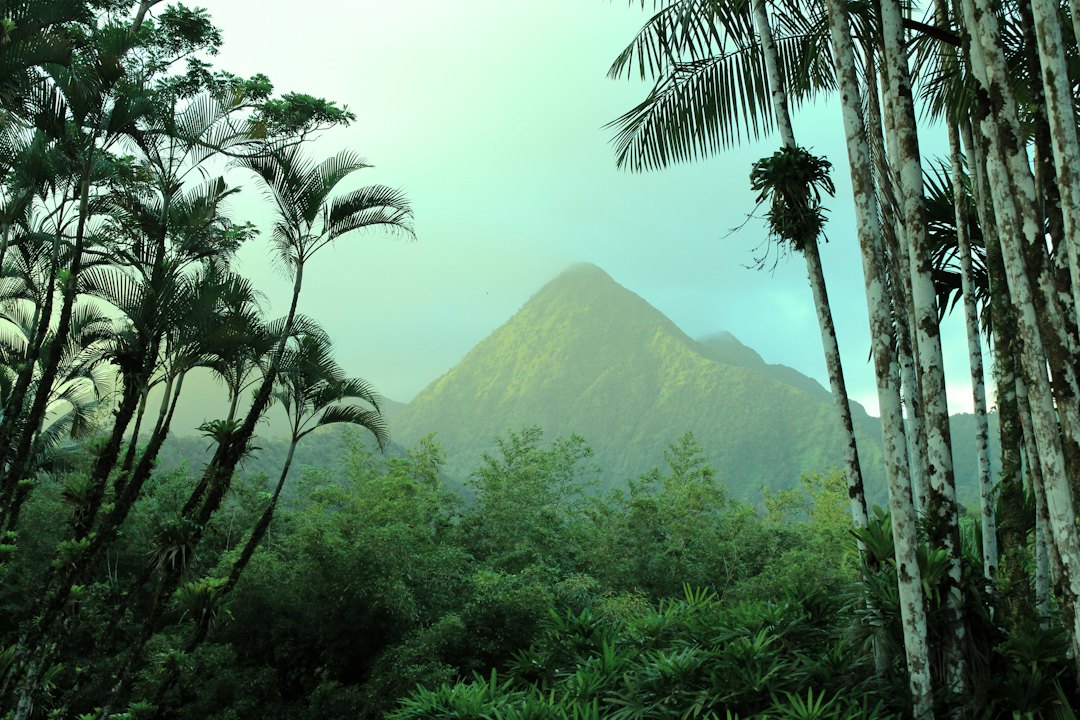
Mount Pelée and Saint-Pierre
A volcano of 1,397 m (4,583 ft) that destroyed Saint-Pierre in 1902. The mountain and the north are UNESCO-listed, and the town’s ruins are worth half a day. Check conditions and hike early.
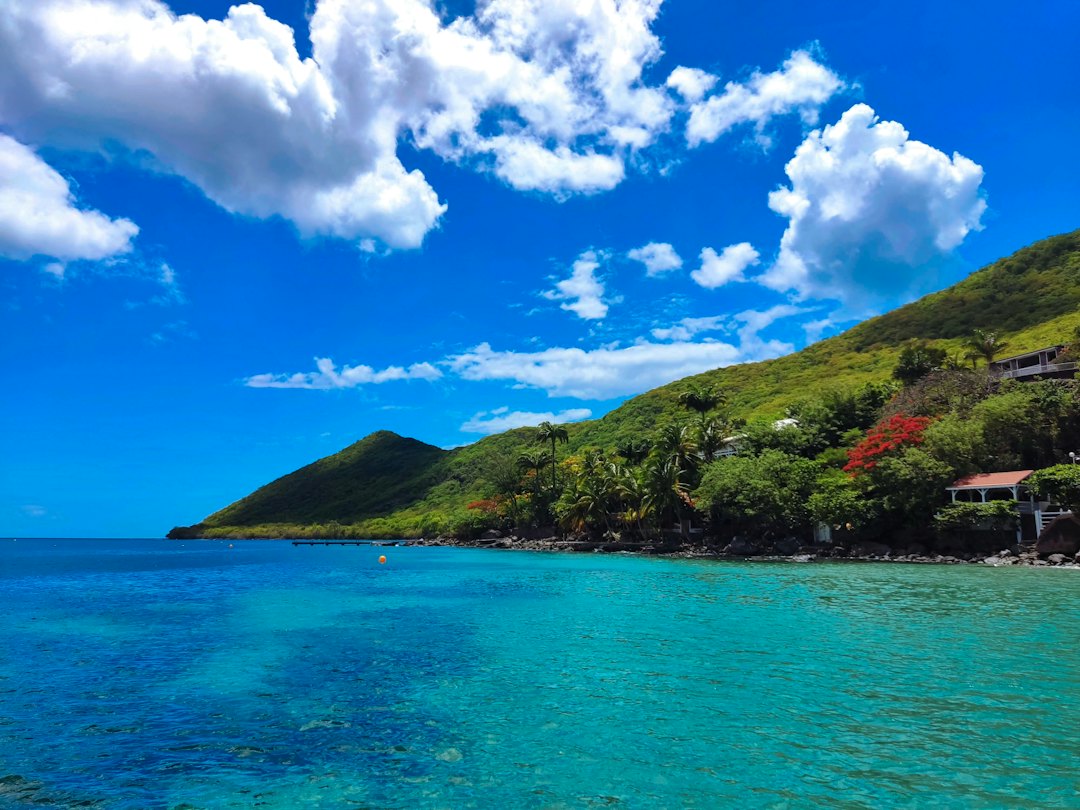
A bay in southern Martinique
Best months: May & Nov–early Dec (peak mid-Dec–Apr)
Photo: Léopold de Reynal on Unsplash
Photo: Teddy Charti on Unsplash
Overview
Martinique is France with a volcano and a tide of rum. It is a full département of the republic, so you pay in euros, drive on French roads, buy baguettes at dawn and eat Creole fish stew at lunch. That mix is the reason to come, and the reason it never fills with big resort strips: the island has a few beach hotels and a lot of small ones, and even Les Salines, the most popular beach, thins out once the dry season ends.
The geography does the rest. Mount Pelée, 1,397 m (4,583 ft), erupted on 8 May 1902 and destroyed Saint-Pierre, killing some 30,000 people; the mountain and the pitons of the north were listed by UNESCO in 2023, and the ruins are worth half a day. The Carbet peaks stand over the north-west coast, and the south has the white-sand beaches of Sainte-Anne and Les Salines, the Diamond Rock off Le Diamant and, at Anse Dufour, sea turtles you can snorkel beside. Rum is not a side note here: Martinique’s agricultural rum, made from fresh cane juice rather than molasses, has its own appellation d’origine contrôlée, and you can tour distilleries such as Clément, Depaz and Saint James. The honest trade-off is the car. Without one you are stuck near Trois-Îlets, and the roads, though European in standard, can jam around Fort-de-France.
Visit from mid-December to April for dry, breezy weather with highs of about 28°C / 82°F (82°F) and the highest prices, or in May, June and November for quieter beaches. The hurricane season runs from June to November, with the peak in September, and Wikivoyage notes July and August are pricey because Martinicans fly to mainland France. Prices and rules below are approximate and written from general knowledge, so check them before you go.
A volcano of 1,397 m (4,583 ft) that destroyed Saint-Pierre in 1902. The mountain and the north are UNESCO-listed, and the town’s ruins are worth half a day. Check conditions and hike early.
AOC agricultural rum made from fresh cane juice, with distilleries such as Clément, Depaz and Saint James. The Carbet peaks and the Jardin de Balata give rainforest views.
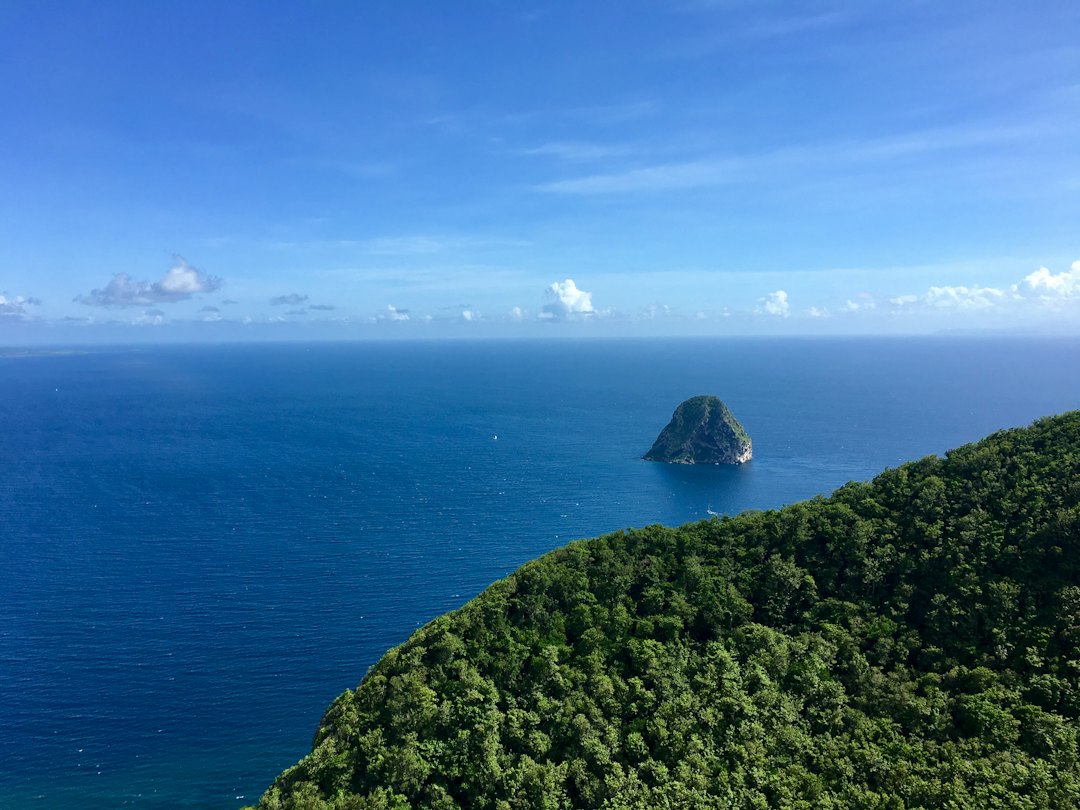
White sand at Sainte-Anne and Les Salines, sea turtles at Anse Dufour and the Diamond Rock off Le Diamant. Early starts beat the crowds.
Best time
Best months for most visitors: May & Nov–early Dec (peak mid-Dec–Apr). Good weather, thinner crowds and fairer prices.
May, June and November to early December are the sweet spot, with highs of about 29 to 30°C / 84 to 86°F (84 to 86°F), warm sea and thinner crowds.
Mid-December to April is dry and breezy, with highs of 27 to 29°C / 81 to 84°F (81 to 84°F) and the highest prices.
August to October is hot, with highs of 28 to 30°C / 82 to 86°F (82 to 86°F) and a sea breeze, and falls in the hurricane season, which runs from June to November.
Booking window: reserve flights and stays 2–3 months ahead for May & Nov–early Dec (peak mid-Dec–Apr), and 4–6 months ahead for peak season (Jan–Apr, Dec).
Partner links. We earn a commission at no extra cost to you; sponsors never change a ranking or safety note. How we earn money →
Weather
Current temperature loads here when your browser can reach Open-Meteo.
Weather data: Open-Meteo Historical & Live API. A single reading for the main town or area, not the whole destination.
Peak season about 28°C / 82°F; shoulder season about 30°C / 86°F.
Rain: Driest mid-December to April; showery and more humid June to November.
Breezy and drier, with highs of 27 to 29°C / 81 to 84°F (81 to 84°F) and lows of 23°C / 73°F (73°F). Peak season and the best weather for a first trip.
Hot, with highs of 29 to 30°C / 84 to 86°F (84 to 86°F) and a sea breeze, more showers and the main hurricane risk. Rain falls on 20 to 24 days a month in the model data, often briefly.
The sea runs from about 27°C / 81°F (81°F) in February to 30°C / 86°F (86°F) in September and October, warm enough to swim all year.
Book hotels, cars and flights ahead.
Wikivoyage notes July and August stay costly because Martinicans travel to mainland France.
Some small hotels close, and you should buy insurance that covers storms.
Weather data: Open-Meteo Historical & Live API (live reading). Typical highs and season notes are our own summaries. How we verify →
Safety
Last updated: government levels come from our editor-verified table (October 2026). When the live UK FCDO check succeeds, its exact UTC time appears in the panel below. The banner takes the most cautious of the five agencies, so a live UK warning always outranks a green entry in our table and any part-country warning shows as red. We never show a level we haven’t checked. How we verify →
Government levels: editor-verified table, October 2026 How we verify →
Five official agencies, one view. Ratings change, so each pill opens the agency’s own page for today’s level.
Tier 4/5 · Standard caution. Normal precautions: the FCDO says crime levels are low; demonstrations can happen with little warning, and hurricane season runs from June to November.
The UK FCDO’s page for Martinique (updated 23 October 2026) carries no warning against travel. It says crime levels are low, but advises avoiding isolated areas, including beaches, after dark, not carrying large amounts of cash or wearing expensive jewellery, and using hotel safes for valuables. It says there is no recent history of terrorism in Martinique, though attacks cannot be ruled out, and that demonstrations, political gatherings and marches can take place with little or no warning, particularly in larger towns, and may disrupt transport and lead to localised curfews. It notes that hurricane season is normally from June to November, that Montagne Pelée is an active volcano that is closely monitored, that French driving laws apply and that Zika, dengue and chikungunya are health risks. Read the current page before you book, and again before you travel, because wording changes. The airport-taxi surcharge is our own note.
Our plain-English summary of what the UK FCDO, US State Department, Australian Smartraveller, Japan MOFA and South Korea MOFA publish. We quote no live ratings from memory; each button above opens the agency's own page.
Our opinion, not an official warning
Regional nuance: The UK FCDO page for Martinique carries no warning against travel and says crime levels are low, with advice to avoid isolated areas including beaches after dark. It notes that demonstrations can occur with little warning, that hurricane season is normally June to November and that Montagne Pelée is a monitored active volcano. Taxi surcharges are our own notes.
The concerns that are real: The real issues are practical: avoid isolated beaches after dark, use hotel safes and keep an eye on the weather. Check local media for demonstrations in Fort-de-France, which can disrupt transport, and buy insurance that covers storms.
What headlines overstate: Headlines about demonstrations, hurricanes and volcano monitoring describe real events. Follow the FCDO and local authorities, check the forecast in hurricane season and carry insurance that covers medical evacuation.
Written by our editors from general travel knowledge and kept apart from the agencies above. How we verify →
Costs
Backpacker
$130 (≈ €115 / £100) per person per day
What it covers: A guesthouse or studio, market and bakery meals, a shared car or bus and free beaches.
Mid-Range (default)
$290 (≈ €260 / £230) per person per day
What it covers: A Trois-Îlets or Sainte-Anne hotel room shared by two, a rental car, restaurant dinners and a distillery tour.
Boutique
$640 (≈ €570 / £500) per person per day
What it covers: A beachfront or hillside villa, tasting dinners, private boat trips and a guide for Pelée.
Cost source: Audited Local Lodging Taxes, Rail Tariffs & Dining Averages (our own estimates, flights excluded). How we verify →
Source: Should I Go's own estimates, October 2026, in USD per person excluding international flights; euro figures are rough conversions. A couple shares a room, so accommodation drops 25% per person. Prices move, so treat these as a planning range, not a quote.
Estimated total: $0 (≈ €0 / £0)
Estimate in USD per trip, excluding international flights. Two or more travellers share rooms, so accommodation drops 25% per person. Budget and luxury tiers are scaled from the mid-range figure.
Cost source: Audited Local Lodging Taxes, Rail Tariffs & Dining Averages (our own estimates, flights excluded). How we verify →
Where to base yourself
The ferry link to Fort-de-France, with beaches, restaurants and hotels close to the airport.
The south’s best-known white-sand beaches and a village with cafés.
The north-west coast with black sand, the Carbet peaks and the Pelée ruins.
Quiet bays, the Anse Dufour turtles and views of the Diamond Rock.
Itineraries
Getting between stops: Rent a car at FDF; Les Trois-Îlets is about 25 minutes away. The ferry from Fort-de-France costs about $8 (≈ €7.14 / £6.30) return.
Getting between stops: A rental car is essential. French driving laws apply and an international driving permit may be needed.
Getting between stops: Plan drives with a margin: roads jam around Fort-de-France. Book Pelée guides and distillery tours ahead.
Routes and timetables change. Confirm transit times with the operator before you book.
Do and stay
Best for: First-timers who want beaches, restaurants and a ferry link
Pros: About 25 minutes from the airport, with Pointe du Bout, restaurants and the ferry to Fort-de-France.
Watch for: A tourist town with busy weekends and larger resorts.
Best for: White-sand beaches in the south
Pros: The island’s best-known beaches, a village centre and easy driving.
Watch for: Les Salines is busiest in the dry season, and there are fewer hotels.
Best for: A quieter north-west base with a black-sand coast
Pros: Close to Saint-Pierre, Pelée and the Carbet peaks, with local restaurants.
Watch for: Far from the south’s white-sand beaches, and some roads wind.
These are partner links. We may earn a commission at no extra cost to you.
Trade-offs
Final verdict
Editorial opinion from Should I Go, written from general travel knowledge and reviewed periodically. Verify prices, entry rules and advisories before you book.
Typical costs and rules change; confirm with official sources before you travel.
May and November to early December are best for value and quiet. Mid-December to April is dry and busiest, and August to October is hot and falls in the hurricane season, which runs from June to November.
The UK FCDO carries no warning against travel and says crime levels are low. It advises avoiding isolated areas, including beaches, after dark and using hotel safes. Demonstrations can happen with little warning, and hurricane season runs from June to November.
The FCDO says UK visitors can stay for tourism or business for up to 90 days without a visa because Martinique is part of the EU, and that the passport must be valid for at least 3 months after you plan to leave. Other nationalities should check the French visa pages.
Almost certainly. Public transport is thin and taxis are expensive at night and on Sundays. The FCDO says French driving laws apply and you may need an international driving permit as well as your UK licence.
By car in about 25 minutes from the airport, or by the Vedettes ferry from Fort-de-France for about $8 (€7 return; ≈ £6). A ferry avoids the bay road in rush hour.
Yes. L’Express des Îles ferries arrive at a central terminal in Fort-de-France: from Saint Lucia (Castries) about 1 h 30 for about $203 (≈ €181 / £160) round trip, from Dominica (Roseau) about 2 h 15 from $101 (≈ €90 / £80) and from Guadeloupe (Pointe-à-Pitre) about 5 h for about $158 (≈ €141 / £124); fares vary by season, and departure maritime taxes are included in the ticket, with no separate cash payment at the gate. The Fort-de-France to Les Trois-Îlets Vedettes ferry (about $8, €7 return; ≈ £6) is a separate local crossing.
Get live weather, activities, travel advisories, and personalised tips for Martinique, French West Indies
Check Martinique, French West Indies Now →Have you visited Martinique, French West Indies? Was it worth it? Readers can vote: Worth Every Penny, Great in Shoulder Season Only, or Overrated / Skip It.