South Beach and Art Deco
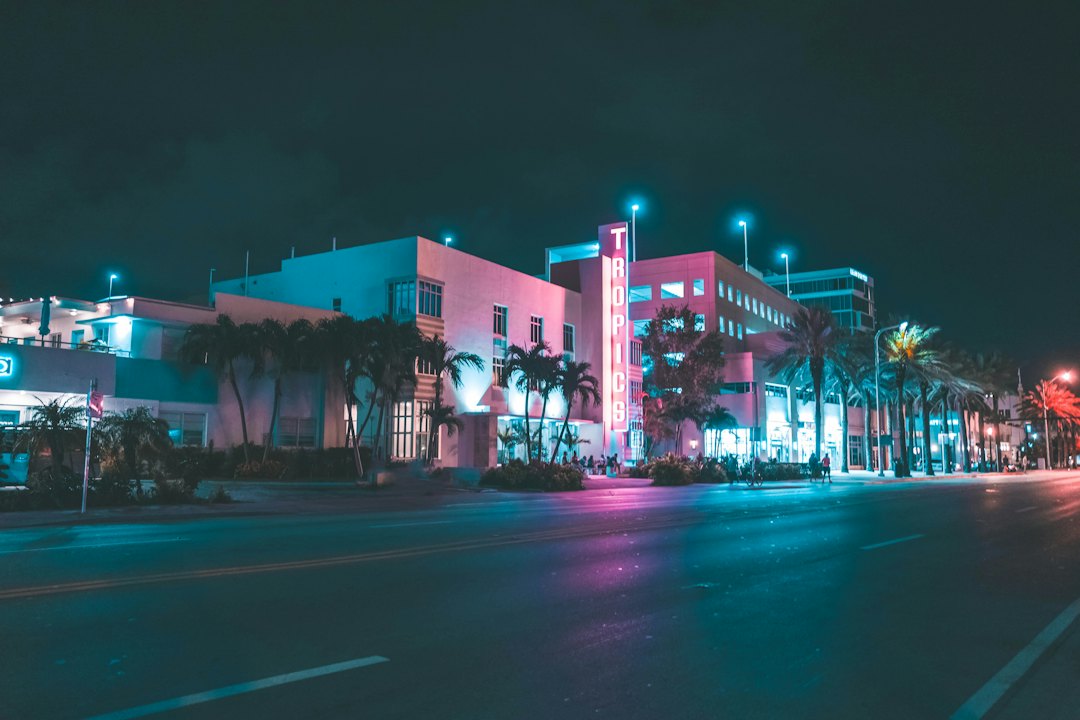
Pastel Art Deco buildings line Ocean Drive and the streets behind it. Walk in the morning, when the beach is quiet, and check cafe prices before you sit down.
The Miami Beach coastline from the air
Best months: Nov–Dec & Mar–May
Photo: Antonio Cuellar on Unsplash
Photo: Joël de Vriend on Unsplash
Photo: Ryan Spencer on Unsplash
View Full Gallery (3)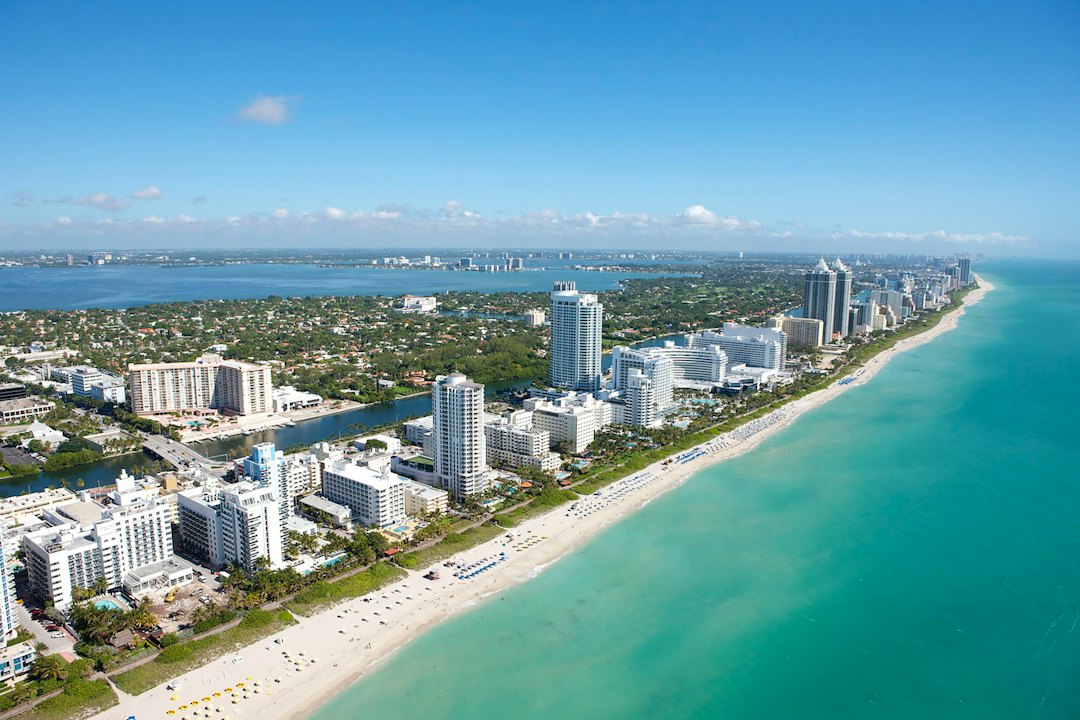
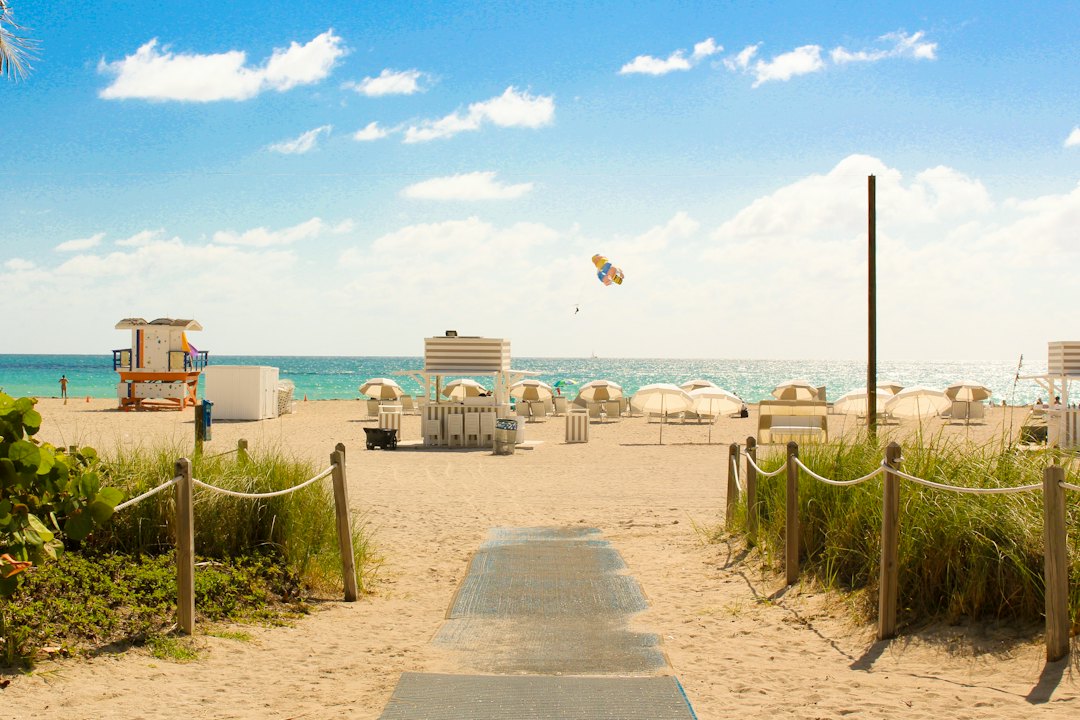
Overview
Miami has two cities in it, and they barely meet. One is the postcard: pastel Art Deco on South Beach, a sea the colour of mouthwash, tanned people eating late. The other is the working, Spanish-speaking one, where a Cuban coffee at a Little Havana window costs less than a bottle of water on Ocean Drive. Visit both and the trip makes sense.
The honest case is the climate and the mix. It is a tropical Atlantic beach city with highs that average about 28°C / 82°F (82°F) across the year, from about 24°C / 75°F (75°F) in January to 31°C / 88°F (88°F) in summer, so a January weekend and a May week both work. You get the Art Deco district, Cuban food in Little Havana, the murals of Wynwood and the Everglades within a day trip. The honest cost is the price and the pose. Crowds are heavy, rooms are expensive, and many restaurants add an automatic service charge of 18 to 20 per cent, so the dinner bill needs reading before you tip a second time. Summer from June to October is hot, humid and stormy, and it is hurricane season, though rates fall. The best months are November and December and March to May, when the sea is warm, the air is bearable and the crowds are thinner than in January and February or at spring break.
A car helps for the Everglades and the far neighbourhoods, but you can do the beach, Brickell and Wynwood without one. Prices and rules are approximate, written from general knowledge, so check them before you go.
Pastel Art Deco buildings line Ocean Drive and the streets behind it. Walk in the morning, when the beach is quiet, and check cafe prices before you sit down.
Calle Ocho for Cuban coffee and sandwiches, then Wynwood for murals and galleries. Both are easy to reach by rideshare.
A day trip from the city for airboats and wildlife. Choose a licensed operator, and wear sun protection and insect repellent.
Best time
Best months for most visitors: Nov–Dec & Mar–May. Good weather, thinner crowds and fairer prices.
November to December and March to May are the sweet spot.
January and February, and spring break in March, are the busiest weeks, when rooms are dearest and the beach and Ocean Drive are crowded.
June to October is hot, humid and wet, with afternoon storms, and it is hurricane season.
Booking window: reserve flights and stays 2–3 months ahead for Nov–Dec & Mar–May, and 4–6 months ahead for peak season (Jan–Feb).
Partner links. We earn a commission at no extra cost to you; sponsors never change a ranking or safety note. How we earn money →
Weather
Current temperature loads here when your browser can reach Open-Meteo.
Weather data: Open-Meteo Historical & Live API. A single reading for the main town or area, not the whole destination.
Peak season about 25°C / 77°F; shoulder season about 28°C / 82°F.
Rain: Wet season June to October, with afternoon storms; drier from November to April.
Hot, humid and stormy, with average highs of 30 to 31°C / 86 to 88°F (86 to 88°F), a heat index well above that and afternoon downpours. It is hurricane season.
Warm and drier, with highs around 24 to 25°C / 75 to 77°F (75 to 77°F). The sea is cooler, but beach weather remains.
Book months ahead and expect to queue for popular restaurants.
Expect highs of about 25 to 29°C / 77 to 84°F (77 to 84°F), warm sea and thinner crowds than in the peak weeks. Prices are still high at weekends and holidays.
Rooms are cheaper, the beach is quieter and indoor attractions and the Everglades are less comfortable in the heat.
Weather data: Open-Meteo Historical & Live API (live reading). Typical highs and season notes are our own summaries. How we verify →
Safety
Last updated: government levels come from our editor-verified table (October 2026). When the live UK FCDO check succeeds, its exact UTC time appears in the panel below. The banner takes the most cautious of the five agencies, so a live UK warning always outranks a green entry in our table and any part-country warning shows as red. We never show a level we haven’t checked. How we verify →
Government levels: editor-verified table, October 2026 How we verify →
Five official agencies, one view. Ratings change, so each pill opens the agency’s own page for today’s level.
Tier 4/5 · Standard caution. Normal precautions: hurricane season (June to November), rip currents, heat, car break-ins and bill padding on Ocean Drive.
The UK FCDO’s page for the United States (updated 30 October 2026) carries no warning against travel to the places in this guide. It says terrorists are very likely to try to carry out attacks in the US, including in crowded places; that violent crime rarely affects tourists, though you should take care in unfamiliar areas; and that gangs may target vehicles driven by people who look like tourists, so avoid leaving items on display in your car. Read the current page before you book, and again before you travel, because wording changes. For Miami, the practical points are the Atlantic hurricane season (the FCDO says it normally runs from June to November, and to follow local evacuation orders) and flash flooding, plus rip currents, sun and car break-ins, which are our own notes where the FCDO does not mention them.
Our plain-English summary of what the UK FCDO, US State Department, Australian Smartraveller, Japan MOFA and South Korea MOFA publish. We quote no live ratings from memory; each button above opens the agency's own page.
Our opinion, not an official warning
Regional nuance: The UK FCDO page for the US carries no warning against travel. The regional nuance is weather: the FCDO says the Atlantic hurricane season normally runs from June to November and that flash flooding can disrupt travel. Rip currents and heat are our own notes for the beach, not FCDO items.
The concerns that are real: Heat, sun and rip currents are the main risks on the beach. Petty theft and car break-ins happen, so keep valuables out of sight. The common scams are about money: unpriced drinks, automatic service charges plus “admin” fees, and unlicensed taxis. Nightlife areas get rowdy late at night.
What headlines overstate: Headlines about hurricanes and flooding describe real risks between June and November. Check the forecast, follow evacuation orders if one is issued and keep flexible bookings.
Written by our editors from general travel knowledge and kept apart from the agencies above. How we verify →
Costs
Backpacker
$160 (≈ €145 / £125) per person per day
What it covers: A hostel bed or shared room, Cuban café meals, public transit and free beach days.
Mid-Range (default)
$350 (≈ €310 / £280) per person per day
What it covers: A boutique hotel room shared by two, restaurant meals with service charge, rides and one paid attraction.
Boutique
$770 (≈ €690 / £610) per person per day
What it covers: A beachfront or Faena-area hotel, tasting dinners, a private boat or Everglades tour and nightlife.
Cost source: Audited Local Lodging Taxes, Rail Tariffs & Dining Averages (our own estimates, flights excluded). How we verify →
Source: Should I Go's own estimates, October 2026, in USD per person excluding international flights; euro figures are rough conversions. A couple shares a room, so accommodation drops 25% per person. Prices move, so treat these as a planning range, not a quote.
Estimated total: $0 (≈ €0 / £0)
Estimate in USD per trip, excluding international flights. Two or more travellers share rooms, so accommodation drops 25% per person. Budget and luxury tiers are scaled from the mid-range figure.
Cost source: Audited Local Lodging Taxes, Rail Tariffs & Dining Averages (our own estimates, flights excluded). How we verify →
Where to base yourself
Art Deco, Ocean Drive, the beach and nightlife, at the busiest end of the city.
Upscale hotels and wider, calmer sand.
Towers, restaurants and the Metrorail link.
Cuban food, murals and galleries, reached by short rides.
Itineraries
Getting between stops: Bus 150 runs from MIA to South Beach for $2.25 (≈ €2.01 / £1.77) in about 30 minutes. A taxi from MIA to South Beach is a flat $38 (≈ €35 / £30). Metrorail and Metrobus share the $2.25 (≈ €2.01 / £1.77) fare, and the Metromover downtown loop is free. Use rideshares between neighbourhoods.
Getting between stops: Metrorail links MIA to Brickell in about 20 minutes. Read menus and bills carefully.
Getting between stops: Book the Everglades trip with a licensed operator, and leave early to avoid traffic.
Routes and timetables change. Confirm transit times with the operator before you book.
Do and stay
Best for: Beach stays with a calmer feel than South Beach
Pros: Wide beaches, upscale hotels and a more relaxed atmosphere than the Ocean Drive strip.
Watch for: Higher prices and a drive or ride to Little Havana and Wynwood.
Best for: City stays, restaurants and Metrorail access
Pros: Towers, restaurants and the Metrorail link to the airport, with walkable evenings.
Watch for: It is a business district, so it is quiet at weekends and the beach is a ride away.
Best for: A leafy, village feel on the bay
Pros: Cafes, parks and a calmer pace by the water, with more shade than the beach neighbourhoods.
Watch for: Further from South Beach, and nightlife is quieter.
These are partner links. We may earn a commission at no extra cost to you.
Trade-offs
Final verdict
Editorial opinion from Should I Go, written from general travel knowledge and reviewed periodically. Verify prices, entry rules and advisories before you book.
Typical costs and rules change; confirm with official sources before you travel.
November–December and March–May are best, with warm sea and highs of about 25 to 29°C / 77 to 84°F (77 to 84°F). January–February and spring break are the busiest, and June to October is hot, humid and hurricane season.
It is one of the pricier US beach cities, with mid-range trips around $350 (≈ €310 / £280) a day. Many restaurants add an 18 to 20 per cent service charge, so check the bill before you tip.
Take Bus 150 from MIA to South Beach for $2.25 (≈ €2.01 / £1.77) in about 30 minutes. For Brickell, ride the MIA Mover and Metrorail, about 20 minutes. Taxis from MIA use flat-rate zones, such as $38 (≈ €34 / £30) to South Beach. Rideshares vary with traffic.
Metrobus and Metrorail share a flat fare of $2.25 a ride (≈ €2.01 / £1.77), and the Metromover loop around downtown is free. That makes the airport-to-Brickell Metrorail ride and Bus 150 to South Beach the cheapest options; a taxi from MIA to South Beach is a flat $38 (≈ €34 / £30).
Get live weather, activities, travel advisories, and personalised tips for Miami, Florida, USA
Check Miami, Florida, USA Now →Have you visited Miami, Florida, USA? Was it worth it? Readers can vote: Worth Every Penny, Great in Shoulder Season Only, or Overrated / Skip It.