Morocco is a feast for the senses — labyrinthine medinas, soaring Atlas mountain passes, vast Saharan dunes, and one of the world's great cuisines. From the blue streets of Chefchaouen to the ancient tanneries of Fes.
Morocco is intense in the way that makes people either love it or leave early. The medinas of Marrakech and Fes are mazes where the best moments come when you stop looking at the map. Agree on a price before getting into a taxi, or insist on the meter. Hire an official guide for your first morning in Fes, then wander alone. Trains link Casablanca, Rabat, Marrakech and Fes (Casablanca to Marrakech takes about three hours), and the Al Boraq high-speed line runs from Casablanca to Tangier in about 2 hours 20 minutes. A night in the Sahara near Merzouga needs a tour or a long drive. Be ready to haggle and to refuse politely: touts are persistent, and good-natured firmness works better than irritation.
Three highlights worth the trip
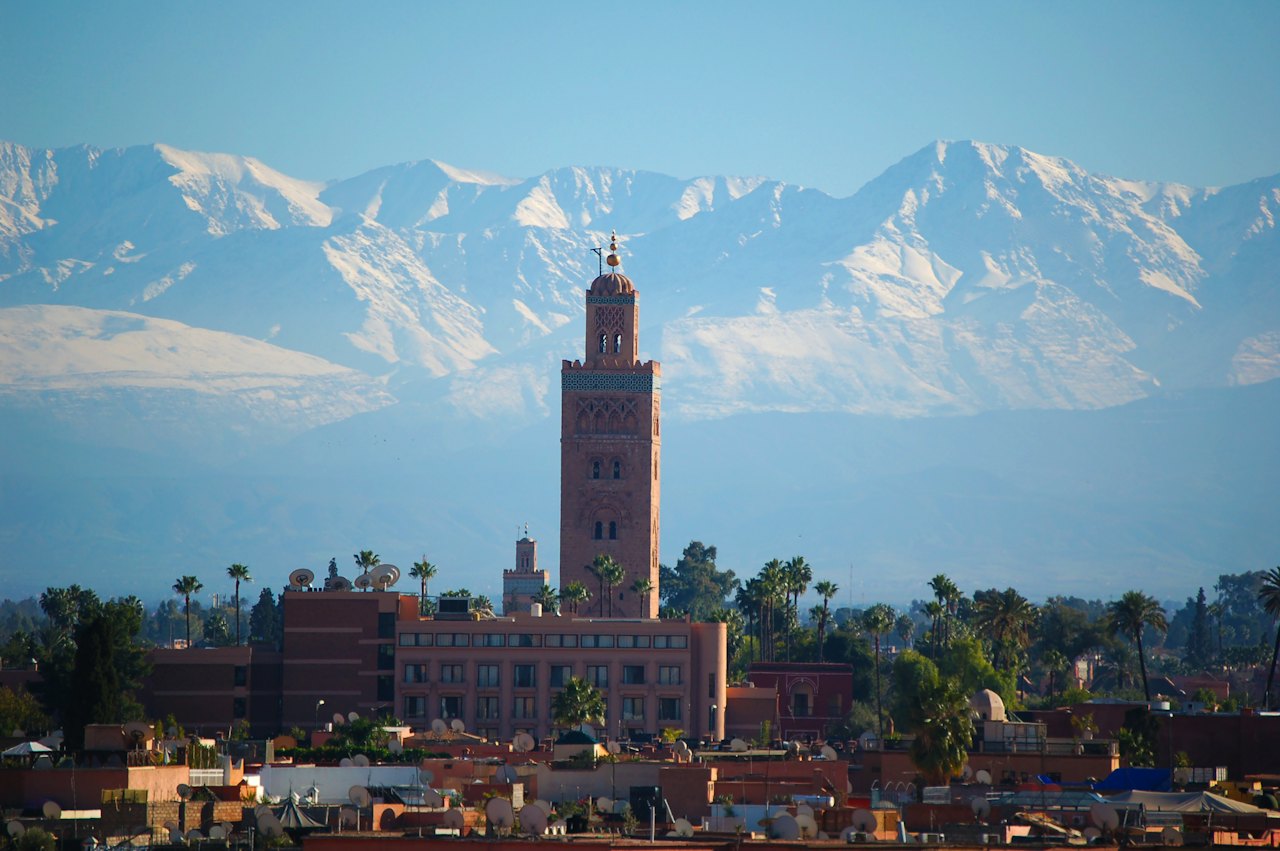
1Marrakech's medina and Jemaa el-Fna
The square changes by the hour: juice stalls by day, food grills and storytellers by night. Haggle gently and agree prices before you sit. A half-day private walk with a licensed local historian costs about $25–45 (≈ €20–40 / £20–35).
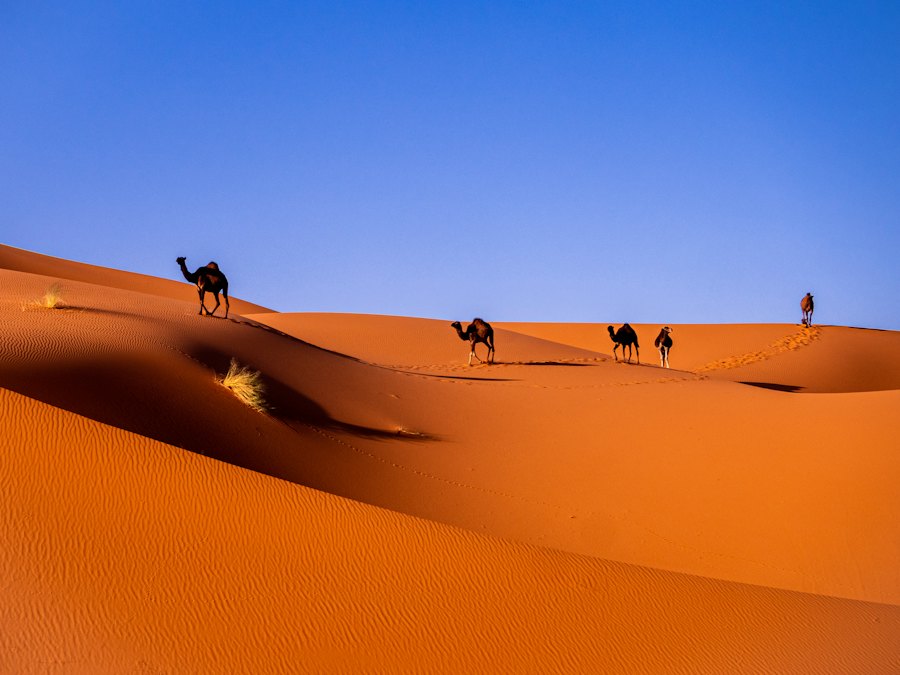
2Atlas Mountains and the desert road
Day trips reach Imlil and Ait Benhaddou; a two-night trip reaches the Sahara dunes at Merzouga. The drive is long and worth it. A three-day, two-night Sahara trip from Marrakech to Merzouga, with a camel trek and a night in a camp, costs about $150–350 (≈ €135–310 / £120–280) per person.
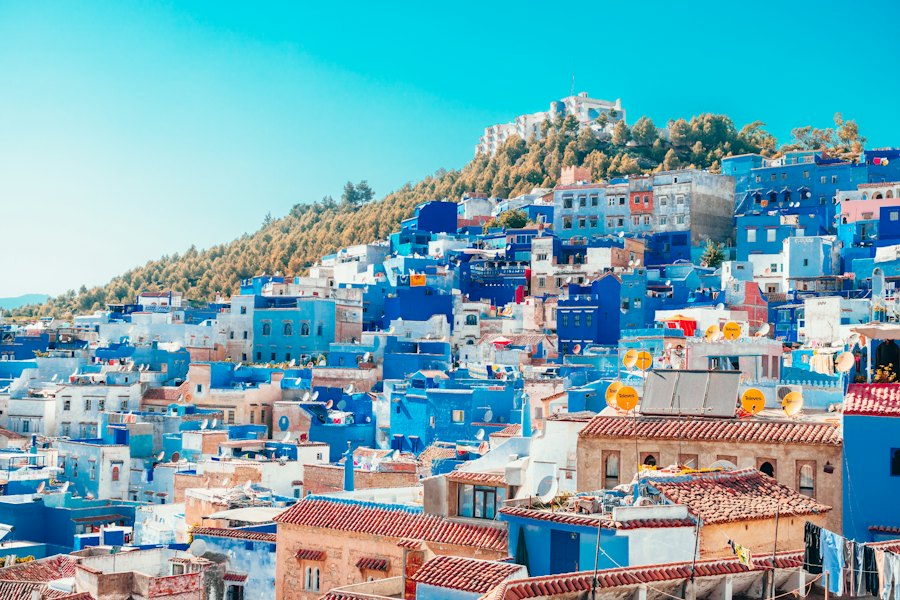
3Blue Chefchaouen and imperial Fes
Fes has tanneries that still use methods unchanged since the Middle Ages, and a maze of lanes. Chefchaouen is a slower, cooler stop with blue-washed lanes.
2
Best time
Best Time to Visit Morocco: A 12-Month View
Best months for most visitors: Mar–May & Sep–Nov. Good weather, thinner crowds and fairer prices.
JanOff (Off-peak)
FebSweet (Sweet spot)
MarSweet (Sweet spot)
AprSweet (Sweet spot)
MaySweet (Sweet spot)
JunOff (Off-peak)
JulOff (Off-peak)
AugOff (Off-peak)
SepSweet (Sweet spot)
OctSweet (Sweet spot)
NovSweet (Sweet spot)
DecPeak (Peak season)
Sweet = best balance of weather, crowds and price
Peak = busiest and dearest (or hottest)
Off = quiet; check weather and closures
Shoulder / sweet spot
February to May and September to November are the best months.
Peak season
December is the busiest month, with Christmas and New Year bringing winter-sun visitors to Marrakech.
Off-peak
June to August is low season because of the heat: Marrakech's July highs average about 38°C / 100°F (100°F), and the Sahara is hotter.
Booking window: reserve flights and stays 2–3 months ahead for Mar–May & Sep–Nov, and 4–6 months ahead for peak season (Dec).
Partner links. We earn a commission at no extra cost to you; sponsors never change a ranking or safety note. How we earn money →
3
Weather
Weather and Seasonal Conditions in Morocco
Right now in Morocco
Current temperature loads here when your browser can reach Open-Meteo.
Peak season about 35°C / 95°F; shoulder season about 24°C / 75°F.
Rain: Low; wetter in winter in the north.
Regional breakdown
Marrakech and the plains
Hot summers (July highs average about 38°C / 100°F (100°F)) and mild winters. March to May and October to November are the comfortable months.
Sahara and the Atlas
Cold nights in the desert in winter and fierce heat in summer. Mountain roads can close with snow.
What each season feels like
Peak season
Days are warm, around 18–20°C / 64–68°F (64–68°F), but nights are cold and desert camps can be near freezing. Riads and flights cost most, so book two to three months ahead.
Shoulder season
For the best weather and lower prices, aim for March to April or October to early November, when Marrakech and Fes are pleasantly warm and Atlas trails are clear. Check the Ramadan dates, which fall roughly from early February to early March in 2027, as hours and meals change.
Off-peak
Prices drop and the coast is better, but the interior is gruelling. January is cold, wet and snowy in the mountains. Ramadan can also change opening hours and meal times, so check the dates.
Last updated: government levels come from our editor-verified table (October 2026). When the live UK FCDO check succeeds, its exact UTC time appears in the panel below. The banner takes the most cautious of the five agencies, so a live UK warning always outranks a green entry in our table and any part-country warning shows as red. We never show a level we haven’t checked. How we verify →
🏛️ Official Government Warnings
Government levels: editor-verified table, October 2026 How we verify →
Five official agencies, one view. Ratings change, so each pill opens the agency’s own page for today’s level.
Tier 3/5 · Increased caution. Increased caution: tout scams, petty theft and regional restrictions.
The UK FCDO, US State Department and Australian DFAT generally advise extra care in Morocco, citing terrorism risk, petty crime in medinas and tourist areas, and restrictions in some border regions and the Western Sahara. Advice also covers the 2023 earthquake zone in the High Atlas. Policies change, so check the current Morocco pages of all three governments before you book.
Our plain-English summary of what the UK FCDO, US State Department, Australian Smartraveller, Japan MOFA and South Korea MOFA publish. We quote no live ratings from memory; each button above opens the agency's own page.
🧭 Editorial Opinions & Street-Smart Reality
Our opinion, not an official warning
Regional nuance: Advice for Morocco often concentrates on border areas and the Western Sahara region, plus terrorism awareness. These are far from Marrakech, Fez and the main tourist circuit.
Persistent touts and unofficial guides in medina souks, especially in Marrakech
Taxi overcharging and inflated prices when a price has not been agreed first
The concerns that are real: Most trouble is annoyance: touts who say a road is closed or offer to show the way, inflated taxi fares, fake guides and pressure to buy. Solo women often face catcalling. The FCDO also notes occasional violent crime, including knife attacks on tourists in major cities and along beaches, so avoid quiet areas after dark and carry few valuables. It also warns about fake guides (use one with an official badge) and about methanol poisoning from illicit alcohol. Use bank ATMs, decline dynamic currency conversion and agree prices before you ride or eat.
What headlines overstate: Reports of danger make Morocco sound unstable for visitors. Serious violence is occasional rather than routine, and persistent hassle and scams are the more realistic problems; politely refusing helps.
Written by our editors from general travel knowledge and kept apart from the agencies above. How we verify →
What it covers: Hostel bed or basic riad room, street food and tagine at local cafes, buses and shared grand taxis, a hammam visit and free medina wandering.
What it covers: Comfortable riad double, sit-down dinners, ONCF trains between cities, an official guide in Fes, entry to main sights and a night in a basic desert camp.
What it covers: Restored riad or desert luxury camp, private driver between cities, rooftop dinners, private guides and spa treatments in a hammam.
Where a day's money goes (solo)
Accommodation$86 (≈ €75 / £70)
Food$57 (≈ €50 / £45)
Transit$29 (≈ €25 / £25)
Activities$19 (≈ €17 / £15)
Cost source: Audited Local Lodging Taxes, Rail Tariffs & Dining Averages (our own estimates, flights excluded). How we verify →
Source: Should I Go's own estimates, October 2026, in USD per person excluding international flights; euro figures are rough conversions. A couple shares a room, so accommodation drops 25% per person. Prices move, so treat these as a planning range, not a quote.
Trip Budget Calculator
Estimated total: $0 (≈ €0 / £0)
Stay 45%
Food 30%
Transit 15%
Sights 10%
Estimate in USD per trip, excluding international flights. Two or more travellers share rooms, so accommodation drops 25% per person. Budget and luxury tiers are scaled from the mid-range figure.
Cost source: Audited Local Lodging Taxes, Rail Tariffs & Dining Averages (our own estimates, flights excluded). How we verify →
6
Where to base yourself
Four Regions and Cities in Morocco
Min. 3 nights
Marrakech
Medina riads, gardens and souks. The easiest base for day trips.
Min. 2 nights
Fes
The oldest medina and the best leather and ceramics. Hard to navigate; hire a guide the first day.
Min. 1 night
Chefchaouen
A small blue-washed town in the Rif. Cool, quiet and photogenic.
Min. 2 nights
Merzouga and the Sahara
Camel treks and camps in the Erg Chebbi dunes. A long drive from Marrakech.
7
Itineraries
Three Itineraries for Morocco
5 days
Imperial cities
Day 1: Marrakech, Bahia Palace and Jemaa el-Fna at dusk.
Day 2: medina, Majorelle Garden and a hammam.
Day 3: train to Fes.
Day 4: Fes medina with a guide.
Day 5: Chefchaouen by road.
Getting between stops: ONCF trains link Marrakech and Fes in about 7 hours; grands taxis and CTM buses go to Chefchaouen.
7 days
Marrakech and the Atlas
Days 1–3: Marrakech.
Day 4: Ait Benhaddou and Ouarzazate.
Day 5: Dades Valley.
Days 6–7: Merzouga and a camel trek.
Getting between stops: Hire a driver or join a small group; the High Atlas roads wind and take longer than the map suggests.
10 days
North to south
Days 1–3: Marrakech.
Days 4–5: Sahara desert.
Days 6–7: Fes.
Days 8–9: Chefchaouen.
Day 10: Tangier or return by train.
Getting between stops: Trains are comfortable and cheap; book first class on long legs.
Routes and timetables change. Confirm transit times with the operator before you book.
8
Do and stay
Things to Do and Where to Stay in Morocco
Top things to do
Marrakech Medina & Djemaa el-Fna
Sahara Desert & Erg Chebbi Dunes
Fes Tanneries
Chefchaouen Blue City
Atlas Mountains Trek
Insider tips
Hire a local guide in Fes medina — it is genuinely easy to get lost
Bargaining is expected in the souks — start at about 40% of the asking price
Dress modestly, especially outside of tourist resorts
A camel trek to the Sahara dunes and overnight camp is worth it
Try a hammam — it is an authentic local experience and usually very affordable
Neighbourhoods to choose from
Marrakech medina (riads)
Best for: First-timers
Pros: Riads give you a quiet courtyard inside the chaos, with breakfast, rooftop terraces and a short walk to Jemaa el-Fna and the souks. Riads run about $30–65 (≈ €25–60 / £25–50) a night for a family-run house with breakfast, $85–160 (≈ €75–145 / £65–125) for a restored boutique riad with a plunge pool and roof terrace, and $300–700 (≈ €270–630 / £240–550)+ for palace-level stays such as La Mamounia or Royal Mansour.
Watch for: Alleys are hard to find at night, taxis can only reach the edge, and some riads are far from the main square.
Fes el-Bali
Best for: History and culture
Pros: Sleeping inside the medina means mornings in the tanneries, the Al-Attarine madrasa and Bou Inania before the day groups arrive.
Watch for: Heavy luggage must be carried or wheeled over cobbles, and finding your riad is challenging without a guide for the first visit.
Essaouira
Best for: Value and breathing room
Pros: A walled coastal town with cheap riads, fresh seafood, steady Atlantic breezes and noticeably less hassle than the big cities.
Watch for: Wind can make the beach unpleasant, and it is a long coach or taxi ride from Fes. Nights are cool in winter.
Live Accommodation Map
Ready to Book This Trip? Book Your Trip to Morocco
These are partner links. We may earn a commission at no extra cost to you.
Sensory, photogenic cities with real working craftspeople.
Good value on riads, food and guided trips.
Variety: desert, mountains, coast and cities.
Short flights from much of Europe.
Honest disadvantages
Hassle from touts and unlicensed guides can be draining.
Medina navigation is hard; even phone maps struggle.
Long drives between highlights.
Summer heat can be extreme inland.
10
Final verdict
Final Verdict: Is Morocco the Right Destination for You?
✅ Who Will Love Morocco
Travellers who like senses and bustleSpice, colour, sound and bargaining are the point.
PhotographersBlue lanes, tanneries and dunes reward early light.
Value-minded culture seekersRiads and guided trips cost less than in southern Europe.
🧭 Who Should Consider Somewhere Else
Anyone allergic to hagglingPrices are negotiable everywhere. Portugal offers calmer fixed prices. Try Portugal instead →
Travellers who dislike long drivesHighlights are far apart. Turkey has easier internal flights. Try Turkey instead →
Solo travellers sensitive to attentionStreet attention can wear. Japan or Portugal are gentler. Try Portugal instead →
Editorial opinion from Should I Go, written from general travel knowledge and reviewed periodically. Verify prices, entry rules and advisories before you book.
Know Before You Go
✈️ Airport to city centreTrain from Casablanca airport to the city is about 45 min for 50 MAD ($5 (≈ €4.46 / £3.94); ≈ €4.50 / £4). At Marrakech airport the L19 bus to the medina area costs 30 MAD ($3 (≈ €2.68 / £2.36); ≈ €2.70 / £2.40) and takes 15–20 min; the fixed-fare taxi from the airport rank is about 200 MAD ($20 (≈ €18 / £16); ≈ €18 / £16), or about 60 MAD ($6 (≈ €5.36 / £4.72); ≈ €5.40 / £4.70) for a metered petit taxi hailed on the road outside.
🛂 Visa & entry rulesVisa-free for up to 90 days for many nationalities, including UK passport holders (per the FCDO). Your passport must be valid for at least 3 months after arrival, and border officers should stamp it on entry; keep the stamp, as a missing one has caused problems at exit. Check your own passport rules.
💳 Cash, cards & ATMsCash is essential in souks. Use bank ATMs and decline dynamic currency conversion. Street food, tagine and mint tea cost about $2–5 (≈ €1.79–4.46 / £1.57–3.94) (20–50 MAD), a sit-down multi-course meal $8–15 (≈ €7.14–13 / £6.30–12) (80–150 MAD), and fine dining with live music $40–90 (≈ €35–80 / £30–70)+ (400–900+ MAD).
🚰 Tap water & healthStick to bottled water; avoid ice and tap water.
🍽️ Tipping customTip 10% in restaurants and a few dirhams for small services.
⚠️ #1 local scam to watch for"The road is closed" or "I will show you the way" touts leading you to shops; politely decline and keep walking.
Typical costs and rules change; confirm with official sources before you travel.
Getting From the Airport Into Town
Route: Casablanca Mohammed V Airport (CMN) by the ONCF airport train to Casa Voyageurs; for Marrakech Menara (RAK), take the L19 airport bus to the medina area, or a taxi (the airport rank charges a fixed fare; a metered petit taxi hailed outside the car park costs far less).
Time: About 45 minutes by train from Casablanca airport; 15–20 minutes by L19 bus (10–15 minutes by petit taxi) from Marrakech airport to the medina.
Fare: Roughly 50 MAD ($5 (≈ €4.46 / £3.94); ≈ €4.50 / £4) by train; 30 MAD ($3 (≈ €2.68 / £2.36); ≈ €2.70 / £2.40) by L19 bus; about 200 MAD ($20 (≈ €18 / £16); ≈ €18 / £16) for the airport rank's fixed fare, or about 60 MAD ($6 (≈ €5.36 / £4.72); ≈ €5.40 / £4.70) for a petit taxi from the road outside. Approximate.
Morocco: Your Questions Answered
Is Morocco safe for tourists?
Generally yes, with sensible care. The FCDO notes occasional violent crime, including knife attacks on tourists in big cities and on beaches, and petty theft, scams and persistent touts are common in Marrakech and Fes. Avoid quiet areas after dark, dress modestly, keep valuables out of sight and avoid unofficial guides. Check the FCDO, State Department and DFAT pages for the latest regional advice. Women travelling alone often find a firm no and confident walking help.
Do you need a guide in the Fes medina?
Not strictly, but an official guide for your first morning helps a lot, since the medina is a maze with thousands of alleys. Book through your riad or the tourist office rather than accepting street offers, agree the price beforehand, and then explore alone. A half-day is usually enough. Tips are appreciated.
What is the best time to visit Morocco?
March to May and September to November are best for most travellers, with warm days and cooler nights. Summer is very hot inland, and winter is cold at night, especially in the desert and mountains. Check Ramadan dates, which move about eleven days earlier each year. Dry, clear spring days are ideal for the Atlas.
Get live weather, activities, travel advisories, and personalised tips for Morocco