The Louvre and the Seine
Few capitals stack this much art, stone and river into one walk. Book a timed Louvre slot, then follow the quays to Notre-Dame and the Latin Quarter.
Paris at dusk, seen from above, Eiffel Tower on the horizon
Best months: Apr–Jun & Sep–Oct
Photo: Luca Micheli on Unsplash
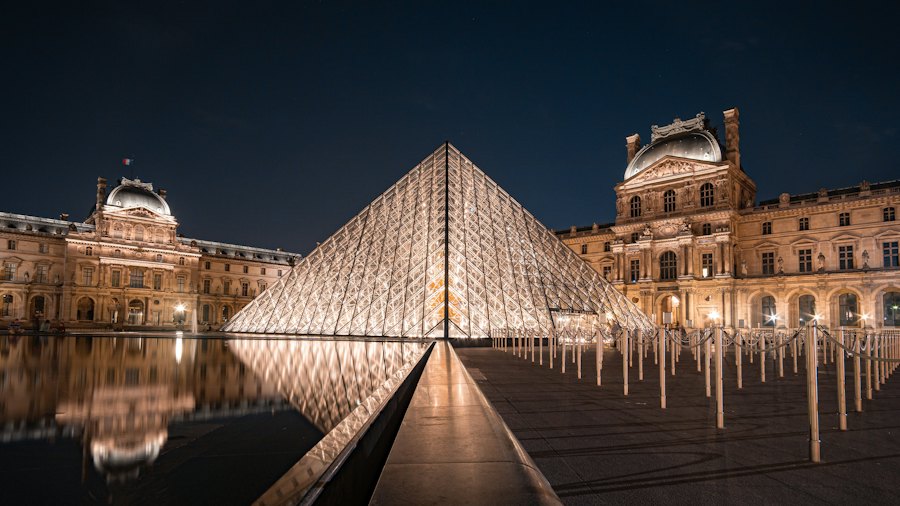
Photo: Michael Fousert on Unsplash
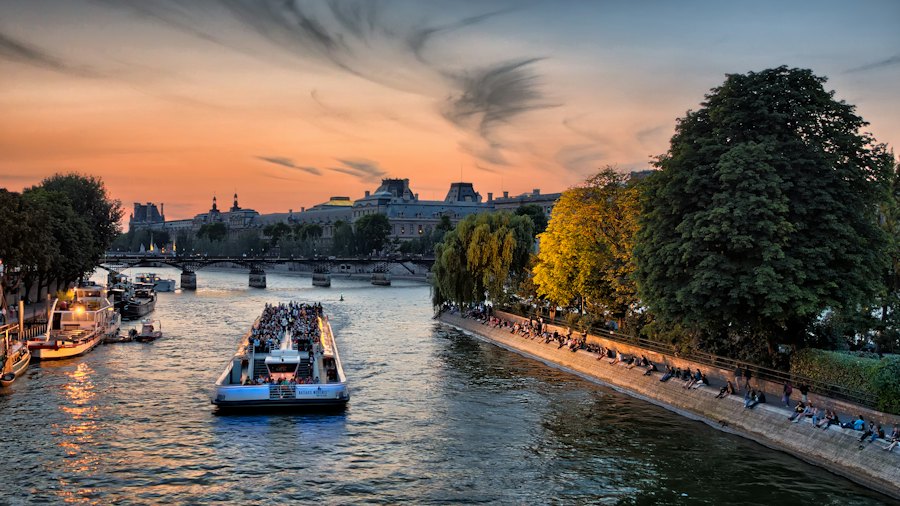
Photo: Joe deSousa on Unsplash
View Full Gallery (3)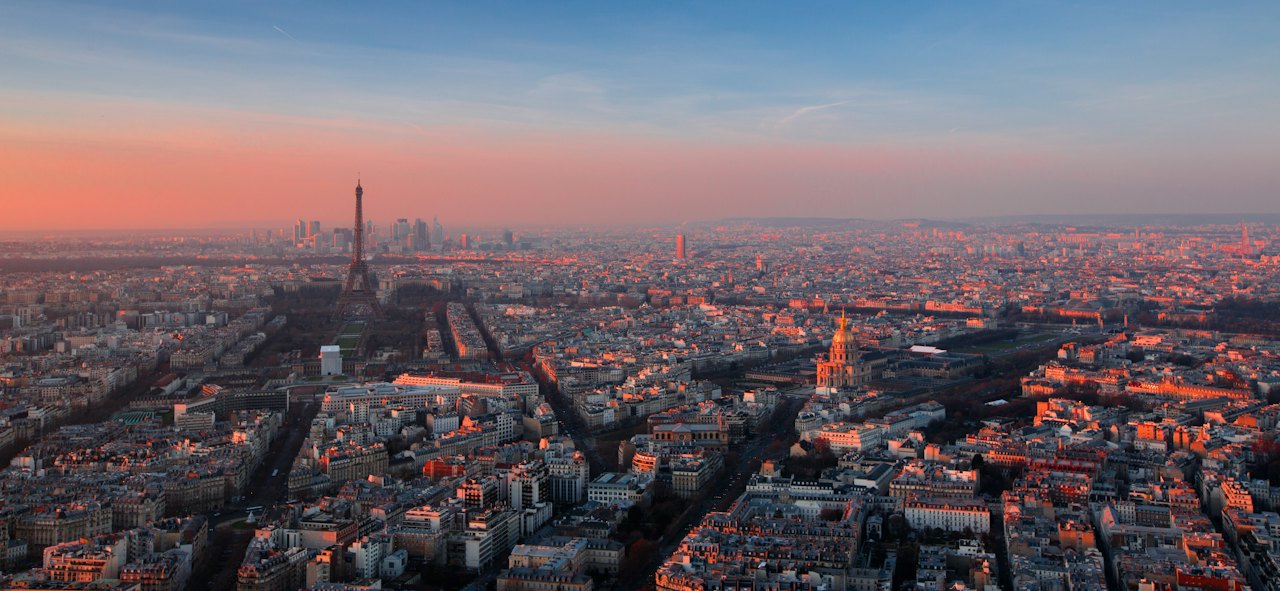
Overview
The French capital blends art, cuisine, romance, and history. From the Eiffel Tower and the Louvre to hidden courtyard cafes and world-class bistros, every neighbourhood holds a new discovery.
The honest case for Paris is that it rewards the second visit more than the first. The first goes to the Eiffel Tower, the Louvre and a long queue for both. The second goes to the Canal Saint-Martin, a Sunday market on Boulevard Richard-Lenoir and a bistro with a handwritten menu. Book timed Louvre entry online ($36 (€32; ≈ £28) for visitors from outside the European Economic Area since January 2026, $25 (€22; ≈ £19) inside it) and go late in the week, when it thins out. A single metro ticket costs about $2.86 (€2.55; ≈ £2.25), or $2.30 (€2.05; ≈ £1.81) on a Navigo Easy card, and the city is smaller on foot than the maps suggest. Be straight with yourself about cost: a table with a view of a landmark carries a surcharge, and a two-street walk away halves it.
Few capitals stack this much art, stone and river into one walk. Book a timed Louvre slot, then follow the quays to Notre-Dame and the Latin Quarter.
Go early, before the Sacré-Cœur steps fill. The lanes behind the basilica and the Sunday morning markets are the real draw.
The RER C reaches Versailles in about 40 minutes. Giverny, Fontainebleau and Champagne are all manageable by train from Paris.
Best time
Best months for most visitors: Apr–Jun & Sep–Oct. Good weather, thinner crowds and fairer prices.
March to May and September to October give the best balance.
June to August and the Christmas fortnight are the busiest weeks.
January, February and November are the quietest and cheapest months, with rooms often 30 to 40 percent below summer rates.
Booking window: reserve flights and stays 2–3 months ahead for Apr–Jun & Sep–Oct, and 4–6 months ahead for peak season (Jun–Aug, Dec).
Partner links. We earn a commission at no extra cost to you; sponsors never change a ranking or safety note. How we earn money →
Weather
Current temperature loads here when your browser can reach Open-Meteo.
Weather data: Open-Meteo Historical & Live API. A single reading for the main town or area, not the whole destination.
Peak season about 25°C / 77°F; shoulder season about 16°C / 61°F.
Rain: Moderate, spread across the year.
Mild and changeable. Spring and autumn bring light showers rather than downpours; July and August can run hot in unairconditioned rooms.
Same weather as the city, but gardens are exposed. Take a hat in summer and a coat before November.
Days run warm, often 25 to 32°C / 77 to 90°F, with occasional heatwaves, and daylight lasts until about 10pm. Hotel rates rise by a quarter or more, and the big museums and towers are crowded from opening to closing.
Expect 12 to 20°C / 54 to 68°F in spring and 14 to 22°C / 57 to 72°F in early autumn, with light rain showers rather than downpours. Parks are green in April and May, and hotel prices sit roughly 15 to 30 percent below July. September and early October are the sweet spot: warm evenings, shorter queues and the city back from holiday.
Expect 3 to 9°C / 37 to 48°F, grey skies, rain and early sunsets around 5pm. Museums are calm, and bistros are cosy, but daylight is short.
Weather data: Open-Meteo Historical & Live API (live reading). Typical highs and season notes are our own summaries. How we verify →
Safety
Last updated: government levels come from our editor-verified table (October 2026). When the live UK FCDO check succeeds, its exact UTC time appears in the panel below. The banner takes the most cautious of the five agencies, so a live UK warning always outranks a green entry in our table and any part-country warning shows as red. We never show a level we haven’t checked. How we verify →
Government levels: editor-verified table, October 2026 How we verify →
Five official agencies, one view. Ratings change, so each pill opens the agency’s own page for today’s level.
Tier 4/5 · Standard caution. Normal precautions: pickpockets at tourist spots, occasional strikes and protests.
The UK FCDO, US State Department and Australian DFAT broadly agree: France is a safe destination for visitors, but they ask you to take normal precautions. Their pages typically flag pickpocketing and petty theft in tourist areas and on transport, occasional strikes and demonstrations that disrupt travel, and a wider terrorism threat in Europe. Advice is updated often, so check the official pages for your passport country before you book and again before you fly.
Our plain-English summary of what the UK FCDO, US State Department, Australian Smartraveller, Japan MOFA and South Korea MOFA publish. We quote no live ratings from memory; each button above opens the agency's own page.
Our opinion, not an official warning
Regional nuance: Advice for France is national and usually centres on terrorism awareness and occasional strikes or protests. None of it is tied to the central tourist districts being unsafe.
The concerns that are real: Pickpockets work the Eiffel Tower, Sacré-Cœur, the Louvre queue and metro line 1. Watch for petition and friendship-bracelet scams, and shell-game tables. Keep phones off café tables, carry bags zipped in front, and decline standalone ATMs that offer to convert currency.
What headlines overstate: Headlines about no-go zones, protests and riots make the whole city sound unstable. In practice, unrest is usually confined to specific streets on specific days, and most visitors face nothing worse than petty theft or a delayed train.
Written by our editors from general travel knowledge and kept apart from the agencies above. How we verify →
Costs
Backpacker
$100 (≈ €90 / £80) per person per day
What it covers: Hostel dorm or budget hotel share, bakery breakfasts and boulangerie lunches, a daily metro or bus ticket allowance, free museum days and picnics along the Seine.
Mid-Range (default)
$220 (≈ €195 / £175) per person per day
What it covers: Boutique three-star hotel in the Marais or Latin Quarter, sit-down bistro lunch and dinner, timed Louvre or Orsay entry, metro passes and one paid sight a day.
Boutique
$480 (≈ €430 / £380) per person per day
What it covers: Four- or five-star hotel or palace, private guided tours, Michelin-listed dinners, a Seine dinner cruise, taxis or private transfers, and a day trip to Versailles with a guide.
Cost source: Audited Local Lodging Taxes, Rail Tariffs & Dining Averages (our own estimates, flights excluded). How we verify →
Source: Should I Go's own estimates, October 2026, in USD per person excluding international flights; euro figures are rough conversions. A couple shares a room, so accommodation drops 25% per person. Prices move, so treat these as a planning range, not a quote.
Estimated total: $0 (≈ €0 / £0)
Estimate in USD per trip, excluding international flights. Two or more travellers share rooms, so accommodation drops 25% per person. Budget and luxury tiers are scaled from the mid-range figure.
Cost source: Audited Local Lodging Taxes, Rail Tariffs & Dining Averages (our own estimates, flights excluded). How we verify →
Where to base yourself
Central, walkable and packed with museums, courtyards and Sunday-open shops. The best first-night base.
Hilly, village-like streets and a nightlife edge. Good value away from the basilica.
Bookshops, bistros and the Luxembourg Gardens. Calm in the evening, pricey for a table with a view.
One long day each by train. Versailles is a full day; Giverny works best April to October.
Itineraries
Getting between stops: Metro lines 1 and 4 link most stops; a day of walking beats a day of line changes.
Getting between stops: RER C from Paris centre to Versailles Rive Gauche, about 40 minutes each way; Metro for the rest.
Getting between stops: TGV from Paris Gare de l'Est to Reims, roughly 45 minutes; book ahead for the cheapest fares.
Routes and timetables change. Confirm transit times with the operator before you book.
Do and stay
Best for: First-timers
Pros: Central, walkable and full of cafés, galleries and falafel stands. Easy metro links on lines 1, 8 and 11 and a short stroll to Notre-Dame. Expect about $220–450 a night (≈ €196–402 / £173–354) for a stylish 3 or 4-star boutique room.
Watch for: Rooms are small and pricey, and weekend streets get loud and crowded, especially around Rue des Rosiers and Place des Vosges.
Best for: Value
Pros: More local and often 20 to 30 percent cheaper than the centre, with good bars, bakeries and independent shops along the canal. Metro and Gare du Nord are close. Mid-range rooms here run about $220–450 a night (≈ €196–402 / £173–354).
Watch for: Fewer major sights on the doorstep, and a few streets near Gare du Nord and Stalingrad feel rougher at night.
Best for: Classic Paris
Pros: Bookshops, the Luxembourg Gardens and old brasseries, with Notre-Dame and the Louvre within walking distance. Quiet side streets make good sleeping.
Watch for: Among the most expensive districts, and many restaurants near the Sorbonne and Boulevard Saint-Michel are tourist-priced and mediocre.
Best for: Budget stays
Pros: Small 2-star hotels and studios cost about $110–180 a night (≈ €98–161 / £87–142), far less than the centre. Palace hotels such as Le Bristol, the Ritz and the Plaza Athénée sit at $700–1,500 (≈ €630–1,340 / £550–1,180)+ (≈ €625–1,339 / £551–1,181).
Watch for: Less central, so allow time on the metro. Food runs from quick eats at $5–12 (≈ €4–11 / £4–9) to a menu du jour at $35–65 (≈ €31–58 / £28–51) and tasting menus at $150–350 (≈ €135–310 / £120–280)+ (≈ €134–313 / £118–276).
These are partner links. We may earn a commission at no extra cost to you.
Trade-offs
Final verdict
Editorial opinion from Should I Go, written from general travel knowledge and reviewed periodically. Verify prices, entry rules and advisories before you book.
Typical costs and rules change; confirm with official sources before you travel.
Three full days covers the headline sights without rushing: the Eiffel Tower and Trocadéro, the Louvre and Tuileries, Montmartre, and the Marais. Four or five days lets you add Versailles or a quieter neighbourhood such as Canal Saint-Martin, and gives you slack for rain or museum closures. Add a day if you plan to visit Versailles or want unhurried museum time.
Yes, violent crime against visitors is uncommon, but petty theft is the main risk. Pickpockets work crowded metro lines, the Eiffel Tower area and Sacré-Cœur. Keep valuables zipped, be wary of strangers offering petitions or bracelets, and check your government's official travel advice before booking. Phones left on cafe tables are the most common loss, so keep them in a front pocket.
January and February are usually the cheapest, followed by November, with hotel rates often 30 to 40 percent below summer. The trade-off is cold, grey weather and early sunsets. The first half of March and late October offer a gentler compromise between price and weather. Booking Eurostar or flights midweek can trim costs further.
Get live weather, activities, travel advisories, and personalised tips for Paris, France
Check Paris, France Now →Have you visited Paris, France? Was it worth it? Readers can vote: Worth Every Penny, Great in Shoulder Season Only, or Overrated / Skip It.