Positano from the sea
Arrive by ferry from Salerno or Sorrento and watch the village rise in tiers. The view from the water beats the road.
Photo: Margo Evardson on Unsplash
View Full Gallery (3)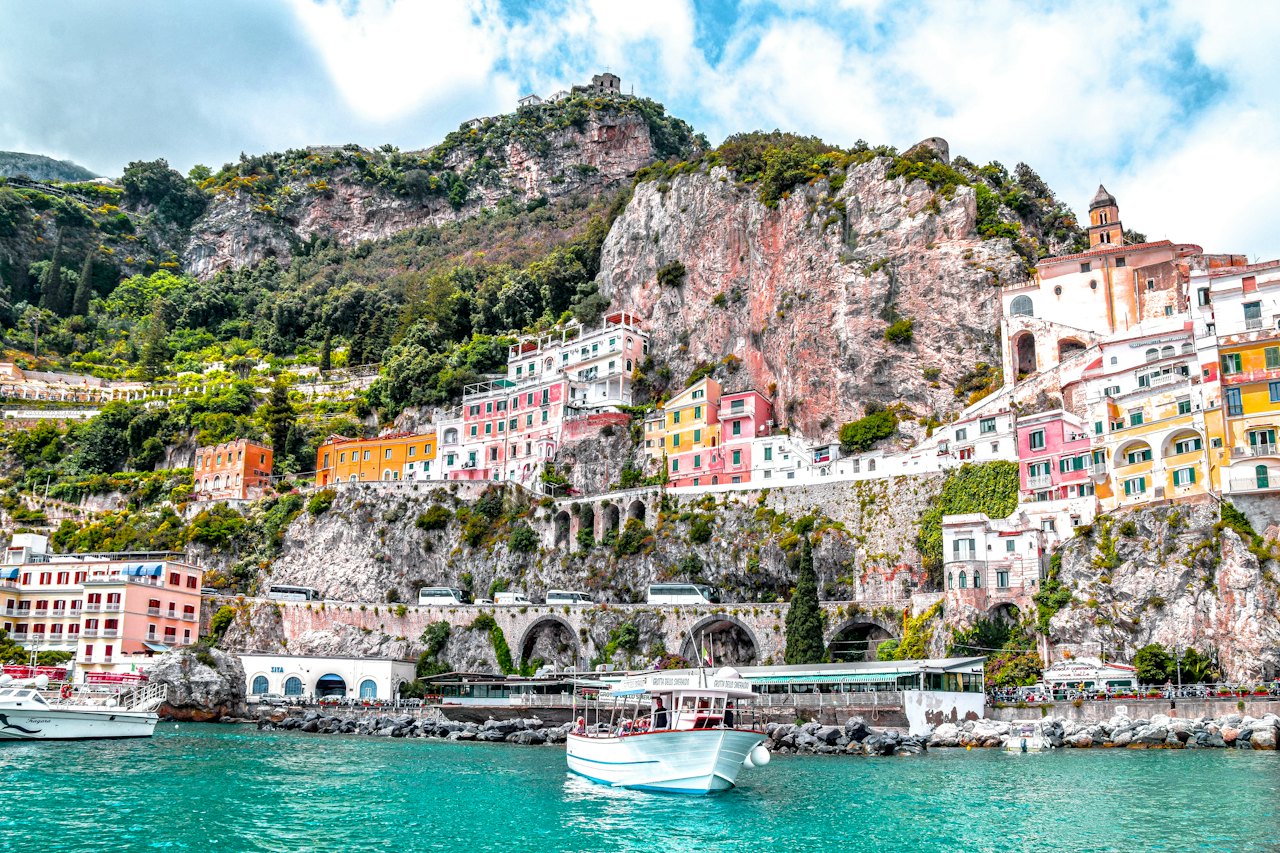
Overview
The Amalfi Coast is one of Italy's great dramatic landscapes — pastel villages clinging to vertical cliffs above a dazzling Mediterranean sea. Positano, Ravello, and Amalfi each have their own distinct charm.
The Amalfi Coast is one of the few places where the view really is the attraction, and where the logistics try hard to ruin it. The coast road is narrow, slow and jammed in summer, so skip the car. Take the ferry from Salerno or Sorrento, or the local bus, and treat each village as a destination. Walk the Path of the Gods from Bomerano to Nocelle (about 7.5 km / 4.7 mi) for the view without the traffic. A lemon granita costs a few euros and tastes better than any restaurant dessert. Prices peak in July and August, and shoulder months in May, June and September are kinder.
Arrive by ferry from Salerno or Sorrento and watch the village rise in tiers. The view from the water beats the road.
A 7.5 km / 4.7 mi walk from Bomerano to Nocelle with clifftop views. Go in the morning and bring water.
Spaghetti al limone, delizia al limone and anchovies from Cetara show off the coast's cooking.
Best time
Best months for most visitors: May–Jun & Sep. Good weather, thinner crowds and fairer prices.
April to June and September to October are the best months.
July and August bring 30°C / 86°F-plus heat, packed ferries and buses, full beaches and the highest room rates of the year.
November to March is quiet and often wet.
Booking window: reserve flights and stays 2–3 months ahead for May–Jun & Sep, and 4–6 months ahead for peak season (Jul–Aug).
Partner links. We earn a commission at no extra cost to you; sponsors never change a ranking or safety note. How we earn money →
Weather
Current temperature loads here when your browser can reach Open-Meteo.
Weather data: Open-Meteo Historical & Live API. A single reading for the main town or area, not the whole destination.
Peak season about 29°C / 84°F; shoulder season about 21°C / 70°F.
Rain: Low in summer; wetter in autumn and winter.
Hot, dry and breezy. Sea temperatures are best in August and September.
Mild with sunny days. Some beach clubs and restaurants close from November.
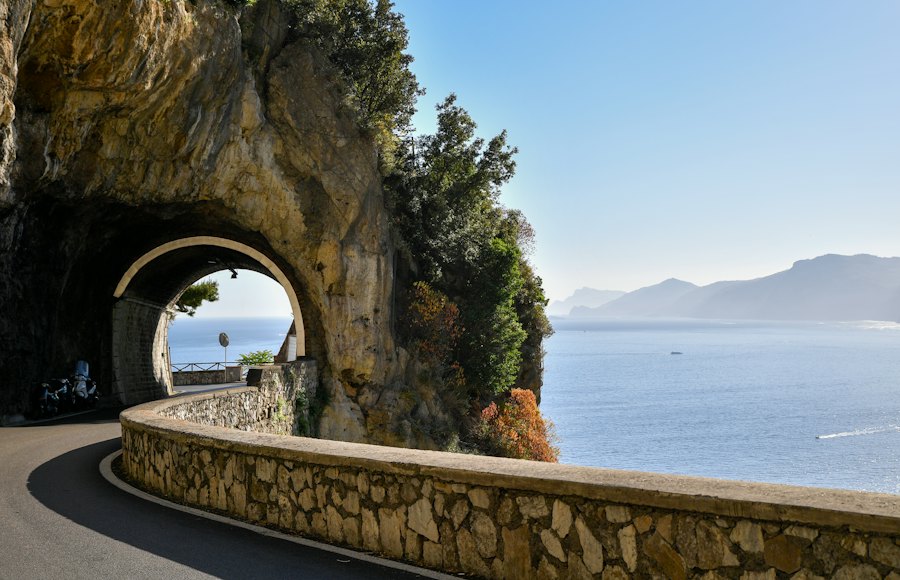
The coast road can stand still for an hour. Book hotels and popular restaurants four to six months ahead, and expect to queue everywhere.
For the right mix of warm weather and lower prices, aim for May, June or the first half of September, when the sea is warm and walkers can use the Path of the Gods without heat stress. Ferries run, hotels charge less, and August crowds are gone.
Many hotels, beach clubs and restaurants close, and ferries run a reduced timetable or stop altogether. Prices are low and the villages feel local, but you will find fewer places to eat.
Weather data: Open-Meteo Historical & Live API (live reading). Typical highs and season notes are our own summaries. How we verify →
Safety
Last updated: government levels come from our editor-verified table (October 2026). When the live UK FCDO check succeeds, its exact UTC time appears in the panel below. The banner takes the most cautious of the five agencies, so a live UK warning always outranks a green entry in our table and any part-country warning shows as red. We never show a level we haven’t checked. How we verify →
Government levels: editor-verified table, October 2026 How we verify →
Five official agencies, one view. Ratings change, so each pill opens the agency’s own page for today’s level.
Tier 4/5 · Standard caution. Normal precautions: pickpockets, narrow roads and heavy summer traffic.
The UK FCDO, US State Department and Australian DFAT generally describe Italy as a country for normal precautions. Their guidance for the Amalfi area tends to focus on pickpocketing in crowded places and transport, summer wildfires, and the threat of earthquakes in the wider Campania region. Rules and alerts change, so check each government's current Italy page before you book.
Our plain-English summary of what the UK FCDO, US State Department, Australian Smartraveller, Japan MOFA and South Korea MOFA publish. We quote no live ratings from memory; each button above opens the agency's own page.
Our opinion, not an official warning
Regional nuance: Advice for Italy is national and routine, with seismic and volcanic notes for the Naples area. The coast itself is a standard tourist destination.
The concerns that are real: The risks are petty rather than dramatic: pickpockets on the Naples Circumvesuviana and crowded buses, unlicensed taxi drivers quoting inflated fares, and card machines offering to charge in your home currency. Pay in euros, use ferries or official buses, and take care on narrow roads without pavements.
What headlines overstate: Headlines about overtourism and gridlock paint the coast as unbearable. It is only really bad in July and August; walk, use the ferry, and visit in shoulder months and it feels very different.
Written by our editors from general travel knowledge and kept apart from the agencies above. How we verify →
Costs
Backpacker
$115 (≈ €105 / £90) per person per day
What it covers: Dorm or small guesthouse in Sorrento or Praiano, slices of pizza and panini, local SITA buses, free hikes and swims, with one ferry hop.
Mid-Range (default)
$260 (≈ €230 / £200) per person per day
What it covers: Three-star hotel or B&B with a view, a sit-down seafood lunch, ferries between villages, the Path of the Gods and one paid sight such as Villa Rufolo.
Boutique
$570 (≈ €510 / £450) per person per day
What it covers: Cliff-top hotel in Positano or Ravello with a sea view, private boat to Capri, tasting menus and a driver instead of the bus.
Cost source: Audited Local Lodging Taxes, Rail Tariffs & Dining Averages (our own estimates, flights excluded). How we verify →
Source: Should I Go's own estimates, October 2026, in USD per person excluding international flights; euro figures are rough conversions. A couple shares a room, so accommodation drops 25% per person. Prices move, so treat these as a planning range, not a quote.
Estimated total: $0 (≈ €0 / £0)
Estimate in USD per trip, excluding international flights. Two or more travellers share rooms, so accommodation drops 25% per person. Budget and luxury tiers are scaled from the mid-range figure.
Cost source: Audited Local Lodging Taxes, Rail Tariffs & Dining Averages (our own estimates, flights excluded). How we verify →
Where to base yourself
The postcard village, steep and expensive. Best for a short splurge.
A working town with a cathedral and the ferry hub. A practical base.
Villas and gardens above the coast, with concerts and cooler evenings.
Cheaper base on the Bay of Naples side with rail and ferry links.
Itineraries
Getting between stops: Ferries link Positano, Amalfi and Salerno in summer; SITA buses run the coast road.
Getting between stops: Ferries from Positano or Amalfi to Capri take about 40 to 60 minutes.
Getting between stops: Circumvesuviana train from Sorrento to Pompeii and Naples.
Routes and timetables change. Confirm transit times with the operator before you book.
Do and stay
Best for: First-timers
Pros: Central for ferries and buses, with a cathedral, a walkable centre and easy day trips to Ravello, Atrani and the paper mill.
Watch for: Crowded with day-trippers from late morning to early evening. Beaches are small, and rooms in the centre are expensive in summer.
Best for: Value
Pros: Better prices on hotels and restaurants, the Circumvesuviana train to Naples and Pompeii, and ferries to Capri and Positano. Good base for a first week.
Watch for: Not on the Amalfi stretch itself and feels more resort-like. The bus along the coast road is slow in summer.
Best for: Quiet and couples
Pros: A calmer village between Positano and Amalfi, with sea views, sunset terraces and lower prices than Positano, plus a bus stop on the main road.
Watch for: Steps everywhere and limited nightlife. You depend on the bus or boat for most sights, and parking is scarce.
These are partner links. We may earn a commission at no extra cost to you.
Trade-offs
Final verdict
Editorial opinion from Should I Go, written from general travel knowledge and reviewed periodically. Verify prices, entry rules and advisories before you book.
Typical costs and rules change; confirm with official sources before you travel.
No, and a car is often a liability. The road is narrow and jammed in summer, and parking in Positano or Amalfi costs a lot. Ferries, SITA buses and your own feet cover almost everything. Hire a driver for a single day if you want flexibility. Ferries run roughly April to October, so check timetables if you travel outside those months.
The simplest route is the Curreri bus from Naples airport to Sorrento, then a ferry or SITA bus to Positano. Allow about two to three hours. Alternatively, take a train to Salerno and a ferry from there. Private transfers cost around $135 (€120; ≈ £105) or more. Check ferry timetables first, because services are seasonal and weather can cancel them.
From November to March it is quiet, but many hotels and restaurants close. The best compromise is May, June or September, when everything is open, the weather is warm and prices are lower than in July and August. Go midweek if possible. Book ahead anyway, since good rooms still sell out in May and September.
Get live weather, activities, travel advisories, and personalised tips for Amalfi Coast, Italy
Check Amalfi Coast, Italy Now →Have you visited Amalfi Coast, Italy? Was it worth it? Readers can vote: Worth Every Penny, Great in Shoulder Season Only, or Overrated / Skip It.