Seven Mile Beach
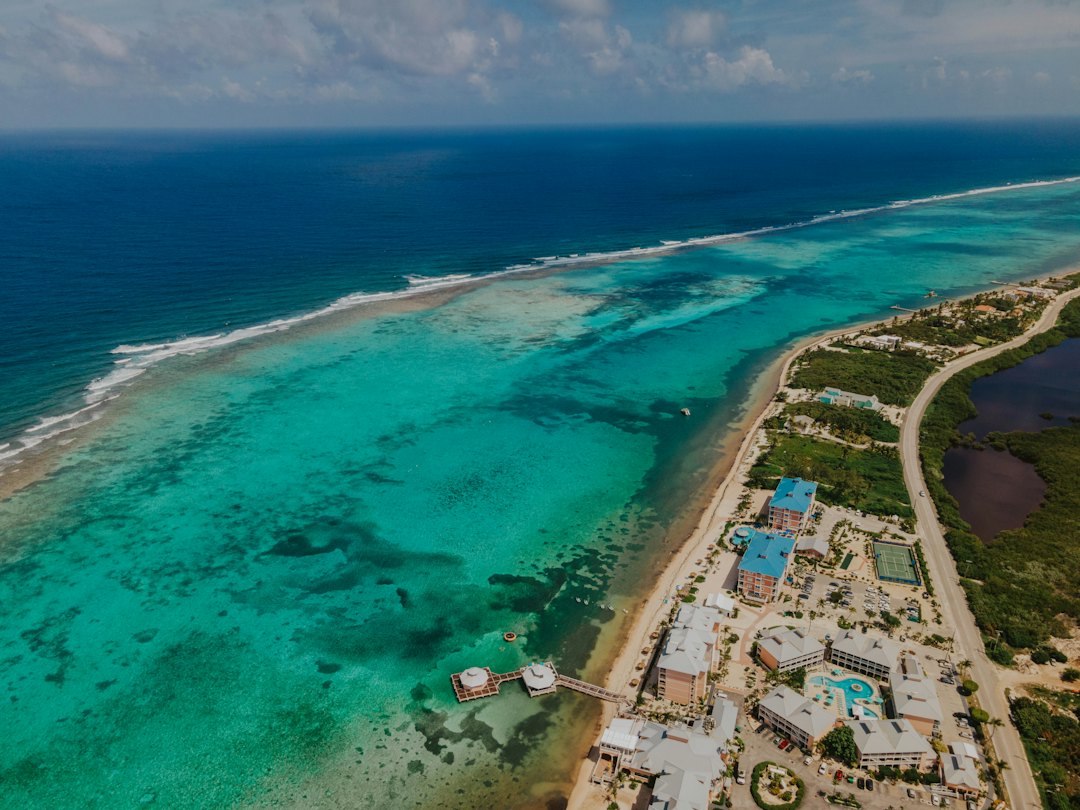
A long coral-sand beach on the west coast with calm water and a line of hotels. Walk it in the morning and take shade in the afternoon.
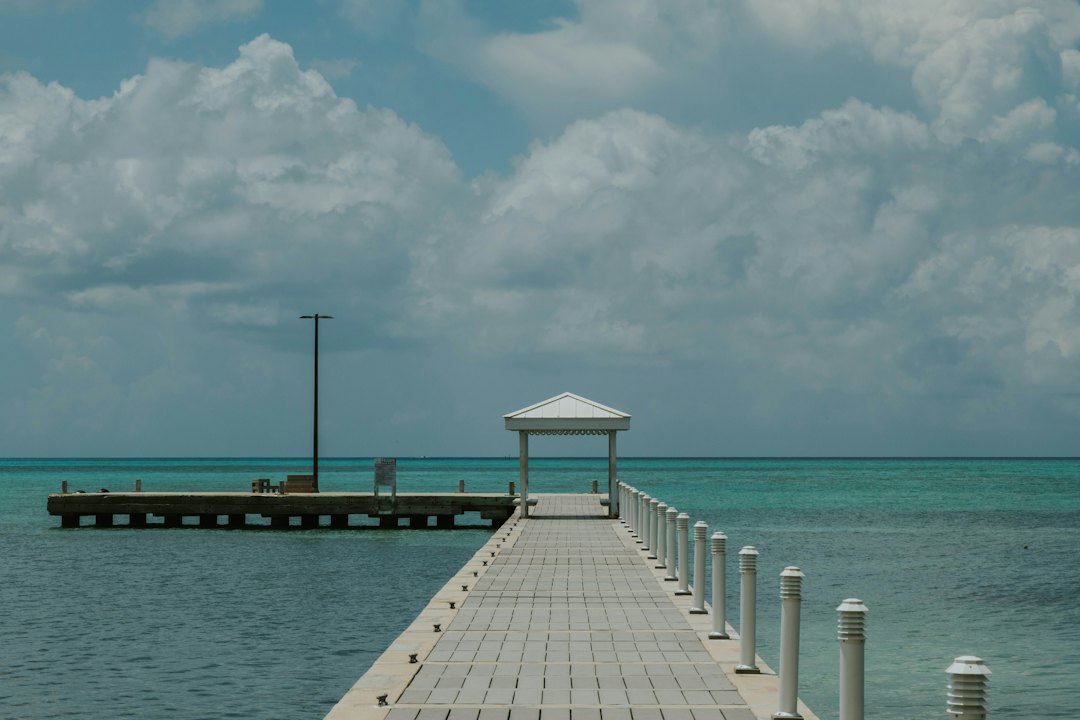
The pier at Rum Point, Grand Cayman
Best months: May–Jun & Nov (peak mid-Dec–Apr)
Photo: Conner Baker on Unsplash
Photo: Conner Baker on Unsplash
Overview
The Cayman Islands are three islands and one reputation: very tidy, very well run and quite expensive. Most visitors land on Grand Cayman, where Seven Mile Beach, a long strip of fine coral sand, is lined with hotels and condos and has a name that is a little more generous than its length, which is just over six miles at the most generous measure (about 10 km / 6.2 mi). It is a British Overseas Territory, so the language and the plugs are familiar, and the dollar is the thing to watch: the Cayman Islands dollar is pegged at 1 KYD to $1.20 (≈ €1.07 / £0.94), and a menu in KYD costs 20 per cent more than the same figure in US dollars.
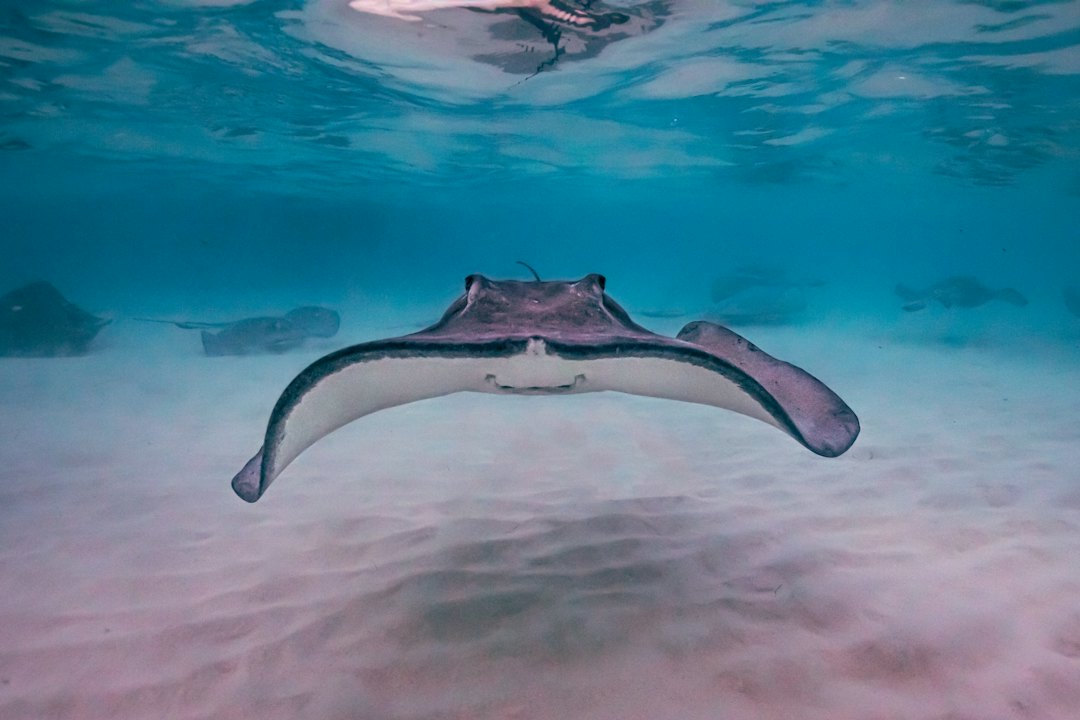
The water is the real draw. Stingray City, a sandbar in the shallow North Sound where southern stingrays gather around boats, is the signature outing, and the advice is simple: book an early trip, because the midday boats are crowded. At night, bioluminescence tours go to the Bio Bay at Sand Point Cove, near Rum Point on the North Sound (per Wikipedia); check which tour you are booking. For divers, the Bloody Bay Wall is on Little Cayman, reached from Grand Cayman by a short Cayman Airways flight (daily, per Wikipedia), and is ranked among the world’s top dive sites. The trade-off is cost. Cheap dining is not a Cayman thing, tips and service charges of 15 to 18 per cent are common, and there are no mountains to hike.
The best months are May, June and November. December to April is the peak, with highs of 27 to 29°C / 81 to 84°F (81 to 84°F) and the busiest beaches. August to October is hot, at 30 to 31°C / 86 to 88°F (86 to 88°F) in the sun, with a sea of around 30°C / 86°F (86°F) and the core of the hurricane season. The FCDO says earthquakes are a risk. Prices and rules are approximate and written from general knowledge, so check them before you go.
A long coral-sand beach on the west coast with calm water and a line of hotels. Walk it in the morning and take shade in the afternoon.
A shallow sandbar where southern stingrays gather around boats. Book a 7:30 am boat, as midday trips are crowded; bioluminescence tours run to the Bio Bay near Rum Point, so check which tour you are booking.
A famous dive site on Little Cayman, reached by a short flight from Grand Cayman. Book with a credentialed operator and check that oxygen is on the boat.
Best time
Best months for most visitors: May–Jun & Nov (peak mid-Dec–Apr). Good weather, thinner crowds and fairer prices.
May, June and November are the sweet spot, with highs of 29 to 30°C / 84 to 86°F (84 to 86°F), warm water and thinner crowds.
Mid-December to April is the peak, with highs of 27 to 29°C / 81 to 84°F (81 to 84°F), the sea at about 27°C / 81°F (81°F) and the highest rates.
August to October is hot, with highs of 30 to 31°C / 86 to 88°F (86 to 88°F), the sea at about 30°C / 86°F (86°F) and the core of the hurricane season, which normally runs from June to November.
Booking window: reserve flights and stays 2–3 months ahead for May–Jun & Nov (peak mid-Dec–Apr), and 4–6 months ahead for peak season (Jan–Apr, Dec).
Partner links. We earn a commission at no extra cost to you; sponsors never change a ranking or safety note. How we earn money →
Weather
Current temperature loads here when your browser can reach Open-Meteo.
Weather data: Open-Meteo Historical & Live API. A single reading for the main town or area, not the whole destination.
Peak season about 27°C / 81°F; shoulder season about 29°C / 84°F.
Rain: Showers year-round; wettest September and October.
Highs of 27 to 29°C / 81 to 84°F (81 to 84°F) with lows of about 25°C / 77°F (77°F). The peak season; the model data shows 12 to 17 rain days a month, mostly short showers, and the sea at about 27 to 28°C / 81 to 82°F (81 to 82°F).
Highs of 29 to 30°C / 84 to 86°F (84 to 86°F), warm water and thinner crowds. May and June show about 20 rain days in the model data, mostly short showers.
Hot, with highs of 30 to 31°C / 86 to 88°F (86 to 88°F), the sea at 30 to 31°C / 86 to 88°F (86 to 88°F) and the core of the hurricane season; September and October are the wettest, with about 21 to 22 rain days in the model data.
Book flights and rooms early.
The model data shows about 20 rain days in May and June, mostly short showers.
Rates drop, some businesses close and insurance that covers storms matters.
Weather data: Open-Meteo Historical & Live API (live reading). Typical highs and season notes are our own summaries. How we verify →
Safety
Last updated: government levels come from our editor-verified table (October 2026). When the live UK FCDO check succeeds, its exact UTC time appears in the panel below. The banner takes the most cautious of the five agencies, so a live UK warning always outranks a green entry in our table and any part-country warning shows as red. We never show a level we haven’t checked. How we verify →
Government levels: editor-verified table, October 2026 How we verify →
Five official agencies, one view. Ratings change, so each pill opens the agency’s own page for today’s level.
Tier 4/5 · Standard caution. No warning against travel: the FCDO page for the Cayman Islands says crime rates are low but advises sensible precautions, and notes the June to November hurricane season and that earthquakes are a risk.
The UK FCDO page for the Cayman Islands (updated 29 October 2025) carries no warning against travel. It says crime rates are low but advises sensible precautions: use a hotel safe or safety deposit box, take particular care of your passport as you cannot renew or replace it in the Cayman Islands, keep a copy of the photo page and report any loss to the police. It says drug penalties are harsh, up to 35 years’ imprisonment and unlimited fines, that many shops, banks and services close on Sundays, and that drink-driving is a serious offence at a limit of 0.07 per cent. It notes there is no recent history of terrorism, though attacks cannot be ruled out, that the hurricane season normally runs from June to November, and that earthquakes are a risk, with a magnitude 7.7 earthquake in 2020 that caused sinkholes but no serious damage. Read the current page before you book and again before you travel, because wording changes. Our own rating of 4 out of 5 is an estimate, not an official level.
Our plain-English summary of what the UK FCDO, US State Department, Australian Smartraveller, Japan MOFA and South Korea MOFA publish. We quote no live ratings from memory; each button above opens the agency's own page.
Our opinion, not an official warning
Regional nuance: The UK FCDO page for the Cayman Islands carries no warning against travel and says crime rates are low but advises sensible precautions, noting harsh drug penalties, the June to November hurricane season and earthquake risk. KYD menu and stingray-boat notes are our own.
The concerns that are real: On a normal week the issues are money and weather. Confusing KYD with US dollars on a menu adds 20 per cent, and a hurricane forecast in autumn can change plans. Carry travel insurance that covers evacuation.
What headlines overstate: Hurricane and earthquake headlines describe real risks, and the FCDO lists both. Download the NENS alert app and follow local authorities in storm season.
Written by our editors from general travel knowledge and kept apart from the agencies above. How we verify →
Costs
Backpacker
$170 (≈ €150 / £135) per person per day
What it covers: A studio or guesthouse away from Seven Mile Beach, supermarket meals, a minibus pass and free public beaches. This is far above a backpacker budget elsewhere.
Mid-Range (default)
$380 (≈ €340 / £300) per person per day
What it covers: A condo or hotel on Seven Mile Beach, restaurant dinners, a rental car for part of the week and a Stingray City trip.
Boutique
$840 (≈ €750 / £660) per person per day
What it covers: A beachfront suite or villa, a private boat day, a dive package with Little Cayman and tasting dinners.
Cost source: Audited Local Lodging Taxes, Rail Tariffs & Dining Averages (our own estimates, flights excluded). How we verify →
Source: Should I Go's own estimates, October 2026, in USD per person excluding international flights; euro figures are rough conversions. A couple shares a room, so accommodation drops 25% per person. Prices move, so treat these as a planning range, not a quote.
Estimated total: $0 (≈ €0 / £0)
Estimate in USD per trip, excluding international flights. Two or more travellers share rooms, so accommodation drops 25% per person. Budget and luxury tiers are scaled from the mid-range figure.
Cost source: Audited Local Lodging Taxes, Rail Tariffs & Dining Averages (our own estimates, flights excluded). How we verify →
Where to base yourself
The west-coast beach strip with hotels, condos and restaurants.
A planned town centre, and the capital with the cruise port and shopping.
A calm north-side beach, bioluminescence tours and the Stingray City departures.
A quieter, more local district at the north end of the west coast, and a cheaper base.
Itineraries
Getting between stops: A taxi from the airport to Seven Mile Beach takes about 12 minutes (a flat $20 (≈ €18 / £16) to the Seven Mile Beach hub, ≈ €18 / £16); minibuses (CI$2–2.50, or $2.40–3 (≈ €2.14–2.68 / £1.89–2.36), for short hops; CI$8, or $9.60 (≈ €8.57 / £7.56), to Cayman Kai) run only on main routes.
Getting between stops: Rent a car for Rum Point and the east; drive on the left and keep to the 0.07 per cent drink-drive limit.
Getting between stops: Check dive operators’ credentials and safety equipment, and carry insurance that covers evacuation.
Routes and timetables change. Confirm transit times with the operator before you book.
Do and stay
Best for: First-timers who want the beach and dining on the doorstep
Pros: A long coral-sand beach, the widest choice of hotels and restaurants and easy water sports.
Watch for: The most expensive area, and busy in the peak months.
Best for: Shops, restaurants and an easy evening at the north end
Pros: A planned town centre with restaurants and a walkable layout, close to the beach.
Watch for: Quieter on the sand than the beach strip, and the polished feel is not for everyone.
Best for: Quieter beach days and bioluminescence tours
Pros: A calm north-side beach and operators for night tours.
Watch for: A car is needed, and the choice of rooms is smaller.
These are partner links. We may earn a commission at no extra cost to you.
Trade-offs
Final verdict
Editorial opinion from Should I Go, written from general travel knowledge and reviewed periodically. Verify prices, entry rules and advisories before you book.
Typical costs and rules change; confirm with official sources before you travel.
May, June and November balance warm sea and lower prices. Mid-December to April is the peak, and August to October is hot and the core of the hurricane season, which normally runs from June to November.
Bloody Bay Wall is on Little Cayman, not Grand Cayman, and visitors usually reach it from Grand Cayman by a short Cayman Airways flight (Wikipedia says daily; Little Cayman is not an entry point, so you land on Grand Cayman or Cayman Brac first). Dive packages from Grand Cayman are common; check operators’ credentials.
No. The Cayman Islands dollar (KYD) is pegged at 1 KYD = $1.20 (≈ €1.07 / £0.94), and US dollars are widely accepted. A menu priced in KYD is 20 per cent more expensive in dollars, so check the currency on every bill.
The UK FCDO page carries no warning against travel and says crime rates are low, with sensible precautions advised. Drug penalties are harsh, and the page notes hurricane season and earthquake risk.
Get live weather, activities, travel advisories, and personalised tips for Cayman Islands, Caribbean
Check Cayman Islands, Caribbean Now →Have you visited Cayman Islands, Caribbean? Was it worth it? Readers can vote: Worth Every Penny, Great in Shoulder Season Only, or Overrated / Skip It.