Nevis Peak
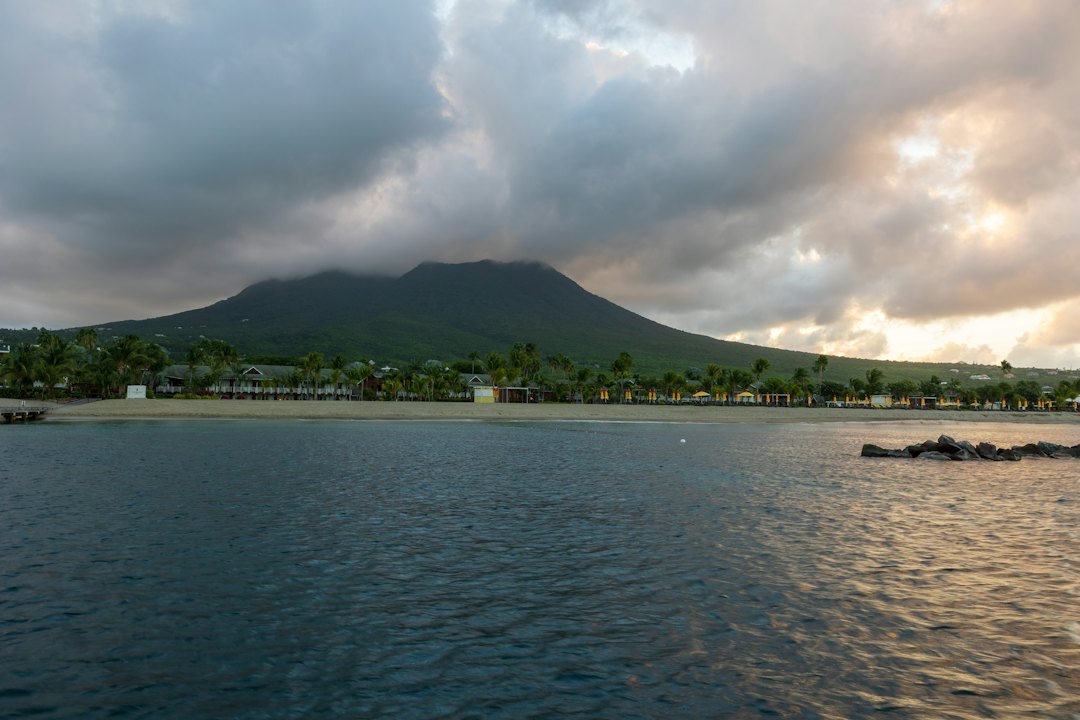
A 985 m (3,232 ft) volcano with cloud forest on its upper slopes. Hike with a local guide, go early and carry water: the trail is steep, muddy and often in cloud.
Photo: Hugh Whyte on Unsplash
Overview
Nevis is what the rest of the Caribbean says it will be after the next hotel opens. It has no cruise port, no traffic lights and a single town, Charlestown, whose main street is still lined with Georgian stone buildings and wooden balconies. A near-circular island about 3 km (2 miles) across the water from St. Kitts, it takes a day to drive round and a week to stop noticing that nobody is in a hurry.
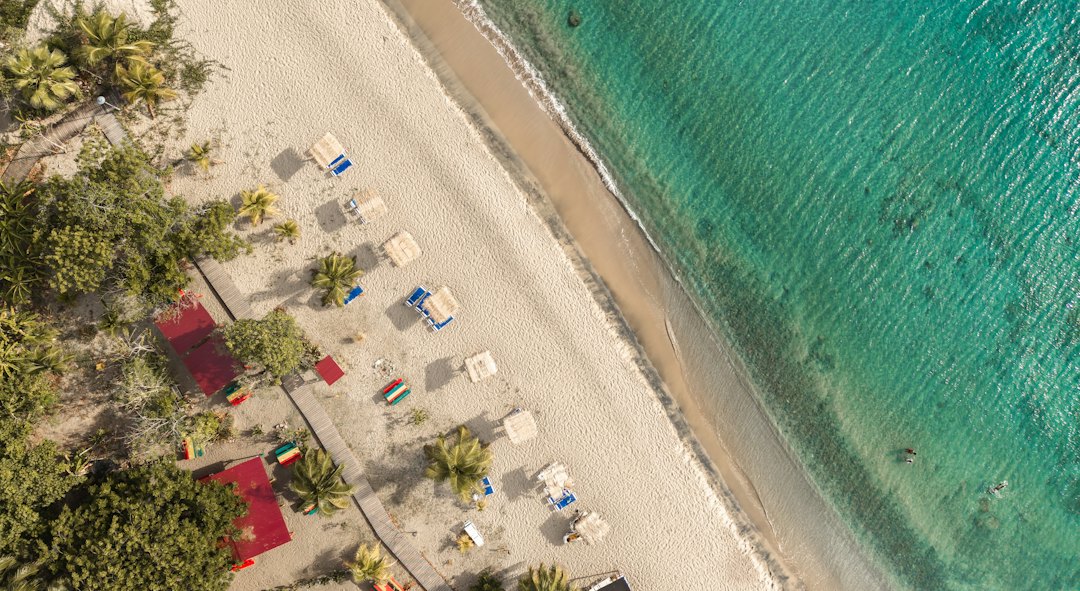
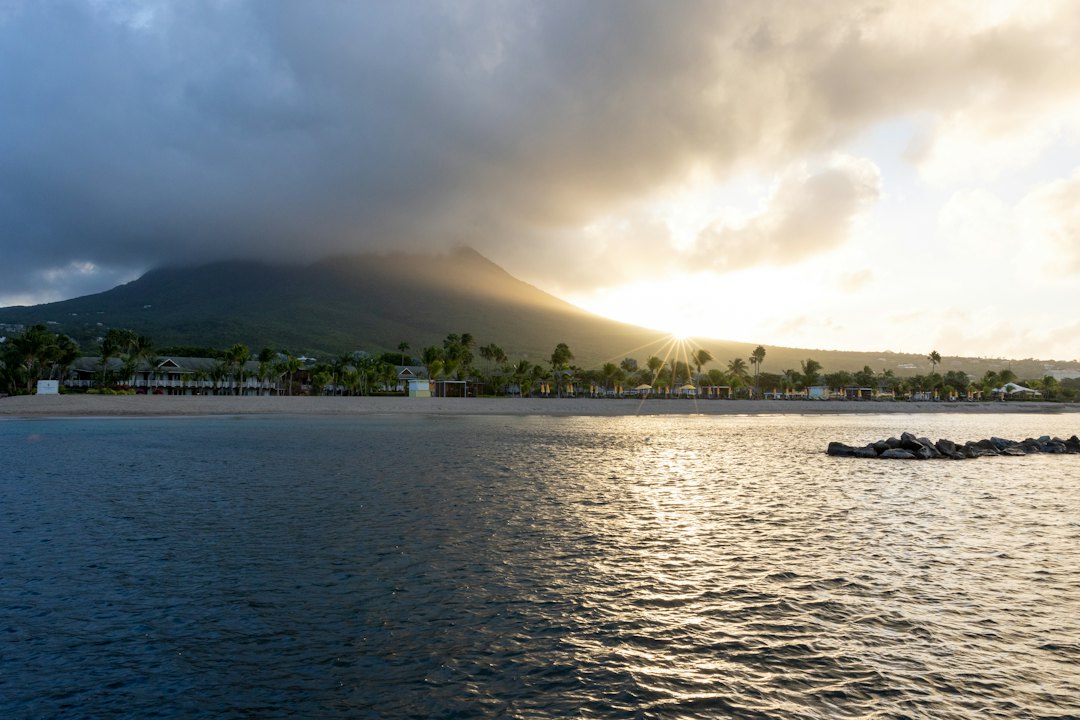
Nevis Peak rises in the middle to 985 m (3,232 ft), usually under a hat of cloud, with cloud forest on its upper slopes and old sugar mills scattered below. The beaches are long and mostly empty: Pinney’s Beach on the west coast has a row of low bars and, at Sunshine’s, a rum punch with a reputation. The island was Alexander Hamilton’s birthplace, and Horatio Nelson was stationed here and married Fanny Nisbet here in 1787. The plantation inns in the hills around Montpelier and Gingerland occupy those old sugar estates, and they are the way to see them. The trade-off is plain. Nevis is expensive for what it is, there is no hostel, nightlife stops early and you must take a boat from St. Kitts to get there, because there are no standard commercial flights between the islands.
Visit from December to April for the driest weather, with highs of about 27°C / 81°F (81°F), or in May, June or November for quieter beaches and lower prices. The hurricane season runs from June to November, with the core from August to October, and some inns close in September and October. Prices and rules below are approximate and written from general knowledge, so check them before you go.
A 985 m (3,232 ft) volcano with cloud forest on its upper slopes. Hike with a local guide, go early and carry water: the trail is steep, muddy and often in cloud.
A long, flat west-coast beach with low bars and sunsets. Sunshine’s Killer Bee rum punch is the local rite; one glass is plenty.
Old mills now hold inns and restaurants around Montpelier and Gingerland, while Charlestown has Georgian streets, Hamilton’s birthplace and the Bath Hotel hot springs.
Best time
Best months for most visitors: Apr–Jun & Nov (peak Dec–Mar). Good weather, thinner crowds and fairer prices.
April to June and November are the sweet spot, with highs of 28 to 29°C / 82 to 84°F (82 to 84°F), warm water, thinner crowds and lower prices.
December to March is dry and breezy, with highs of 27°C / 81°F (81°F) and the highest rates.
August to October is hot, at 28 to 30°C / 82 to 86°F (82 to 86°F) in the sun, and is the core of the hurricane season, which runs from June to November.
Booking window: reserve flights and stays 2–3 months ahead for Apr–Jun & Nov (peak Dec–Mar), and 4–6 months ahead for peak season (Jan–Mar, Dec).
Partner links. We earn a commission at no extra cost to you; sponsors never change a ranking or safety note. How we earn money →
Weather
Current temperature loads here when your browser can reach Open-Meteo.
Weather data: Open-Meteo Historical & Live API. A single reading for the main town or area, not the whole destination.
Peak season about 27°C / 81°F; shoulder season about 29°C / 84°F.
Rain: Driest December to March; showery and more humid August to October.
Dry and breezy, with highs of about 27°C / 81°F (81°F) and lows of 24°C / 75°F (75°F). The peak season and the best weather for a first trip.
Hot, with highs of 28 to 30°C / 82 to 86°F (82 to 86°F) in the sun, more showers and the main hurricane risk. The upper slopes of Nevis Peak are much cooler and often in cloud.
The sea runs from about 27°C / 81°F (80°F) in February to 30°C / 86°F (86°F) in September and October, warm enough to swim all year.
Book the inns and the ferry or water taxi ahead.
April to June and November are the sweet spot, with highs of 28 to 29°C / 82 to 84°F (82 to 84°F), warm water, thinner crowds and lower prices.
Some inns close, flights are cheaper and you should buy travel insurance that covers storms.
Weather data: Open-Meteo Historical & Live API (live reading). Typical highs and season notes are our own summaries. How we verify →
Safety
Last updated: government levels come from our editor-verified table (October 2026). When the live UK FCDO check succeeds, its exact UTC time appears in the panel below. The banner takes the most cautious of the five agencies, so a live UK warning always outranks a green entry in our table and any part-country warning shows as red. We never show a level we haven’t checked. How we verify →
Government levels: editor-verified table, October 2026 How we verify →
Five official agencies, one view. Ratings change, so each pill opens the agency’s own page for today’s level.
Tier 4/5 · Standard caution. Normal to increased caution: the FCDO page for St Kitts and Nevis lists serious crime, strong currents, hurricane season and earthquake risk.
Nevis shares the UK FCDO’s page for St Kitts and Nevis (updated 7 October 2026), which carries no warning against travel. It says there have been incidents of serious crime including murder, armed robbery and sexual assault, and advises securing accommodation, taking care walking alone off main roads, avoiding isolated areas including beaches after dark and using only licensed taxis. It says there is no recent history of terrorism, though attacks cannot be ruled out. It notes that the hurricane season runs from June to November, that earthquakes are a risk, that currents can be strong and not all beaches have lifeguards, and that Mount Liamuiga on St. Kitts is a potentially active volcano. Read the current page before you book, and again before you travel, because wording changes. Our own rating reflects Nevis’s small scale and quiet streets, and the ferry timing note is our own.
Our plain-English summary of what the UK FCDO, US State Department, Australian Smartraveller, Japan MOFA and South Korea MOFA publish. We quote no live ratings from memory; each button above opens the agency's own page.
Our opinion, not an official warning
Regional nuance: The UK FCDO page for St Kitts and Nevis carries no warning against travel but lists incidents of serious crime including murder, armed robbery and sexual assault, strong currents, the June to November hurricane season and earthquake risk. Ferry timing is our own note.
The concerns that are real: The FCDO page covers the whole federation, so take the same precautions: lock the room, use licensed taxis and avoid isolated beaches after dark. In practice the real nuisances are ferry timings and swimming where there is no lifeguard.
What headlines overstate: Headlines about hurricanes, volcano alerts and crime on St. Kitts describe real risks. Follow the FCDO and local authorities, check the forecast in hurricane season and carry insurance that covers medical evacuation.
Written by our editors from general travel knowledge and kept apart from the agencies above. How we verify →
Costs
Backpacker
$200 (≈ €180 / £155) per person per day
What it covers: A guesthouse or small apartment, simple local meals, bus or shared taxi and free beaches. This is the nation-wide figure shared with St. Kitts; on Nevis, true budget hotels are nearly non-existent, so expect to spend well above it.
Mid-Range (default)
$440 (≈ €390 / £350) per person per day
What it covers: A boutique-premium stay: shoulder-season entry rates or a standard garden room at a historic plantation inn or an upscale beachside cottage near Oualie Beach ($220-$380 (≈ €195–340 / £175–300) a night), meals mostly at restaurants attached to the plantation inns or mid-to-high seaside bistros ($65-$100 (≈ €60–90 / £50–80) a day, with fewer casual independent eateries), and $40-$70 (≈ €35–60 / £30–55) a day for the mandatory channel crossing by water taxi or passenger ferry plus historical walks or botanical garden fees.
Boutique
$970 (≈ €870 / £760) per person per day
What it covers: A plantation inn or beachfront suite, tasting dinners, private tours and a boat day.
Cost source: Audited Local Lodging Taxes, Rail Tariffs & Dining Averages (our own estimates, flights excluded). How we verify →
Source: Should I Go's own estimates, October 2026, in USD per person excluding international flights; euro figures are rough conversions. A couple shares a room, so accommodation drops 25% per person. Prices move, so treat these as a planning range, not a quote.
Estimated total: $0 (≈ €0 / £0)
Estimate in USD per trip, excluding international flights. Two or more travellers share rooms, so accommodation drops 25% per person. Budget and luxury tiers are scaled from the mid-range figure.
Cost source: Audited Local Lodging Taxes, Rail Tariffs & Dining Averages (our own estimates, flights excluded). How we verify →
Where to base yourself
The capital, with Georgian buildings, the ferry pier, the Museum of Nevis History and the market.
The west-coast beach strip with bars, sunsets and the Sunshine’s rum punch.
Sugar-mill inns, gardens, the Bath Hotel ruins and the road to the peak.
Quiet bays, the water taxi from St. Kitts and snorkelling.
Itineraries
Getting between stops: The water taxi from the Southeast Peninsula to Oualie Beach takes 7–10 minutes ($25 (≈ €20 / £20) in total); the ferry from Basseterre takes 30–45 minutes ($9–11 (≈ €8.04–9.82 / £7.09–8.66) one way), with tickets bought at the pier terminal on the day. Check the last boat.
Getting between stops: Hire a car or book a driver for the inns and the peak; Charlestown and Pinney’s Beach are walkable from a nearby base.
Getting between stops: Most visitors fly into St. Kitts (SKB) and cross by sea. Allow slack for late ferries.
Routes and timetables change. Confirm transit times with the operator before you book.
Do and stay
Best for: Beachfront stays with bars a short walk away
Pros: A long west-coast beach, sunsets and the Sunshine’s rum punch bar.
Watch for: Pricey in winter, and some bars close in the off-season.
Best for: Couples who want historic sugar-mill inns in the hills
Pros: Cooler air, gardens, restaurants and views of the sea and the peak.
Watch for: You need a car or driver for beaches, and nights are very quiet.
Best for: Water-taxi arrivals and quiet swims
Pros: Close to the water taxi from St. Kitts, with calm water and small restaurants.
Watch for: Quiet, with few shops.
These are partner links. We may earn a commission at no extra cost to you.
Trade-offs
Final verdict
Editorial opinion from Should I Go, written from general travel knowledge and reviewed periodically. Verify prices, entry rules and advisories before you book.
Typical costs and rules change; confirm with official sources before you travel.
April to June and November are best: warm, quiet and cheaper. December to March is dry and busiest, and August to October is hot and the core of the hurricane season, which runs from June to November.
Most visitors fly into St. Kitts (SKB). From there, the ferry from Basseterre to Charlestown (vessels such as iConnect, Lady B and Passion) takes 30–45 minutes for $9–11 (EC$25–30; ≈ €8–10 / £7–9) one way for adults, with tickets bought at the pier terminal on the day, or a water taxi from the Southeast Peninsula to Oualie Beach takes 7–10 minutes for $25 (≈ €20 / £20) in total (a flat $23 (≈ €20 / £18) fare plus a mandatory $2 (≈ €1.79 / £1.57) NASPA port foot tax; ≈ €22 / £20). There is no immigration or passport check between the islands. Nevis has a small airport (NEV), but there are no standard commercial flights between the two islands, only occasional private charters or international flights arriving from outside the federation.
A private night boat can cost $120 (EC$324; ≈ €107 / £94) or more. Check the timetable before you plan the day, or take the 7–10 minute water taxi from the Southeast Peninsula to Oualie Beach for $25 (≈ €20 / £20) in total.
The UK FCDO page for St Kitts and Nevis carries no warning against travel but lists serious crime including murder, armed robbery and sexual assault. It advises avoiding isolated areas including beaches after dark and using licensed taxis. Nevis is small and quiet, but take the same precautions.
Get live weather, activities, travel advisories, and personalised tips for Nevis, Caribbean
Check Nevis, Caribbean Now →Have you visited Nevis, Caribbean? Was it worth it? Readers can vote: Worth Every Penny, Great in Shoulder Season Only, or Overrated / Skip It.