The South Rim viewpoints
Mather Point is the crowd magnet. Walk the Rim Trail a mile or two east or west and the canyon turns quiet.
Photo: Lex Brogan on Unsplash
Photo: Oleg Chursin on Unsplash
View Full Gallery (3)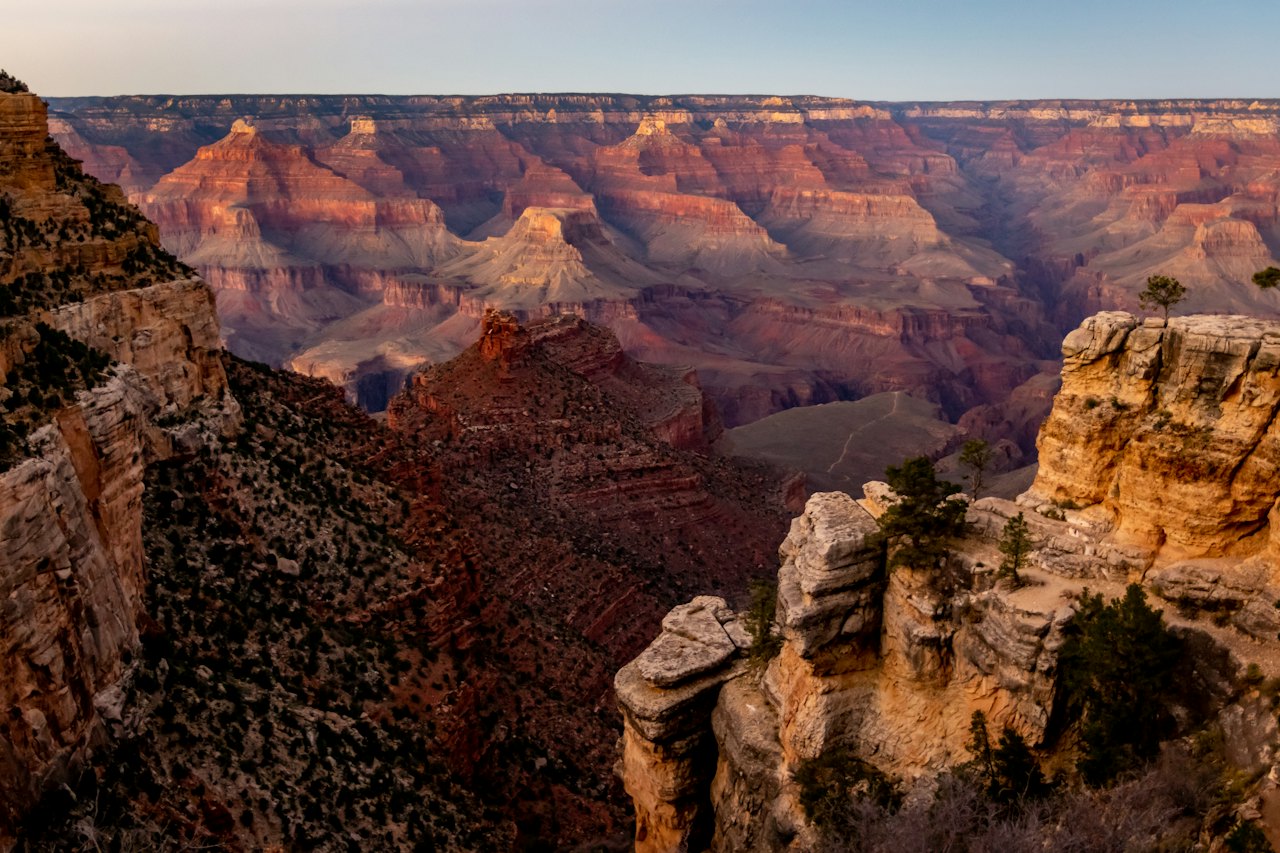
Overview
One of the world's great natural wonders, carved over millions of years into a mile-deep cathedral of layered red rock. Standing at the rim, the scale is almost impossible to process.
The Grand Canyon is bigger than the photographs, and the mistake most people make is to treat it as a viewpoint rather than a place. Arrive at the South Rim for sunrise, walk a section of the Rim Trail, then drop a short way down Bright Angel for a sense of scale. Park entry is about $35 (≈ €30 / £30) per vehicle and covers a week. Never attempt the river and back in a day, and carry far more water than feels sensible, because summer heat inside the canyon is dangerous. The North Rim is quieter and higher, but it closes for winter. Midday at Mather Point in July is the one time to avoid.
Mather Point is the crowd magnet. Walk the Rim Trail a mile or two east or west and the canyon turns quiet.
Bright Angel and South Kaibab trails drop into heat that catches people out. Start at dawn, carry far more water than seems sensible, and turn back at the halfway mark.
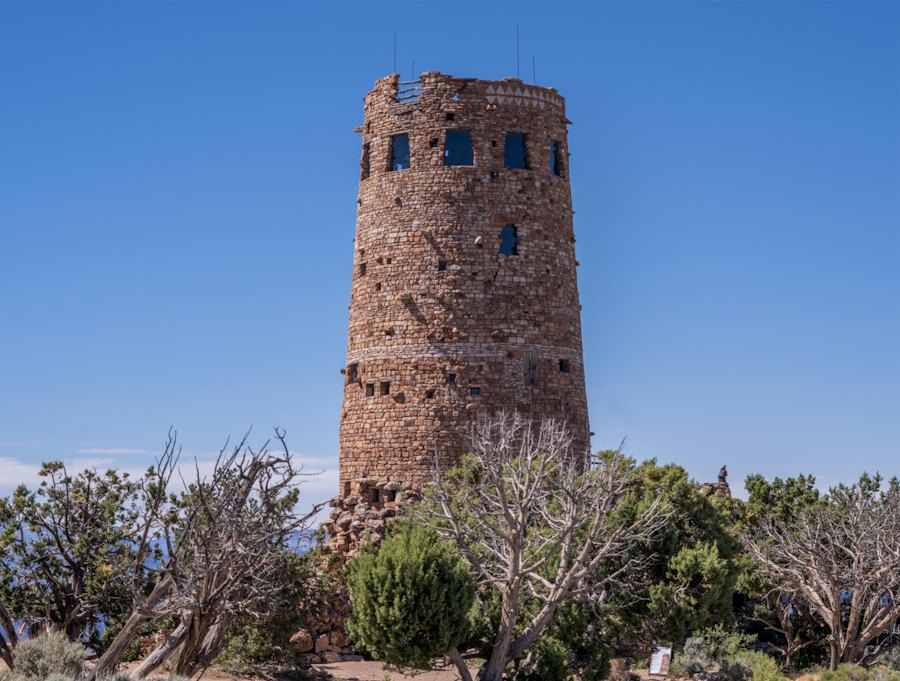
A 25-mile road east of the village with pull-outs and the stone Desert View Watchtower. Sunrise here has fewer people than Mather Point.
Best time
Best months for most visitors: Mar–May & Sep–Nov. Good weather, thinner crowds and fairer prices.
March to May and September to November are the best months.
June to August is peak season, with South Rim temperatures near 28°C / 82°F and inner-canyon heat above 40°C / 104°F.
December to February is cold, with snow on the rim and icy trails below it.
Booking window: reserve flights and stays 2–3 months ahead for Mar–May & Sep–Nov, and 4–6 months ahead for peak season (Jun–Aug).
Partner links. We earn a commission at no extra cost to you; sponsors never change a ranking or safety note. How we earn money →
Weather
Current temperature loads here when your browser can reach Open-Meteo.
Weather data: Open-Meteo Historical & Live API. A single reading for the main town or area, not the whole destination.
Peak season about 29°C / 84°F; shoulder season about 20°C / 68°F.
Rain: Low; summer storms and winter snow on the rim.
Cool, with snow possible from November to March. Summer days are comfortable at the rim, but the inner canyon can top 40°C / 104°F.
Much hotter than the rim, especially from June to August. Hiking below the rim is a spring and autumn activity.
Afternoon thunderstorms are common. Lodging in the park sells out a year ahead, and prices peak, so book early and hike before 7am.
Rim temperatures sit between 10°C / 50°F and 22°C / 72°F, skies are clear and inner-canyon hikes are possible. Prices drop outside school holidays, and rooms are easier to book. April and October give the most reliable balance of mild weather, fewer visitors and lower rates.
The North Rim closes from mid-October to mid-May. Crowds thin out and lodging gets cheaper, and snow dusting the canyon is striking, but bring microspikes and warm layers.
Weather data: Open-Meteo Historical & Live API (live reading). Typical highs and season notes are our own summaries. How we verify →
Safety
Last updated: government levels come from our editor-verified table (October 2026). When the live UK FCDO check succeeds, its exact UTC time appears in the panel below. The banner takes the most cautious of the five agencies, so a live UK warning always outranks a green entry in our table and any part-country warning shows as red. We never show a level we haven’t checked. How we verify →
Government levels: editor-verified table, October 2026 How we verify →
Five official agencies, one view. Ratings change, so each pill opens the agency’s own page for today’s level.
Tier 4/5 · Standard caution. Normal precautions: extreme heat, dehydration and cliff-edge care.
The UK FCDO, US State Department and Australian DFAT generally treat the United States as a normal-precautions destination for tourists. For national parks, their advice focuses on natural hazards such as extreme heat, dehydration, wildlife, flash floods and cliff edges rather than crime. The National Park Service itself publishes seasonal trail warnings. None of the three flags the Grand Canyon as a place to avoid. Check the official pages and the park's own conditions page before booking, and again before you travel.
Our plain-English summary of what the UK FCDO, US State Department, Australian Smartraveller, Japan MOFA and South Korea MOFA publish. We quote no live ratings from memory; each button above opens the agency's own page.
Our opinion, not an official warning
Regional nuance: US advice for Arizona is routine. The real regional nuance is the park itself: extreme heat, flash floods and seasonal road or rim closures.
The concerns that are real: Heat exhaustion and dehydration cause most rescues, with falls from unfenced edges a rare but real risk. Car break-ins occur in busy car parks, and fake tour resellers outside the park sell inflated tickets. Carry more water than seems sensible, and keep valuables out of sight.
What headlines overstate: Headlines about deaths at the rim sound alarming, but the park receives about five million visitors a year and the vast majority leave unharmed. Most fatalities involve hiking in extreme heat, risky selfie behaviour or unpreparedness, not the viewpoints themselves.
Written by our editors from general travel knowledge and kept apart from the agencies above. How we verify →
Costs
Backpacker
$85 (≈ €75 / £65) per person per day
What it covers: Camping at Mather Campground or a Williams motel dorm, supermarket food and picnic lunches, and the free park shuttle. Car hire or shuttle bus from Flagstaff is shared.
Mid-Range (default)
$190 (≈ €170 / £150) per person per day
What it covers: Three-star motel or lodge in Tusayan or Williams, sit-down dinners at around $20-$35 (≈ €18–30 / £16–30), park entry share, and a rental car split between two travellers.
Boutique
$420 (≈ €380 / £330) per person per day
What it covers: Rim-side rooms at El Tovar, a helicopter flight or mule ride, private guided hike or rafting day, and fine dining in the El Tovar dining room.
Cost source: Audited Local Lodging Taxes, Rail Tariffs & Dining Averages (our own estimates, flights excluded). How we verify →
Source: Should I Go's own estimates, October 2026, in USD per person excluding international flights; euro figures are rough conversions. A couple shares a room, so accommodation drops 25% per person. Prices move, so treat these as a planning range, not a quote.
Estimated total: $0 (≈ €0 / £0)
Estimate in USD per trip, excluding international flights. Two or more travellers share rooms, so accommodation drops 25% per person. Budget and luxury tiers are scaled from the mid-range figure.
Cost source: Audited Local Lodging Taxes, Rail Tariffs & Dining Averages (our own estimates, flights excluded). How we verify →
Where to base yourself
The park's hub on the South Rim, with lodges, shuttle buses and the main viewpoints. Book rooms months ahead.
Gateway towns outside the park with cheaper beds and car-friendly access.
Quieter eastern corner with the Watchtower and long views. Day-trip rather than stay.
Higher, cooler and far quieter, open mid-May to mid-October. It needs a long drive round.
Itineraries
Getting between stops: Free park shuttles along the Village and Hermit Road routes; a car is useful for Desert View.
Getting between stops: Drive east on AZ-64 and US-89; Page is about 2.5 hours from the South Rim.
Getting between stops: A rental car is the only practical way to link these stops.
Routes and timetables change. Confirm transit times with the operator before you book.
Do and stay
Best for: First-timers
Pros: Historic lodges such as El Tovar and Bright Angel sit right on the rim, with shuttle stops and sunrise views in walking distance. Nothing beats the location.
Watch for: Expensive and booked up a year ahead in peak season. Rooms are basic for the price, and the village is crowded by midday.
Best for: Value
Pros: A small town just outside the south entrance with chain hotels, restaurants and a supermarket. It is 15 minutes from the rim, with a shuttle running in summer.
Watch for: Functional rather than charming, with traffic jams at the park gate in summer. You still need the shuttle or a car to reach the rim.
Best for: Road trips
Pros: A Route 66 town about an hour south, with cheaper motels, diners and the Grand Canyon Railway to the South Rim. Easy for a Phoenix or Las Vegas road trip.
Watch for: A long day if you drive back and forth, and no canyon views from town. Many visitors still stay for the railway only.
These are partner links. We may earn a commission at no extra cost to you.
Trade-offs
Final verdict
Editorial opinion from Should I Go, written from general travel knowledge and reviewed periodically. Verify prices, entry rules and advisories before you book.
Typical costs and rules change; confirm with official sources before you travel.
Two days is enough for the South Rim. One full day for viewpoints and a short walk down Bright Angel, and a second day for sunrise, the Rim Trail or Desert View Drive. Hikers wanting rim-to-river should add at least two more days. Add a night if you want sunrise and sunset in the same trip.
The South Rim is better for a first visit, with more viewpoints, facilities and a year-round season. The North Rim is higher, cooler and far quieter, but it is remote and closes from mid-October to mid-May. Pick the North Rim only if you want solitude and have extra driving time.
Rim-to-river and back in a single day is strongly discouraged by park rangers. The climb out is steeper than the descent, and heat exhaustion is common. Hike down part of Bright Angel or South Kaibab and turn back, or book a campsite or Phantom Ranch permit. Rangers also advise carrying salty snacks and turning back at the halfway point.
Get live weather, activities, travel advisories, and personalised tips for Grand Canyon, USA
Check Grand Canyon, USA Now →Have you visited Grand Canyon, USA? Was it worth it? Readers can vote: Worth Every Penny, Great in Shoulder Season Only, or Overrated / Skip It.