The Swiss Alps are the rare place where the postcard is accurate and the bill is too. Snowy peaks above wooden chalets, trains that arrive to the minute, cable cars and rack railways to more than 3,000 metres and lakes the colour of milky jade: all of it is real. The Matterhorn above Zermatt, the Eiger, Monch and Jungfrau above Grindelwald and Lauterbrunnen, and the Engadine valleys are the best-known bases.
Switzerland is among the most expensive countries in Europe, and the trick is to spend where it counts. The rail network is among the best in the world, so the Swiss Travel Pass or a Half Fare Card can pay for itself, though the Jungfraujoch return from Interlaken Ost alone costs $273 to $327 (CHF 225.60 to CHF 270.40) at full fare. Choose a clear day, because the clouds can hide everything above 2,000 metres, and check the forecast and webcams the night before. Hiking is best from late June to September, skiing from December to March (lower slopes get patchy by late March; Grindelwald's season runs to mid-April), and May and October are quiet and cheaper but many lifts close. Supermarket picnics, tap water and hostels are the way to keep daily costs sensible.
Three highlights worth the trip
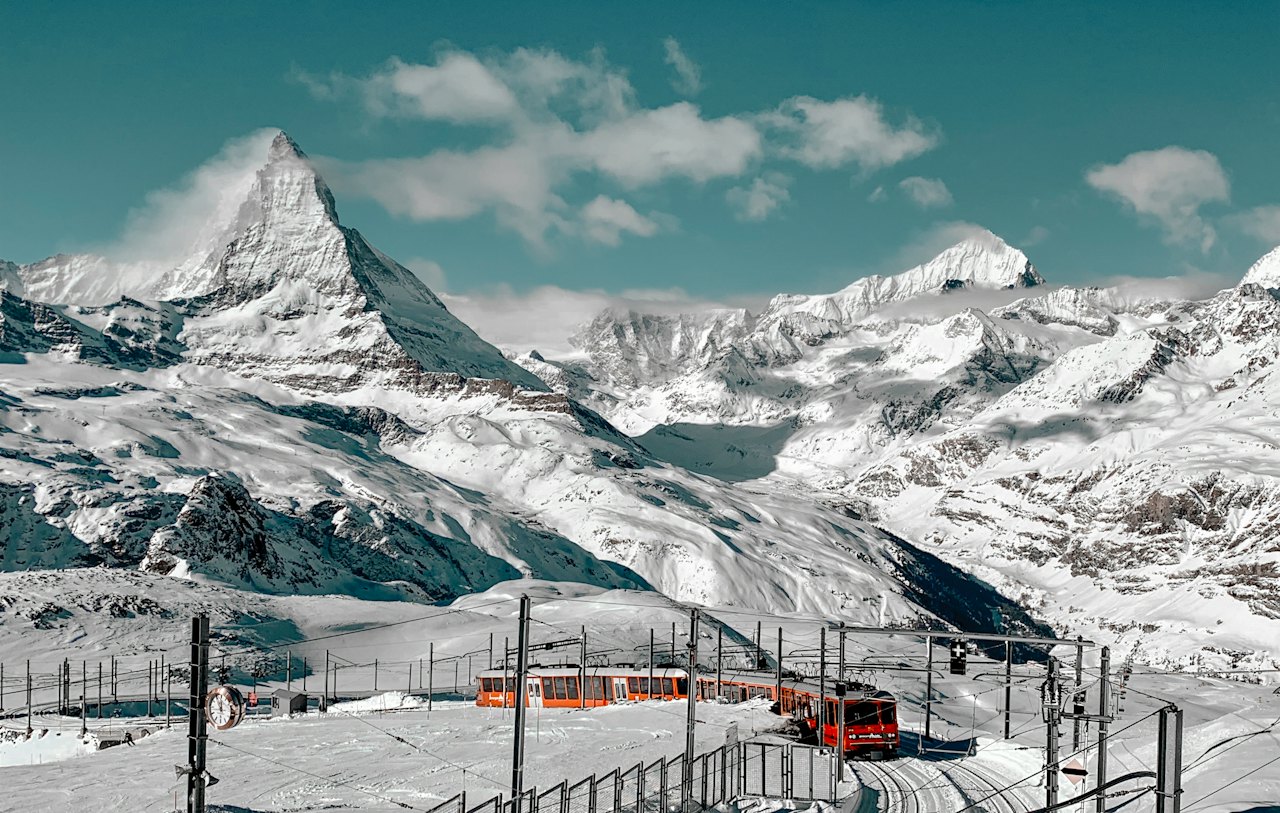
1Zermatt and the Matterhorn
The Gornergrat railway gives the classic view. Go early on a clear day. The return from Zermatt is priced by season: $123 (CHF 102) in winter (Nov–Apr) rising to $160 (CHF 132) in summer (May–Oct), and half price with a Half Fare Card or Swiss Travel Pass ($62–80 (≈ €55–70 / £50–65); CHF 51–66).
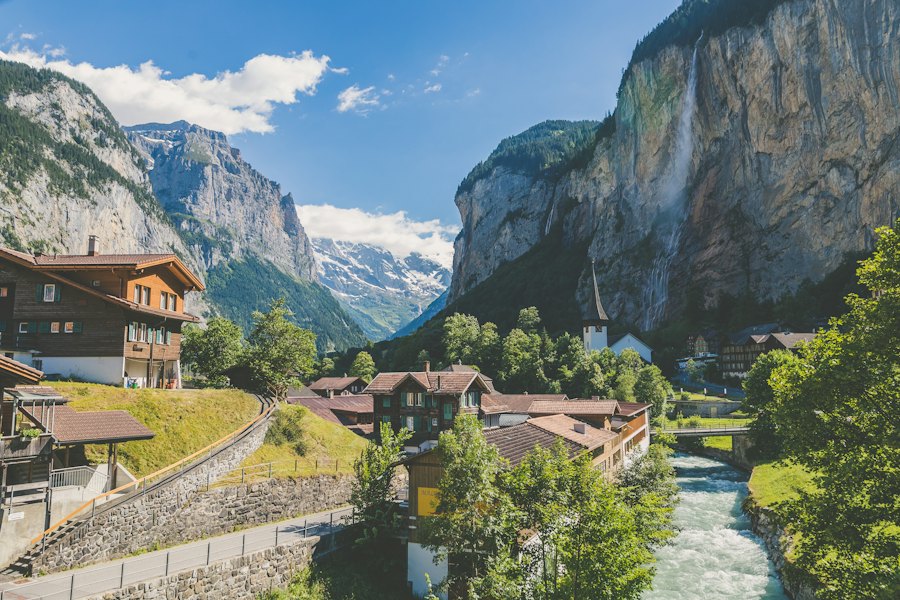
2Lauterbrunnen and Jungfrau
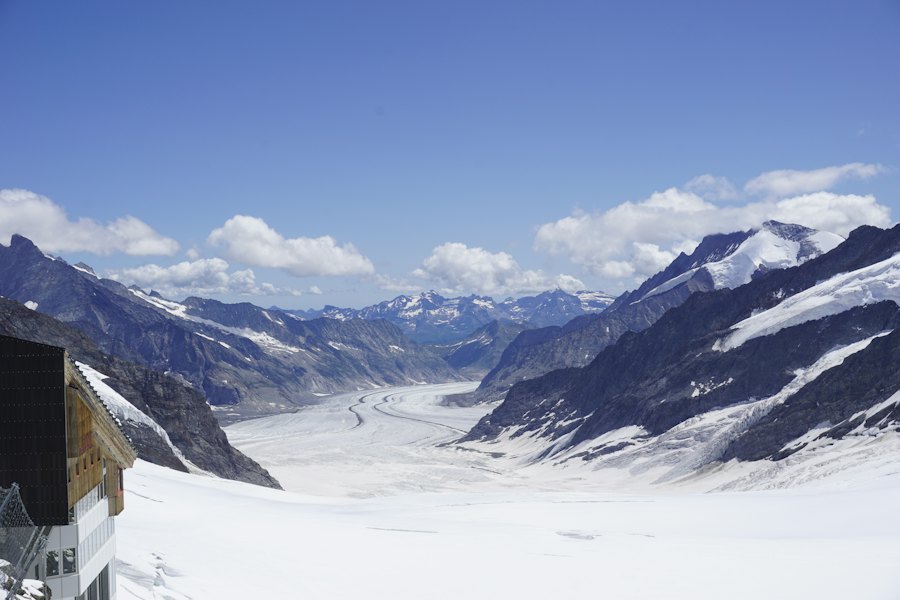
Waterfalls, cliffs and the Jungfraujoch train, whose station sits at 3,454 m (11,332 ft). The return from Interlaken Ost is $273 (CHF 225.60) in the low season (Jan–Apr, Nov–Dec) and $327 (CHF 270.40) in summer (May–Oct); with a Half Fare Card or Swiss Travel Pass it falls to roughly $137–163 (CHF 113–135). No pass, regional or national, is valid for free above Eigergletscher: the Jungfrau Travel Pass takes you free to Eigergletscher and Kleine Scheidegg, the Berner Oberland Pass only to Grindelwald and Wengen (25% off the rest), and either way the last stretch to the top is an extra ticket. A cheaper summit such as Schilthorn or Männlichen is the sensible alternative.
3Scenic trains
The Glacier Express and Bernina Express are slow, pricey and spectacular; regional lines offer similar views for less.
2
Best time
Best Time to Visit Swiss Alps: A 12-Month View
Best months for most visitors: Jun–Sep & Dec–Mar. Good weather, thinner crowds and fairer prices.
JanSweet (Sweet spot)
FebSweet (Sweet spot)
MarPeak (Peak season)
AprOff (Off-peak)
MayPeak (Peak season)
JunSweet (Sweet spot)
JulSweet (Sweet spot)
AugSweet (Sweet spot)
SepSweet (Sweet spot)
OctPeak (Peak season)
NovOff (Off-peak)
DecSweet (Sweet spot)
Sweet = best balance of weather, crowds and price
Peak = busiest and dearest (or hottest)
Off = quiet; check weather and closures
Shoulder / sweet spot
June and September are the best summer shoulder months: wildflowers in June, clearer air and golden larches in late September, and fewer crowds.
Peak season
July and August for hiking and mid-December to March for skiing are peak.
Off-peak
April to May and late October to November are quiet.
Booking window: reserve flights and stays 2–3 months ahead for Jun–Sep & Dec–Mar, and 4–6 months ahead for peak season (Mar, May, Oct).
Partner links. We earn a commission at no extra cost to you; sponsors never change a ranking or safety note. How we earn money →
3
Weather
Weather and Seasonal Conditions in Swiss Alps
Right now in Swiss Alps
Current temperature loads here when your browser can reach Open-Meteo.
Interlaken (580 m) averages 24–25°C / 75–77°F (76–77°F) highs in July and August with 15–16°C / 59–61°F (59–61°F) lows; Zermatt (1,608 m) 19°C / 66°F (66°F) highs and 9–10°C / 48–50°F (48–50°F) lows. Thunderstorms build in the afternoons. Open-Meteo model data, 2015–2024.
Winter
Zermatt's January highs average about -1°C / 30°F (31°F) with lows near -7°C / 19°F (19°F); Interlaken is 6°C / 43°F (43°F) by day and 0°C / 32°F (32°F) at night. Snow is reliable at altitude from December to March, with short days and low light.
What each season feels like
Peak season
Mountain lifts and huts are open, days are warm and long in summer, and snow is reliable at altitude in winter. Prices are highest, and Zermatt, Grindelwald and Lauterbrunnen are crowded. Book months ahead.
Shoulder season
Mid-March to April has spring skiing at altitude (Grindelwald's season runs to mid-April, but the lower slopes get patchy by late March). Prices are lower than in the peak, but some high routes may still hold snow in June.
Off-peak
Many cable cars, hotels and mountain restaurants close for maintenance, and trails are muddy or snowed over. Prices are the lowest, and the cities, lakes and valleys are pleasant, but it is a poor time for high-altitude views.
Last updated: government levels come from our editor-verified table (October 2026). When the live UK FCDO check succeeds, its exact UTC time appears in the panel below. The banner takes the most cautious of the five agencies, so a live UK warning always outranks a green entry in our table and any part-country warning shows as red. We never show a level we haven’t checked. How we verify →
🏛️ Official Government Warnings
Government levels: editor-verified table, October 2026 How we verify →
Five official agencies, one view. Ratings change, so each pill opens the agency’s own page for today’s level.
Tier 5/5 · Very low risk. Normal precautions: mountain weather, avalanche and hiking hazards.
The UK FCDO (page updated 11 August 2026) does not advise against travel to Switzerland. It describes a low rate of serious crime, with more petty theft reported in larger cities, at Geneva airport and on trains to and from Geneva, and says a terrorist attack cannot be ruled out. For the Alps it lists avalanches, landslides, flooding, crevasses, rockfalls, thunderstorms, altitude sickness, sun exposure and sudden weather changes, and says British nationals have been hospitalised or died in Swiss Alps accidents. Check the FCDO Switzerland page before you book.
Our plain-English summary of what the UK FCDO, US State Department, Australian Smartraveller, Japan MOFA and South Korea MOFA publish. We quote no live ratings from memory; each button above opens the agency's own page.
🧭 Editorial Opinions & Street-Smart Reality
Our opinion, not an official warning
Regional nuance: The FCDO describes a low rate of serious crime in Switzerland, with more petty theft in larger cities, at Geneva airport and on Geneva trains. Its Alps advice centres on mountain hazards: check weather and avalanche bulletins, and hold insurance that covers mountain rescue, helicopter costs and repatriation.
Rapidly changing mountain weather, lingering snow, rockfalls, crevasses, altitude sickness and avalanche risk on high routes
Unprepared hiking and skiing off-piste, summer wildfire risk, and petty theft at stations and in cities
The concerns that are real: The mountains are the real hazard. The FCDO says to check forecasts, carry a map, compass, GPS and charged phone, avoid going out alone and consider a guide. It names altitude sickness as a risk around the Matterhorn, Saas-Fee, St Moritz and Engelberg-Titlis, and says off-piste skiing is very dangerous. Its advice is to hold insurance that covers mountain rescue, helicopter costs and repatriation.
What headlines overstate: The FCDO also flags a heightened wildfire risk in summer, after dry spells, and tick-borne encephalitis risk (April to October). In Ticino and St Gallen it is illegal to cover your face in public (fines of CHF 100 to 10,000, about $120 to $12,100 (≈ €105–10,800 / £95–9,550)), which matters on a Lugano day trip.
Written by our editors from general travel knowledge and kept apart from the agencies above. How we verify →
What it covers: CHF 80 to 110 a day: youth hostels, grocery-store meals (Coop, Migros), regional public transport with a Half Fare Card, and self-guided hikes.
What it covers: CHF 220 to 350 a day: three-star alpine hotels, one sit-down mountain restaurant meal a day, and a Swiss Travel Pass to cover trains and mountain cable cars.
What it covers: CHF 500 to 900+ a day: five-star ski resorts, fine dining or fondue pairings, private ski instructors or mountain guides, and first-class scenic rail.
Where a day's money goes (solo)
Accommodation$342 (≈ €310 / £270)
Food$228 (≈ €200 / £180)
Transit$114 (≈ €100 / £90)
Activities$76 (≈ €70 / £60)
Cost source: Audited Local Lodging Taxes, Rail Tariffs & Dining Averages (our own estimates, flights excluded). How we verify →
Source: Should I Go's own estimates, October 2026, in USD per person excluding international flights; euro figures are rough conversions. A couple shares a room, so accommodation drops 25% per person. Prices move, so treat these as a planning range, not a quote.
Trip Budget Calculator
Estimated total: $0 (≈ €0 / £0)
Stay 45%
Food 30%
Transit 15%
Sights 10%
Estimate in USD per trip, excluding international flights. Two or more travellers share rooms, so accommodation drops 25% per person. Budget and luxury tiers are scaled from the mid-range figure.
Cost source: Audited Local Lodging Taxes, Rail Tariffs & Dining Averages (our own estimates, flights excluded). How we verify →
6
Where to base yourself
Four Regions and Cities in Swiss Alps
Min. 2 nights
Zermatt
Car-free village under the Matterhorn. Expensive but unforgettable.
Min. 3 nights
Lauterbrunnen and Grindelwald
Waterfalls and the Jungfrau region. A good hiking base.
Min. 2 nights
Lucerne
Lake, old town and Mount Pilatus. An easy gateway.
Min. 1 night
Interlaken
Lakes and adventure sports. Transport hub, less charming.
7
Itineraries
Three Itineraries for Swiss Alps
5 days
Matterhorn and Jungfrau
Day 1: Zurich to Zermatt.
Day 2: Gornergrat and Riffelsee.
Day 3: train to Interlaken.
Day 4: Lauterbrunnen waterfalls and Wengen.
Day 5: Jungfraujoch, or Schynige Platte (the mountain train from Wilderswil runs May to October).
Getting between stops: Zurich to Zermatt takes about 3 h 12 min (change at Visp), $161 (CHF 133) one way or $80 (CHF 66.50) with a Half Fare Card; Zurich to Interlaken Ost about 1 h 55 min, $90 (CHF 74) or $45 (CHF 37). A Swiss Travel Pass (2nd class: $307 (≈ €270 / £240) for 3 days, CHF 254; $531 (≈ €470 / £420) for 8 days, CHF 439) covers most trains and boats and halves some mountain railways; check your exact lifts first, since no pass is valid above Eigergletscher on the Jungfraujoch line.
7 days
Lakes and peaks
Days 1–2: Lucerne and Mount Pilatus.
Days 3–4: Interlaken and Grindelwald.
Days 5–6: Zermatt.
Day 7: Lugano or return.
Getting between stops: Trains link every stop, and Lucerne to Interlaken has an hourly train via Brienz. The Glacier Express runs Zermatt to St. Moritz (about 8 hours, 291 km / 181 miles), so it is a separate trip, not part of this loop. Zermatt to Lugano is a long day of changes, so check the SBB timetable.
8 days
Hiking week
Days 1–2: Lauterbrunnen.
Days 3–4: Grindelwald and First.
Days 5–6: Zermatt.
Days 7–8: Saas-Fee.
Getting between stops: Local trains and post buses run to most trailheads.
Routes and timetables change. Confirm transit times with the operator before you book.
8
Do and stay
Things to Do and Where to Stay in Swiss Alps
Top things to do
Matterhorn and Zermatt
Jungfrau region (Lauterbrunnen and Grindelwald)
Glacier Express and Bernina Express rail lines
Lucerne, Mount Pilatus and Rigi
Alpine hiking and skiing
Insider tips
Check the weather and mountain webcams the night before a high-altitude trip
Compare the Swiss Travel Pass and Half Fare Card ($182 (≈ €165 / £145); CHF 150) against your actual route before buying
Picnic from Coop or Migros, or use the department-store cafeterias (Coop, Manor, Migros); a café lunch costs $24–36 (CHF 20 to 30; ≈ €21–32 / £19–28) and a sit-down dinner $48–73 (CHF 40 to 60)
Tap and fountain water is safe, so carry a refillable bottle
Pre-book scenic trains like the Glacier Express and reserve seats for peak season
Neighbourhoods to choose from
Interlaken / Lauterbrunnen
Best for: First-timers
Pros: Interlaken is the transport hub for the Jungfrau region, with lakes and good rail links. Lauterbrunnen offers waterfalls, hikes and cable cars at your door.
Watch for: Expensive in summer, and Interlaken is a busy base for day trippers. Lauterbrunnen is small and rooms sell out.
Zermatt
Best for: The Matterhorn
Pros: A car-free village with the Matterhorn views, skiing and hiking from your door. Many viewpoints are reachable on foot or by lift.
Watch for: Among the most expensive places in Switzerland, and cars stop at Täsch, 7 km (4 miles) away, so you finish the journey by shuttle train or taxi.
Lucerne
Best for: Value and day trips
Pros: A lake, medieval bridges and easy trains and boats to Mount Pilatus, Rigi and Interlaken. Prices are lower than in the high-mountain resorts.
Watch for: Less of the alpine feel, and the main sights are busy in summer. Some peaks are a day trip away.
Live Accommodation Map
Ready to Book This Trip? Book Your Trip to Swiss Alps
These are partner links. We may earn a commission at no extra cost to you.
Among the most expensive places in Europe: three- to four-star doubles run $218–387 (CHF 180 to 320) a night and a mid-range dinner $48–73 (CHF 40 to 60) a head.
Weather can obscure the views.
Mountain trains are costly: Jungfraujoch from $273 (CHF 225.60) at full fare.
Peak season is crowded.
10
Final verdict
Final Verdict: Is Swiss Alps the Right Destination for You?
✅ Who Will Love Swiss Alps
Hikers and rail fansHuts, funiculars and scenic lines.
Winter sports loversSkiing and snowshoeing.
PhotographersPeaks, lakes and villages.
🧭 Who Should Consider Somewhere Else
Budget backpackersPrices are very high. Vietnam or Thailand offer more for less. Try Vietnam instead →
Warm-weather seekersAlpine air is cool. Fiji is warm. Try Fiji instead →
Spontaneous plannersPeak huts and trains book ahead. New Zealand has more flexibility. Try New Zealand instead →
Editorial opinion from Should I Go, written from general travel knowledge and reviewed periodically. Verify prices, entry rules and advisories before you book.
Know Before You Go
✈️ Airport to city centreFrom Zurich Airport (ZRH), trains reach Zurich main station in about 10 minutes for roughly $8.50–11 (CHF 7 to CHF 9; ≈ €7.60–9.80 / £6.70–8.70) (approximate; Wikivoyage lists CHF 6.80), and Geneva Airport has a similar rail link. From Zurich, Interlaken Ost is about 1 h 55 min (usually changing at Bern) for $90 (CHF 74) one way, or $45 (CHF 37) with a Half Fare Card, and Zermatt about 3 h 12 min (changing at Visp) for $161 (CHF 133), or $80 (CHF 66.50) with a Half Fare Card.
🛂 Visa & entry rulesSwitzerland is in Schengen but not the EU. Visa-free for many nationalities up to 90 days in any 180; for UK passports the FCDO says the passport must be issued less than 10 years before arrival and valid 3 months after you leave, and you may be asked for accommodation, insurance, a return ticket and proof of funds (around CHF 100 a day, about $120 (≈ €105 / £95)). The EU Entry/Exit System has been fully operational since 10 April 2026 (it applies at Swiss borders too), and ETIAS pre-authorisation is expected in 2027 and is not yet required, so check the official pages.
💳 Cash, cards & ATMsCards and contactless work widely, but carry some Swiss francs for mountain huts, small cafes and lockers. Euros are accepted in many shops and ticket counters; check the exchange rate shown on the price list.
🚰 Tap water & healthTap and fountain water is safe unless marked otherwise.
🍽️ Tipping customService is included in prices by law; rounding up to the next franc, or a few francs for good service, is plenty.
⚠️ #1 local scam to watch forCheck what a pass actually covers before you board: scenic trains can need seat reservations, and cable cars and the top of the Jungfraujoch line carry supplements. Prices (2nd class): Half Fare Card $182 (CHF 150, valid one month); Swiss Travel Pass $307 (CHF 254) for 3 days and $531 (CHF 439) for 8; Jungfraujoch return from $273 (CHF 225.60), about $137–163 (CHF 113–135) with a pass; Gornergrat return $123–160 (CHF 102–132). Overnight guests in Interlaken and Lucerne get a free local transit card, so ask your hotel.
Typical costs and rules change; confirm with official sources before you travel.
Getting From the Airport Into Town
Route: Zurich Airport (ZRH) to Zurich main station (HB) by SBB train, with onward direct trains to Lucerne, Interlaken and Bern; Geneva Airport (GVA) also has a direct rail link.
Time: About 10 minutes to Zurich HB; about 1 h 55 min from Zurich to Interlaken Ost (usually a quick change at Bern) and about 3 h 12 min to Zermatt (change at Visp).
Fare: About $8.50–11 (CHF 7 to CHF 9; ≈ €7.60–9.80 / £6.70–8.70) to Zurich HB (Wikivoyage lists CHF 6.80). From Zurich, a standard one-way ticket to Interlaken Ost is $90 (CHF 74; ≈ €80 / £71), or $45 (CHF 37) with a Half Fare Card; to Zermatt it is $161 (CHF 133; ≈ €144 / £127), or $80 (CHF 66.50) with a Half Fare Card.
Swiss Alps: Your Questions Answered
Is the Swiss Travel Pass worth it?
It depends on your route. The 2nd-class pass costs $307 (CHF 254) for 3 consecutive days and $531 (CHF 439) for 8 days, and covers trains, buses, boats and museums, with discounts on some mountain lines, so it pays off for fast-moving itineraries covering many cities. If you stay in one region, the Swiss Half Fare Card ($182 (≈ €165 / £145); CHF 150, valid for one month, 50% off almost all trains, buses, boats and mountain excursions) or a regional pass is often cheaper. Add up your intended journeys before buying.
When is the best time to visit the Swiss Alps?
For hiking, late June to September is best, with July and August the busiest. For skiing, December to March. May and October are quiet, with fewer crowds and lower prices, but many lifts and huts close. Check opening dates for the trips you want.
How expensive is Switzerland?
Very. Mid-range travellers should expect about $266 to $424 (≈ €240–380 / £210–330) per person per day (CHF 220 to 350), and a café lunch alone is $24–36 (CHF 20 to 30; ≈ €21–32 / £19–28). You can cut costs by eating picnic lunches, using hostels, drinking tap water and choosing free hikes over expensive cable car excursions.
Do I need a car in the Swiss Alps?
No. Public transport reaches almost every village, and Zermatt, Wengen, Mürren and Saas-Fee are car-free. Cars stop at Täsch for Zermatt (the last 7 km / 4.3 mi, about 4 miles / 6.4 km, is by shuttle train or taxi), and parking at Lauterbrunnen or Grindelwald Terminal fills up with day-trippers. Overnight guests in Interlaken and Lucerne get a guest card with free local transit in their zone, so ask your hotel before buying a pass. If you do drive, motorways need a vignette (about CHF 40, or $48 (≈ €45 / £40); ≈ €43 / £38), according to the FCDO and Wikivoyage.
How much do Jungfraujoch and the Gornergrat cost?
The Jungfraujoch return from Interlaken Ost is $273 (CHF 225.60) in the low season (January to April, November and December) and $327 (CHF 270.40) in the peak summer season (May to October). With a Half Fare Card or Swiss Travel Pass it falls to roughly $137–163 (CHF 113–135), depending on season and route. The Gornergrat return from Zermatt is priced by season: $123 (CHF 102) in winter (November to April) and $160 (CHF 132) in summer (May to October), and half price with either card.
What do hotels and restaurants cost in Interlaken, Grindelwald and Zermatt?
A three- to four-star double room is typically $218–387 (CHF 180 to 320; ≈ €195–345 / £172–305) a night, towards the top of that range in the ski season (January to March) and the hiking peak (July and August). A café or casual lunch (one dish such as a burger or rösti, plus a soft drink) is $24–36 (CHF 20 to 30). A mid-range sit-down dinner is $48–73 (CHF 40 to 60) per person for a main course, a glass of wine or beer and sometimes charged tap water, and a three-course meal for two at a mid-scale chalet is $145–194 (CHF 120 to 160).
How long does it take to get from Zurich to Interlaken and Zermatt, and what does it cost?
Zurich to Interlaken Ost takes about 1 h 55 min, usually with a quick change at Bern; a standard one-way ticket is $90 (CHF 74), or $45 (CHF 37) with a Half Fare Card. Zurich to Zermatt takes about 3 h 12 min, changing at Visp; a standard one-way ticket is $161 (CHF 133), or $80 (CHF 66.50) with a Half Fare Card.
How much more does Zermatt cost than the rest of the Swiss Alps?
Plan on the top of the ranges. Zermatt is a car-free valley with limited space, so a mid-range hotel room runs about $218–387 (≈ €195–350 / £170–300) a night (CHF 180–320), and in Zermatt expect the upper end of that, and eating out comes to about $110–140 (≈ €100–125 / £85–110) a day against about $90 (≈ €80 / £70) elsewhere, with mid-range mountain restaurants reaching $50–60 (≈ €45–55 / £40–45) a head at lunch. If you drive, you also pay to park at the Täsch terminal and for a return shuttle train into the village. The mid-range guide figure of about $345 (≈ €310 / £270) a day tends to behave like $360–400 (≈ €320–360 / £280–310) a day in Zermatt once a Gornergrat ticket and chalet dining are added. These Zermatt figures are editor-supplied estimates.
Get live weather, activities, travel advisories, and personalised tips for Swiss Alps