Fushimi Inari at dawn
The torii gates climb the hillside. Go before 7am to avoid the crush; the upper loop is quiet.
Photo: Dayo Adepoju on Unsplash
Photo: Marek Piwnicki on Unsplash
View Full Gallery (3)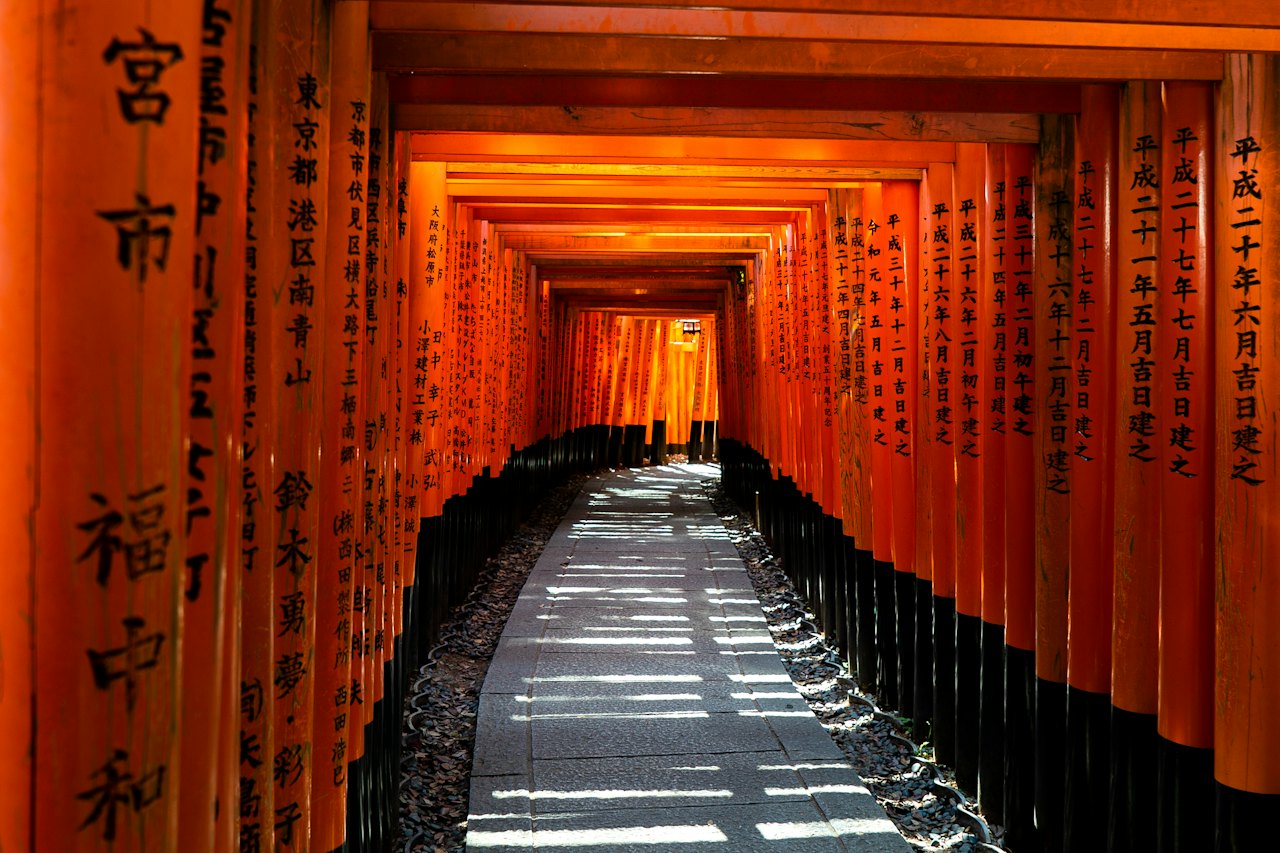
Overview
Kyoto was Japan's capital for more than a thousand years, and it still keeps about 1,600 temples and 400 shrines inside a basin of hills. It is also the city where the old image of Japan collides hardest with the number of people trying to photograph it. Fushimi Inari, Kiyomizu-dera and the Arashiyama bamboo grove can be crowded by mid-morning, so the trick is to be there before the tour groups, or to go somewhere else.
Kyoto repays slowness. Spend a morning at a smaller temple such as Daitoku-ji sub-temples or Shisen-do, walk the Philosopher's Path outside peak hours, and eat kaiseki or a simple tofu lunch rather than wandering Nishiki Market at noon. Buses are packed, so use the subway, trains and a bike where you can. In Gion, stay out of the private alleys and do not chase geisha or maiko for photos; the city has fined visitors for it. Cherry blossom in late March and early April and the autumn leaves in mid to late November are lovely and expensive. Summer is hot and humid.
The torii gates climb the hillside. Go before 7am to avoid the crush; the upper loop is quiet.
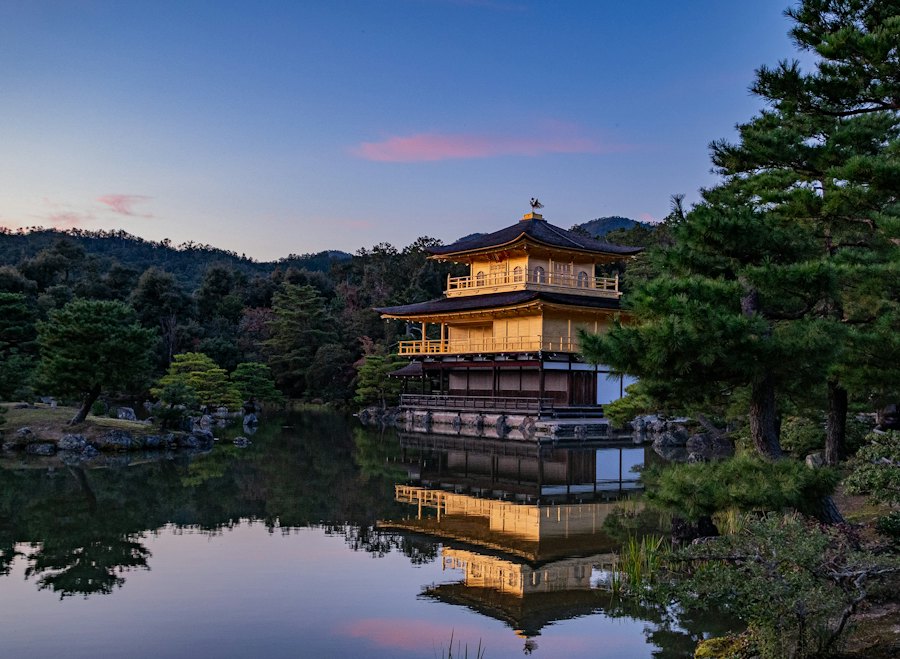
Kinkaku-ji, Ryoan-ji and Ginkaku-ji reward early starts and a slow pace.
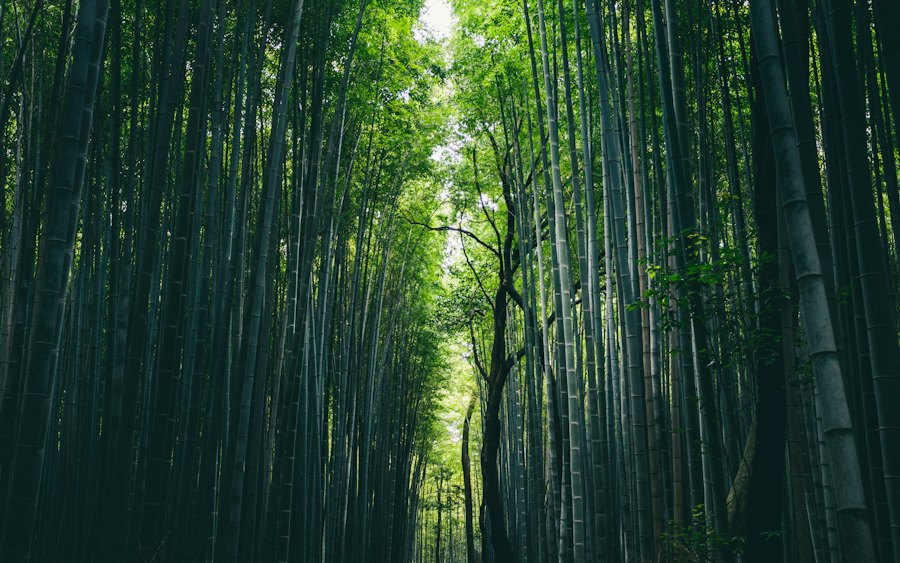
The bamboo grove is busy by 9am. Walk on to Tenryu-ji and the river for calm.
Best time
Best months for most visitors: Mar–May & Oct–Nov. Good weather, thinner crowds and fairer prices.
Late April to May, and October to early November, give mild weather with fewer visitors than the blossom and leaf weeks.
Late March to mid-April (cherry blossom) and mid-November to early December (autumn leaves) are the peak weeks.
The rainy season starts around mid-June and runs to the end of July, July and August are hot and humid with highs of 32–34°C / 90–93°F (90–93°F) and occasional spells above 35°C / 95°F, and January and February are cold, occasionally with snow on the temple roofs.
Booking window: reserve flights and stays 2–3 months ahead for Mar–May & Oct–Nov, and 4–6 months ahead for peak season (Jan–Feb, Sep, Dec).
Partner links. We earn a commission at no extra cost to you; sponsors never change a ranking or safety note. How we earn money →
Weather
Current temperature loads here when your browser can reach Open-Meteo.
Weather data: Open-Meteo Historical & Live API. A single reading for the main town or area, not the whole destination.
Cherry blossom in late March to early April and red maples in mid to late November are the peaks, and the busiest.
Summer is hot and humid; winter is cold and quiet, with an occasional dusting of snow.
Rooms sell out months ahead, prices can double, and the main temples have queues. Golden Week (late April to early May) is also very busy.
May is green and comfortable, while October is clear and dry, with some early colour in the hills.
Prices are lowest in January and February, and the temples are quieter.
Weather data: Open-Meteo Historical & Live API (live reading). Typical highs and season notes are our own summaries. How we verify →
Safety
Last updated: government levels come from our editor-verified table (October 2026). When the live UK FCDO check succeeds, its exact UTC time appears in the panel below. The banner takes the most cautious of the five agencies, so a live UK warning always outranks a green entry in our table and any part-country warning shows as red. We never show a level we haven’t checked. How we verify →
Government levels: editor-verified table, October 2026 How we verify →
Five official agencies, one view. Ratings change, so each pill opens the agency’s own page for today’s level.
Tier 5/5 · Very low risk. Normal precautions: earthquakes, typhoon season and crowds.
The UK FCDO, US State Department and Australian DFAT generally describe Japan as a low-risk destination where normal precautions apply. Their advice usually mentions earthquakes, tsunamis, typhoons in late summer and autumn, and heavy rain, plus the need to follow local alerts. Advice varies and changes, so check each agency's current Japan page before you book.
Our plain-English summary of what the UK FCDO, US State Department, Australian Smartraveller, Japan MOFA and South Korea MOFA publish. We quote no live ratings from memory; each button above opens the agency's own page.
Our opinion, not an official warning
Regional nuance: Japan's advice focuses on natural hazards such as earthquakes and typhoons, not crime. Kyoto is inland, but check local alerts in typhoon season.
The concerns that are real: Crime is low, so the real risks are practical: heat stroke in July and August, crowded buses, and getting caught out by typhoon-season disruption. Follow local etiquette in temples and in Gion, where the private side lanes are closed to visitors and photography (¥10,000 fine, about $67 (≈ €60 / £55); ≈ €60 / £53); photographing from main streets such as Hanamikoji-dori and Shijo-dori is allowed, and chasing, cornering or touching geisha is not.
What headlines overstate: Earthquake and typhoon headlines usually concern specific regions. Kyoto sits inland and is generally less affected than the coast, but you should know the evacuation basics and keep your phone's alert setting on.
Written by our editors from general travel knowledge and kept apart from the agencies above. How we verify →
Costs
Backpacker
$75 (≈ €65 / £60) per person per day
What it covers: Hostel dorm or capsule, convenience-store and udon meals, subway and bus day passes, free shrines and walks, and one or two paid temple entries.
Mid-Range (default)
$170 (≈ €150 / £135) per person per day
What it covers: Business hotel or small ryokan double shared by two, restaurant lunches and dinners, a few temple entries, a day trip to Nara and taxis for late evenings.
Boutique
$370 (≈ €330 / £290) per person per day
What it covers: High-end ryokan with kaiseki dinner or a luxury hotel, private guides, a tea ceremony, geisha-hosted dinner and car transfers.
Cost source: Audited Local Lodging Taxes, Rail Tariffs & Dining Averages (our own estimates, flights excluded). How we verify →
Source: Should I Go's own estimates, October 2026, in USD per person excluding international flights; euro figures are rough conversions. A couple shares a room, so accommodation drops 25% per person. Prices move, so treat these as a planning range, not a quote.
Estimated total: $0 (≈ €0 / £0)
Estimate in USD per trip, excluding international flights. Two or more travellers share rooms, so accommodation drops 25% per person. Budget and luxury tiers are scaled from the mid-range figure.
Cost source: Audited Local Lodging Taxes, Rail Tariffs & Dining Averages (our own estimates, flights excluded). How we verify →
Where to base yourself
Old wooden streets, teahouses and temples. Walkable but crowded.
Bamboo grove, river and monkey park. Best early or late.
The shrine gates and sake breweries.
Deer, Todai-ji and quiet temple lanes, 45 minutes by train.
Itineraries
Getting between stops: Buses are crowded; the subway and JR lines are quicker, or hire a bicycle.
Getting between stops: JR Nara Line takes about 45 minutes from Kyoto Station.
Getting between stops: Special Rapid train from Kyoto to Osaka takes about 30 minutes.
Routes and timetables change. Confirm transit times with the operator before you book.
Do and stay
Best for: Transport and value
Pros: Direct Haruka airport trains, the Shinkansen to Tokyo and Osaka, and many mid-priced hotels. Bus and subway lines fan out from here.
Watch for: Less atmosphere than the old streets, and the temples in the east and north take a bus or subway ride to reach.
Best for: Atmosphere
Pros: Wooden lanes, Kiyomizu-dera and Yasaka Shrine on your doorstep, and early starts before the day crowds arrive.
Watch for: Expensive, crowded by day, and rooms can be small. Late-night dining options are limited.
Best for: Food and nightlife
Pros: Walkable restaurants, bars, Nishiki Market and Pontocho Alley, plus subway links to most sights. A good central base for first-timers.
Watch for: Busy and noisy in the evening. Some of the cheaper hotels are plain and have small rooms.
These are partner links. We may earn a commission at no extra cost to you.
Trade-offs
Final verdict
Editorial opinion from Should I Go, written from general travel knowledge and reviewed periodically. Verify prices, entry rules and advisories before you book.
Typical costs and rules change; confirm with official sources before you travel.
Three days covers the major sights at a reasonable pace: Fushimi Inari and Higashiyama, Arashiyama and Kinkaku-ji, and a day for gardens, food and wandering. Add a fourth day for Nara or Osaka. Kyoto is spread out, so allow travel time between areas.
Late March to early April for cherry blossom and mid-November for autumn leaves are the famous times, and they are crowded and expensive. For a calmer visit with good weather, try late April to May or October. Avoid July and August if you do not like heat and humidity.
At the most famous sights, often yes. The fix is to go at dawn or late in the day, choose smaller temples, use the subway rather than buses, and stay outside the busiest weeks. The north and west of the city, and the temples on the Philosopher's Path, are noticeably calmer.
Get live weather, activities, travel advisories, and personalised tips for Kyoto
Check Kyoto Now →Have you visited Kyoto? Was it worth it? Readers can vote: Worth Every Penny, Great in Shoulder Season Only, or Overrated / Skip It.