Palaces and hanok villages
Gyeongbokgung opens early; hanbok rental gets free entry. Bukchon is crowded, so try Ikseon-dong or Seochon.
Geunjeongjeon Hall, Gyeongbokgung Palace
Best months: Apr–Jun & Sep–Oct
Photo: Daniel Bernard on Unsplash
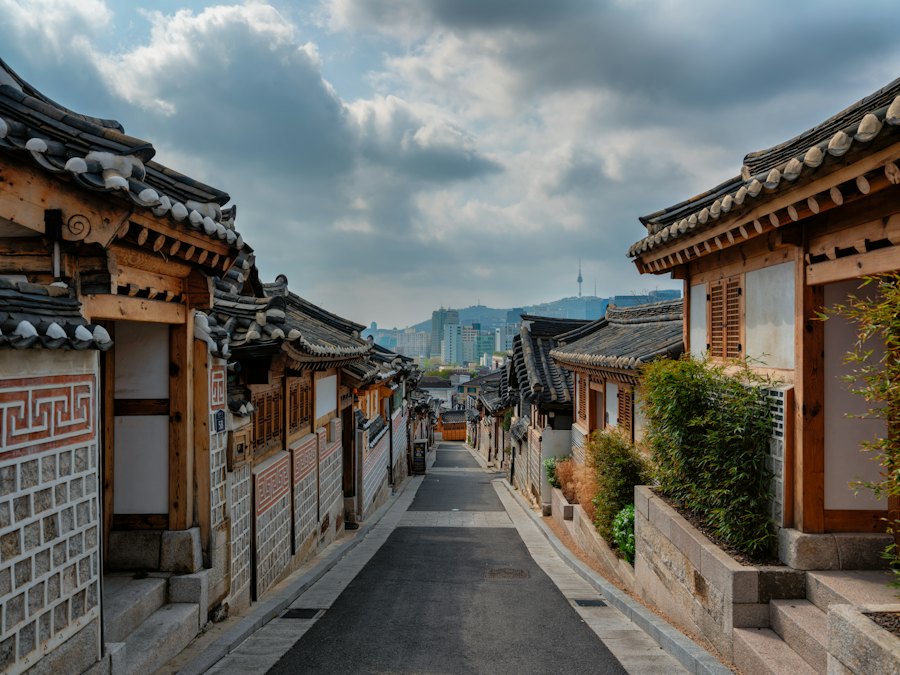
Photo: Elliot Gouy on Unsplash
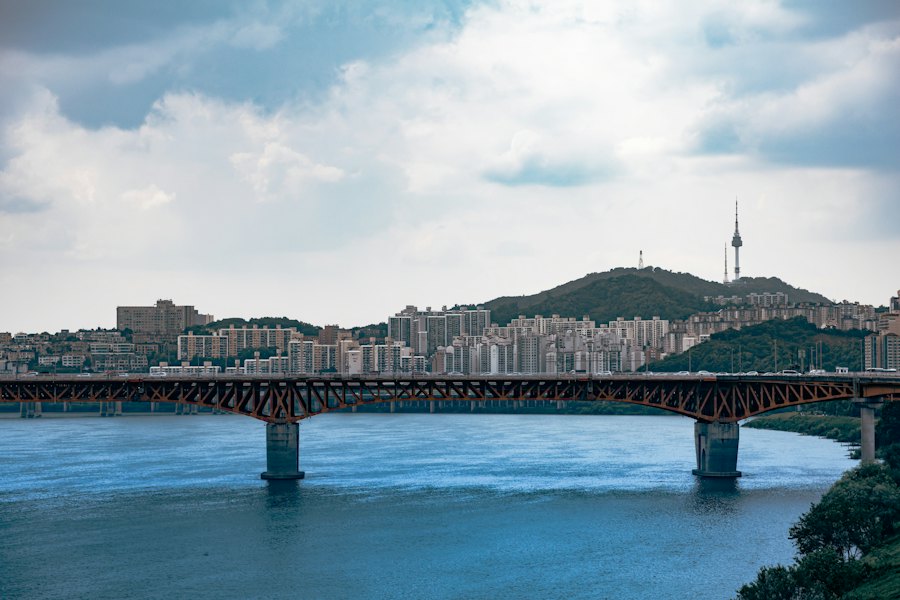
Photo: Dohyuk You on Unsplash
View Full Gallery (3)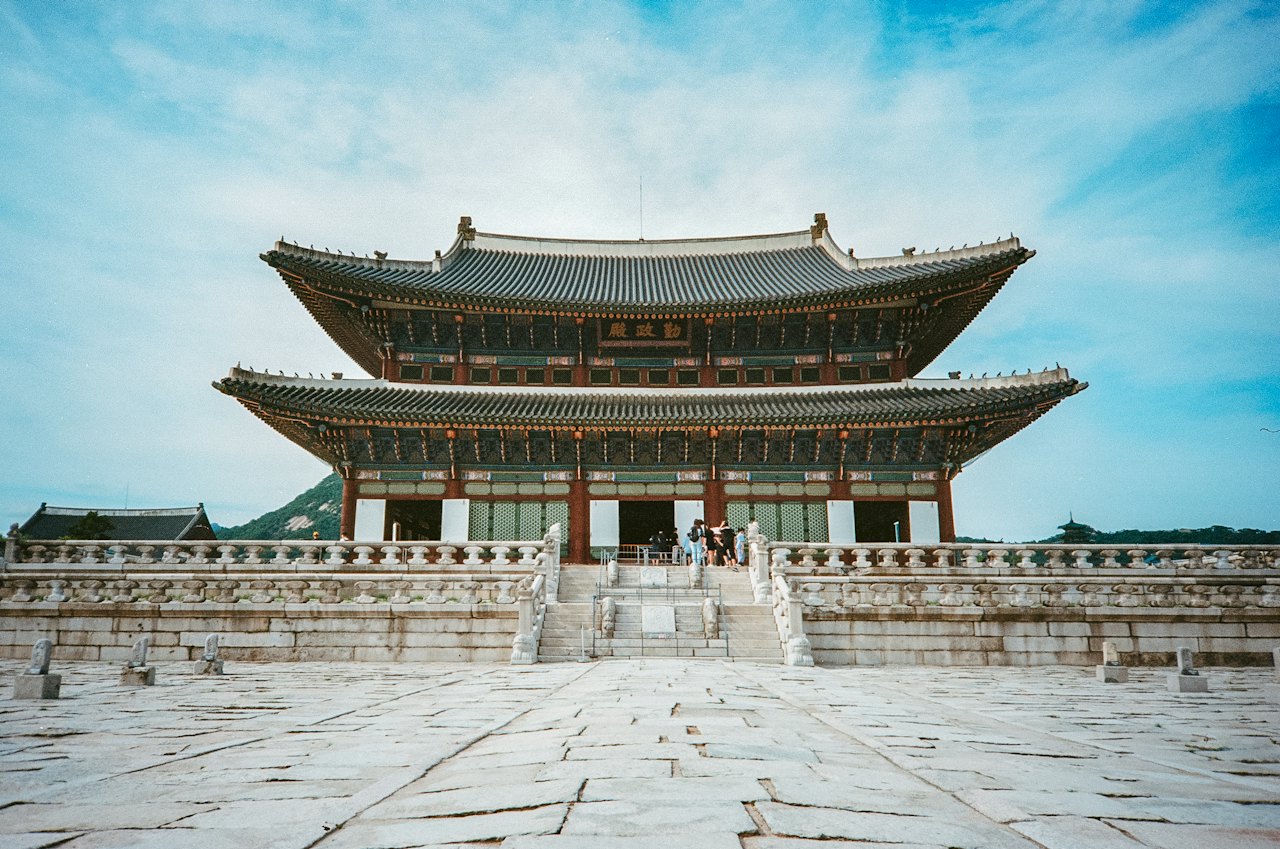
Overview
Seoul is a city of about ten million that runs on a well-kept subway, fast broadband and very late nights, and it sits against a ring of granite mountains you can reach by train. The old palaces, Gyeongbokgung and Changdeokgung, stand a short walk from glass towers, and a ten-minute walk from Insadong's tea houses puts you in the middle of street food, fashion markets and 24-hour barbecue restaurants.
Seoul is more affordable than Tokyo, and easier to use than most visitors expect. Buy a T-money card, use the subway and a map app such as Naver Map or Kakao Map, because Google Maps navigation is limited in Korea. Eat Korean barbecue, bibimbap, tteokbokki and jjigae at neighbourhood restaurants, and drink soju as locals do, with food. Hike Bukhansan or Inwangsan in the morning, and visit the palaces in the afternoon (a complete hanbok gets you in free; Gyeongbokgung is closed on Tuesdays and the other main palaces on Mondays). April to June and September to October are the best months; winter is dry and very cold (January highs about 2 °C / 36 °F, lows near −7 °C / 20 °F), and the monsoon rains of late June and July are heavy. Cards are widely accepted, though foreign cards and phone wallets sometimes fail, so carry some cash; tipping is not expected.
Gyeongbokgung opens early; hanbok rental gets free entry. Bukchon is crowded, so try Ikseon-dong or Seochon.
Gwangjang and Namdaemun markets serve bindaetteok, tteokbokki and hotteok. Cash helps.
Hongdae and Itaewon for music and bars; Myeongdong for shopping and skincare.
Best time
Best months for most visitors: Apr–Jun & Sep–Oct. Good weather, thinner crowds and fairer prices.
May, June and September are comfortable, with warm days and fewer crowds than April and October.
April (cherry blossom) and October (autumn colour) are peak, with mild temperatures (highs about 18 °C / 64 °F in April and 19 °C / 66 °F in October) and clear skies.
The jangma monsoon rains arrive around late June and run through July, and August stays hot and humid: highs average about 29 °C / 84°F (84 °F) in July and August, with lows of 22 °C / 72°F (72 °F), and it feels hotter.
Booking window: reserve flights and stays 2–3 months ahead for Apr–Jun & Sep–Oct, and 4–6 months ahead for peak season (Mar, Jun, Nov–Dec).
Partner links. We earn a commission at no extra cost to you; sponsors never change a ranking or safety note. How we earn money →
Weather
Current temperature loads here when your browser can reach Open-Meteo.
Weather data: Open-Meteo Historical & Live API. A single reading for the main town or area, not the whole destination.
Peak season about 29°C / 84°F; shoulder season about 18°C / 64°F.
Rain: Heavy monsoon rain from late June to July; dry, cold winters.
Cherry blossom in April and fall colour in October are the highlights. Sunshine averages 5.5–6.5 hours a day through the year, and September is a relief month as humidity drops (typhoon remnants usually mean one to three days of heavy rain, mainly early in the month).
Summer is hot and humid, with the monsoon in late June and July (highs about 29 °C / 84 °F in July and August); winter is cold and dry, with January highs near 2 °C / 36°F (36 °F), lows near −7 °C / 45°F (20 °F) and snow possible.
Hotels in Myeongdong, Hongdae and Jongno cost more, and the palaces and Bukchon are crowded. Book rooms ahead for blossom weeks and national holidays such as Chuseok.
Early June can be hot and humid before the monsoon. September is a relief month as the humidity drops, and it brings clear skies and good hiking in the second half. It is the tail end of typhoon season, but destructive direct hits on Seoul are statistically rare: expect typically one to three days of heavy rain and wind, mainly in early September. Radar warnings give ample notice, so transit disruption is minor.
Winter, December to February, is dry and cold (highs 2 to 5 °C / 36 to 41 °F, lows from −5 to −7 °C / 23 to 19 °F), but the palaces in snow are quiet, indoor life is warm and prices are lowest.
Weather data: Open-Meteo Historical & Live API (live reading). Typical highs and season notes are our own summaries. How we verify →
Safety
Last updated: government levels come from our editor-verified table (October 2026). When the live UK FCDO check succeeds, its exact UTC time appears in the panel below. The banner takes the most cautious of the five agencies, so a live UK warning always outranks a green entry in our table and any part-country warning shows as red. We never show a level we haven’t checked. How we verify →
Government levels: editor-verified table, October 2026 How we verify →
Five official agencies, one view. Ratings change, so each pill opens the agency’s own page for today’s level.
Tier 5/5 · Very low risk. Normal precautions: regional tensions, monsoon and winter cold.
The UK FCDO page for South Korea (last updated 14 May 2026) has no travel warning in its summary. It says there is no recent history of terrorism, though attacks cannot be ruled out, and that tension on the Korean Peninsula can change with little notice, particularly after North Korean missile tests and during the regular South Korean–US military exercises. It adds that demonstrations are common but mostly peaceful and well policed, that foreign nationals may not take part in political activities, and that sirens signal occasional civil emergency exercises. Check the FCDO page again before you book.
Our plain-English summary of what the UK FCDO, US State Department, Australian Smartraveller, Japan MOFA and South Korea MOFA publish. We quote no live ratings from memory; each button above opens the agency's own page.
Our opinion, not an official warning
Regional nuance: The UK FCDO says tension on the Korean Peninsula can change with little notice but rarely affects daily life in Seoul. The DMZ can be visited only on organised tours, with set rules, and some sites have been closed since 2024.
The concerns that are real: Crime is low. The usual problems are practical: unofficial airport taxis, overpriced tourist-district restaurants, motorcycle delivery riders on pavements, and occasional pickpocketing in crowded areas such as Myeongdong and Hongdae. The FCDO also notes that air pollution, including yellow dust, is common in spring. Heat in July and August and winter ice are other risks.
What headlines overstate: Headlines about North Korea can sound alarming but have little effect on daily life. The DMZ can only be visited on an organised tour (some nationalities are not allowed, and several sites have been closed since 2024, so ask the operator what is open), and the FCDO says to exercise caution and follow local authorities in the area. Keep an eye on official advice, and ensure your insurance covers your trip.
Written by our editors from general travel knowledge and kept apart from the agencies above. How we verify →
Costs
Backpacker
$85 (≈ €75 / £65) per person per day
What it covers: Hostel dorm or guesthouse in Hongdae or Myeongdong, GS25 and CU convenience-store snacks, Gwangjang Market and noodle-bar meals, subway and T-money card, palace tickets from about $2.25 (3,000 won; ≈ € 2 / £ 1.80), and hikes. About $45–75 (₩60,000–100,000; ≈ € 40–67 / £ 35–59) a day.
Mid-Range (default)
$190 (≈ €170 / £150) per person per day
What it covers: A 3–4-star boutique hotel in Insadong or Myeongdong, café breakfasts, sit-down lunches, an evening of Korean barbecue or stews with drinks, subway and taxis, palace and museum entries, and a day trip to the DMZ or Suwon. About $135–250 (₩180,000–330,000; ≈ € 120–225 / £ 105–195) a day.
Boutique
$420 (≈ €380 / £330) per person per day
What it covers: Four Seasons Seoul, Signiel or Shilla, hanjeongsik, hotel buffets and fine dining, private guided tours, spa visits and car transfers. About $465–940 (≈ €420–840 / £370–740)+ (₩620,000–1,250,000+; ≈ € 415–840+ / £ 365–740+) a day.
Cost source: Audited Local Lodging Taxes, Rail Tariffs & Dining Averages (our own estimates, flights excluded). How we verify →
Source: Should I Go's own estimates, October 2026, in USD per person excluding international flights; euro figures are rough conversions. A couple shares a room, so accommodation drops 25% per person. Prices move, so treat these as a planning range, not a quote.
Estimated total: $0 (≈ €0 / £0)
Estimate in USD per trip, excluding international flights. Two or more travellers share rooms, so accommodation drops 25% per person. Budget and luxury tiers are scaled from the mid-range figure.
Cost source: Audited Local Lodging Taxes, Rail Tariffs & Dining Averages (our own estimates, flights excluded). How we verify →
Where to base yourself
Palaces, hanok lanes and tea houses. Walkable and historic.
Shopping, street food and the N Seoul Tower hike.
Youth culture, cafés and live music.
Shopping, K-pop agencies and luxury. Less charming.
Itineraries
Getting between stops: A T-money card covers subways and buses (about $1.13 (≈ €1.01 / £0.89) / 1,500 won a ride); for three days of unlimited travel the 3-day Tourist Climate Card is about $7.50 (≈ €6.70 / £5.91) (10,000 won).
Getting between stops: Tours include transport to the DMZ (some sites have been closed since 2024, so ask what is open); Line 1 from Seoul Station to Suwon takes about 45–60 minutes at the standard fare.
Getting between stops: The fastest KTX trains take just over two hours; book ahead, as reservations are compulsory. Haeundae, Busan’s main beach, is 2 to 2.5 hours south of Seoul by KTX.
Routes and timetables change. Confirm transit times with the operator before you book.
Do and stay
Best for: Nightlife and budget
Pros: Young, lively area near Hongik University with street performers, bars and cheap guesthouses. Direct AREX link to the airport.
Watch for: Noisy late into the night, so choose a quieter building if you sleep early. A subway ride to the palaces.
Best for: Palaces and culture
Pros: Walking distance to Gyeongbokgung, Changdeokgung, tea houses and hanok lanes. A calmer and more traditional setting.
Watch for: Fewer late-night options, and rooms in hanok guesthouses are small. Hotels cost more than in Hongdae.
Best for: First-timers and transit
Pros: Central, with subway lines, the AREX airport express, and shopping and street food. Many hotels in every price range.
Watch for: Crowded, commercial and touristy, with overpriced restaurants near the main street. Not a quiet place.
These are partner links. We may earn a commission at no extra cost to you.
Trade-offs
Final verdict
Editorial opinion from Should I Go, written from general travel knowledge and reviewed periodically. Verify prices, entry rules and advisories before you book.
Typical costs and rules change; confirm with official sources before you travel.
Four days covers the palaces, Bukchon and Insadong, Gwangjang Market, a mountain hike and the nightlife neighbourhoods. Five to seven days lets you add a DMZ tour, Suwon fortress or a day trip to Nami Island. A KTX train to Busan or Gyeongju is a good add-on.
Yes, it is among the safest big cities in Asia. Violent crime against visitors is rare, and it is common to walk home late at night. Take normal precautions, watch for traffic and scooters on pavements, and use official taxis or apps. Check the official advice for current conditions.
Less than Tokyo or most Western capitals. Mid-range travellers should expect about $135 to $250 (≈ €120–220 / £105–195) per person per day (₩180,000–330,000; ≈ € 120–225 / £ 105–195). Food, transport and entry fees are good value, while accommodation in central areas and shopping can add up. Travel in shoulder months for lower hotel prices.
Gyeongbokgung is closed every Tuesday; Changdeokgung, Changgyeonggung and Deoksugung are closed every Monday. If a public holiday falls on a closing day the palace opens and the closure moves to the next non-holiday. A Gyeongbokgung ticket costs about $2.25 (3,000 won; ≈ € 2 / £ 1.80). Entry is free if you wear a complete hanbok, matching top and bottom; a vest or part of a skirt does not count. Rental shops outside the gates charge about $11–19 (15,000–25,000 won; ≈ € 10–17 / £ 9–15) for four hours.
Not for ordinary city walking tours, palace walks or food tours; a photo of it on your phone is enough. For a DMZ or JSA tour you must carry the physical passport on the morning of departure: copies and digital scans are rejected at the checkpoints and you will not be allowed on the bus.
Trains run daily from about 05:30 until around midnight. The base fare is $1.13 (1,500 won; ≈ € 1 / £ 0.89) with a T-money card for the first 10 km (6 miles); a single-use paper ticket is $1.20 (1,600 won; ≈ € 1.07 / £ 0.94) plus a refundable deposit of about $0.38 (≈ €0.34 / £0.30) (500 won) returned at station machines. Beyond 10 km / 6.2 mi, about $0.08 (≈ €0.07 / £0.06) (100 won) is added for every extra 5 km (3 miles). The 30-day tourist Climate Card was discontinued on 1 October 2026; short stays can use the Tourist Climate Card instead, a 1-day pass for about $3.75 (5,000 won; ≈ € 3.35 / £ 2.95) or a 3-day pass for about $7.50 (10,000 won; ≈ € 6.70 / £ 5.90) for unlimited travel inside the city.
Nami Island lies 60–65 km / 37–40 mi / 64 km (37–40 miles / 60–64 km) north-east of Seoul. Take the ITX-Cheongchun train from Yongsan or Cheongnyangni to Gapyeong, 45 to 60 minutes, then a taxi or shuttle of about 10 minutes to Gapyeong Wharf and a ferry of about 10 minutes. Allow 1.5 to 2 hours each way. For Suwon Hwaseong Fortress, take Line 1 from Seoul Station to Suwon, about 45 to 60 minutes at the standard fare.
Flying from Los Angeles to Incheon (ICN) takes about 13 hours westbound and about 11 hours back eastbound; from London Heathrow it is about 11.5 to 12 hours. Seoul is landlocked and has no city beach. The nearest open sea is Eulwangni Beach on Yeongjong Island, near Incheon Airport, about 1.5 hours by subway or bus; Haeundae in Busan is 2 to 2.5 hours south by KTX.
Get live weather, activities, travel advisories, and personalised tips for Seoul
Check Seoul Now →Have you visited Seoul? Was it worth it? Readers can vote: Worth Every Penny, Great in Shoulder Season Only, or Overrated / Skip It.