Ha Long Bay and Lan Ha
Limestone islands and floating villages. Overnight cruises vary widely in quality, so read recent reviews.
Photo: Marina Lobato on Unsplash
Photo: Vivu Vietnam on Unsplash
View Full Gallery (3)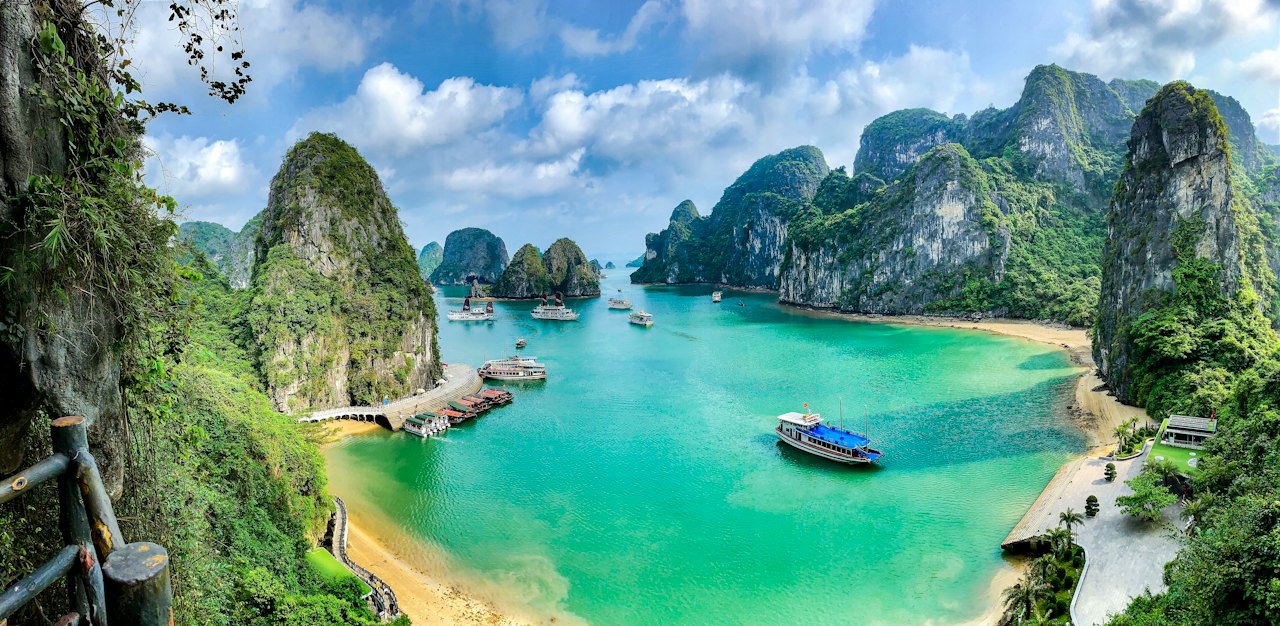
Overview
Vietnam rewards travellers with extraordinary diversity — from the chaos and pho of Hanoi and the lantern-lit streets of Hoi An to the karst mountains of Ha Long Bay and the rice terraces of Sapa.
Vietnam is long and thin, and the common mistake is to try to cover all of it. Pick two regions: north (Hanoi, Ha Long Bay, Sapa), centre (Hoi An, Hue, Da Nang) or south (Ho Chi Minh City, the Mekong). A bowl of phở or bún chả costs a couple of dollars and is a meal in itself. Crossing the road is a learned skill: walk steadily and let the bikes flow around you. Keep your phone away from the kerb, because bag snatching from passing scooters is the most common crime. Weather differs sharply by region, so check before you book your dates.
Limestone islands and floating villages. Overnight cruises vary widely in quality, so read recent reviews.
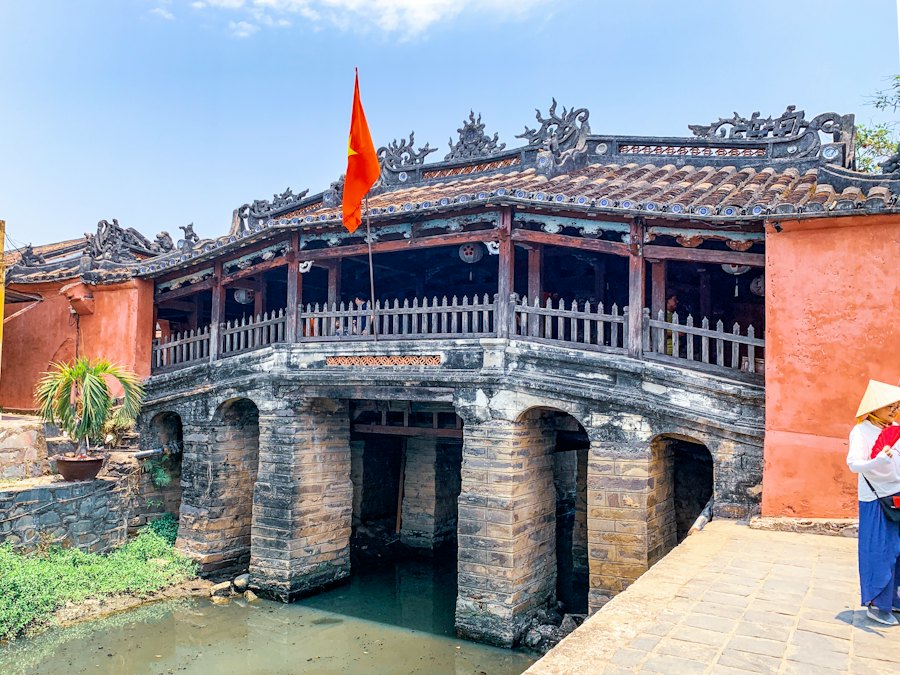
Yellow shophouses and lantern-lit evenings. Go early, before day-trip crowds, and rent a bicycle for the rice-field lanes.
Street food, markets and war museums, with a Mekong day trip for floating markets.
Best time
Best months for most visitors: Feb–Apr & Sep–Nov. Good weather, thinner crowds and fairer prices.
February to April and September to November are the best windows overall.
December is the busiest month in Vietnam.
May to August is hot, humid and wet in much of the country, with storms in the south and typhoons possible in the north and centre.
Booking window: reserve flights and stays 2–3 months ahead for Feb–Apr & Sep–Nov, and 4–6 months ahead for peak season (Dec).
Partner links. We earn a commission at no extra cost to you; sponsors never change a ranking or safety note. How we earn money →
Weather
Current temperature loads here when your browser can reach Open-Meteo.
Weather data: Open-Meteo Historical & Live API. A single reading for the main town or area, not the whole destination.
Peak season about 32°C / 90°F; shoulder season about 26°C / 79°F.
Rain: Varies by region; heavy rain May–Oct in the south.
Four seasons: hot, humid summers, a damp cool winter and a lovely autumn.
Typhoons can hit central Vietnam from September to November; the south has a clear wet and dry season.
The north is cool and dry, the south is warm and sunny, and the central coast can still be wet. Flights and hotels peak around Christmas and Tet, so book two to three months ahead for the best rooms.
For good weather and lower prices, aim for March to April for the whole country, or late September to October for the north and south. Note that Tet falls in February 2027, when many businesses close and transport is full, and the central coast is often wet from October.
January is cold and drizzly in Hanoi. Prices are lowest, and beaches in Da Nang and Phu Quoc can still be pleasant.
Weather data: Open-Meteo Historical & Live API (live reading). Typical highs and season notes are our own summaries. How we verify →
Safety
Last updated: government levels come from our editor-verified table (October 2026). When the live UK FCDO check succeeds, its exact UTC time appears in the panel below. The banner takes the most cautious of the five agencies, so a live UK warning always outranks a green entry in our table and any part-country warning shows as red. We never show a level we haven’t checked. How we verify →
Government levels: editor-verified table, October 2026 How we verify →
Five official agencies, one view. Ratings change, so each pill opens the agency’s own page for today’s level.
Tier 4/5 · Standard caution. Normal precautions: traffic, bag snatching and taxi overcharging.
The UK FCDO, US State Department and Australian DFAT generally describe Vietnam as a destination where visitors should take normal precautions. Their advice highlights road accidents, bag snatching from motorbikes, overcharging scams, typhoons and flooding in some seasons, and areas near some borders. Rules change, so check the current Vietnam pages of all three governments before you book. Read the full advice before you travel.
Our plain-English summary of what the UK FCDO, US State Department, Australian Smartraveller, Japan MOFA and South Korea MOFA publish. We quote no live ratings from memory; each button above opens the agency's own page.
Our opinion, not an official warning
Regional nuance: Government advice for Vietnam mostly covers typhoons, flooding and road safety. Border areas are the only places with specific restrictions and are away from tourist routes.
The concerns that are real: Traffic is the greatest danger: scooter accidents injure many tourists, so check that your insurance covers riding. Bag snatchers target phones near the kerb, and unmarked taxis run fast meters. Use Grab, Mai Linh or Vinasun, and use bank ATMs.
What headlines overstate: Stories of chaos or scams suggest the country is hostile to visitors. Most travellers meet friendly hosts; the real issues are traffic, bag snatching and taxi overcharging, all manageable with basic care.
Written by our editors from general travel knowledge and kept apart from the agencies above. How we verify →
Costs
Backpacker
$30 (≈ €25 / £25) per person per day
What it covers: Dorm bed or basic guesthouse, street food and bia hơi, local buses and Grab bike rides, sleeper buses and the odd night train berth.
Mid-Range (default)
$65 (≈ €60 / £50) per person per day
What it covers: Boutique three-star hotel with breakfast, sit-down local dinners, domestic flights or sleeper trains, entry fees for main sights and a day tour or cooking class.
Boutique
$140 (≈ €125 / £110) per person per day
What it covers: Four- or five-star hotels, an overnight luxury cruise on Ha Long Bay, private drivers and guides, and tasting-menu dinners in Saigon or Hanoi.
Cost source: Audited Local Lodging Taxes, Rail Tariffs & Dining Averages (our own estimates, flights excluded). How we verify →
Source: Should I Go's own estimates, October 2026, in USD per person excluding international flights; euro figures are rough conversions. A couple shares a room, so accommodation drops 25% per person. Prices move, so treat these as a planning range, not a quote.
Estimated total: $0 (≈ €0 / £0)
Estimate in USD per trip, excluding international flights. Two or more travellers share rooms, so accommodation drops 25% per person. Budget and luxury tiers are scaled from the mid-range figure.
Cost source: Audited Local Lodging Taxes, Rail Tariffs & Dining Averages (our own estimates, flights excluded). How we verify →
Where to base yourself
Old Quarter lanes, street food and day trips to Ninh Binh and Ha Long.
Lantern-lit old town, beaches and tailors.
A fast, hot metropolis and gateway to the Mekong Delta.
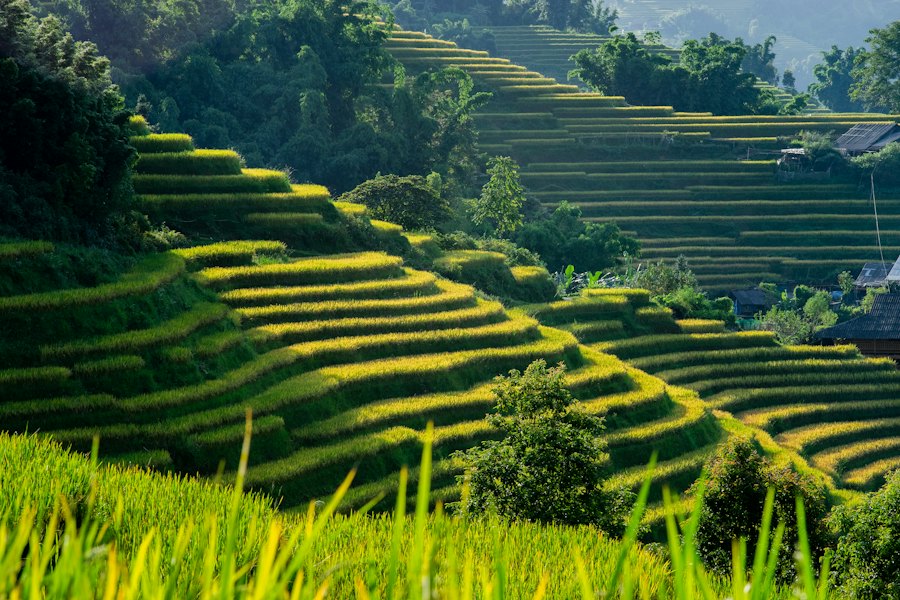
Terraced mountains and ethnic markets in the far north. Trek in dry months.
Itineraries
Getting between stops: Domestic flights Hanoi–Da Nang take about 1 hour 20 minutes; Grab and taxis in cities.
Getting between stops: The Reunification Express train or short flights link the long legs.
Getting between stops: Mix overnight trains and one or two internal flights.
Routes and timetables change. Confirm transit times with the operator before you book.
Do and stay
Best for: First-timers
Pros: Walkable streets full of food stalls, cafes and markets, with the lake, temples and water-puppet theatre close by and plenty of guesthouses.
Watch for: Loud, congested and dusty, with scooters on pavements. Traffic noise continues late into the night, so ask for an upper-floor room.
Best for: Slow travel and beaches
Pros: Rooms outside the old town are cheaper, with rice-field views, bike rides to the old town and An Bang beach cafes nearby.
Watch for: The old town is crowded with tour groups by day, and the central coast floods from October to November.
Best for: Value and access
Pros: Central for sights, restaurants and the Cu Chi and Mekong tours, with plenty of hostels and cheap hotels in the Pham Ngu Lao area.
Watch for: Touristy and noisy, with persistent sellers and bag snatchers. Quieter, more local neighbourhoods are in District 3 or Thao Dien.
These are partner links. We may earn a commission at no extra cost to you.
Trade-offs
Final verdict
Editorial opinion from Should I Go, written from general travel knowledge and reviewed periodically. Verify prices, entry rules and advisories before you book.
Typical costs and rules change; confirm with official sources before you travel.
Most travellers need an e-visa or qualify for a visa exemption, and rules differ by nationality and change often. Apply only through the official Vietnamese government e-visa site, as look-alike sites charge extra. Check your passport validity and the current entry rules before you book. Allow a few working days for processing, and keep a printed copy.
February to April and September to November suit most itineraries, but Vietnam is long, so the answer depends on region. The north is best in autumn and spring, the centre is driest from February to May, and the south is driest from December to April. Avoid the central coast in October and November, when typhoons and floods are likely.
Two weeks is enough for two regions, such as Hanoi, Ha Long Bay and Hoi An, or Ho Chi Minh City and the Mekong. Covering the whole country takes three weeks or more. Domestic flights and night trains help you save time. Slower travel is more rewarding than ticking off cities.
Get live weather, activities, travel advisories, and personalised tips for Vietnam
Check Vietnam Now →Have you visited Vietnam? Was it worth it? Readers can vote: Worth Every Penny, Great in Shoulder Season Only, or Overrated / Skip It.