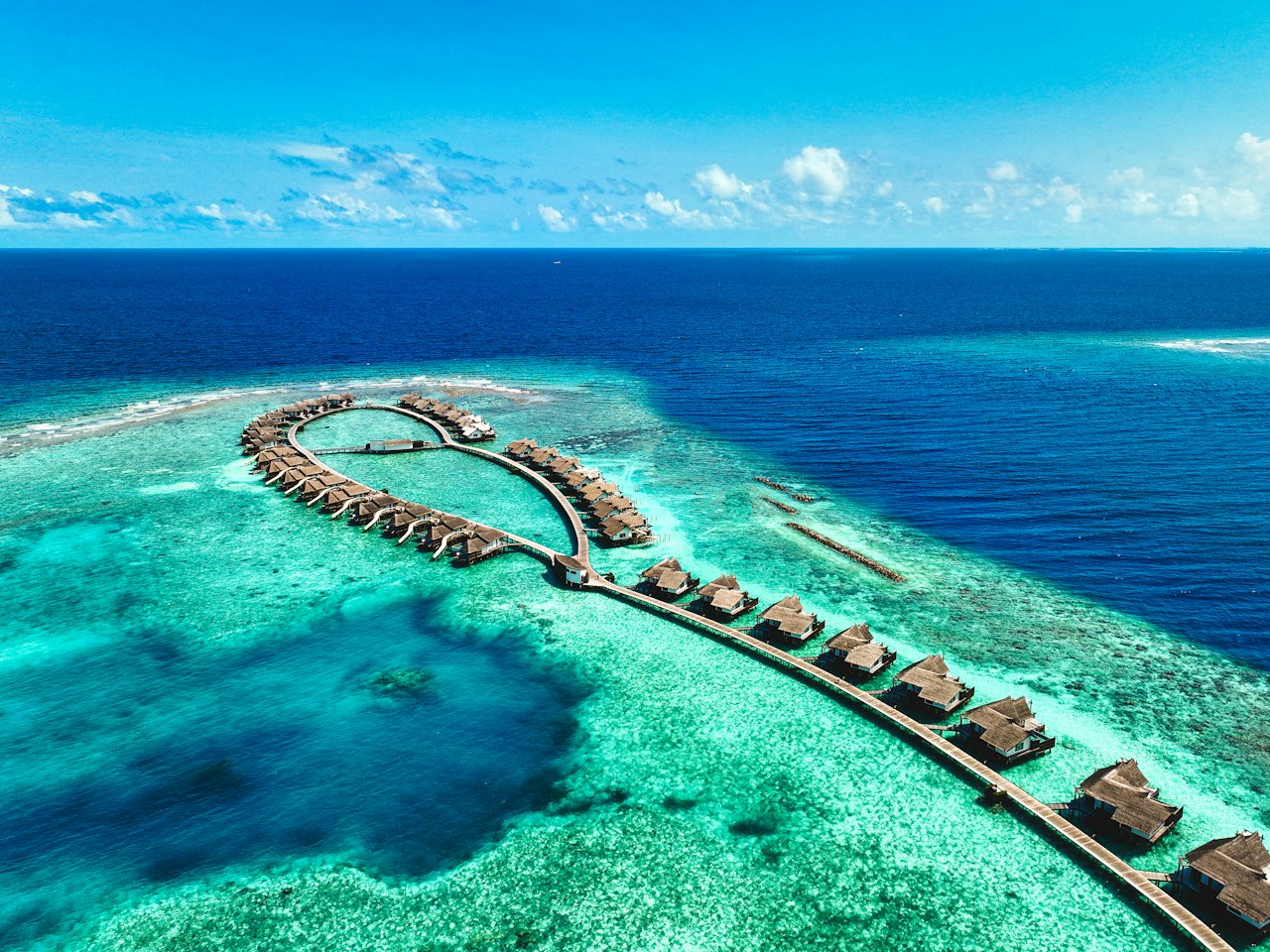
Overwater villas and house reefs
The postcard stay is on a private island resort. Many house reefs allow snorkelling off the jetty.
Photo: Ishan @seefromthesky on Unsplash
Overview
The Maldives is the ultimate escape — about 1,190 coral islands in 26 atolls scattered across the Indian Ocean, each ringed by warm turquoise water and vivid reefs. Overwater bungalows, bioluminescent beaches, and world-class diving.
The Maldives is the place where the brochure and the reality mostly agree, and where the bill is the part nobody mentions until you book. A resort on its own island means a seaplane or speedboat transfer (a seaplane alone is roughly $400-$820 (≈ €360–730 / £310–650) return) and an all-in price that can pass $500 (≈ €450 / £390) a night. Since the late 2000s, locals have been allowed to run guesthouses on inhabited islands, which cuts costs sharply, but alcohol is banned there and swimwear is limited to designated beaches. The reef is the real attraction, so pick somewhere with a house reef and a decent dive or snorkel crew. Go between December and April for the driest weather, and expect to pay for it.
The postcard stay is on a private island resort. Many house reefs allow snorkelling off the jetty.
Since the late 2000s guesthouses on inhabited islands such as Maafushi have opened up cheaper stays, with dress rules and no alcohol.
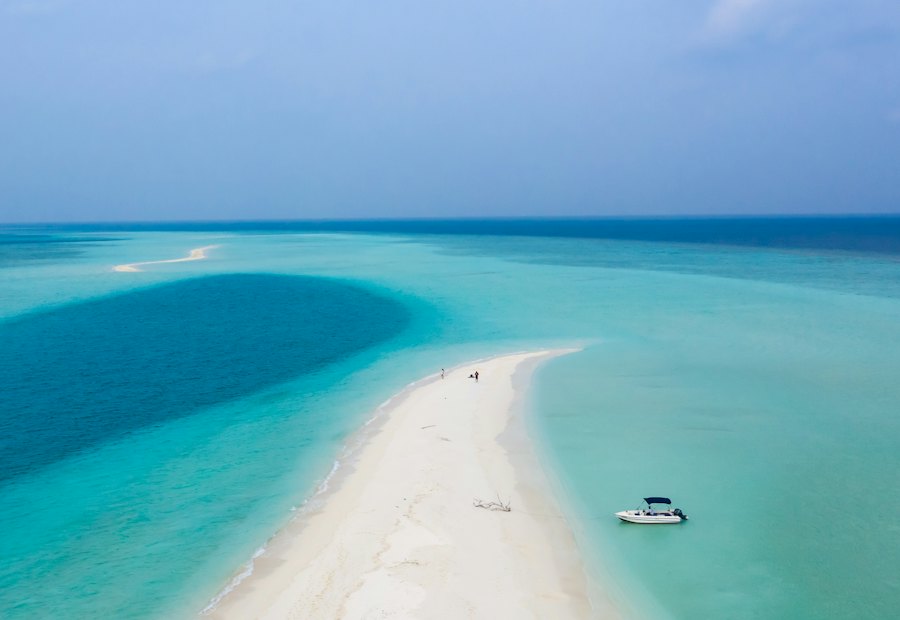
Day trips visit sandbanks and dolphin watching. Whale sharks gather around South Ari Atoll for much of the year.
Best time
Best months for most visitors: Dec–Apr. Good weather, thinner crowds and fairer prices.
April and November are the sweet spots.
December to March is the dry northeast monsoon, with sunny skies, calm seas and the highest prices.
May to October is the southwest monsoon, with heavy rain, wind, rougher seas and cloudy skies.
Booking window: reserve flights and stays 2–3 months ahead for Dec–Apr, and 4–6 months ahead for peak season (Jan–Mar, Dec).
Partner links. We earn a commission at no extra cost to you; sponsors never change a ranking or safety note. How we earn money →
Weather
Current temperature loads here when your browser can reach Open-Meteo.
Weather data: Open-Meteo Historical & Live API. A single reading for the main town or area, not the whole destination.
Peak season about 31°C / 88°F; shoulder season about 31°C / 88°F.
Rain: Wet May–Oct; dry Dec–Apr.
The dry season runs roughly December to April, with sunny days and calm seas.
May to November brings rain, wind and rougher seas, but lower prices.
Christmas and New Year rates can double, and resorts sell out months ahead. Book four to six months in advance and expect a minimum stay.
Weather is still mostly sunny, with a chance of showers, and resort rates are noticeably lower than in the peak season. Visibility is usually fine for snorkelling. Late April and mid-November give the best balance of settled weather and lower prices, with fewer guests.
Resort rates fall by 30-50 per cent and surfers arrive. Manta season at Hanifaru Bay falls in these months, so it is a trade-off.
Weather data: Open-Meteo Historical & Live API (live reading). Typical highs and season notes are our own summaries. How we verify →
Safety
Last updated: government levels come from our editor-verified table (October 2026). When the live UK FCDO check succeeds, its exact UTC time appears in the panel below. The banner takes the most cautious of the five agencies, so a live UK warning always outranks a green entry in our table and any part-country warning shows as red. We never show a level we haven’t checked. How we verify →
Government levels: editor-verified table, October 2026 How we verify →
Five official agencies, one view. Ratings change, so each pill opens the agency’s own page for today’s level.
Tier 4/5 · Standard caution. Normal precautions: sea conditions, strict local laws and customs.
The UK FCDO, US State Department and Australian DFAT generally advise tourists to take normal precautions in the Maldives, while noting that the political situation, strict laws on alcohol, drugs, religious conduct and dress, and sea conditions need attention. Advice has at times urged extra care in Malé when tensions rise. Resort islands are considered the safest option. None of the three treats the main tourist areas as a no-go zone. The UK FCDO (page updated 12 August 2026) also warns that Middle East airspace disruption can delay or cancel connecting flights to the Maldives. Check each official page before booking.
Our plain-English summary of what the UK FCDO, US State Department, Australian Smartraveller, Japan MOFA and South Korea MOFA publish. We quote no live ratings from memory; each button above opens the agency's own page.
Our opinion, not an official warning
Regional nuance: Advice for the Maldives generally points to political demonstrations in the capital Malé and a ban on some activities on local islands. Resort islands are separate and secure. The UK FCDO (12 August 2026) also warns that Middle East airspace disruption can affect flight connections.
The concerns that are real: Rip currents and strong currents on reefs, sunburn, and coral cuts are common. Strict laws: alcohol and pork are banned outside resorts, and drug penalties are severe. Beware unlicensed excursion sellers in Malé and inflated currency conversions at shops. Always wear a life jacket on drift snorkels.
What headlines overstate: Headlines about the islands vanishing due to sea-level rise overstate the near-term reality for visitors. Resorts are not under imminent threat in the next few decades, though climate change is a long-term concern for the country.
Written by our editors from general travel knowledge and kept apart from the agencies above. How we verify →
Costs
Backpacker
$135 (≈ €120 / £105) per person per day
What it covers: Guesthouse room on a local island such as Maafushi or Thoddoo, local cafe meals, public ferries between islands, and the occasional shared snorkel or sandbank trip.
Mid-Range (default)
$300 (≈ €270 / £240) per person per day
What it covers: Boutique guesthouse or small resort with half-board, speedboat transfers, a shared snorkelling or dolphin excursion each day, and drinks at a licensed resort bar.
Boutique
$660 (≈ €590 / £520) per person per day
What it covers: Overwater villa in a five-star resort with half-board, seaplane transfers shared per person, spa treatments, private dive guide and a sunset cruise or private sandbank dinner.
Cost source: Audited Local Lodging Taxes, Rail Tariffs & Dining Averages (our own estimates, flights excluded). How we verify →
Source: Should I Go's own estimates, October 2026, in USD per person excluding international flights; euro figures are rough conversions. A couple shares a room, so accommodation drops 25% per person. Prices move, so treat these as a planning range, not a quote.
Estimated total: $0 (≈ €0 / £0)
Estimate in USD per trip, excluding international flights. Two or more travellers share rooms, so accommodation drops 25% per person. Budget and luxury tiers are scaled from the mid-range figure.
Cost source: Audited Local Lodging Taxes, Rail Tariffs & Dining Averages (our own estimates, flights excluded). How we verify →
Where to base yourself
Closest to the airport; speedboat transfers of 20 to 45 minutes. Good for short stays.
Home to whale sharks and great reefs. Often reached by seaplane.
A UNESCO biosphere reserve with manta feeding in the wet season. Seaplane transfers.
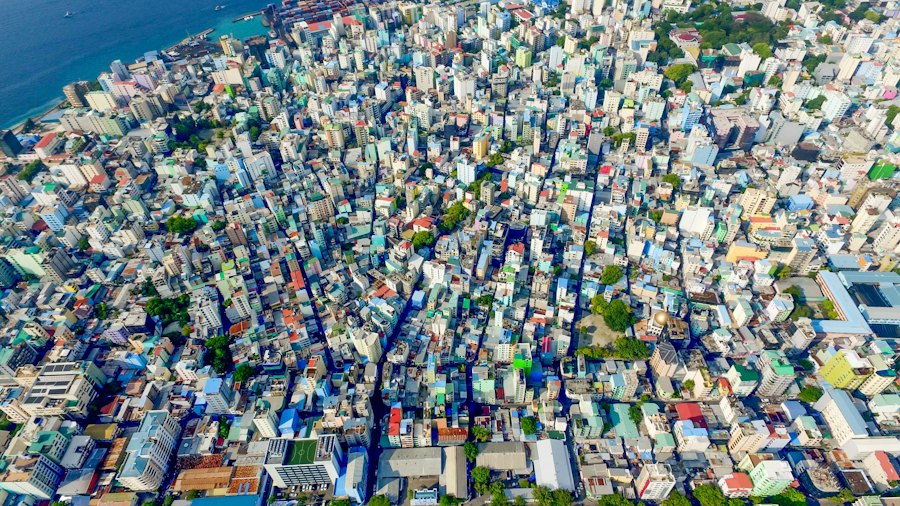
Guesthouse stays at much lower prices. Cultural rules apply.
Itineraries
Getting between stops: Seaplanes fly in daylight only (about 6am-4pm), so if you land after about 3:30pm you will likely need a night in Malé or Hulhumalé. Luggage is capped at 20 kg checked and 5 kg hand baggage.
Getting between stops: Public ferries are cheap but slow; speedboat transfers are quicker.
Getting between stops: Domestic flights or seaplanes link atolls; transfers need booking in advance.
Routes and timetables change. Confirm transit times with the operator before you book.
Do and stay
Best for: Snorkelling
Pros: Home to whale sharks, manta rays and some of the best house reefs. Choose a resort with its own reef or a guesthouse on Dhigurah or Maamigili.
Watch for: A seaplane or domestic flight is needed, which adds cost. Guesthouse options exist but are fewer than in the North Malé Atoll.
Best for: Value
Pros: The best-known local island, reached by a 45-minute speedboat from Malé, with dozens of guesthouses, a bikini beach, dive centres and cheap excursions.
Watch for: Busy and unglamorous, with plenty of tour touts and little privacy. Alcohol is not served on the island, and the bikini beach is small.
Best for: Short stays
Pros: Resorts here are a 20-60 minute speedboat ride from the airport, so you avoid a seaplane fare (resort speedboats run about $100-$490 (≈ €90–440 / £80–390) return per person, and nearby resorts like Kurumba about $90-$100 (≈ €80–90 / £70–80)) and a long transfer. Good for short stays and first-time visitors.
Watch for: Higher prices for convenience, and some reefs near Malé are less healthy than those in the outer atolls. Busy lagoons in peak season.
These are partner links. We may earn a commission at no extra cost to you.
Trade-offs
Final verdict
Editorial opinion from Should I Go, written from general travel knowledge and reviewed periodically. Verify prices, entry rules and advisories before you book.
Typical costs and rules change; confirm with official sources before you travel.
Resorts are, but local-island guesthouses are not. Staying on islands such as Maafushi, Thoddoo or Dhigurah can bring costs down to around $110-$160 (≈ €100–145 / £85–125) a day per person. You lose alcohol and the private-island feel, but keep the reef and the beaches. Ferries are cheap and run on fixed schedules, so check timetables before you book.
January to April has the driest weather and calmest seas, though it is also the most expensive. For better value with mostly good weather, try April or November. May to October is wet and windy, but cheaper, and it is the best time for manta rays. Always check the forecast, since monsoon weather is patchy.
No. Alcohol is banned on inhabited local islands and is served only in resorts and on licensed safari boats. Bringing alcohol into the country is not permitted, and customs will confiscate it at the airport. Dress modestly in villages and use designated bikini beaches. Rules on local islands are set by the community, so follow the signs.
Get live weather, activities, travel advisories, and personalised tips for The Maldives
Check The Maldives Now →Have you visited The Maldives? Was it worth it? Readers can vote: Worth Every Penny, Great in Shoulder Season Only, or Overrated / Skip It.