Sigiriya and the Cultural Triangle
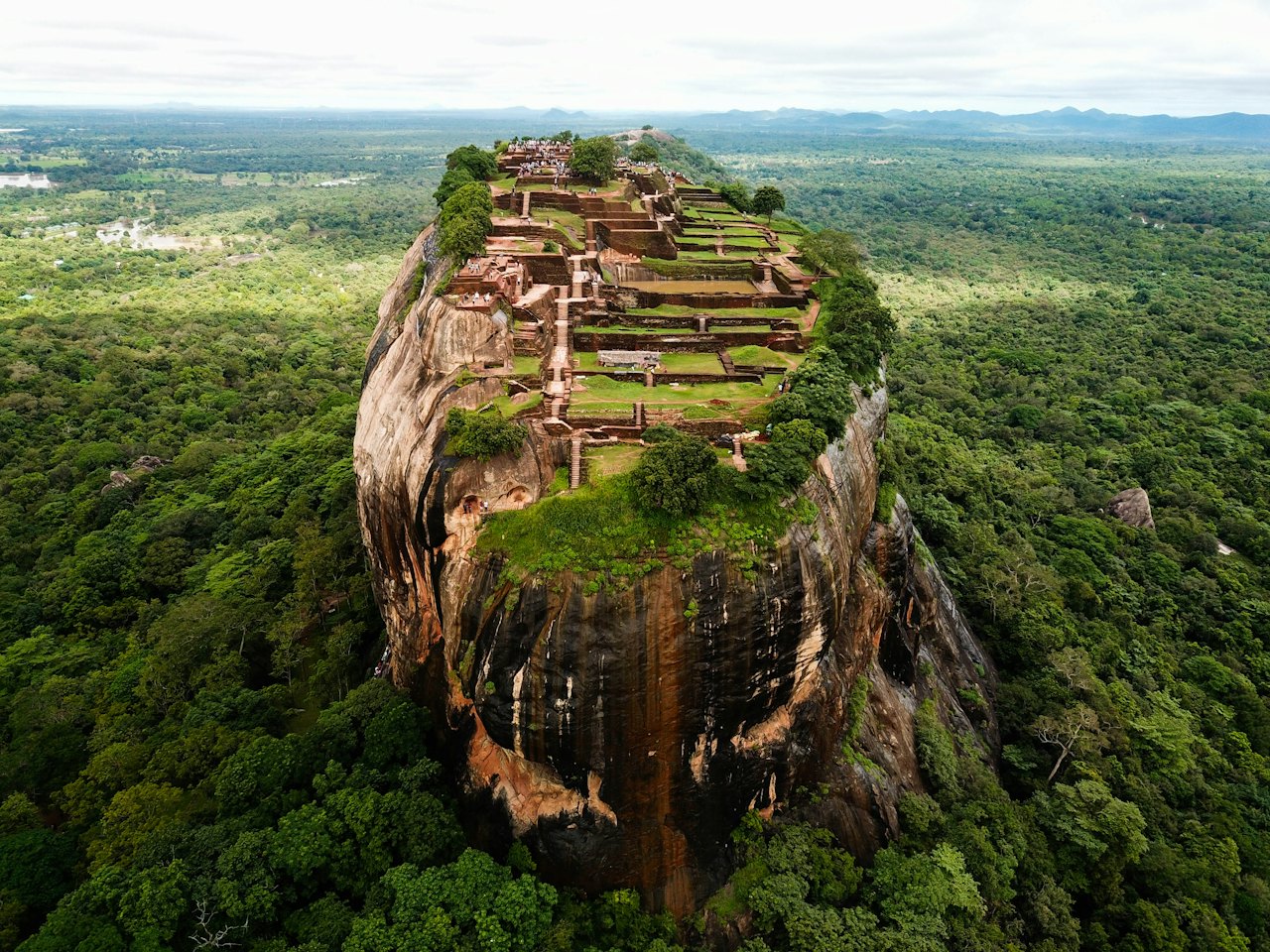
Climb Sigiriya Rock early ($35 (≈ €30 / £30) per foreign adult, museum included), then explore Dambulla caves and Polonnaruwa.
Photo: Hendrik Cornelissen on Unsplash
Overview
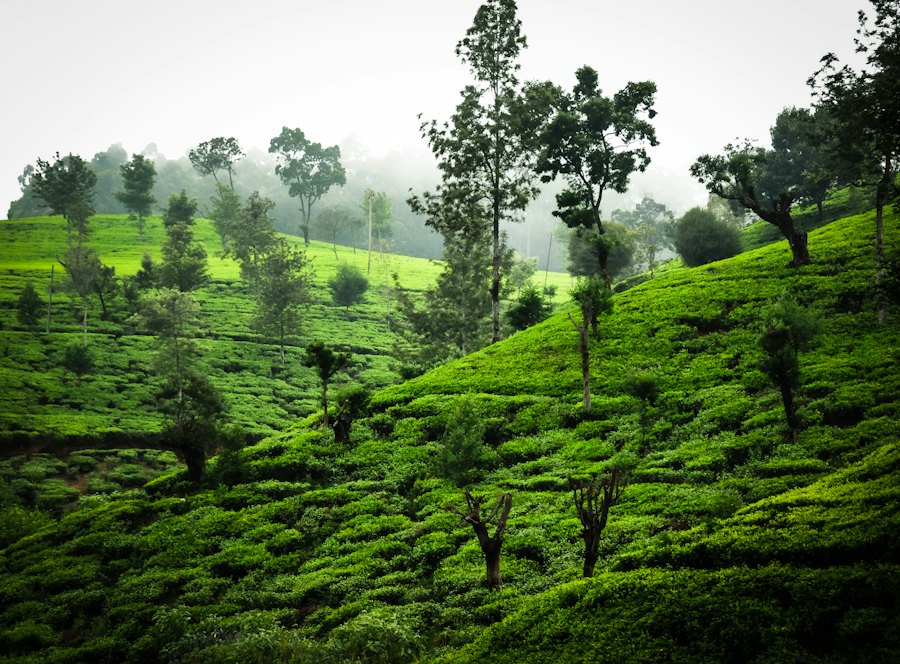
Sri Lanka is small enough to cross in a day and varied enough that a fortnight barely scratches it. Tea country around Nuwara Eliya and Ella, the rock fortress of Sigiriya, the ruined cities of Anuradhapura and Polonnaruwa, the Dutch fort at Galle and a long coast of beaches and surf breaks all sit within a few hours of each other. Elephants at Minneriya and Udawalawe and leopards in Yala are a reliable draw.
Distances mislead. A 150-kilometre journey can take five hours on winding hill roads, so plan fewer stops. The famous Kandy to Ella train is slow, crowded and worth booking seats on in advance. The island has two monsoons: the south-west one, roughly April to September, soaks the south and west coasts and hill country (Colombo sees 25 to 29 rain days a month from April to October), while the north-east one, October to January, affects the east and north. That is why December to March suits the west and south, and April to September suits the east. The country has recovered unevenly from the 2022 economic crisis, so check current conditions on prices and flights before you go. Coastal highs sit at 29 to 31°C / 84 to 88°F (84 to 88°F) all year, and the hills are cooler.
Climb Sigiriya Rock early ($35 (≈ €30 / £30) per foreign adult, museum included), then explore Dambulla caves and Polonnaruwa.
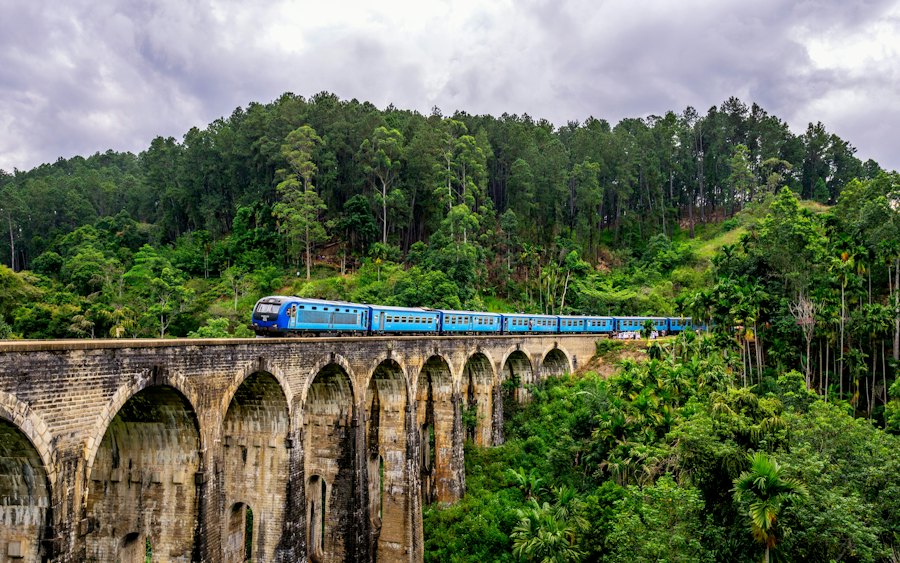
The Kandy to Ella train takes 6 to 7 hours through tea country. Unreserved seats cost $1 to $4 (≈ €0.89–3.57 / £0.79–3.15); reserved 1st or 2nd class $12 to $22 (≈ €11–20 / £9.45–17) online. Pick 2nd class for windows that open.
Mirissa whale watching runs November to April, calmest from December to March (operators quote a 98% sighting chance); boats rarely run May to October. Galle Fort for ramparts and cafes.
Best time
Best months for most visitors: Dec–Mar. Good weather, thinner crowds and fairer prices.
April is hot and humid with the Sinhala and Tamil New Year, and the east coast, including Trincomalee, Pasikudah and Arugam Bay, is at its best from about April to September, when Arugam Bay highs reach 33 to 34°C / 91 to 93°F (91 to 93°F).
December to March is the dry season for the west and south coasts, Colombo and the hill country, and the busiest, with Christmas and New Year costing the most.
May to June (Colombo about 29 rain days) and October to November (the east coast is wettest in October to December) bring heavy rain and unsettled inter-monsoon weather, with flooding and landslides possible in hill country.
Booking window: reserve flights and stays 2–3 months ahead for Dec–Mar, and 4–6 months ahead for peak season (Apr, Jul–Sep).
Partner links. We earn a commission at no extra cost to you; sponsors never change a ranking or safety note. How we earn money →
Weather
Current temperature loads here when your browser can reach Open-Meteo.
Weather data: Open-Meteo Historical & Live API. A single reading for the main town or area, not the whole destination.
Best from December to March; the south-west monsoon arrives from about April. Colombo highs 29 to 31°C / 84 to 88°F (84 to 88°F), with 25 to 29 rain days a month from April to October.
Best from April to September; Arugam Bay highs reach 33 to 34°C / 91 to 93°F (91 to 93°F) in June to August, and October to December is its wettest spell.
Coastal highs run 29 to 31°C / 84 to 88°F (84 to 88°F) and Kandy 27 to 31°C / 81 to 88°F (81 to 88°F), with the hills sunniest from January to March. Book rooms and the Kandy to Ella train well ahead. This is also the calmest stretch for whale watching off Mirissa.
July to September is a good time for the cultural triangle and the east coast, though the south-west is wet and rough seas affect swimming.
Prices are lowest and the green landscapes are at their best, but travel can be disrupted and some beaches are unsafe for swimming.
Weather data: Open-Meteo Historical & Live API (live reading). Typical highs and season notes are our own summaries. How we verify →
Safety
Last updated: government levels come from our editor-verified table (October 2026). When the live UK FCDO check succeeds, its exact UTC time appears in the panel below. The banner takes the most cautious of the five agencies, so a live UK warning always outranks a green entry in our table and any part-country warning shows as red. We never show a level we haven’t checked. How we verify →
Government levels: editor-verified table, October 2026 How we verify →
Five official agencies, one view. Ratings change, so each pill opens the agency’s own page for today’s level.
Tier 4/5 · Standard caution. UK FCDO: no advice against travel; ETA needed, terrorism cannot be ruled out, flood and landslide risk in the inter-monsoon, mined areas in the north and east.
The UK FCDO does not advise against travel to Sri Lanka (page updated 7 October 2026). It says heavy inter-monsoon rain has raised the risk of flooding and landslides, that terrorist attacks cannot be ruled out in places visitors go, and that there is a visible military presence in the north, with mined areas in the north and east: stay on roads and cleared paths and heed warning signs. Your passport must be valid for 6 months after arrival and you need an ETA. Health risks listed are dengue, Zika, chikungunya and altitude sickness. Flights via Middle Eastern hubs may be delayed. Check the official pages before booking and again before you fly.
Our plain-English summary of what the UK FCDO, US State Department, Australian Smartraveller, Japan MOFA and South Korea MOFA publish. We quote no live ratings from memory; each button above opens the agency's own page.
Our opinion, not an official warning
Regional nuance: UK FCDO (updated 7 Oct 2026): no advice against travel. It flags flood and landslide risk after heavy inter-monsoon rain, a visible military presence in the north and mined areas in the north and east (stay on roads and cleared paths), and that terrorist attacks cannot be ruled out.
The concerns that are real: Road traffic is the main danger: buses and tuk-tuks drive fast and overtake on blind bends. Overcharging, touts and gem scams are common, and women travelling alone report unwanted attention in some places. Rip currents on the south and west coasts, and wild animals including elephants and monkeys, are real hazards.
What headlines overstate: The 2019 Easter attacks and the 2022 economic crisis shaped the country's reputation, but tourist areas have operated normally since. The FCDO currently flags flood and landslide risk and Middle East flight disruption. Conditions change, so watch the official advice and local news; Sri Lanka Tourism's 24-hour hotline is 1912.
Written by our editors from general travel knowledge and kept apart from the agencies above. How we verify →
Costs
Backpacker
$50 (≈ €45 / £40) per person per day
What it covers: Local buses and trains, local rice and curry cafes, budget guesthouses and a few selective entry fees.
Mid-Range (default)
$115 (≈ €105 / £90) per person per day
What it covers: Private car and driver, 3-star boutique hotels or modern homestays, a mix of local and Western dining, and major sights and safaris included.
Boutique
$250 (≈ €220 / £195) per person per day
What it covers: Luxury driver or specialist guides, 5-star colonial tea bungalows or beach resorts, fine dining and private wildlife expeditions.
Cost source: Audited Local Lodging Taxes, Rail Tariffs & Dining Averages (our own estimates, flights excluded). How we verify →
Source: Should I Go's own estimates, October 2026, in USD per person excluding international flights; euro figures are rough conversions. A couple shares a room, so accommodation drops 25% per person. Prices move, so treat these as a planning range, not a quote.
Estimated total: $0 (≈ €0 / £0)
Estimate in USD per trip, excluding international flights. Two or more travellers share rooms, so accommodation drops 25% per person. Budget and luxury tiers are scaled from the mid-range figure.
Cost source: Audited Local Lodging Taxes, Rail Tariffs & Dining Averages (our own estimates, flights excluded). How we verify →
Where to base yourself
Gateway city with markets and food.
Temple of the Tooth and tea plantations.
Sigiriya, Dambulla and Anuradhapura.
Beaches and whale watching, November to April.
Itineraries
Getting between stops: Private driver or buses; trains link Kandy and Colombo. Airport to Kandy by pre-booked car is about 3 hours.
Getting between stops: Reserved seats on the Kandy to Ella train (6 to 7 hours, about $12 to $22 (≈ €11–20 / £9.45–17) online) book out; buy early, and choose 2nd class reserved for opening windows. 1st class is air-conditioned but the windows stay shut.
Getting between stops: A driver is efficient ($60 to $80 (≈ €55–70 / £45–65) a day, plus about $12 (≈ €11 / £9.45) a night for lodging if the hotel has no driver quarters); trains cover the scenic leg.
Routes and timetables change. Confirm transit times with the operator before you book.
Do and stay
Best for: Atmosphere
Pros: A walled Dutch-era fort with cafes, boutique hotels and sea views, within reach of southern beaches such as Unawatuna and Mirissa.
Watch for: More expensive than elsewhere on the south coast, and busy at sunset. Beaches are a short tuk-tuk ride away.
Best for: Hill country and hiking
Pros: Small guesthouses with views over the Ella Gap, Little Adam's Peak and Nine Arch Bridge, and a cooler climate. Easy to reach on the scenic train.
Watch for: Busy, and mist or rain can hide views. Prices have risen and the town is geared to tourists.
Best for: Ancient sites and wildlife
Pros: Near Sigiriya Rock, the Dambulla cave temples and elephant safaris at Minneriya and Kaudulla, with quiet guesthouses in the countryside.
Watch for: Hot and dusty, with little to do in the evening. Sigiriya entry is $35 (≈ €30 / £30) for foreign adults ($20 (≈ €18 / £16) for ages 6 to 12), and sunrise crowds are heavy.
These are partner links. We may earn a commission at no extra cost to you.
Trade-offs
Final verdict
Editorial opinion from Should I Go, written from general travel knowledge and reviewed periodically. Verify prices, entry rules and advisories before you book.
Typical costs and rules change; confirm with official sources before you travel.
December to March is best for the west and south coasts, Colombo and the hills. April to September is better for the east coast, including Trincomalee and Arugam Bay. The unsettled inter-monsoon weeks in October and November hit the hills hardest. Because of two monsoons there is always good weather somewhere, so choose your region first and your dates second.
Yes, by most standards. Assuming two people travelling together and excluding flights, a budget traveller can get by on $30 to $45 (≈ €25–40 / £25–35) a day each, and mid-range travellers on about $90 to $140 (≈ €80–125 / £70–110). A local rice and curry costs about $1 to $3 (≈ €0.89–2.68 / £0.79–2.36), while entry fees for foreigners at Sigiriya, safaris and some sites are expensive compared with local prices. Prices and exchange rates have shifted since 2022, so treat these as approximate.
Ten to fourteen days works well for the classic route of Colombo, the cultural triangle, Kandy, tea country and the south coast. A week is enough for two or three areas without rushing. Allow extra time because roads and trains are slow, and book the Kandy to Ella train early.
Sigiriya (Lion Rock) is $35 (≈ €30 / £30) per foreign adult, including the on-site museum, and $20 (≈ €18 / £16) for children aged 6 to 12. A safari at Yala or Udawalawe needs a government park permit of about $42 to $45 (≈ €40–40 / £35–35) per adult plus a private 4x4 jeep, which costs $25 to $60 (≈ €20–55 / £20–45) for a half day split among your group. Many operators sell all-inclusive private safaris (jeep, permits and driver) from about $75 (≈ €65 / £60) for a solo traveller, cheaper per person for bigger groups.
To central Colombo, the expressway takes 35 to 45 minutes and a metered or fixed-fare private taxi costs roughly $10 to $12 (about 3,300 to 4,000 rupees). A pre-booked private car to Kandy is about $63 to $87 (≈ €55–80 / £50–70) and takes 3 hours; Galle or Mirissa is $100 to $110 (≈ €90–100 / £80–85) and takes 2 to 2.5 hours by highway.
The journey takes 6 to 7 hours through tea plantations and mountain passes. Unreserved tickets bought at the station are very cheap, about 300 to 1,200 rupees ($1 to $4 (≈ €0.89–3.57 / £0.79–3.15)) depending on class, but they do not guarantee a seat. Most visitors book a reserved 1st or 2nd class seat online through agent platforms (third-party sellers, not the railway itself) for about $12 to $22 (≈ €11–20 / £9.45–17). 1st class has air conditioning but its windows do not open, so you cannot lean out for photos. 2nd class reserved is the favourite for views, because the windows open and you can stand near the doorways.
A guesthouse costs about $15 to $35 (≈ €13–30 / £12–30) a night, a mid-range boutique hotel or resort $50 to $120 (≈ €45–105 / £40–95), and a luxury or heritage villa $180 to $350 (≈ €160–310 / £140–280) or more. A car with an English-speaking driver is a popular way to cover several regions and costs about $60 to $80 (≈ €55–70 / £45–65) a day, usually including the vehicle, fuel, insurance and highway tolls. If your hotel has no free driver quarters (many mid-range and luxury hotels do), you pay the driver a food and lodging allowance of about $12 (4,000 rupees) a night.
The season runs from November to April. December to March is the peak, with the calmest seas, and operators commonly quote a 98 per cent chance of seeing blue, fin or sperm whales on the migration route off the southern coast. From May to October, the south-west monsoon makes the sea very rough, boat tours rarely operate and seasickness is a real risk, so plan whale watching for the dry season.
Tips are an important part of tourism incomes and are very much appreciated. For a private driver on a multi-day trip, about 2,500 to 4,000 rupees ($8 to $12 (≈ €7.14–11 / £6.30–9.45)) a day is typical for excellent service. Safari jeep drivers and trackers get about 1,500 to 2,500 rupees ($5 to $8 (≈ €4.46–7.14 / £3.94–6.30)) per jeep at the end of the ride. Most sit-down tourist restaurants add a 10% service charge; if it is included, round up or leave an extra 200 to 500 rupees ($0.60 to $1.50 (≈ €0.54–1.34 / £0.47–1.18)) for good service, and if it is not, leave about 10%. Hotel porters get 100 to 200 rupees ($0.30 to $0.60 (≈ €0.27–0.54 / £0.24–0.47)) a bag.
Get live weather, activities, travel advisories, and personalised tips for Sri Lanka
Check Sri Lanka Now →Have you visited Sri Lanka? Was it worth it? Readers can vote: Worth Every Penny, Great in Shoulder Season Only, or Overrated / Skip It.