Bangkok temples and street food
Wat Pho, Wat Arun and the Grand Palace by day; street food in Chinatown by night.
Photo: Humphrey M on Unsplash
Photo: Nat Weerawong on Unsplash
View Full Gallery (3)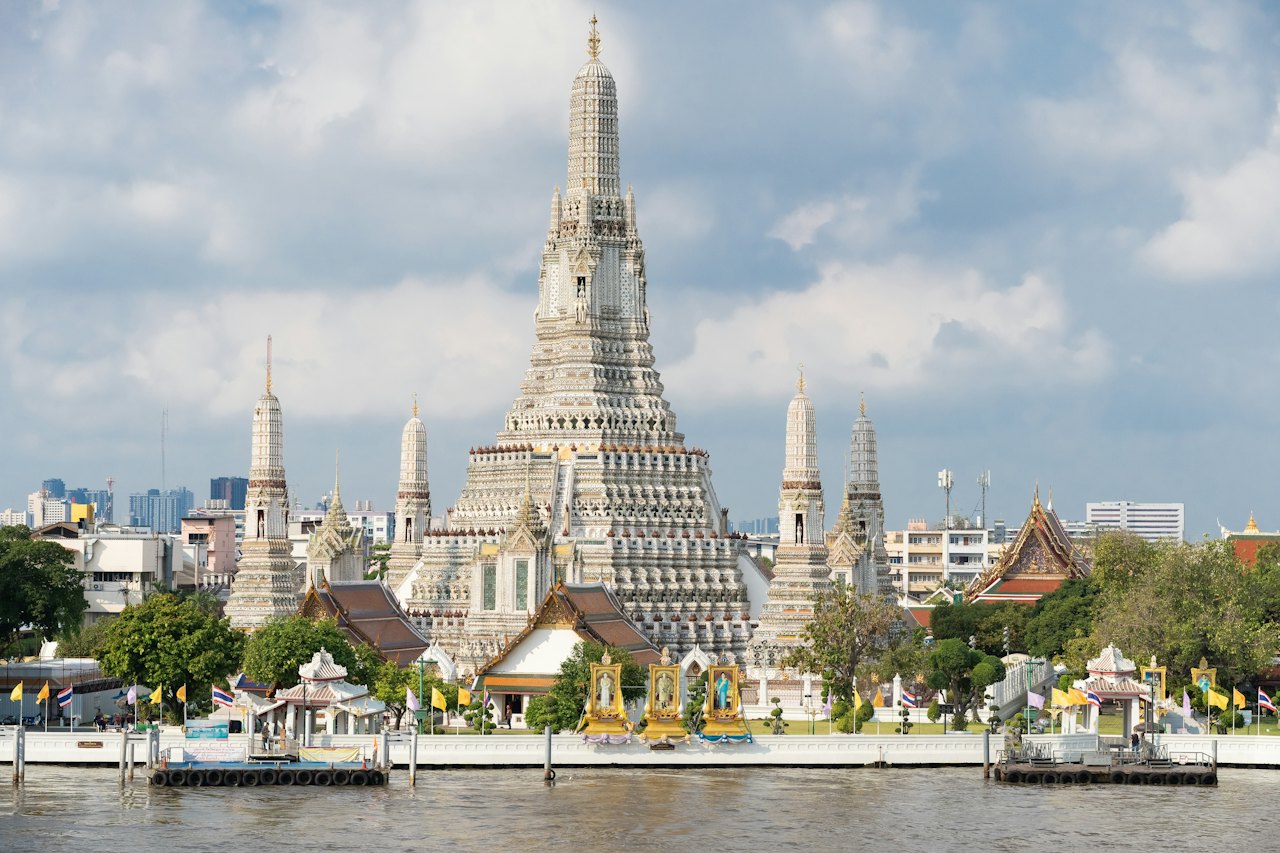

Overview
Thailand is the most practised destination in Southeast Asia, which is both its appeal and its complaint. Bangkok's temples, canals and food stalls, Chiang Mai's old city and northern hills, and the Andaman and Gulf island chains are all easy to reach and easy to afford. That ease is why it is crowded, and why the resorts and beach bars of Phuket, Krabi and Koh Samui can feel the same from one trip to the next.
The sensible plan is to pick a season, then a coast. The cool, dry months of November to February suit Bangkok, the north and the Andaman side; the Gulf islands (Koh Samui, Koh Phangan, Koh Tao) are mostly drier from January to September, with their heaviest rain from October to December. March to May is hot (April is the hottest month, often 35 to 40 °C / 95 to 104 °F), and smoke from crop burning can foul the air in the north. Go to the islands outside Christmas and New Year if you can, use ride-hailing apps rather than haggling with tuk-tuks, and rent a scooter only if you hold the right licence and insurance. Thai food, at a plastic table for a few dollars, is the real reason to come.
Wat Pho, Wat Arun and the Grand Palace by day; street food in Chinatown by night.
Temples, cooking classes and ethical elephant sanctuaries; choose ones with no riding.
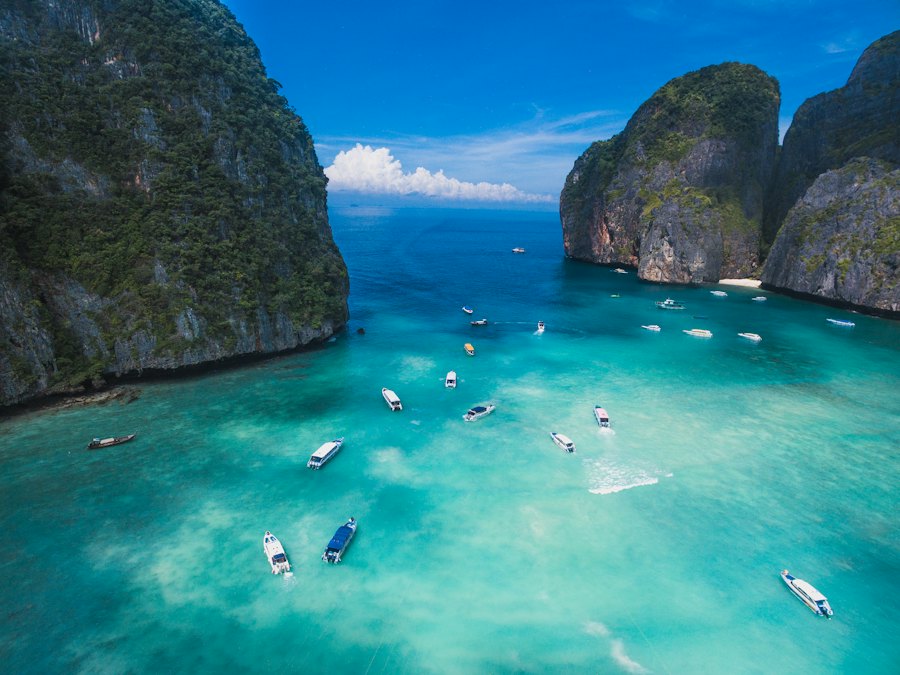
Phi Phi and Krabi in the Andaman Sea; Koh Samui and Koh Tao in the Gulf.
Best time
Best months for most visitors: Nov–Feb. Good weather, thinner crowds and fairer prices.
March to May is hot and humid, with April the hottest month: temperatures above 35 °C / 95°F (95 °F) are normal in Bangkok and across central and northern Thailand, with Songkran, the water festival, falling in mid-April and filling the streets for several days.
November to February is the cool, dry season and the busiest, with Christmas and New Year the most expensive and crowded, especially on Phuket, Krabi and Koh Samui.
May to October is the rainy season on the Andaman coast (it really sets in around September), with heavy showers, rough seas and some boat services suspended, but lower prices and quieter beaches.
Booking window: reserve flights and stays 2–3 months ahead for Nov–Feb, and 4–6 months ahead for peak season (Mar, Jun–Aug, Oct).
Partner links. We earn a commission at no extra cost to you; sponsors never change a ranking or safety note. How we earn money →
Weather
Current temperature loads here when your browser can reach Open-Meteo.
Weather data: Open-Meteo Historical & Live API. A single reading for the main town or area, not the whole destination.
Peak season about 35°C / 95°F; shoulder season about 31°C / 88°F.
Rain: High in the wet season (May–Oct, heaviest around September); dry Nov–Apr.
The best weather and the busiest time.
March to May is very hot, with April the hottest month (35 to 40 °C / 95 to 104 °F). The Andaman coast is wet from May to October; the Gulf islands are driest from January to September and wettest from October to December.
Days are warm rather than baking, with temperatures from the mid-20s to low 30s Celsius (mid-70s to high 80s °F). Book islands and flights well ahead.
The north can suffer smoke from burning from February to April. The Gulf Coast (Koh Samui, Koh Phangan, Koh Tao) has a different pattern from the Andaman coast: mostly dry and sunny from January to September.
In Bangkok it brings daily downpours and occasional flooding; the Gulf islands are the opposite: their monsoon peaks late, with heavy rain from October to December.
Weather data: Open-Meteo Historical & Live API (live reading). Typical highs and season notes are our own summaries. How we verify →
Safety
Last updated: government levels come from our editor-verified table (October 2026). When the live UK FCDO check succeeds, its exact UTC time appears in the panel below. The banner takes the most cautious of the five agencies, so a live UK warning always outranks a green entry in our table and any part-country warning shows as red. We never show a level we haven’t checked. How we verify →
Government levels: editor-verified table, October 2026 How we verify →
Five official agencies, one view. Ratings change, so each pill opens the agency’s own page for today’s level.
Tier 4/5 · Standard caution. Normal precautions across most of the country: road accidents, scams and strong seas; UK FCDO advises against all but essential travel to the far south and within 20 km / 12 mi of the Cambodian border.
The UK FCDO (page updated 12 Oct 2026) has no warning against travel to most of Thailand, but advises against all but essential travel to Pattani, Yala and Narathiwat provinces, four districts of southern Songkhla (Chana, Thepa, Na Thawi, Saba Yoi), the Hat Yai to Padang Besar train line, and anywhere within 20 km (12 miles) of the Cambodian border, where fighting broke out in July and December 2025, land crossings remain suspended and landmines remain. It also warns that terrorist attacks could happen anywhere, that protests can turn unpredictable, and that Bangkok and Chiang Mai can have dangerous smoke haze. Its October page also reported severe flooding around Bangkok. Check the official pages before booking and again before you fly.
Our plain-English summary of what the UK FCDO, US State Department, Australian Smartraveller, Japan MOFA and South Korea MOFA publish. We quote no live ratings from memory; each button above opens the agency's own page.
Our opinion, not an official warning
Regional nuance: The UK FCDO advises against all but essential travel to Pattani, Yala, Narathiwat, parts of southern Songkhla and anywhere within 20 km (12 miles) of the Cambodian border (land crossings suspended, landmines). Bangkok, Chiang Mai and the main islands are treated far more routinely.
The concerns that are real: Road deaths, especially scooter crashes, are the largest risk to visitors. Taxi and tuk-tuk overcharging, gem or tailor shop scams, and damage claims after vehicle rentals are common. Drink spiking and bag theft happen at party beaches and night areas, and strong currents and jellyfish affect swimmers in some seasons.
What headlines overstate: Political demonstrations and border disputes make headlines, but they rarely affect the main tourist areas of Bangkok, Chiang Mai or the islands. Keep an eye on current news and your embassy's updates, and check the official advice before travelling.
Written by our editors from general travel knowledge and kept apart from the agencies above. How we verify →
Costs
Backpacker
$45 (≈ €40 / £35) per person per day
What it covers: 1,200 to 2,000 baht a day: hostel bed or basic fan room, street food, public transport.
Mid-Range (default)
$105 (≈ €95 / £85) per person per day
What it covers: 2,500 to 4,500 baht a day: private air-conditioned room shared by two, local markets and tourist cafes, ride-hailing rides and the occasional paid tour.
Boutique
$230 (≈ €210 / £180) per person per day
What it covers: 5,000 to 9,000+ baht a day: well-reviewed hotels or resorts, frequent private drivers or flights, sit-down restaurants and organised day trips.
Cost source: Audited Local Lodging Taxes, Rail Tariffs & Dining Averages (our own estimates, flights excluded). How we verify →
Source: Should I Go's own estimates, October 2026, in USD per person excluding international flights; euro figures are rough conversions. A couple shares a room, so accommodation drops 25% per person. Prices move, so treat these as a planning range, not a quote.
Estimated total: $0 (≈ €0 / £0)
Estimate in USD per trip, excluding international flights. Two or more travellers share rooms, so accommodation drops 25% per person. Budget and luxury tiers are scaled from the mid-range figure.
Cost source: Audited Local Lodging Taxes, Rail Tariffs & Dining Averages (our own estimates, flights excluded). How we verify →
Where to base yourself
Temples, markets and nightlife.
Old city temples and mountains.
Limestone cliffs and beaches.
Gulf beaches and diving.
Itineraries
Getting between stops: Sleeper trains take about 12 hours; flights take about 1 hour 10 minutes.
Getting between stops: Domestic flights and ferries link the legs.
Getting between stops: Budget airlines connect most regions.
Routes and timetables change. Confirm transit times with the operator before you book.
Do and stay
Best for: First-timers
Pros: Near BTS Skytrain and MRT stations, with large hotel choice, restaurants and shops, and easy river boats to the old city sights.
Watch for: Traffic and heat are heavy, Sukhumvit's Nana and Soi Cowboy areas are noisy and adult-oriented, and rooms near the main sights are pricier.
Best for: Culture and cafes
Pros: A walkable moated old city with temples and night markets, and cafe-lined Nimman for a modern, easy stay. Cooler than Bangkok in winter and cheap.
Watch for: Smoke from burning in February to April can be severe, and the old city is busy with tour groups and scooters.
Best for: Beaches
Pros: Beachfront resorts, boat trips to nearby islands and a wide range of prices. Railay is reachable only by boat and has dramatic limestone scenery.
Watch for: Chaweng and Ao Nang are busy and commercial, rains cut some services in season, and the best beaches are crowded at midday.
These are partner links. We may earn a commission at no extra cost to you.
Trade-offs
Final verdict
Editorial opinion from Should I Go, written from general travel knowledge and reviewed periodically. Verify prices, entry rules and advisories before you book.
Typical costs and rules change; confirm with official sources before you travel.
November to February is generally best, with warm, drier weather across Bangkok, the north and the Andaman coast. It is also the busiest and most expensive time. March to May is very hot, and the north can be smoky. For the Gulf islands such as Koh Samui, January to September is mostly drier than on the Andaman side, whose dry season runs November to April.
It is good value rather than rock-bottom now. Street food, local transport and simple rooms remain cheap (a dish at a stall or food court is about $1.75–4.50 (≈ €1.56–4.02 / £1.38–3.54), or 60 to 150 baht), and a budget traveller can manage on around $35 to $60 (≈ €30–55 / £30–45) a day (1,200 to 2,000 baht). Island resorts, domestic flights and tourist-area restaurants cost noticeably more, and Phuket and Koh Samui in peak season can push budgets up a tier. Mid-range travellers should plan on roughly $75 to $130 (≈ €65–115 / £60–100) per person per day (2,500 to 4,500 baht).
Ten to fourteen days works well for a first trip: three or four in Bangkok, three in Chiang Mai and a week on one island group. You can do less, but distances are large and travel days add up. Pick one coast rather than trying both, and allow a buffer day before an international flight if you travel by boat.
Plan on about $13–19 (450 to 650 baht; ≈ €12–17 / £10–15) for a public metered taxi from Suvarnabhumi or Don Mueang to a central hotel. The meter starts at 35 or 40 baht and adds 3 baht a minute when traffic crawls under 6 km / 3.7 mi/h (4 mph); expect about 300 to 450 baht on the meter, plus a 50 baht airport surcharge paid to the driver and 70 to 110 baht in expressway tolls paid in cash. Grab and Bolt show the fare up front but can surge 1.5 to 3 times at peak hours, with tolls on top. The Airport Rail Link at $1.33 (45 baht) is cheaper and often faster.
Up to 30 days for tourism if you hold a passport from one of about 60 visa-exempt countries, including the UK, the US, Canada, Australia, Japan, South Korea, Singapore, Malaysia and most EU nations; the stay was cut from 60 days to 30. Mauritius and Seychelles passports get 15 days, and a few nationalities, such as Azerbaijan, Belarus and Serbia, need a visa on arrival at the border. You also need 6 months of passport validity and the free Digital Arrival Card within 72 hours before you fly. Rules change, so confirm yours on the official Thai immigration site.
Get live weather, activities, travel advisories, and personalised tips for Thailand
Check Thailand Now →Have you visited Thailand? Was it worth it? Readers can vote: Worth Every Penny, Great in Shoulder Season Only, or Overrated / Skip It.