The Siq and the Treasury
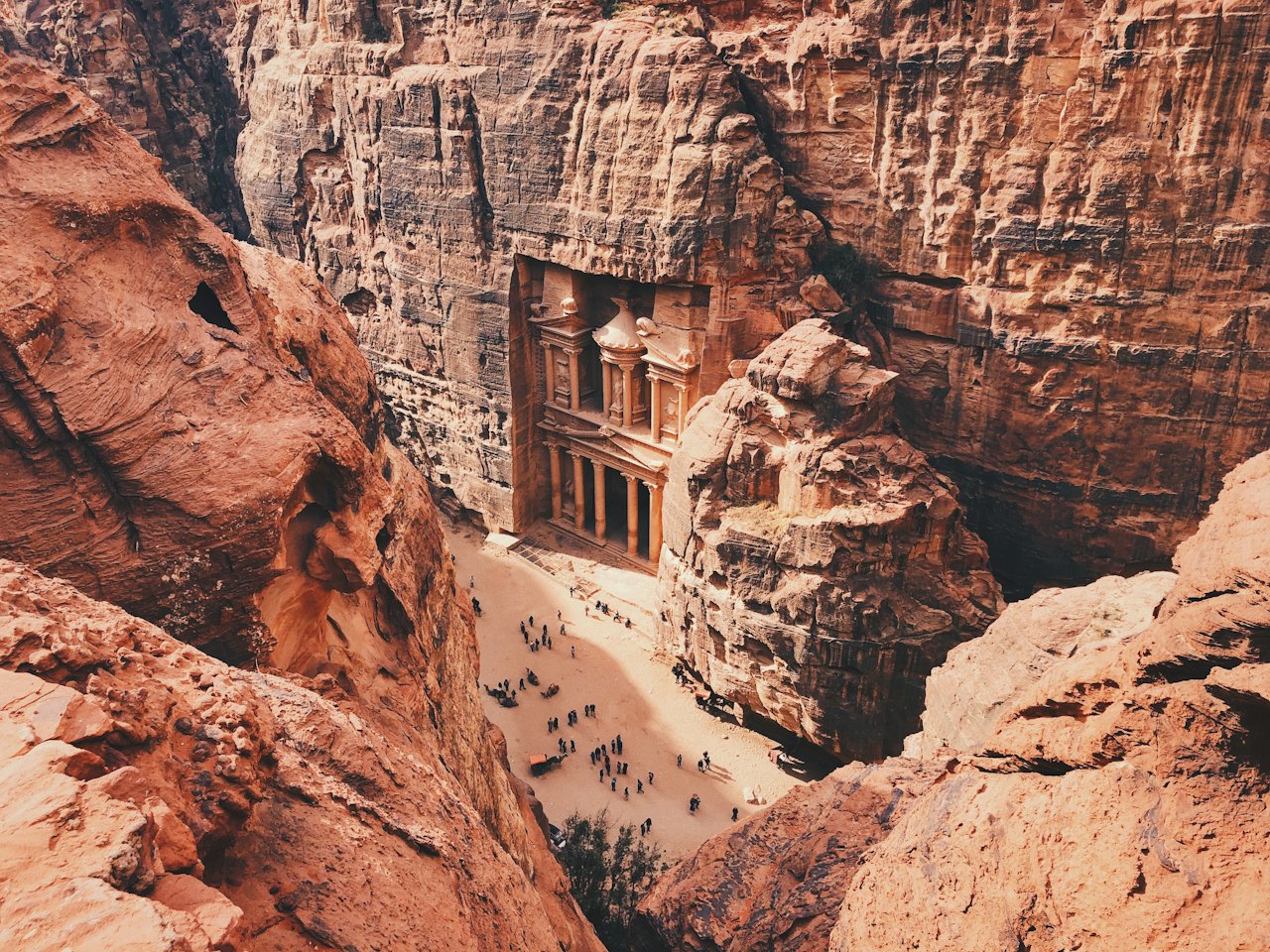
The path through the narrow gorge opens onto Al-Khazneh. Arrive at opening for soft light and fewer people.
Photo: Florin Gorgan on Unsplash
Overview
Petra is rarely a disappointment, which is unusual for a place this famous. You walk about a kilometre down the Siq, a narrow sandstone canyon, and the Treasury appears at the end in a slit of pink light. The Nabataeans carved their city here more than two thousand years ago, and the Treasury is only the first of hundreds of facades, tombs, theatre seats and hillside stairs.
The mistake most visitors make is treating Petra as a one-hour photo stop. The site is large, the walk to the Monastery is more than 800 steps, and the best views, such as the High Place of Sacrifice and the Treasury from above, take time and legs. Plan a full day, ideally two, and start at opening to beat the heat and the tour groups. Jordan itself is easy and welcoming, and pairing Petra with Wadi Rum, the Dead Sea and Amman makes a compact week. It is not a cheap country, though, and entry to Petra is the biggest single cost.
The path through the narrow gorge opens onto Al-Khazneh. Arrive at opening for soft light and fewer people.
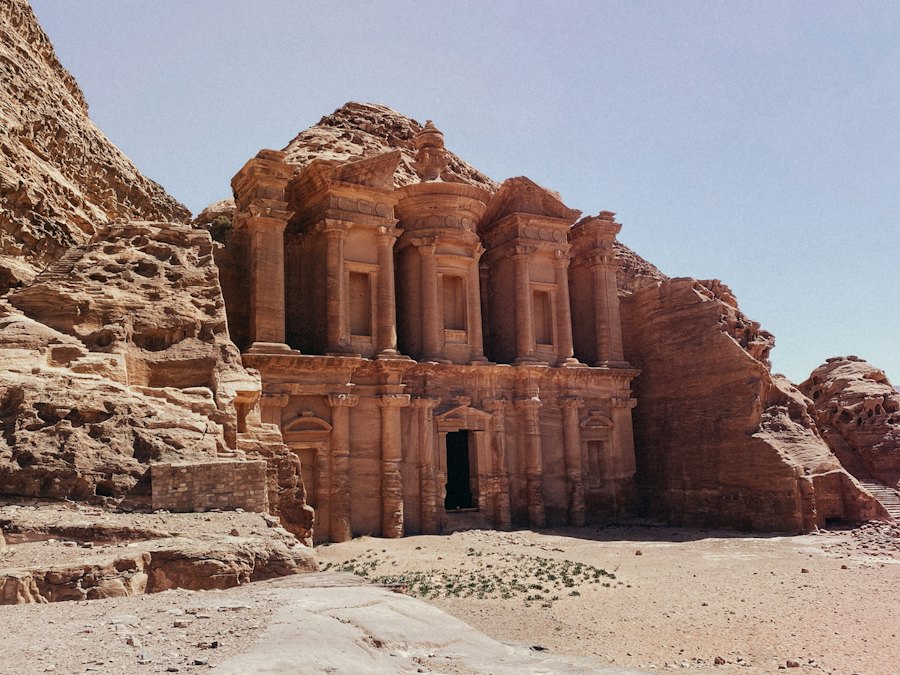
More than 800 steps climb to Ad Deir. Start early; the views at the top are the point.
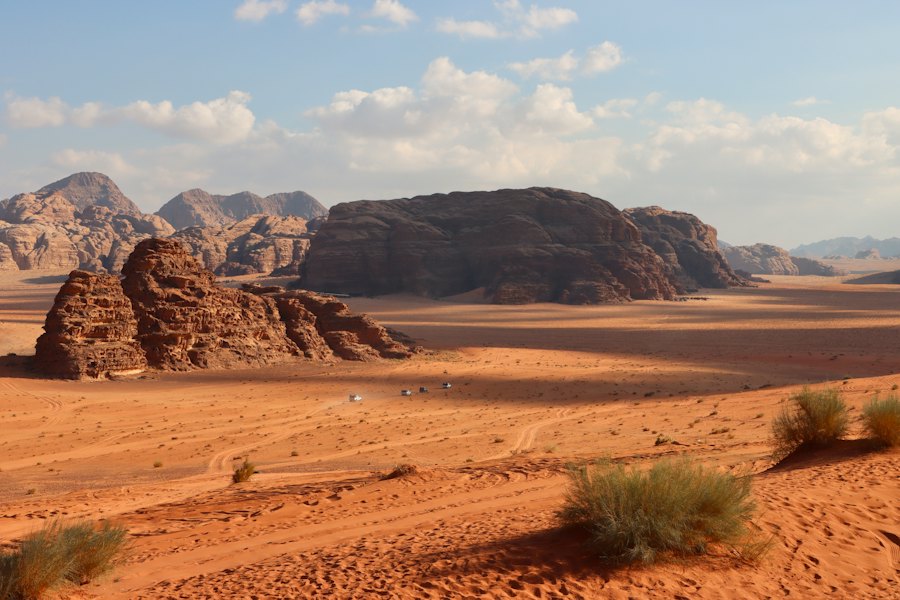
A night in a desert camp, jeep ride and sunrise over red rock.
Best time
Best months for most visitors: Mar–May & Sep–Nov. Good weather, thinner crowds and fairer prices.
September and early December are often good value, with warm days and fewer visitors.
March to May and October to November are peak season, with comfortable daytime highs of about 19 to 28°C / 66 to 82°F (66-82°F) in spring and 20 to 31°C / 68 to 88°F (68-88°F) in autumn and clear skies.
June to August is hot, with average daytime highs of 32-33°C / 90-91°F (90-91°F), a very high UV index and no shade, so aim for the first hours after opening.
Booking window: reserve flights and stays 2–3 months ahead for Mar–May & Sep–Nov, and 4–6 months ahead for peak season (Jan–Feb, Jun, Sep, Dec).
Partner links. We earn a commission at no extra cost to you; sponsors never change a ranking or safety note. How we earn money →
Weather
Current temperature loads here when your browser can reach Open-Meteo.
Weather data: Open-Meteo Historical & Live API. A single reading for the main town or area, not the whole destination.
Brisk days with highs of 13-15°C / 55-59°F (55-59°F) and freezing desert nights of 2-4°C / 36-39°F (35-39°F). This is the wettest time of year.
Highs of 19-28°C / 66-82°F (66-82°F) and lows of 6-13°C / 43-55°F (43-55°F). Ideal trekking weather with mild evenings.
Intense midday sun, highs of 32-33°C / 90-91°F (90-91°F), nights of 16-17°C / 61-63°F (61-63°F), a very high UV index and almost no humidity.
Highs of 20-31°C / 68-88°F (68-88°F) and lows of 8-16°C / 46-61°F (46-61°F). Great visibility, with daytime temperatures dropping quickly by November.
Petra is at its busiest, particularly in spring, and hotels in Wadi Musa fill up, so book early.
February can be pleasant, though nights are cold and rain is possible. Spring wildflowers appear in the desert after good winter rains.
December to February is cold, with highs of 13-15°C / 55-59°F (55-59°F) and nights of 2-4°C / 36-39°F (35-39°F) that can reach freezing, and rain can cause flash floods in the Siq, which occasionally closes it (the FCDO flags flash-flood risk from November to March). Crowds are thinner and prices lower.
Weather data: Open-Meteo Historical & Live API (live reading). Typical highs and season notes are our own summaries. How we verify →
Safety
Last updated: government levels come from our editor-verified table (October 2026). When the live UK FCDO check succeeds, its exact UTC time appears in the panel below. The banner takes the most cautious of the five agencies, so a live UK warning always outranks a green entry in our table and any part-country warning shows as red. We never show a level we haven’t checked. How we verify →
Government levels: editor-verified table, October 2026 How we verify →
Five official agencies, one view. Ratings change, so each pill opens the agency’s own page for today’s level.
Tier 4/5 · Standard caution. UK FCDO (27 Oct 2026): advises against travel within 3 km / 1.9 mi of the Syrian border only; regional tensions mean a high risk of sudden escalation and airspace disruption.
The UK FCDO (updated 27 October 2026) advises against all travel within 3 km / 1.9 mi (about 2 miles / 3.2 km) of the Syrian border only; it does not advise against travel to Petra, Wadi Rum or the Dead Sea. The wider Middle East context is unpredictable and the risk of sudden escalation is high, so expect possible flight cancellations and airspace closures. A shooting at a church in Karak Governorate on 23 October 2026 caused several casualties. Check the FCDO, US State Department and Australian DFAT pages before booking and again before you fly.
Our plain-English summary of what the UK FCDO, US State Department, Australian Smartraveller, Japan MOFA and South Korea MOFA publish. We quote no live ratings from memory; each button above opens the agency's own page.
Our opinion, not an official warning
Regional nuance: The UK FCDO (updated 27 Oct 2026) advises against all travel within 3 km / 1.9 mi of the Syrian border and does not restrict Petra, Wadi Rum or the Dead Sea. It warns the regional situation is unpredictable, with possible flight cancellations and airspace closures, and notes a shooting at a church in Karak on 23 October 2026. Check the official pages before you book.
The concerns that are real: The practical problems are heat and dehydration, loose steps, unlicensed guides and the occasional price dispute over animals or transport. The FCDO warns of flash floods in wadis from November to March, so avoid them for at least a day after heavy rain. Petra's opening hours are strict and visitors have been locked in overnight, so leave on time. The Desert Highway is rough in places and driving at night is tiring.
What headlines overstate: Regional conflict can make Jordan sound riskier than most visitors find it, but the FCDO is explicit that airspace and flight disruption are real possibilities. Keep your plans flexible, take insurance that covers cancellations, and follow local authorities' advice.
Written by our editors from general travel knowledge and kept apart from the agencies above. How we verify →
Costs
Backpacker
$60 (≈ €55 / £45) per person per day
What it covers: Hostel or budget hotel in Wadi Musa, a clean private room at $20-$45 (≈ €18–40 / £16–35) a night, street food at $2-$5 (≈ €1.79–4.46 / £1.57–3.94) a meal (falafel sandwiches, shawarma wraps, a takeaway portion of Mansaf, the national dish of lamb cooked in fermented yogurt sauce over rice), shared transport, and Petra entry averaged across the trip.
Mid-Range (default)
$130 (≈ €115 / £100) per person per day
What it covers: Comfortable three- or four-star hotel at $65-$130 (≈ €60–115 / £50–100) a night, sit-down meals at $10-$25 (≈ €8.93–20 / £7.87–20) a person in central Wadi Musa (a good place to try Zarb, a Bedouin barbecue slow-cooked in a sand pit), a private driver for part of the trip, Petra entry and a guide for a half day.
Boutique
$290 (≈ €260 / £230) per person per day
What it covers: Five-star hotel at the Petra gate at $200-$450 (≈ €180–400 / £155–350)+ a night, private driver and guide, sunset or Petra by Night extras, a premium Wadi Rum camp and fine dining.
Cost source: Audited Local Lodging Taxes, Rail Tariffs & Dining Averages (our own estimates, flights excluded). How we verify →
Source: Should I Go's own estimates, October 2026, in USD per person excluding international flights; euro figures are rough conversions. A couple shares a room, so accommodation drops 25% per person. Prices move, so treat these as a planning range, not a quote.
Estimated total: $0 (≈ €0 / £0)
Estimate in USD per trip, excluding international flights. Two or more travellers share rooms, so accommodation drops 25% per person. Budget and luxury tiers are scaled from the mid-range figure.
Cost source: Audited Local Lodging Taxes, Rail Tariffs & Dining Averages (our own estimates, flights excluded). How we verify →
Where to base yourself
The ancient city and a lively town with hotels.
Desert camps, jeeps and camel rides.
The Citadel, Roman theatre and falafel.
Floating in salt water and snorkelling in the Red Sea.
Itineraries
Getting between stops: Walking inside Petra; horse carts and donkeys are available at extra cost.
Getting between stops: JETT buses and private taxis link Amman, Petra and Wadi Rum.
Getting between stops: Hire a driver or use JETT buses; roads are good.
Routes and timetables change. Confirm transit times with the operator before you book.
Do and stay
Best for: First-timers
Pros: Hotels, restaurants and shops are within walking distance of the Petra entrance, making an early start easy. Options range from hostels to well-known international hotels, and prices change with how close you are to the Visitor Center gates. Budget hostels and guesthouses higher up the hill in downtown Wadi Musa run $20-$45 (≈ €18–40 / £16–35) a night for clean private rooms; three- and four-star hotels run $65-$130 (≈ €60–115 / £50–100), many with rooftop views, pools and buffet breakfasts; five-star and entry-adjacent properties right at the park gate (such as the Mövenpick Resort Petra and The Old Village Hotel & Resort) run $200-$450 (≈ €180–400 / £155–350)+.
Watch for: A touristy town with limited character after dark, and some restaurants are overpriced. Hotels fill quickly in spring and autumn.
Best for: Quiet
Pros: Fewer visitors, desert views and a calmer feel, with access to Little Petra's smaller carved tombs. Good for those who want to avoid the town.
Watch for: Far from restaurants and the main entrance, and you will need a taxi or driver. Fewer accommodation options.
Best for: Desert stay
Pros: A night in a Bedouin camp under the stars, with jeep tours, sunrise and sunset rock views. About two hours from Petra by road.
Watch for: Facilities range from basic to quite luxurious, with prices to match. Nights are cold in winter and midday is hot in summer.
These are partner links. We may earn a commission at no extra cost to you.
Trade-offs
Final verdict
Editorial opinion from Should I Go, written from general travel knowledge and reviewed periodically. Verify prices, entry rules and advisories before you book.
Typical costs and rules change; confirm with official sources before you travel.
March to May and October to November are best, with pleasant temperatures and clear skies. Midsummer is hot, with average highs of 32-33°C / 90-91°F (90-91°F) and intense midday sun, and winter is cold and wet, with highs of 13-15°C / 55-59°F (55-59°F), nights close to freezing with a small risk of flooding in the Siq. If you travel in summer, start at opening and finish by early afternoon.
One full day covers the main sights if you start early: the Siq, Treasury, Street of Facades, theatre and Monastery. Two days lets you add the High Place of Sacrifice, the Royal Tombs, Little Petra and a slower pace. The Monastery is more than 800 steps up and can take over an hour each way. Many visitors wish they had allowed more time.
By regional standards, yes. Entry is JD 50 ($71 (≈ €65 / £55); ≈ €63 / £56) for one day if you spend a night in Jordan, JD 55 for two days and JD 60 for three, and JD 90 ($127 (≈ €115 / £100)) for day-trippers who sleep outside the country. The Jordan Pass includes Petra entry and waives the visa fee on stays of four days or more, so it usually pays for itself. Mid-range travellers should expect about $110 to $150 (≈ €100–135 / £85–120) per person per day in total.
Get live weather, activities, travel advisories, and personalised tips for Petra, Jordan
Check Petra, Jordan Now →Have you visited Petra, Jordan? Was it worth it? Readers can vote: Worth Every Penny, Great in Shoulder Season Only, or Overrated / Skip It.