The caldera view
Oia and Fira sit on the rim of a flooded volcano. The sunset crowd at Oia is thick, so walk to Imerovigli for a quieter ledge.
Photo: Richard Liu on Unsplash
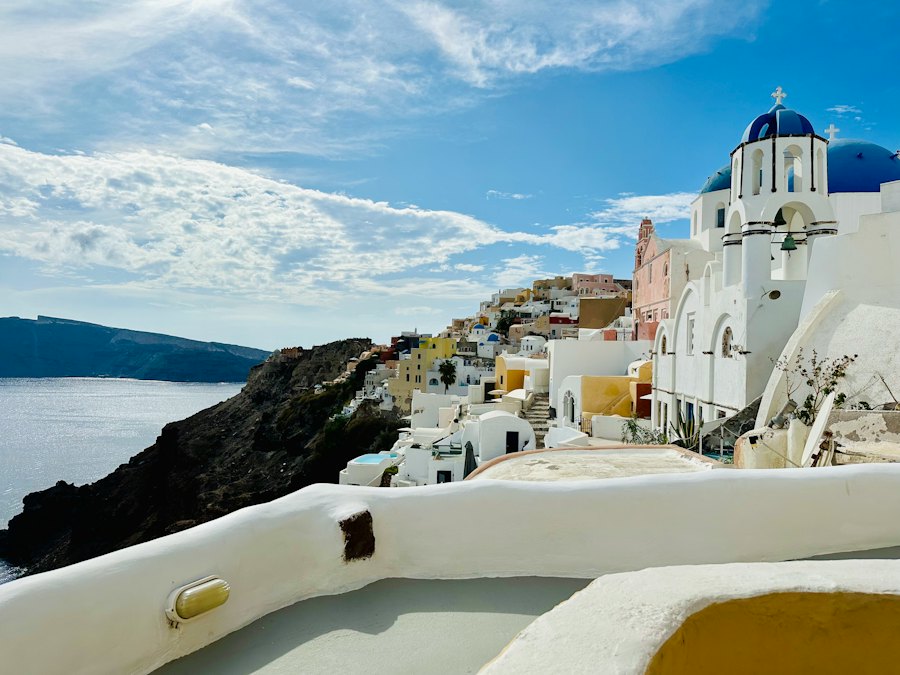
Photo: Michael Lock on Unsplash
View Full Gallery (3)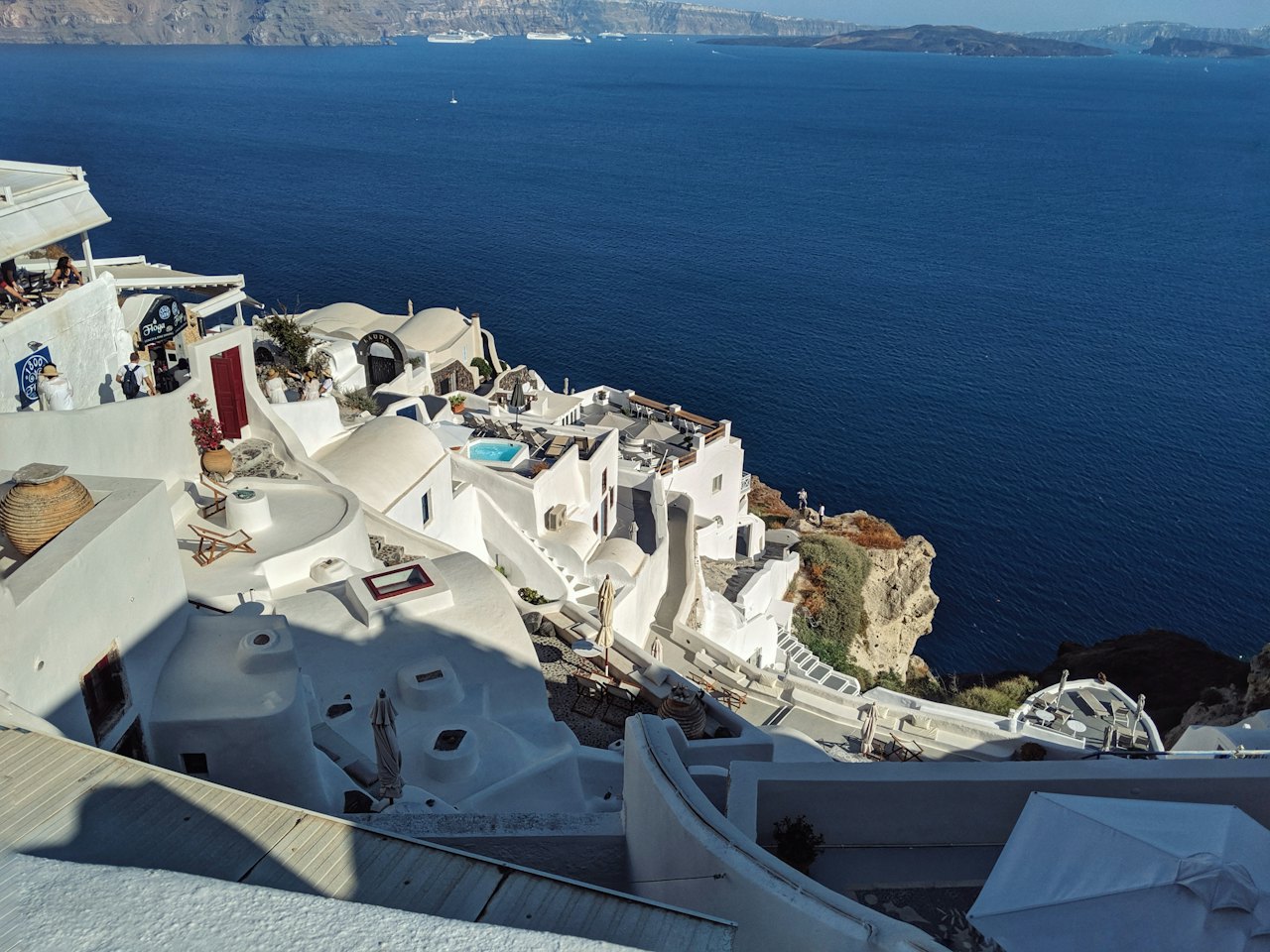
Overview
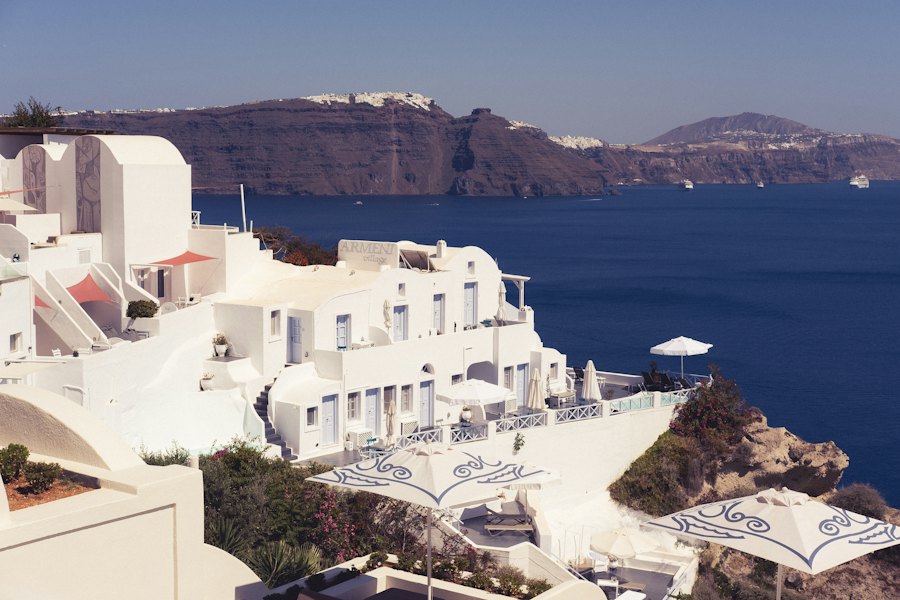
Santorini's volcanic caldera creates one of the most dramatic settings on earth. Whitewashed villages cling to cliffs above a glittering sea, and the sunsets are the stuff of legend.
Santorini is smaller and more fragile than its postcards suggest. The caldera rim is a few kilometres of whitewashed village, and at sunset Oia can feel like a stadium. The fix is simple: stay in Imerovigli or Pyrgos, walk the cliff path from Fira to Oia in the morning (about 10 km / 6 miles, two and a half to four hours), and watch the light from somewhere with fewer elbows. Visit the Minoan ruins at Akrotiri for the island's real depth. Be realistic about money: rooms with a caldera view cost double those a street back, and ferries from Athens take four to five hours on the fast boats and seven to nine on the slow ones.
Oia and Fira sit on the rim of a flooded volcano. The sunset crowd at Oia is thick, so walk to Imerovigli for a quieter ledge.
Local Assyrtiko grows in vines trained into baskets on the ground. Several wineries open for tastings with a view.
Perissa and Kamari have black volcanic sand, and Red Beach has red sand under iron-rich cliffs. Boat trips to the volcano and hot springs run most days in season.
Best time
Best months for most visitors: May–Jun & Sep–Oct. Good weather, thinner crowds and fairer prices.
May to June and September to October are the sweet spots.
July and August are the busiest and priciest months, with highs averaging about 29°C / 84°F (84°F) and warm nights near 24°C / 75°F (75°F), strong meltemi winds, packed ferries and cruise ships.
November to March is quiet and cheap, but many hotels, restaurants and boats shut, and ferry schedules thin out.
Booking window: reserve flights and stays 2–3 months ahead for May–Jun & Sep–Oct, and 4–6 months ahead for peak season (Jul–Aug).
Partner links. We earn a commission at no extra cost to you; sponsors never change a ranking or safety note. How we earn money →
Weather
Current temperature loads here when your browser can reach Open-Meteo.
Weather data: Open-Meteo Historical & Live API. A single reading for the main town or area, not the whole destination.
Peak season about 29°C / 84°F; shoulder season about 22°C / 72°F.
Rain: Low; dry summers.
Hot, dry and breezy: highs average about 29°C / 84°F (84°F) in July and August, with nights near 24°C / 75°F (75°F) and almost no rain. Meltemi winds can lift in July and August and disrupt ferries.
Warm days (highs about 22 to 27°C / 72 to 81°F), cooler evenings and fewer crowds. Many hotels open from April and close by late October.
Caldera-view rooms often cost two to three times their shoulder-season rate and sell out four to six months in advance, though the sea is at its warmest.
Daytime highs average about 22 to 27°C / 72 to 81°F (72 to 81°F), the sea is swimmable from June and still warm into October, and the cruise-ship crush is lighter. Rates are often 30 to 40 percent below July and August. Late April can also work for hiking, though some hotels and tavernas open only around Easter. Book September flights early.
Expect highs of about 14 to 19°C / 57 to 66°F (57 to 66°F), rain, strong winds and cancelled sailings. It suits travellers who want empty villages and low prices, not beach days.
Weather data: Open-Meteo Historical & Live API (live reading). Typical highs and season notes are our own summaries. How we verify →
Safety
Last updated: government levels come from our editor-verified table (October 2026). When the live UK FCDO check succeeds, its exact UTC time appears in the panel below. The banner takes the most cautious of the five agencies, so a live UK warning always outranks a green entry in our table and any part-country warning shows as red. We never show a level we haven’t checked. How we verify →
Government levels: editor-verified table, October 2026 How we verify →
Five official agencies, one view. Ratings change, so each pill opens the agency’s own page for today’s level.
Tier 4/5 · Standard caution. Normal precautions: traffic on narrow roads, care on cliff paths, heat in summer.
The UK FCDO page for Greece (updated 11 August 2026) has no warning against travel to Santorini. It does flag a high risk of wildfires from April to October, a likely terrorism threat across Greece, regular strikes called at short notice that can disrupt ferries and flights, earthquake and tremor awareness, and yearly quad-bike deaths and injuries. Its theft warnings focus on central Athens and crowded tourist places. Check the official pages for your passport country before booking and again before you travel.
Our plain-English summary of what the UK FCDO, US State Department, Australian Smartraveller, Japan MOFA and South Korea MOFA publish. We quote no live ratings from memory; each button above opens the agency's own page.
Our opinion, not an official warning
Regional nuance: Greece's advice is generally routine, with wildfire and seismic notes in season. Santorini's volcano is monitored and not a visitor exclusion zone.
The concerns that are real: Narrow cliffside roads and quad bikes cause serious injuries every year (the FCDO says so too), so get full instructions before you rent one. Watch your step on caldera paths, drink water in the heat, and agree taxi fares in advance. Pre-book transfers in peak season, and double-check ferry times.
What headlines overstate: Earthquake and volcano headlines overstate everyday risk for visitors. Most days pass without a tremor, though conditions can change, so follow local authority guidance. The FCDO warns of high wildfire risk across Greece from April to October, so check local alerts in summer.
Written by our editors from general travel knowledge and kept apart from the agencies above. How we verify →
Costs
Backpacker
$140 (≈ €125 / £110) per person per day
What it covers: Basic room or hostel in Fira or Karterados, gyros and souvlaki at $6–9 (€5 to €8; ≈ £4.74–7.11), local bus tickets of $2.25–3.35 (€2 to €3; ≈ £1.78–2.65), supermarket picnics and the free Fira-to-Oia hike.
Mid-Range (default)
$315 (≈ €280 / £250) per person per day
What it covers: Boutique hotel a street back from the caldera, taverna dinners with wine, volcano boat trip, Akrotiri entry, a rental quad or car for part of the stay, and buses.
Boutique
$690 (≈ €620 / £540) per person per day
What it covers: Cave suite with caldera view and plunge pool, private sunset catamaran, winery tasting tours, fine dining in Oia or Imerovigli, and private transfers.
Cost source: Audited Local Lodging Taxes, Rail Tariffs & Dining Averages (our own estimates, flights excluded). How we verify →
Source: Should I Go's own estimates, October 2026, in USD per person excluding international flights; euro figures are rough conversions. A couple shares a room, so accommodation drops 25% per person. Prices move, so treat these as a planning range, not a quote.
Estimated total: $0 (≈ €0 / £0)
Estimate in USD per trip, excluding international flights. Two or more travellers share rooms, so accommodation drops 25% per person. Budget and luxury tiers are scaled from the mid-range figure.
Cost source: Audited Local Lodging Taxes, Rail Tariffs & Dining Averages (our own estimates, flights excluded). How we verify →
Where to base yourself
The postcard village. Beautiful and expensive, with heavy sunset crowds.
The central hub for buses, shops and restaurants. Best for first-timers who want convenience.
Quieter caldera views and a good walking start to Fira. A calm base.
Beach villages and inland Pyrgos. Cheaper rooms but you need the bus.
Itineraries
Getting between stops: KTEL buses run Fira to Oia and Fira to Akrotiri; a rental quad or car gives more freedom.
Getting between stops: Local buses from the Fira terminal; taxis are scarce at peak hours.
Getting between stops: High-speed catamarans reach Naxos in about 1 hour 10 minutes to 1 hour 30 minutes and slower ferries in about 2 to 2.5 hours; book ahead in July and August.
Routes and timetables change. Confirm transit times with the operator before you book.
Do and stay
Best for: Caldera views without the crowds
Pros: Highest point on the caldera rim, with some of the best sunsets and a calm atmosphere. Fira is a 30-minute cliff walk away.
Watch for: Few restaurants and shops, many steps, and prices still high. You will need buses, taxis or a car for beaches.
Best for: First-timers
Pros: The island's transport hub and main town, with the widest choice of restaurants, tours and the central bus station. Easy to reach Oia and Kamari.
Watch for: Crowded in summer, with cruise-ship day visitors and busy shopping streets. Caldera-edge hotels are pricey, and nightlife can be loud.
Best for: Value
Pros: Pyrgos is a quiet hilltop village with local tavernas and views; Kamari has a black-sand beach and cheaper rooms, with regular buses to Fira.
Watch for: No caldera sunset views, a 20 to 30 minute bus ride to Fira, and Kamari's seafront is touristy and quiet out of season.
These are partner links. We may earn a commission at no extra cost to you.
Trade-offs
Final verdict
Editorial opinion from Should I Go, written from general travel knowledge and reviewed periodically. Verify prices, entry rules and advisories before you book.
Typical costs and rules change; confirm with official sources before you travel.
Three nights is enough for the caldera hike, a sunset, Akrotiri, a beach and a winery. Four gives breathing room if the weather or ferries misbehave. More than five is only worth it if you want to rest, since sights are compact and the island is small. Visitors who stay one night usually regret it.
It is if you pick your base and season carefully. Go in May, June or late September, stay in Imerovigli or Pyrgos, and skip Oia at sunset. In July and August, with crowds and high prices, other Greek islands often give better value. Booking accommodation four to six months ahead for May or September widens your choice.
Use KTEL buses for Fira, Oia, Kamari and Perissa; they are cheap, around $2.25–3.35 (€2 to €3; ≈ £1.78–2.65), but get packed in summer. Rent a car or quad for flexibility, though parking is tight and roads are narrow. Taxis are limited, so pre-book them for sunsets and airport runs. Ferries from Athinios also connect by bus to Fira.
A group tour of 3 to 4 hours to the Nea Kameni volcano and the Palea Kameni hot springs averages €35 to €45 ($39-$50 (≈ €45 / £40)). A 5-hour sunset catamaran cruise inside the caldera, with a Greek barbecue dinner and open bar, costs about €90 to €140 ($101-$157 (≈ €140 / £125)) a person. Editor-supplied, not independently checked.
Santorini caps cruise passengers going ashore at 8,000 a day, enforced through the Santorini berth allocation system, which restricts or reschedules arrivals above 8,000 passengers on a single day. Ships anchor in the caldera and passengers come ashore by tender to the Old Port, then take the cable car to Fira (€10, $11.20 (≈ €10 / £8.82), one way) or climb 588 steps; queues can reach 1 to 2 hours when several ships leave at once in the late afternoon. Greece also charges a cruise environmental levy of €20 ($22) a person at high-density ports such as Santorini and Mykonos in peak summer (roughly June to September), about €12 ($13) in shoulder months and about €4 ($4.50) in winter, included in the port taxes in your cruise fare rather than paid in cash. The cap and levy are editor-supplied, not independently checked; the cable car price and step count are from Wikivoyage.
Get live weather, activities, travel advisories, and personalised tips for Santorini, Greece
Check Santorini, Greece Now →Have you visited Santorini, Greece? Was it worth it? Readers can vote: Worth Every Penny, Great in Shoulder Season Only, or Overrated / Skip It.