The short answer: Tokyo for scale, Seoul for value
Go to Tokyo if you want a city that feels like several countries and have ten days or more. Go to Seoul if you have a long weekend to a week, a tighter budget and an appetite for barbecue, palaces and late nights. Both are among the safest big cities you can visit, and both are better in spring and autumn than in the months in between.
On our estimates, a mid-range day costs about $150 (≈ €135 / £120) per person in Tokyo and about $120 (≈ €105 / £95) in Seoul, flights excluded, as of October 2026. Crowds score 4 out of 5 for Tokyo and 3 for Seoul, and both score 5 out of 5 for safety.
You can test the pairing yourself. Compare Tokyo and Seoul side by side and the pattern holds across cost, crowds and season: Tokyo bigger and dearer, Seoul smaller and easier.
Cost: about $30 (≈ €25 / £25) a day between them
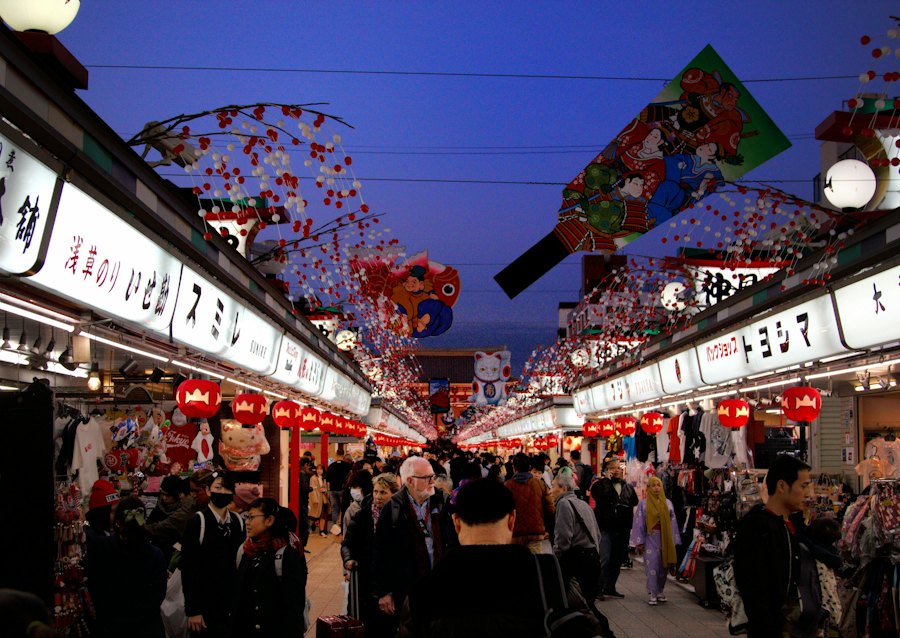
Seoul is cheaper at every tier, but the gap is modest at the bottom and wider in the middle. Our destination pages put a budget day at roughly $55 to $80 (≈ €50–70 / £45–65) in Tokyo and $50 to $75 (≈ €45–65 / £40–60) in Seoul, mid-range at $125 to $180 (≈ €110–160 / £100–140) against $110 to $150 (≈ €100–135 / £85–120), and luxury at $300 to $420 (≈ €270–380 / £240–330) against $300 to $500 (≈ €270–450 / £240–390). The luxury figures overlap, which tells you something: at the top end, Seoul is not the bargain.
Food is the cheap part of both trips. Tokyo's standing sushi bars, ramen counters and basement food halls and Seoul's Gwangjang and Namdaemun markets (bindaetteok, tteokbokki, hotteok) all deliver a good meal for very little. Lodging is where you will feel the difference. Tokyo hotel rooms are small and prices rise sharply in cherry-blossom season, and Kyoto, the usual add-on, is dearer again at about $170 (≈ €150 / £135) a day mid-range.
Cash still matters in both: small Tokyo places and Seoul's market stalls can be cash-only. Our full Japan breakdown is in how much does Japan cost.
Both cities reward a prepaid transit card: a Suica or Pasmo in Tokyo, picked up at the airport, and a T-money card in Seoul, which covers subways and buses. Tokyo's network is bigger, so daily transport spend climbs faster if you add Shinkansen or Nikko day trips. Seoul's KTX to Busan, about 2.5 hours, is the one big fare most visitors consider.
| Tokyo | Seoul | |
|---|---|---|
| Budget day, per person | $55 to $80 (≈ €50–70 / £45–65) | $50 to $75 (≈ €45–65 / £40–60) |
| Mid-range day, per person | $125 to $180 (≈ €110–160 / £100–140) (about $150 (≈ €135 / £120)) | $110 to $150 (≈ €100–135 / £85–120) (about $120 (≈ €105 / £95)) |
| Luxury day, per person | $300 to $420 (≈ €270–380 / £240–330) | $300 to $500 (≈ €270–450 / £240–390) |
| Crowds (1 to 5) | 4 | 3 |
| Safety score (1 to 5) | 5 | 5 |
| Best months | Mar–May & Oct–Nov | Apr–Jun & Sep–Oct |
| Suggested stay | 4 to 6 days (plus Kyoto) | 4 to 6 days |
When to go: spring and autumn, with different traps
Tokyo's comfortable windows are March to May and October to November. June is wet, and late summer into early autumn is typhoon season. Seoul's are April to June and September to October. Cherry blossom in April and autumn colour in October are the highlights, and both are busy.
Seoul punishes the shoulders of the year harder. Winter is cold and dry, with January daytime temperatures near freezing, and July is humid with heavy monsoon rain. Our page also notes air quality dipping in spring. Tokyo's winter is kinder, and clear Fuji views are most likely on winter mornings.
For a first visit, the easiest times are late October for either city and early April if you accept blossom crowds. Book hotels months ahead for blossom weeks and for national holidays such as Chuseok in Korea.
Language, transport and safety
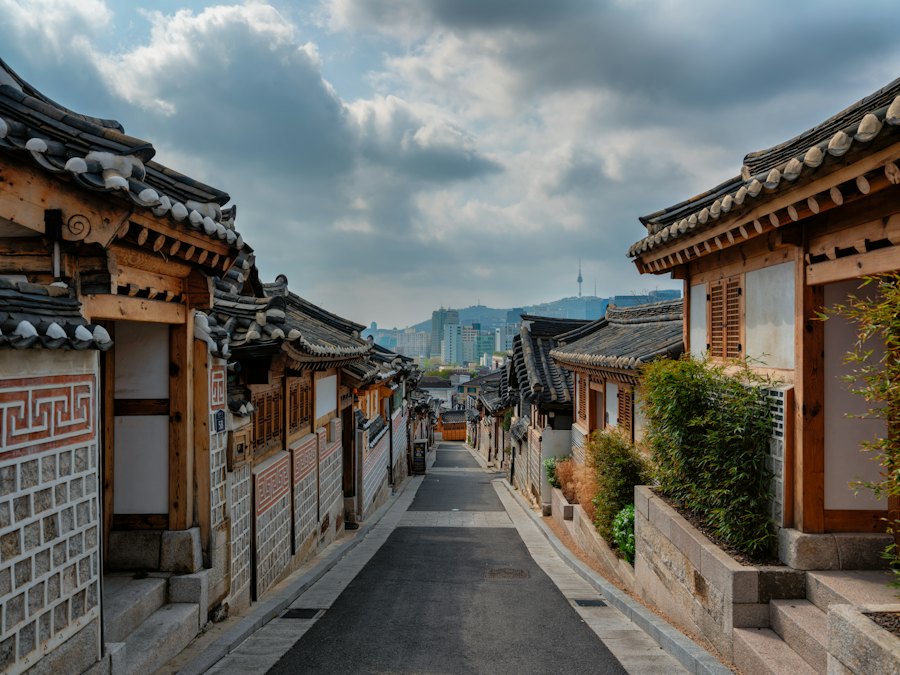
Tokyo has the world's most reliable rail network, with airports 40 to 80 minutes out. Seoul's subway is clean, cheap, signed in English and runs until about midnight, and the AREX airport train and the KTX to Busan (about 2.5 hours) make a second city easy. From Tokyo, the Tokaido Shinkansen reaches Kyoto in about 2 hours 15 minutes.
The language barrier is bigger in Seoul. English is spoken less than in some Asian capitals, Google Maps navigation does not work well, and some payment and booking services want a Korean phone number. Download Naver Map and Papago before you land. In Tokyo, many menus are Japanese-only and English signage thins out away from the main areas.
Both are low-crime cities, and the risk lists are short. In Tokyo it is earthquakes and typhoons, plus overcharging and drink-spiking by touts in Kabukicho and Roppongi. In Seoul it is monsoon heat, icy pavements in winter, and unofficial airport taxis and overpriced restaurants in Myeongdong and Hongdae. South Korea's advice mentions tension with North Korea, which rarely affects daily life in Seoul. We do not quote advisory levels; check the UK FCDO, US State Department, Smartraveller, Japan's MOFA and South Korea's 0404.go.kr pages for today's wording.
Who should pick which
Pick Tokyo if this is your one big Asian trip and you want depth: neighbourhoods that feel like different cities, day trips to Nikko or Kamakura, and an easy rail jump to Kyoto. The honest cost is the price of rooms in peak season and the sheer distances; moving between districts eats time.
Pick Seoul if you have a week or less, or a lower budget, and you want food, palaces, mountain hikes inside the city and a 24-hour rhythm. The honest cost is the winter cold, the summer monsoon and the language friction. It is also less of a beach or nature trip than its reputation suggests; it is inland.
Do both if you have two weeks: the cheaper route is to fly into one and out of the other. For a solo traveller either works well; see our solo travel picks. For more on the Japan side, read the Kyoto guide.
Seoul also has a day trip Tokyo cannot match: the DMZ, which can be visited only on organised tours with set rules, and Suwon's Hwaseong fortress, about an hour from the city on subway line 1. Tokyo's counterweights are Nikko's shrines, Kamakura's bronze Buddha and the Hakone and Fuji area, each a day by train. Neither city runs out of things to do in a week.
Japan vs South Korea: frequently asked questions
Is Seoul cheaper than Tokyo?
Yes, at every tier on our estimates: about $120 (≈ €105 / £95) a day mid-range per person against $150 (≈ €135 / £120) in Tokyo, excluding flights, as of October 2026. The gap narrows at the luxury end.
Which is safer, Tokyo or Seoul?
Both score 5 out of 5 on our scale and both have very low street crime. Japan's main risks are earthquakes and typhoons; South Korea's are weather extremes. Check the official advisory pages for the current wording.
When is the best time to visit Japan or South Korea?
Tokyo is best Mar–May & Oct–Nov; Seoul Apr–Jun & Sep–Oct. Seoul's winters are cold and dry and its Julys are wet; Tokyo's June is wet and late summer is typhoon season.
Do I need Korean or Japanese to get around?
No, but Seoul takes more preparation. Download Naver Map and Papago before you land. Tokyo has clearer English signage on main rail lines but many Japanese-only menus.