Old and new in one afternoon
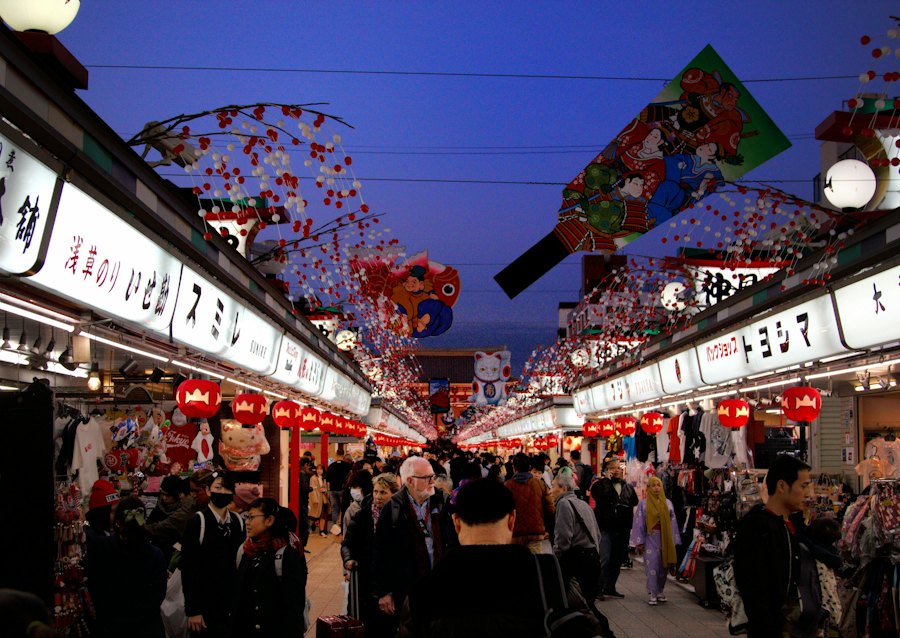
Senso-ji in Asakusa, then the glass towers of Shinjuku by evening. Tokyo does contrast without trying.
Tokyo Tower above the skyline on a clear day
Best months: Mar–May & Oct–Nov
Photo: Rebecca Clarke on Unsplash
Photo: Susann Schuster on Unsplash
View Full Gallery (3)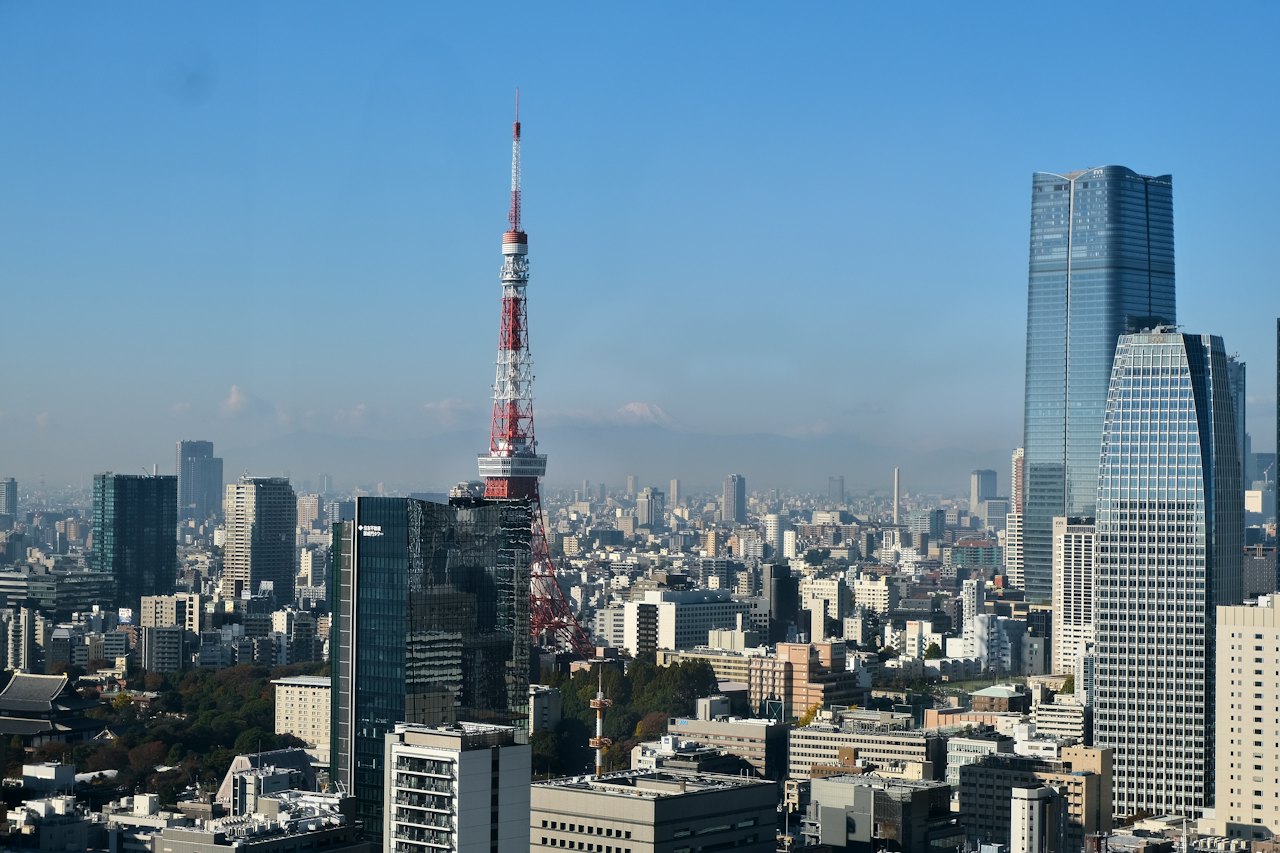
Overview
One of the most electrifying cities on earth — ancient shrines sit alongside neon-lit skyscrapers, and the food culture alone justifies the journey. From three-Michelin-star omakase to perfect midnight ramen.
Tokyo is not one city so much as a dozen, stitched together by the best public transport on earth. Set aside a day for each: Asakusa's old temples, Shibuya's crossings, Shinjuku's late-night alleys, Yanaka's low-rise lanes. Load a Suica or Pasmo card on day one and stop thinking about fares. Eat well for very little, with a bowl of ramen around $6.30 (¥1,000; ≈ €5.65 / £4.95) and rice balls from any convenience store. The trade-off is scale: you will walk more than you plan, and cherry blossom and autumn leaf weeks bring crowds that no timetable can fix. English signs thin out fast away from the main lines, so keep a translation app handy.
Senso-ji in Asakusa, then the glass towers of Shinjuku by evening. Tokyo does contrast without trying.
Standing sushi bars, ramen counters and basement food halls. The best meals are often unlabelled and under a rail line.
Hakone is about 30 minutes by Shinkansen to Odawara, Nikko about 1 hour 50 minutes, and Karuizawa about an hour. Fuji views depend on the season: good from November to February, rare in summer.
Best time
Best months for most visitors: Mar–May & Oct–Nov. Good weather, thinner crowds and fairer prices.
May and late September to October are the best value for weather.
Late March to April (cherry blossom) and November (autumn leaves) are the busiest times.
January and February are cold but bright, with highs of 9–10°C / 48–50°F (48–50°F) and lows near freezing, the clearest skies for Mount Fuji views and cheaper rooms.
Booking window: reserve flights and stays 2–3 months ahead for Mar–May & Oct–Nov, and 4–6 months ahead for peak season (Mar–Apr, Nov).
Partner links. We earn a commission at no extra cost to you; sponsors never change a ranking or safety note. How we earn money →
Weather
Current temperature loads here when your browser can reach Open-Meteo.
Weather data: Open-Meteo Historical & Live API. A single reading for the main town or area, not the whole destination.
Peak season about 31°C / 88°F; shoulder season about 18°C / 64°F.
Rain: Moderate; wet June and typhoon-season autumn.
Humid summers (highs about 30–31°C / 86–88°F), a wet June and typhoon season in late summer and early autumn. March to May and October to November are the comfortable months.
Cooler and cloudier than the city. Fuji is most visible on crisp winter mornings (November to February); from June to August haze and cloud hide it most of the time.
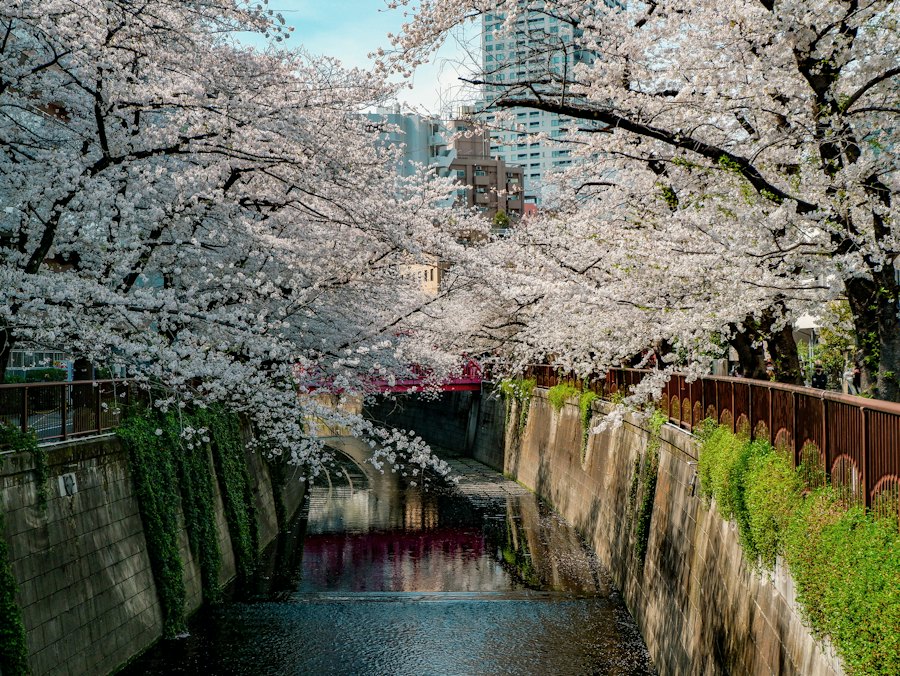
Daytime highs run about 14–19°C / 57–66°F (57–66°F) in March, April and November, with crowds at Ueno, Shinjuku Gyoen and Meguro River. Hotels often cost 30 to 60 percent more, and the best rooms sell out three to five months ahead.
May brings highs of about 23°C / 73°F (74°F) and long, mostly dry days, with the post-Golden Week lull from about 8 May. September has typhoon and humidity risks (highs still about 27°C / 81°F), but October is mild, with highs around 21°C / 70°F (71°F) and rooms noticeably cheaper than blossom or foliage weeks. These are the months to choose if you want comfort without peak pricing.
June to August is hot, humid and rainy, with a rainy season in June and July, though flights can be cheap. December is quiet until the year-end holidays.
Weather data: Open-Meteo Historical & Live API (live reading). Typical highs and season notes are our own summaries. How we verify →
Safety
Last updated: government levels come from our editor-verified table (October 2026). When the live UK FCDO check succeeds, its exact UTC time appears in the panel below. The banner takes the most cautious of the five agencies, so a live UK warning always outranks a green entry in our table and any part-country warning shows as red. We never show a level we haven’t checked. How we verify →
Government levels: editor-verified table, October 2026 How we verify →
Five official agencies, one view. Ratings change, so each pill opens the agency’s own page for today’s level.
Tier 5/5 · Very low risk. Normal precautions: very low crime, drink-spiking risk in nightlife districts, earthquake awareness advised.
The UK FCDO has no advice against travel to Tokyo. Its page says civil disturbance is rare and there is no recent history of terrorism, though attacks cannot be ruled out. It warns about drink spiking and credit card fraud, with Kabukicho, Roppongi, Shibuya and Ikebukuro named as high-risk zones, and about North Korean missile launches, earthquakes and strict drug laws. Read the official pages for your passport country before booking and again before departure.
Our plain-English summary of what the UK FCDO, US State Department, Australian Smartraveller, Japan MOFA and South Korea MOFA publish. We quote no live ratings from memory; each button above opens the agency's own page.
Our opinion, not an official warning
Regional nuance: The UK FCDO notes earthquakes, typhoons and North Korean missile launches, and says civil disturbance is rare. Nothing in Tokyo itself is a no-go area.
The concerns that are real: The real risk is drink spiking and huge card bills after street touts invite you into bars in Kabukicho, Roppongi, Shibuya and Ikebukuro, so never follow street invitations and carry only what you need. Know your hotel's earthquake procedures, bring enough cash for small shops, and check medication rules before flying.
What headlines overstate: Earthquake and tsunami headlines make Tokyo sound precarious, but the city is built and drilled for them, and most visitors never feel one. Crime is very low, and lost wallets are often handed in.
Written by our editors from general travel knowledge and kept apart from the agencies above. How we verify →
Costs
Backpacker
$70 (≈ €60 / £55) per person per day
What it covers: Capsule hotel or hostel bed, konbini breakfasts, ramen and teishoku set lunches, day passes for Tokyo Metro, and free sights such as Meiji Shrine grounds and Shibuya Crossing.
Mid-Range (default)
$150 (≈ €135 / £120) per person per day
What it covers: Business or boutique hotel near a Yamanote line station, sit-down izakaya dinners, entry to places like teamLab or Tokyo Skytree, Suica fares and a day trip to Kamakura.
Boutique
$330 (≈ €290 / £260) per person per day
What it covers: Five-star hotel in Ginza or Marunouchi, omakase sushi or kaiseki dinner, private guides, taxis between neighbourhoods and a day trip to Hakone or Nikko by private car.
Cost source: Audited Local Lodging Taxes, Rail Tariffs & Dining Averages (our own estimates, flights excluded). How we verify →
Source: Should I Go's own estimates, October 2026, in USD per person excluding international flights; euro figures are rough conversions. A couple shares a room, so accommodation drops 25% per person. Prices move, so treat these as a planning range, not a quote.
Estimated total: $0 (≈ €0 / £0)
Estimate in USD per trip, excluding international flights. Two or more travellers share rooms, so accommodation drops 25% per person. Budget and luxury tiers are scaled from the mid-range figure.
Cost source: Audited Local Lodging Taxes, Rail Tariffs & Dining Averages (our own estimates, flights excluded). How we verify →
Where to base yourself
Older Tokyo: temples, shitamachi lanes and cheaper hotels. Good for early starts.
Neon, transit hubs and nightlife. Convenient but loud, so choose a side street.
Best for bullet-train access and polished shopping. Higher prices.
Shrines in the forest at Nikko, beaches and a bronze Buddha at Kamakura. Each fills a day.
Itineraries
Getting between stops: JR Yamanote Line loops the main hubs; get a Suica or Pasmo card at the airport.
Getting between stops: Tobu limited express or Shinkansen via Utsunomiya to Nikko takes about 1 hour 50 minutes each way; Metro and JR inside the city.
Getting between stops: Tokaido Shinkansen from Tokyo Station to Kyoto, about 2 hours 15 minutes on a Nozomi train (Osaka about 2 hours 30 minutes).
Routes and timetables change. Confirm transit times with the operator before you book.
Do and stay
Best for: First-timers
Pros: The busiest rail hub in Japan, with direct trains to both airports, endless food and nightlife, and easy day trips toward Kawaguchiko and Hakone.
Watch for: Enormous, crowded and noisy, and Shinjuku Station is a maze. Kabukicho nearby has touts and overpriced bars after dark.
Best for: Value
Pros: Cheaper hotels and hostels, old Tokyo atmosphere, Senso-ji at dawn and good direct links from Narita by Keisei Skyliner to Ueno. Quieter evenings.
Watch for: Further from Shibuya and Shinjuku nightlife, and many restaurants and shops close by about 9pm. Few late-night options.
Best for: Nightlife and food
Pros: Trendy bars, record shops and some of the city's best restaurants, with the Yamanote line and Ginza line at the door and a lively late-night scene.
Watch for: Pricey rooms, steep hills and crowds around the crossing. Rooms in the busiest streets can be small and noisy.
These are partner links. We may earn a commission at no extra cost to you.
Trade-offs
Final verdict
Editorial opinion from Should I Go, written from general travel knowledge and reviewed periodically. Verify prices, entry rules and advisories before you book.
Typical costs and rules change; confirm with official sources before you travel.
Four to five days is a good first visit, long enough for Asakusa, Shibuya, Shinjuku, a food market and one museum or garden. Add two or three days if you want day trips to Kamakura, Nikko or Hakone, and leave one day free for jet lag and rain. Tokyo rewards slow days more than packed itineraries.
Less than most people expect, though accommodation costs more than food. A mid-range traveller can manage on about $125 to $180 (≈ €110–160 / £100–140) a day, with ramen at around $6.30 (¥1,000; ≈ €5.65 / £4.95) and a hotel room from about $95–221 (¥15,000–35,000; ≈ €85–197 / £75–174) a night. Prices rise sharply during cherry blossom season. Food, transport and temples are good value; hotel rooms are the main swing factor, so book early.
October and May are the best all-round months, with mild, dry weather and lower prices than cherry blossom or autumn-leaf peaks. If you want blossoms, go in late March or early April and book three to five months ahead. Avoid June to August if you dislike heat and humidity. Check typhoon forecasts if you travel in September.
The Keisei Skyliner, the fastest train to Ueno or Nippori, costs $16 (¥2,580; ≈ €14.50 / £12.80) one way at the station, or $14.60 (¥2,310; ≈ €13 / £11.50) one way ($28.40 (¥4,500; ≈ €25.40 / £22.40) return) if you book ahead online. The Narita Express runs direct to Tokyo Station ($19.80 (¥3,140; ≈ €17.70 / £15.60)), Shinjuku and Shibuya ($21 (¥3,330; ≈ €18.80 / £16.60)). Foreign passport holders should look at the N'EX TOKYO Round Trip Ticket at $32.80 (¥5,200; ≈ €29.30 / £25.85), valid for 14 days. Fares change, so check the operator's site before you travel.
Budget rooms (capsule hotels, hostels and business hotels such as APA Hotels or Toyoko Inn) run about $32–76 (¥5,000–12,000; ≈ €28–68 / £25–60) a night; expect compact rooms built for sleeping. Mid-range (Daiwa Roynet, Richmond Hotels, Hotel Gracery) is about $95–221 (¥15,000–35,000; ≈ €85–197 / £75–174) and gives you more space. Luxury (Tokyo Station Hotel, Aman Tokyo, the Ritz-Carlton) starts around $347–947 (≈ €310–850 / £270–750)+ (¥55,000–150,000+; ≈ €310–846 / £273–746+). Prices climb in cherry blossom season and autumn foliage weeks.
teamLab Planets is in Toyosu (extended through the end of 2027). It is a linear, barefoot walk through knee-deep water, with a flat ticket of $24 (¥3,800; ≈ €21.40 / £18.90). teamLab Borderless is a permanent museum with no set path in Azabudai Hills, with dynamic pricing of $23–30 (¥3,600–4,800; ≈ €20–27 / £18–24) depending on demand. Both need online booking weeks ahead, so pick the one that suits you rather than assuming they are the same.
Yes, the outer market. The inner wholesale market and the live tuna auction moved to Toyosu in 2018, but Tsukiji Outer Market is open with more than 450 food stalls and restaurants. Most run from 5:00 am to 2:00 pm, and 9:00 to 11:30 am is the best time for visitors. It is closed on Sundays and national holidays, and on some Wednesdays, so check the calendar.
Hakone is about 30 minutes by Shinkansen from Tokyo Station to Odawara, or 75 to 85 minutes by Odakyu Romancecar from Shinjuku to Hakone-Yumoto. Nikko takes about 1 hour 50 minutes, by Tobu limited express from Asakusa or Shinkansen with a change at Utsunomiya. Karuizawa is about an hour from Tokyo Station on the Hokuriku Shinkansen. Kyoto takes about 2 hours 15 minutes and Osaka about 2 hours 30 minutes on the fastest Nozomi, so a same-day return is a 5-hour round trip; it works but is tiring.
Sometimes, and less often than marketing suggests. November to February gives the best odds: mornings are crisp and clear, and you can see it from high viewpoints such as Shibuya Sky or the Tokyo Metropolitan Government Building, or from the right side of the Shinkansen heading from Tokyo toward Kyoto. From June to August, humidity, haze and cloud hide it most of the time.
Get live weather, activities, travel advisories, and personalised tips for Tokyo, Japan
Check Tokyo, Japan Now →Have you visited Tokyo, Japan? Was it worth it? Readers can vote: Worth Every Penny, Great in Shoulder Season Only, or Overrated / Skip It.