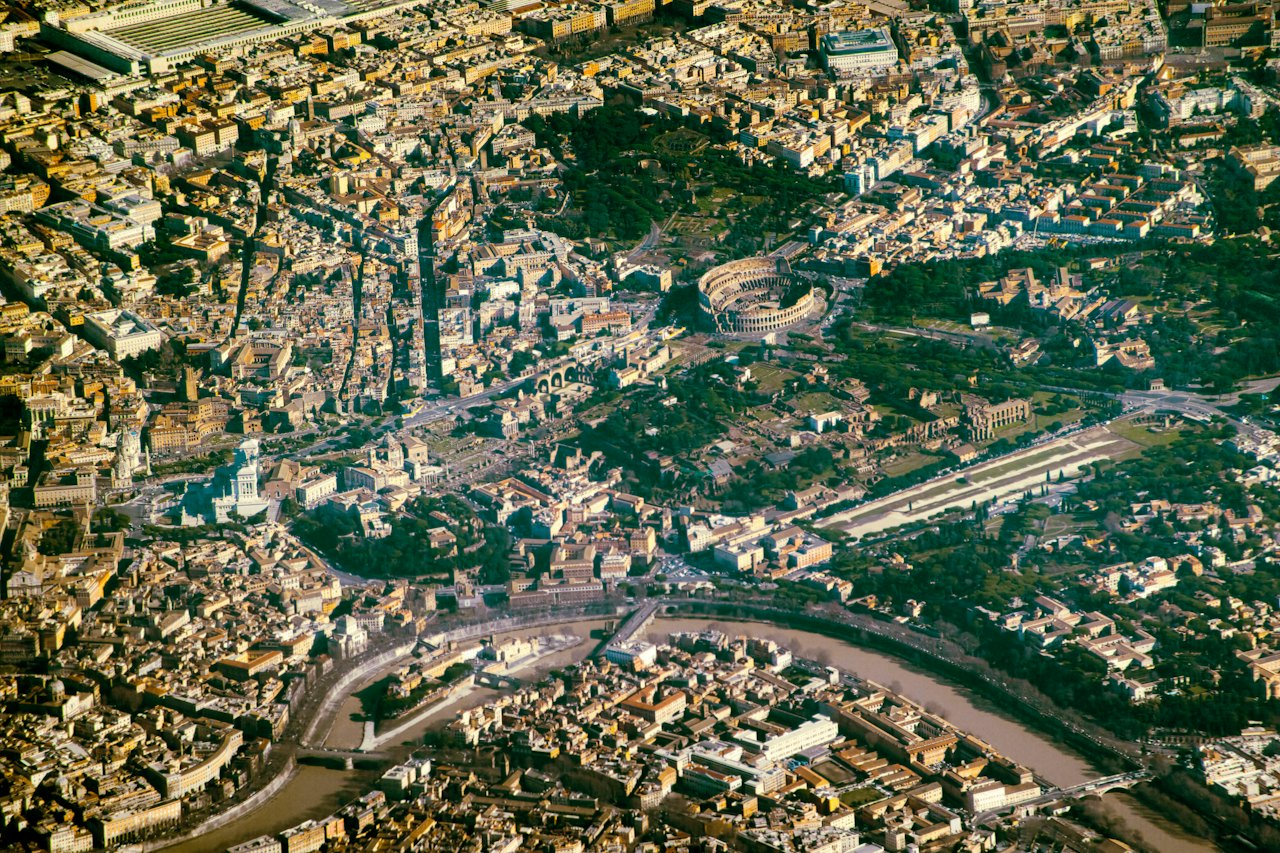
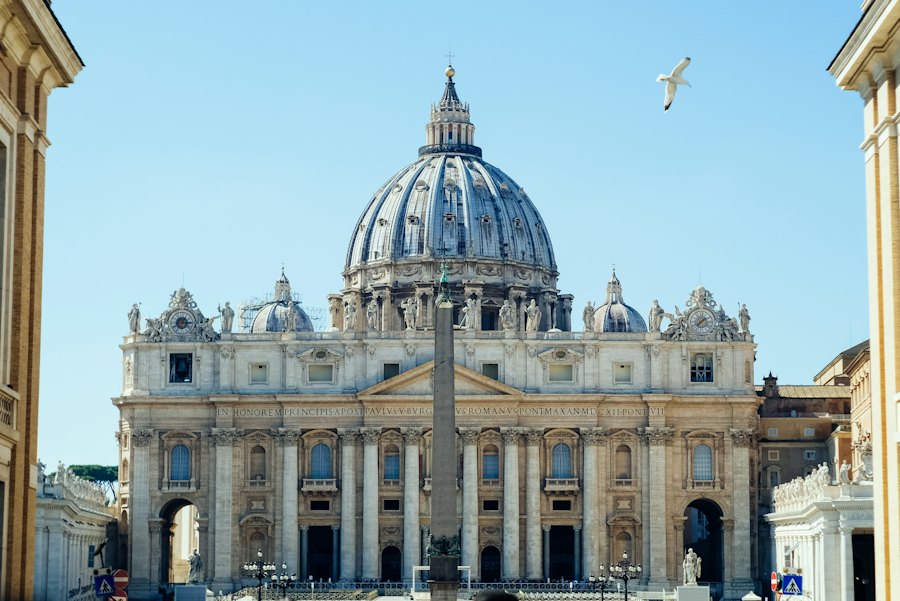
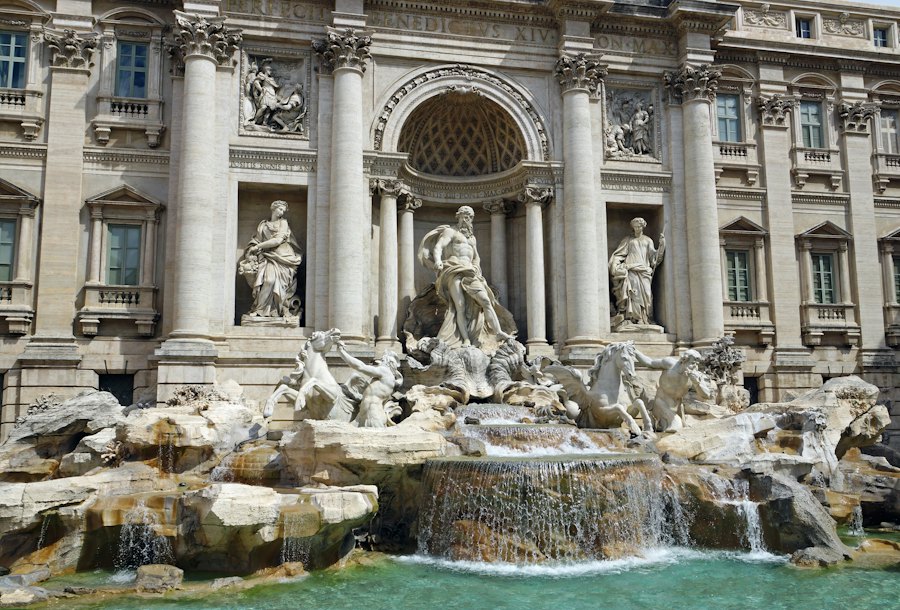
Rome is a city you do not so much visit as dig through. Roman concrete, medieval churches, Baroque fountains and a 1970s bus stop sit within a few hundred metres of each other, and the best days are the ones where you stop trying to tick off the list. The Colosseum, the Forum and the Vatican Museums are as big as their reputation, and as busy.
Rome rewards early starts and short itineraries. Book the Colosseum (about €18, $20 (≈ €18 / £16), for the Colosseum, Forum and Palatine together) and the Vatican Museums (€20 plus a €5 online fee, about $28 (≈ €25 / £20) in all) online for the first slot, because walk-up queues in summer can eat half a morning. Eat in Trastevere's side streets, Testaccio or Monti rather than beside a landmark, and expect to pay a cover charge (coperto) in many restaurants. Pickpockets work the metro and the Trevi crowd, so keep phones in a front pocket. July and August are hot, with highs averaging about 33 °C / 91°F (91 °F), and the city feels it. April, May, late September and October are the months to aim for. Three or four days covers the essentials; five lets you see Rome rather than the queue.
Three highlights worth the trip
1Colosseum, Forum and Palatine
Book a timed combined ticket (€18, $20 (≈ €18 / £16), valid 24 hours; €24, $27 (≈ €25 / £20), with arena or underground access) and go first or last slot. Tickets open 30 days ahead and are named to your ID. The Palatine's gardens are the calm part of the site.
2The Vatican Museums and St Peter's
Tickets are €20 plus a €5 online fee ($28 (≈ €25 / £20) in all). Closed on Sundays except the last Sunday of the month, when entry is free but unbookable (queue only), and on major holidays. Dress covers shoulders and knees; the Sistine Chapel is silent and crowded.
3Eating in Testaccio and Trastevere
Cacio e pepe, carbonara and supplì are the standards. Walk two streets from a landmark for better prices. Trevi Fountain now charges a €2 ($2.20) entry fee in 2026.
2
Best time
Best Time to Visit Rome: A 12-Month View
Best months for most visitors: Apr–Jun & Sep–Oct. Good weather, thinner crowds and fairer prices.
JanPeak (Peak season)
FebPeak (Peak season)
MarPeak (Peak season)
AprSweet (Sweet spot)
MaySweet (Sweet spot)
JunPeak (Peak season)
JulOff (Off-peak)
AugOff (Off-peak)
SepSweet (Sweet spot)
OctSweet (Sweet spot)
NovPeak (Peak season)
DecPeak (Peak season)
Sweet = best balance of weather, crowds and price
Peak = busiest and dearest (or hottest)
Off = quiet; check weather and closures
Shoulder / sweet spot
April to early June and mid-September to October are the best months.
Peak season
July and August bring highs averaging about 33 °C / 91°F (91 °F), with hot spells above that, and the most visitors, although many Romans leave in mid-August and some local restaurants close.
Off-peak
November to March is cooler and wetter, with highs of roughly 12 to 17 °C / 54 to 63°F (54 to 63 °F), about 9 to 13 rainy days a month and lows of 4 to 9 °C / 39 to 48°F (39 to 48 °F) in winter.
Booking window: reserve flights and stays 2–3 months ahead for Apr–Jun & Sep–Oct, and 4–6 months ahead for peak season (Jan–Mar, Jun, Nov–Dec).
Partner links. We earn a commission at no extra cost to you; sponsors never change a ranking or safety note. How we earn money →
3
Weather
Weather and Seasonal Conditions in Rome
Right now in Rome
Current temperature loads here when your browser can reach Open-Meteo.
July and August average highs of about 33 °C / 91°F (91 °F) with hot spells above that, and only 4 to 5 rainy days a month. Plan sights for early morning and late afternoon.
Spring and autumn
Warm and bright: highs of 19 to 29 °C / 66 to 84°F (66 to 84 °F) from April to early June and 22 to 27 °C / 72 to 81°F (72 to 81 °F) in September and October. Rain is more frequent in October and November, about 11 to 13 days a month.
What each season feels like
Peak season
Easter and big event years also fill the city. Temperatures are Open-Meteo averages for 2015-2024. Book major sights and rooms well ahead.
Shoulder season
Highs run about 19 to 29 °C / 66 to 84°F (66 to 84 °F) from April to early June and 22 to 27 °C / 72 to 81°F (72 to 81 °F) in September and October, gardens are in bloom in spring and evenings are good for eating outside. Hotel prices rise at Easter and in May, but remain below midsummer. Expect about 9 to 11 rainy days a month in April, May and October.
Off-peak
Queues are shorter, hotel prices are lowest outside Christmas and New Year, and the Vatican and Forum are far easier. Some days are grey, but museums and trattorie are at their most local.
Last updated: government levels come from our editor-verified table (October 2026). When the live UK FCDO check succeeds, its exact UTC time appears in the panel below. The banner takes the most cautious of the five agencies, so a live UK warning always outranks a green entry in our table and any part-country warning shows as red. We never show a level we haven’t checked. How we verify →
🏛️ Official Government Warnings
Government levels: editor-verified table, October 2026 How we verify →
Five official agencies, one view. Ratings change, so each pill opens the agency’s own page for today’s level.
Tier 4/5 · Standard caution. Normal precautions: pickpocketing in crowds and on public transport.
The UK FCDO, US State Department and Australian DFAT generally describe Italy as a low-risk destination where normal precautions apply. Their advice usually mentions petty crime in tourist areas and on public transport, occasional strikes, and heat in summer. Advice varies and changes, so check each agency's current Italy page before you book.
Our plain-English summary of what the UK FCDO, US State Department, Australian Smartraveller, Japan MOFA and South Korea MOFA publish. We quote no live ratings from memory; each button above opens the agency's own page.
🧭 Editorial Opinions & Street-Smart Reality
Our opinion, not an official warning
Regional nuance: Italy's advice generally focuses on petty crime and heat, not regional danger. Strikes can disrupt trains, metro and flights for a day, so check dates before you travel.
Pickpockets on the metro, on bus 64 and around the Colosseum, Termini and the Trevi Fountain
Tourist-trap restaurants with cover charges and unlicensed taxis near Termini and major sights
The concerns that are real: Pickpocketing is the main issue: on the metro, on bus 64 to the Vatican and around the Trevi Fountain and Colosseum. Keep phones and wallets in front pockets and bags closed. Unlicensed taxis, overpriced restaurants and street sellers who tie 'friendship bracelets' on your wrist are other nuisances.
What headlines overstate: Headlines about strikes and protests usually mean public-transport disruption for a day, not danger. Check the strike calendar (sciopero) before travelling and carry a walking plan as backup.
Written by our editors from general travel knowledge and kept apart from the agencies above. How we verify →
What it covers: Hostel dorm or simple outer-neighbourhood guesthouse (about €25 to €40 a night), pizza al taglio, supplì, bakery items and a casual pasta, the metro or walking, and free churches and piazzas.
What it covers: Central 3- or 4-star boutique hotel or historic rental flat (about €90 to €150 a night), café breakfast, light lunches and multi-course osteria dinners with house wine, timed tickets for the Colosseum and Vatican, and some taxis.
What it covers: 5-star palatial hotel or flagship boutique near Via Veneto or the Spanish Steps (about €350 to €700+ a night), terrace dining over the ruins, private wine tastings or Michelin-starred tasting menus, and car transfers.
Where a day's money goes (solo)
Accommodation$203 (≈ €180 / £160)
Food$135 (≈ €120 / £105)
Transit$68 (≈ €60 / £55)
Activities$45 (≈ €40 / £35)
Cost source: Audited Local Lodging Taxes, Rail Tariffs & Dining Averages (our own estimates, flights excluded). How we verify →
Source: Should I Go's own estimates, October 2026, in USD per person excluding international flights; euro figures are rough conversions. A couple shares a room, so accommodation drops 25% per person. Prices move, so treat these as a planning range, not a quote.
Trip Budget Calculator
Estimated total: $0 (≈ €0 / £0)
Stay 45%
Food 30%
Transit 15%
Sights 10%
Estimate in USD per trip, excluding international flights. Two or more travellers share rooms, so accommodation drops 25% per person. Budget and luxury tiers are scaled from the mid-range figure.
Cost source: Audited Local Lodging Taxes, Rail Tariffs & Dining Averages (our own estimates, flights excluded). How we verify →
6
Where to base yourself
Four Regions and Cities in Rome
Min. 2 nights
Centro Storico
The Pantheon, Piazza Navona and the alleys. Beautiful, loud and priced for it.
Min. 2 nights
Monti and Colosseo
Quieter lanes, wine bars and a short walk to the ruins.
Min. 2 nights
Trastevere
Cobbled lanes, restaurants and a lively evening scene.
Min. 1 night
Testaccio and Ostiense
Local food, street art and nightlife. A short metro ride from the centre.
7
Itineraries
Three Itineraries for Rome
3 days
Rome in three days
Day 1: Colosseum, Forum and the Capitoline Hill.
Day 2: Vatican Museums, St Peter's and Trastevere dinner.
Day 3: Pantheon, Trevi and the Villa Borghese.
Getting between stops: Metro lines A and B link Termini, the Vatican and the Colosseum; the centre is walkable.
5 days
Rome and the Appian Way
Days 1–3: the three-day plan above.
Day 4: Appian Way and the catacombs.
Day 5: Ostia Antica.
Getting between stops: Regional train from Piramide to Ostia Antica takes about 30 minutes; bus 118 for the Appian Way.
7 days
Rome to Naples
Days 1–4: Rome.
Day 5: train to Naples.
Day 6: Pompeii.
Day 7: Amalfi Coast or return.
Getting between stops: High-speed train Rome–Naples takes about an hour to 70 minutes; Pompeii takes roughly three hours from Rome overall by train, so allow a full day.
Routes and timetables change. Confirm transit times with the operator before you book.
8
Do and stay
Things to Do and Where to Stay in Rome
Top things to do
Colosseum and Roman Forum
Vatican Museums and St Peter's Basilica
Pantheon and Piazza Navona
Trastevere and Testaccio food streets
Appian Way by bike
Insider tips
Book Colosseum and Vatican Museums tickets online, and choose the first slot of the day
Fill your bottle at the free nasoni drinking fountains around the city
Dress covered (shoulders and knees) to enter St Peter's and other churches
Eat away from major landmarks; menus with photos usually mean tourist prices
Walk the centre and use the metro or tram for longer hops; taxis are slow in traffic
Vatican Museums are closed on Sundays except the last Sunday of the month, when entry is free but you cannot book ahead and must queue; Colosseum tickets go on sale 30 days ahead and are tied to your passport or ID
Neighbourhoods to choose from
Centro Storico (Pantheon / Navona)
Best for: First-timers
Pros: Most sights are within walking distance, and the alleys are at their best in the evening. You can often walk to dinner and back without public transport.
Watch for: Expensive, noisy and crowded, with many tourist restaurants. Rooms in older buildings can be small.
Trastevere
Best for: Food and nightlife
Pros: Cobbled lanes, a good range of restaurants and bars, and a more local feel at night. Tram 8 links it to the centre.
Watch for: Very busy and loud on weekend nights, with a long walk or tram ride to the Vatican and Colosseum.
Monti / Termini
Best for: Value and transport
Pros: Monti is a quieter neighbourhood near the Colosseum with good cafes and wine bars. Around Termini you find cheaper rooms and direct airport trains and metro lines.
Watch for: The streets immediately around Termini are shabby and can feel uncomfortable late at night. Choose your block carefully.
Live Accommodation Map
Ready to Book This Trip? Book Your Trip to Rome
These are partner links. We may earn a commission at no extra cost to you.
Peace-seeking travellersThe centre is lively. Lofoten is calm. Try Lofoten instead →
Editorial opinion from Should I Go, written from general travel knowledge and reviewed periodically. Verify prices, entry rules and advisories before you book.
Know Before You Go
✈️ Airport to city centreThe Leonardo Express train from Fiumicino (FCO) to Termini takes about 32 minutes and costs around $16 (€14; ≈ £13); the official taxi fare to anywhere inside the Aurelian Walls is a fixed $62 (€55; ≈ £49), luggage included, 24 hours a day. The regional FL1 train costs about $9 (€8) and skips Termini, and a paper ticket must be stamped in a green or yellow machine before boarding.
🛂 Visa & entry rulesVisa-free for many nationalities up to 90 days in any 180 (Schengen). The EU Entry/Exit System has been fully operational since 10 April 2026 (passports are no longer stamped; expect a fingerprint and photo at the border), and ETIAS pre-authorisation is expected in 2027 and is not yet required, so check the official EU pages before you fly.
💳 Cash, cards & ATMsCards and contactless work almost everywhere, including tapping a bank card on the metro, buses and trams (€1.50 a journey, capped at €8.50 a day). Carry a little cash for small bars, market stalls and some taxis.
🚰 Tap water & healthTap water is safe, and the free nasoni fountains are drinkable.
🍽️ Tipping customService is rarely included in full. Check for a coperto cover charge; rounding up or leaving a few euros is plenty. The hotel city tax (€5 to €10 per person per night) is paid at checkout.
⚠️ #1 local scam to watch forFake 'gladiators' charging for photos, bracelet pushers, and unofficial taxis at stations; use the white licensed taxis only.
Typical costs and rules change; confirm with official sources before you travel.
Getting From the Airport Into Town
Route: Fiumicino Airport (FCO) to Roma Termini by the Leonardo Express train; cheaper options are the regional FL1 train to Trastevere or Ostiense, and the Terravision or similar airport buses.
Time: About 32 minutes by Leonardo Express; 45 to 60 minutes by bus or regional train.
Fare: Official airport taxis charge a fixed €55 ($62) from Fiumicino to anywhere inside the Aurelian Walls, luggage included, 24 hours a day (from Ciampino the fixed fare is €40, $45 (≈ €40 / £35)). The Leonardo Express to Termini costs €14 ($16) and the regional FL1 train costs €8 ($9) each way; FL1 skips Termini and stops at Trastevere, Ostiense and Tiburtina, and a paper ticket must be stamped in a green or yellow machine before boarding to avoid a fine. Inside the city, a metro, bus or tram journey costs €1.50 ($1.70) by contactless card, capped at €8.50 ($9.50) a day after the sixth tap (Wikivoyage, July 2026). Taxi and FL1 figures are editor-supplied.
Rome: Your Questions Answered
How many days do you need in Rome?
Three full days cover the Colosseum and Forum, the Vatican, and the centre between the Pantheon and Trastevere. Four or five days give you time for a day trip to Ostia Antica or the Appian Way, and a slower pace. Rome rewards doing less each day, not more.
Do I need to book Colosseum and Vatican tickets in advance?
Yes, from spring to autumn. Official timed tickets sell out for popular slots, and walk-up queues can last an hour or more. Book through the official sites, choose an early or late slot, and be cautious about resellers adding large markups. Check the current ticket rules and opening times before you go. Colosseum, Forum and Palatine: €18 ($20) for a ticket valid 24 hours, €24 ($27) with arena or underground access; sales open 30 days ahead and tickets are named. Vatican Museums: €20 ($22) plus a €5 ($5.60) online booking fee. Editor-supplied, not independently checked.
Is Rome safe for tourists?
Yes, for the most part. Violent crime against visitors is uncommon. Pickpocketing is the real risk, especially on crowded buses, the metro and at major sights. Use a zipped bag, carry little cash, use licensed taxis and be sceptical of friendly strangers offering help at ticket machines.
Do you have to pay to see the Trevi Fountain?
Since 2026 a €2 fee ($2.20 (≈ €1.96 / £1.73)) applies to the busiest part of the Trevi Fountain, and a €5 ($5.60) Roma Mic card is needed for some civic museums, according to Wikivoyage. The rest of the square and most churches stay free. Check the official Rome tourism site for current rules before you go.
When are the Vatican Museums closed, and is there a free day?
The Vatican Museums are closed every Sunday except the last Sunday of the month, and on major holidays such as 25 and 26 December, 1 and 6 January and Easter Sunday and Monday. On the last Sunday entry is free, usually 9 am to 2 pm with last entry at 12:30 pm, but you cannot reserve a slot and must queue at the entrance. Editor-supplied, not independently checked.
What is the Rome city tax for hotel stays?
The tourist tax is charged per person per night for up to 10 nights, with children under 10 exempt: €5 ($5.60) in 1- and 2-star hotels and B&Bs, €6 ($6.70) in 3-star, €7.50 ($8.40) in 4-star and €10 ($11.20) in 5-star hotels. You pay it at the hotel at checkout, not with an online booking. Editor-supplied, not independently checked.
Get live weather, activities, travel advisories, and personalised tips for Rome