Angkor Wat at sunrise
The classic view is crowded; walk through the central galleries after the crowd leaves.
Photo: Daniel Lienert on Unsplash
View Full Gallery (3)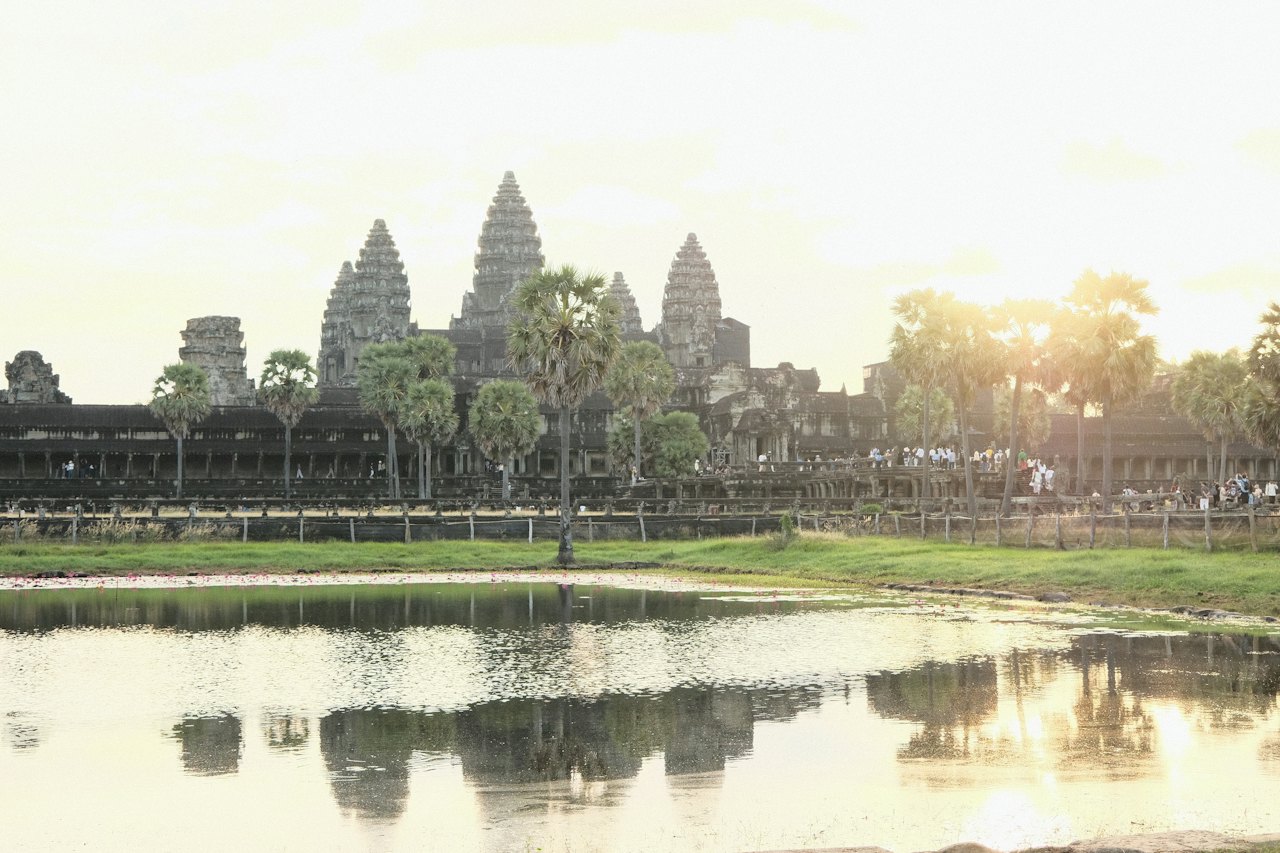
Overview
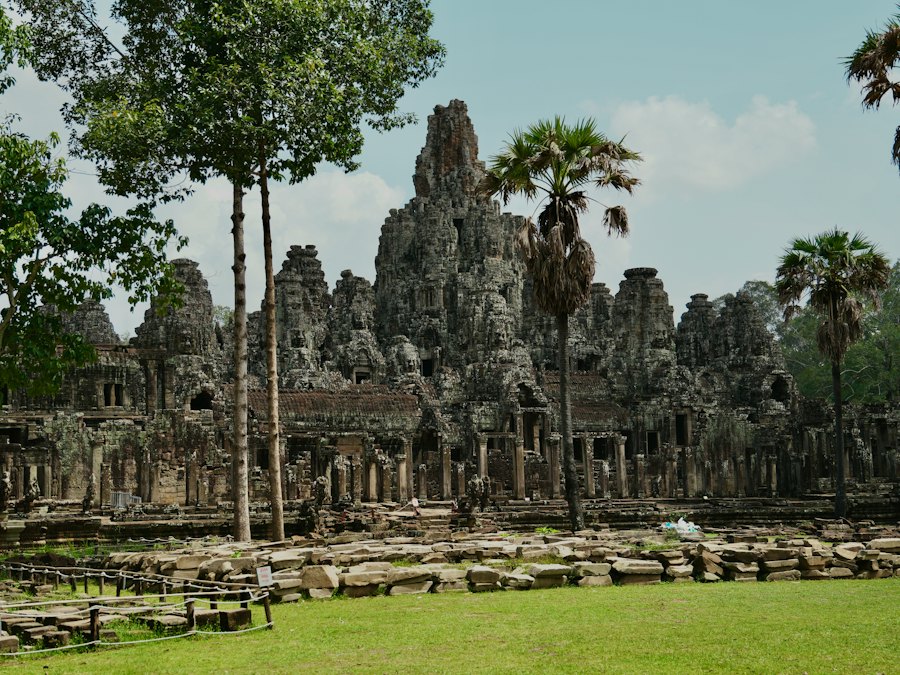
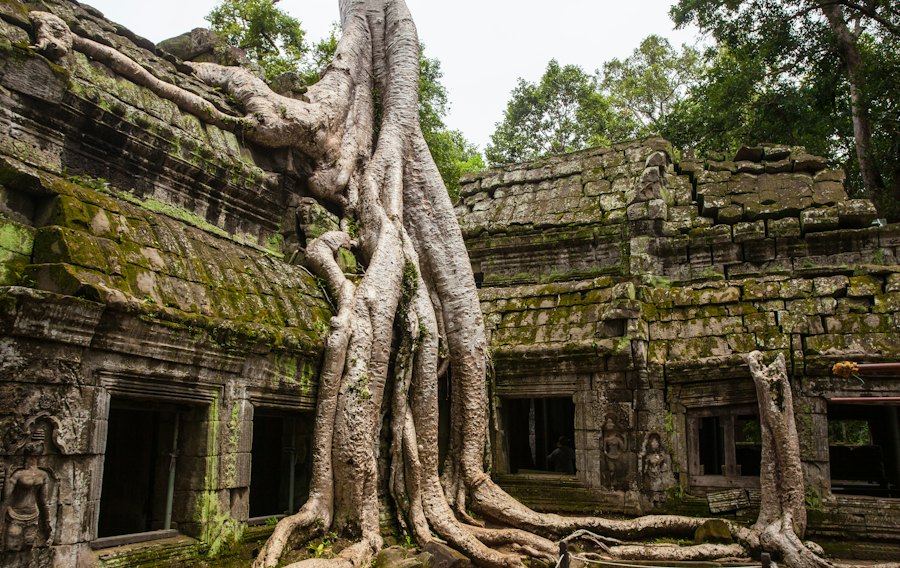
Angkor Wat is the world's largest religious monument, and it is also the one most visitors see at the wrong hour. Everyone climbs out of bed at 4:30 a.m. for sunrise over the towers, and everyone gets the same photograph. The temple is better in the afternoon, when the western light falls on the long bas-relief galleries and the crowds have thinned. The surrounding Angkor Archaeological Park has dozens of other temples, and Bayon with its stone faces and Ta Prohm with its strangler figs are as good as the main one.
Plan for two or three days rather than one. A three-day pass costs about US$62 and a tuk-tuk driver for the day roughly $15 to $20 (≈ €13–18 / £12–16) (approximate), and the temples are spread across more than 400 square kilometres. The heat is serious: from March to May the midday temperature passes 35 degrees Celsius, so go early, rest at midday and finish late. Dress codes apply, with shoulders and knees covered. Siem Reap, the town that serves the temples, is lively, cheap and easy, and Pub Street is tourist-oriented but fun after dark.
The classic view is crowded; walk through the central galleries after the crowd leaves.
Hundreds of carved faces under towers. Mornings are cooler.
Tree roots cover the stones at Ta Prohm; Banteay Srei and Preah Khan are calmer.
Best time
Best months for most visitors: Nov–Feb. Good weather, thinner crowds and fairer prices.
March to May is hot, with temperatures often above 35 degrees, and the mid-April Khmer New Year brings a week of local celebrations and crowded transport.
November to February is the peak, with dry weather and daytime temperatures of around 28 to 32 degrees Celsius.
September and October are the wettest months, with heavy showers and sometimes floods around the lake.
Booking window: reserve flights and stays 2–3 months ahead for Nov–Feb, and 4–6 months ahead for peak season (Mar, Jun–Oct).
Partner links. We earn a commission at no extra cost to you; sponsors never change a ranking or safety note. How we earn money →
Weather
Current temperature loads here when your browser can reach Open-Meteo.
Weather data: Open-Meteo Historical & Live API. A single reading for the main town or area, not the whole destination.
Cooler, clear and busy.
Hot, humid, with afternoon rain and greener scenery.
Angkor Wat is crowded, especially at sunrise and during the Christmas and Chinese New Year weeks, and prices are highest. Book rooms ahead for December and January.
June to October is the green season: rain is mostly in the afternoon, the temples are quieter, and rooms are cheaper.
The upside is lush scenery, few visitors and low prices. Start early, keep an umbrella, and be ready for muddy paths and some road disruption.
Weather data: Open-Meteo Historical & Live API (live reading). Typical highs and season notes are our own summaries. How we verify →
Safety
Last updated: government levels come from our editor-verified table (October 2026). When the live UK FCDO check succeeds, its exact UTC time appears in the panel below. The banner takes the most cautious of the five agencies, so a live UK warning always outranks a green entry in our table and any part-country warning shows as red. We never show a level we haven’t checked. How we verify →
Government levels: editor-verified table, October 2026 How we verify →
Five official agencies, one view. Ratings change, so each pill opens the agency’s own page for today’s level.
Tier 4/5 · Standard caution. Normal to increased caution: bag snatching, landmines off-path, Thai border tensions.
The UK FCDO, US State Department and Australian DFAT generally describe Cambodia as needing normal to increased caution, and they usually highlight petty crime, bag snatching from motorbikes and unexploded landmines in rural areas. Recent tensions along parts of the Thai border have led some governments to advise against travel close to it. Siem Reap and Angkor are a long way from there, but advice changes, so check the current pages from each agency before booking.
Our plain-English summary of what the UK FCDO, US State Department, Australian Smartraveller, Japan MOFA and South Korea MOFA publish. We quote no live ratings from memory; each button above opens the agency's own page.
Our opinion, not an official warning
Regional nuance: Cambodia's advice often mentions unexploded landmines in rural areas and, more recently, tension along parts of the Thai border, far from Siem Reap. Stay on marked paths and check current advice for border regions.
The concerns that are real: Bag snatching from motorbikes and tuk-tuks is the most common crime, so keep bags away from the road side. Traffic accidents, heat exhaustion and stomach illness are more likely than serious crime. Stay on marked paths in rural areas because of old landmines.
What headlines overstate: Border tensions or landmine stories make Cambodia sound dangerous. Siem Reap and the temples are a long way from the affected zones, and the tourist route is well established. Check current border and advisory news before travelling.
Written by our editors from general travel knowledge and kept apart from the agencies above. How we verify →
Costs
Backpacker
$40 (≈ €35 / £30) per person per day
What it covers: Dorm or fan room, street food and cafe meals, a shared tuk-tuk, and a share of the Angkor pass cost.
Mid-Range (default)
$90 (≈ €80 / £70) per person per day
What it covers: Boutique hotel with a pool, restaurant dinners, a private tuk-tuk or car, a three-day Angkor pass, and a guide or cooking class.
Boutique
$200 (≈ €180 / £155) per person per day
What it covers: Colonial-style luxury hotel, private guide and car, sunrise picnics, spa treatments and fine dining.
Cost source: Audited Local Lodging Taxes, Rail Tariffs & Dining Averages (our own estimates, flights excluded). How we verify →
Source: Should I Go's own estimates, October 2026, in USD per person excluding international flights; euro figures are rough conversions. A couple shares a room, so accommodation drops 25% per person. Prices move, so treat these as a planning range, not a quote.
Estimated total: $0 (≈ €0 / £0)
Estimate in USD per trip, excluding international flights. Two or more travellers share rooms, so accommodation drops 25% per person. Budget and luxury tiers are scaled from the mid-range figure.
Cost source: Audited Local Lodging Taxes, Rail Tariffs & Dining Averages (our own estimates, flights excluded). How we verify →
Where to base yourself
Town base with food, markets and guesthouses.
The main temples; tickets are sold for 1, 3 or 7 days.
Pink sandstone carvings and a river of lingas.
Boat trips on the great lake.
Itineraries
Getting between stops: Tuk-tuk or bicycle between temples; start early to avoid heat.
Getting between stops: Buses take about 6 to 8 hours; flights about 45 minutes.
Getting between stops: Buses and boats connect these towns.
Routes and timetables change. Confirm transit times with the operator before you book.
Do and stay
Best for: First-timers
Pros: Walkable restaurants, bars, markets and many guesthouses. Easy to find tuk-tuks and tours.
Watch for: Noisy at night, and often crowded. Prices for food and drinks are higher on Pub Street itself.
Best for: Quiet and value
Pros: Quieter streets with good boutique hotels, cafes and pagodas, still walkable to the centre.
Watch for: Fewer nightlife options and you may take a tuk-tuk to the busiest streets.
Best for: Temples first
Pros: Closer to the temple entrance, with larger resorts and pools. Easier early starts for sunrise.
Watch for: Further from the town's restaurants and nightlife, so you rely on a tuk-tuk or hotel shuttle.
These are partner links. We may earn a commission at no extra cost to you.
Trade-offs
Final verdict
Editorial opinion from Should I Go, written from general travel knowledge and reviewed periodically. Verify prices, entry rules and advisories before you book.
Typical costs and rules change; confirm with official sources before you travel.
Two to three days is ideal. One day covers Angkor Wat, Bayon and Ta Prohm at a hurry, and a three-day pass lets you add Banteay Srei, Preah Khan and quieter temples at a slower pace. Start early, rest at midday and come back for the late afternoon light.
November to February is cool and dry, and the most comfortable. The temples are crowded, though. March to May is very hot, and June to October is the green season, with afternoon rain, fewer visitors and lower prices. If you can handle some rain, the wet season can be a good compromise.
Cover your shoulders and knees, as it is a sacred site and guards may turn you away from upper levels. Light, loose long trousers or a long skirt and a T-shirt work well in the heat. Wear comfortable shoes with grip for steep stairs, and carry a hat and water.
Get live weather, activities, travel advisories, and personalised tips for Angkor Wat
Check Angkor Wat Now →Have you visited Angkor Wat? Was it worth it? Readers can vote: Worth Every Penny, Great in Shoulder Season Only, or Overrated / Skip It.