Hawker centres
Maxwell and Lau Pa Sat serve chicken rice, laksa and satay for a few dollars. Go off-peak.
Photo: Nick Fewings on Unsplash
Overview
Singapore has a reputation as a sterile shopping mall with an airport attached, and the reputation is mostly wrong. The real city is in its hawker centres, where a plate of chicken rice costs a few dollars and the queue at the best stall is the review. Chinatown, Little India and Kampong Glam sit within a few MRT stops of each other, each with its own temples, food and language, and the Botanic Gardens (a UNESCO site) are free and open from dawn.
It is also expensive where it counts. Alcohol is heavily taxed, hotel rooms are priced like a European capital, and a sit-down dinner with drinks can cost more than a day of street food elsewhere in Southeast Asia. The trick is to eat at hawker centres, travel by MRT and bus with a contactless card, and spend the savings on one or two big sights such as Gardens by the Bay or the Night Safari. Three or four days is plenty. It is hot and humid all year (daytime highs average about 29 to 30 °C / 84 to 86 °F), so plan outdoor time for early morning and late evening, and keep the afternoons for air-conditioned museums.
Maxwell and Lau Pa Sat serve chicken rice, laksa and satay for a few dollars. Go off-peak.
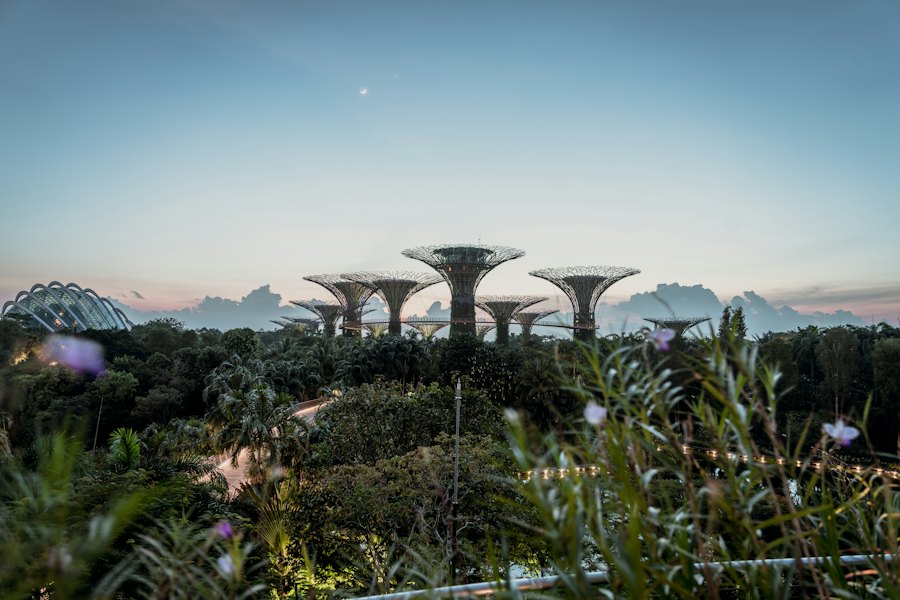
Supertrees and the Cloud Forest dome. The light show runs nightly.
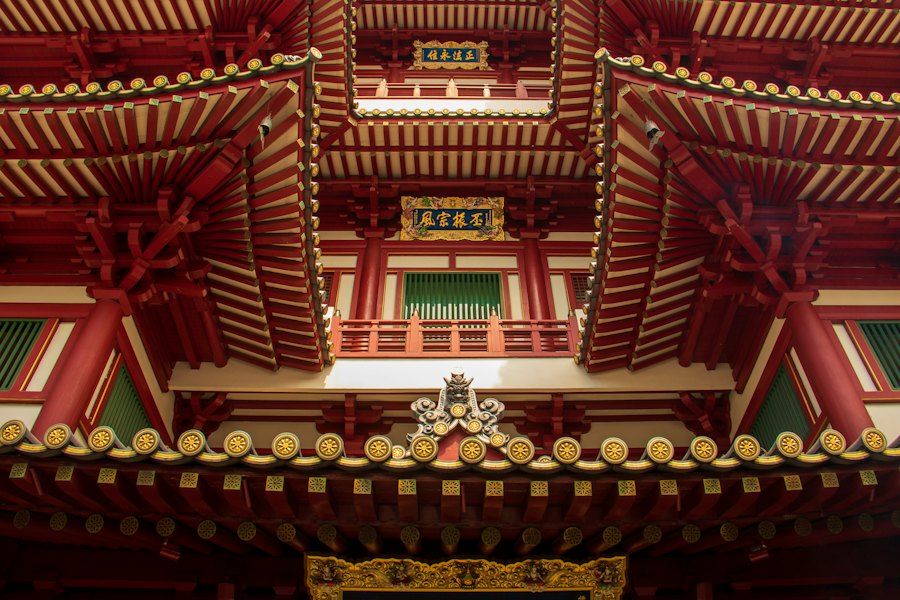
Three districts a short MRT ride apart, each with temples, food and shops.
Best time
Best months for most visitors: Feb–Mar & Jun–Aug. Good weather, thinner crowds and fairer prices.
February and March are the driest months (roughly 20 and 24 rain days in every 30, against 25 to 28 in most others), and April is as wet as most.
June to August and December are the busiest months, with school holidays, the Great Singapore Sale around June and July and year-end events.
November to January is the northeast monsoon, the rainiest time of year, with heavy showers and occasional spells of continuous rain.
Booking window: reserve flights and stays 2–3 months ahead for Feb–Mar & Jun–Aug, and 4–6 months ahead for peak season (Jan, Apr–May, Sep–Dec).
Partner links. We earn a commission at no extra cost to you; sponsors never change a ranking or safety note. How we earn money →
Weather
Current temperature loads here when your browser can reach Open-Meteo.
Weather data: Open-Meteo Historical & Live API. A single reading for the main town or area, not the whole destination.
Hot and humid: highs average 29 to 30 °C / 84 to 86°F (84 to 86 °F), lows 24 to 25 °C / 75 to 77°F (75 to 77 °F). Rain falls on 20 to 28 days in every 30, and November to January is the rainiest spell.
Smoke from regional fires can reduce air quality from June to October (UK FCDO).
Hotel rates rise, and weekend crowds fill Gardens by the Bay and Sentosa. Daytime highs average about 29 to 30 °C / 84 to 86°F (84 to 86 °F) all year. Book rooms a month or two ahead.
Chinese New Year falls in late January or early February, and many smaller shops and eateries close for 2 to 3 days. May and September to October are quieter, although smoke haze from regional fires can drift in from June to October. Showers are short and sharp, and sightseeing is easy with an umbrella and an air-conditioned plan B.
Rooms can be cheaper outside the Christmas period, and the city's indoor attractions, museums and food courts work whatever the weather. Highs stay at 29 to 30 °C / 84 to 86°F (84 to 86 °F) and lows at 24 to 25 °C / 75 to 77°F (75 to 77 °F) throughout the year.
Weather data: Open-Meteo Historical & Live API (live reading). Typical highs and season notes are our own summaries. How we verify →
Safety
Last updated: government levels come from our editor-verified table (October 2026). When the live UK FCDO check succeeds, its exact UTC time appears in the panel below. The banner takes the most cautious of the five agencies, so a live UK warning always outranks a green entry in our table and any part-country warning shows as red. We never show a level we haven’t checked. How we verify →
Government levels: editor-verified table, October 2026 How we verify →
Five official agencies, one view. Ratings change, so each pill opens the agency’s own page for today’s level.
Tier 5/5 · Very low risk. No FCDO warning against travel: strict drug laws, scams, dengue and haze.
The UK FCDO (travel advice updated 19 March 2026) does not advise against travel to Singapore. It says violent crime and theft are rare, but online and phone scams are common, often by people pretending to be officials or bank staff. It warns that terrorist attacks cannot be ruled out, that drug offences carry severe penalties (evidence of drug use in your system on arrival or in transit means refusal of entry or arrest), and that rules on littering, vandalism, flags and e-cigarettes are strictly enforced. Health risks include dengue, Zika and chikungunya, and haze from June to October. Advice changes, so read the current FCDO page before you travel.
Our plain-English summary of what the UK FCDO, US State Department, Australian Smartraveller, Japan MOFA and South Korea MOFA publish. We quote no live ratings from memory; each button above opens the agency's own page.
Our opinion, not an official warning
Regional nuance: The UK FCDO does not advise against travel to Singapore. Its advice focuses on strict laws, including severe penalties for drug offences and rules on vaping, littering and vandalism, rather than regional danger. There are no areas to avoid.
The concerns that are real: The risks are mostly legal and medical rather than criminal. Penalties for drugs, vandalism, vaping and some other offences are severe, and the rules apply to visitors; the FCDO says police can issue on-the-spot fines for littering. Dengue is present, so use repellent. Violent crime and theft are rare, but phone and online scams are common, so take care of your passport and leave valuables in the hotel safe where possible. The heat can cause dehydration.
What headlines overstate: Headlines about harsh punishments make the country sound intimidating. For most visitors the rules mean tidy streets and no hassle. Read the rules on vaping, drugs and gum, and the stay is straightforward.
Written by our editors from general travel knowledge and kept apart from the agencies above. How we verify →
Costs
Backpacker
$100 (≈ €90 / £80) per person per day
What it covers: Hostel or capsule bed at $23–47 (S$30–60; ≈ €21–42 / £18–37) in Chinatown, Little India or Kampong Glam, three hawker meals at $3–9 (S$4–12; ≈ €3–8 / £2–7) each, bus and MRT at about $0.86–1.88 (S$1.10–2.40; ≈ €0.77–1.67 / £0.68–1.48) a journey, and the free Botanic Gardens. In all about $36–83 (S$46–106; ≈ €32–74 / £28–65) a day before any paid attraction.
Mid-Range (default)
$225 (≈ €200 / £175) per person per day
What it covers: A 3 to 4-star hotel at $78–234 (S$100–300; ≈ €70–209 / £62–185) a night with a pool and a smart room, three restaurant meals at $12–31 (S$15–40; ≈ €10–28 / £9–25) each, MRT or the odd taxi, and a big sight such as Gardens by the Bay or the Night Safari. In all about $117–336 (S$150–430; ≈ €105–300 / £92–265) a day.
Boutique
$500 (≈ €450 / £390) per person per day
What it covers: A five-star room at $234–469 (≈ €210–420 / £185–370)+ (S$300–600+; ≈ €209–419+ / £185–369+) a night, one fine-dining meal at $94–273 (≈ €85–240 / £75–210)+ (S$120–350+; ≈ €84–244+ / £74–215+), casual meals and transfers. In all about $359–805 (≈ €320–720 / £280–630)+ (S$460–1030+; ≈ €321–718+ / £283–634+) a day.
Cost source: Audited Local Lodging Taxes, Rail Tariffs & Dining Averages (our own estimates, flights excluded). How we verify →
Source: Should I Go's own estimates, October 2026, in USD per person excluding international flights; euro figures are rough conversions. A couple shares a room, so accommodation drops 25% per person. Prices move, so treat these as a planning range, not a quote.
Estimated total: $0 (≈ €0 / £0)
Estimate in USD per trip, excluding international flights. Two or more travellers share rooms, so accommodation drops 25% per person. Budget and luxury tiers are scaled from the mid-range figure.
Cost source: Audited Local Lodging Taxes, Rail Tariffs & Dining Averages (our own estimates, flights excluded). How we verify →
Where to base yourself
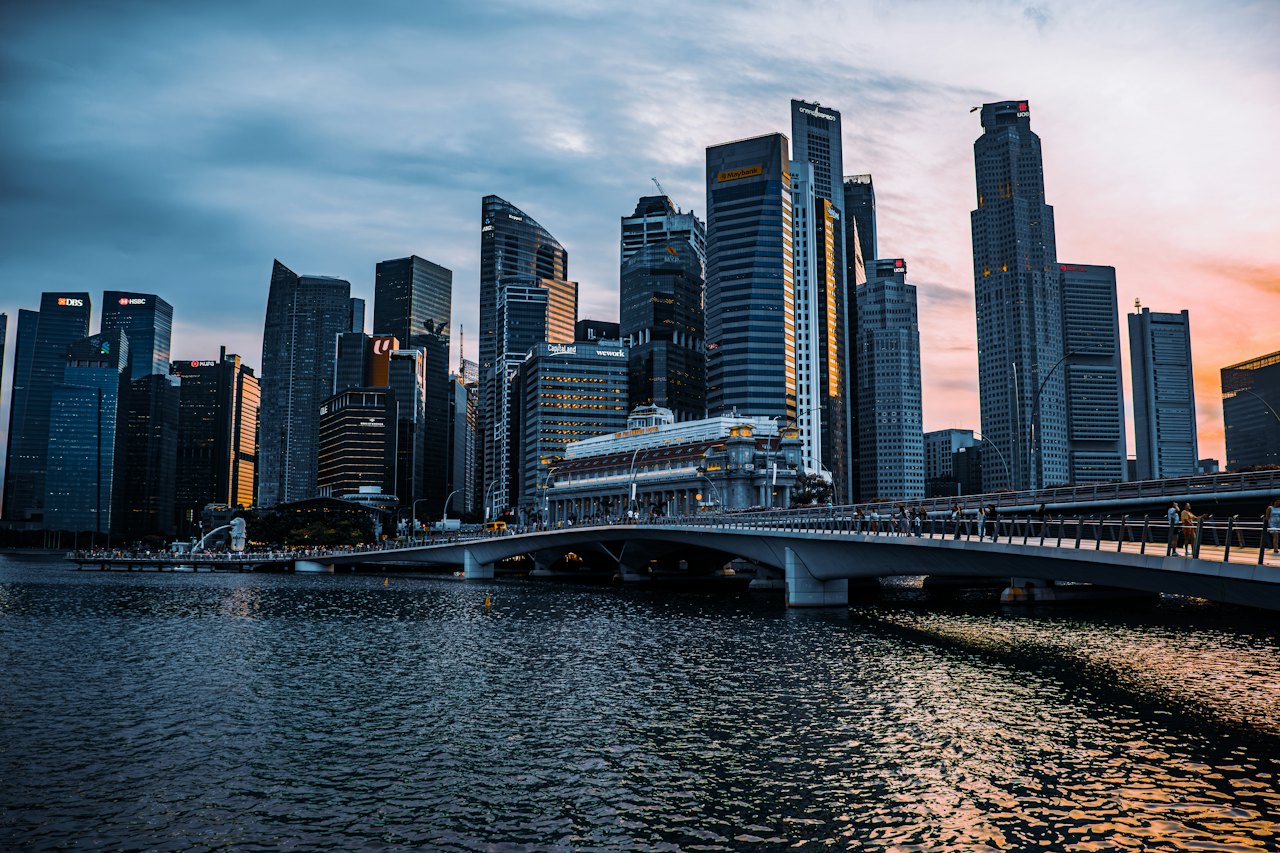
Skyline, gardens and hotels.
Temples, shophouses and hawker food.
Spices, Sultan Mosque and cafés.
Beaches, theme parks and resorts.
Itineraries
Getting between stops: The MRT and buses use a contactless card (about S$1.10 to S$2.40 a journey); most sights are within a short ride.
Getting between stops: MRT to HarbourFront then the Sentosa Express.
Getting between stops: The MRT runs from Changi to the city in about 40 to 45 minutes.
Routes and timetables change. Confirm transit times with the operator before you book.
Do and stay
Best for: First-timers
Pros: Walkable to hawker centres, temples and bars, with several MRT lines at the door and a good range of boutique hotels and hostels. Hostels and capsules ($23–47 (S$30–60; ≈ €21–42 / £18–37)) cluster here and in Little India and Kampong Glam.
Watch for: Noisy at night around Club Street, and room rates are high for the size of the room.
Best for: Value and cafes
Pros: Cheaper guesthouses and mid-range hotels, with Arab Street cafes, the Sultan Mosque and Bugis shopping close by, and a short hop to Marina Bay. Budget hotels with private compact rooms, free Wi-Fi and a 24-hour desk cost $47–78 (S$60–100; ≈ €42–70 / £37–62), for example Heritage Collection or Hotel 81.
Watch for: Less polished than Marina Bay, and the streets around Bugis can be busy and loud on weekends.
Best for: Luxury and shopping
Pros: Skyline views, big hotels and direct access to Gardens by the Bay, malls and the MRT. Good if you want a pool and a view. Mid-range 3 to 4-star hotels run $78–234 (S$100–300; ≈ €70–209 / £62–185), for example YOTEL Singapore Orchard or the Carlton Hotel; the luxury tier is $234–469 (≈ €210–420 / £185–370)+ (S$300–600+; ≈ €209–419+ / £185–369+) at Marina Bay Sands, Raffles Singapore or Capella Sentosa.
Watch for: The most expensive rooms in the country, and the area is quiet and corporate after the shops close. Add 10% service charge and 9% GST to any quoted rate.
These are partner links. We may earn a commission at no extra cost to you.
Trade-offs
Final verdict
Editorial opinion from Should I Go, written from general travel knowledge and reviewed periodically. Verify prices, entry rules and advisories before you book.
Typical costs and rules change; confirm with official sources before you travel.
Three to four days covers the main neighbourhoods, hawker centres, Gardens by the Bay and one big attraction such as the Night Safari or Sentosa. Two days works as a stopover. Add a fifth day for Pulau Ubin or a day trip to Johor Bahru in Malaysia, subject to current border rules.
Accommodation and alcohol are expensive, but food does not have to be. A hawker meal costs $3–9 (S$4–12; ≈ €3–8 / £2–7), and public transport is cheap. Hotels average about $247 (S$316; ≈ €220 / £194) a night for a standard double. Per person per day, plan on about $36 to $83 (≈ €30–75 / £30–65) as a budget traveller (hostel and hawker food), $117 to $336 (≈ €105–300 / £90–260) in the mid-range and $359 to $805 (≈ €320–720 / £280–630)+ at the top end, all derived from editor-supplied tiers.
Citizens of many countries enter without a visa for stays of 30 to 90 days (the FCDO says normally 30 to 90 for British citizens, at the officer's discretion), and your passport must be valid for 6 months after you arrive; rules depend on your passport. Everyone, including visa-free travellers, must complete the free SG Arrival Card online within three days before arrival. Check the official Immigration and Checkpoints Authority website before you travel.
Hotel rates are often quoted "++": a 10% service charge plus 9% GST, both added to the room rate. Because the GST is charged on the rate plus service charge, the two together come to 1.10 × 1.09 = 1.199, about 19.9% on top. A room at $156 (S$200; ≈ €140 / £123) costs about $188 (S$240; ≈ €167 / £148) in the end. There is no separate tourist bed tax or entry levy. The casino entry levy of $117 (S$150; ≈ €105 / £92) applies only to citizens and permanent residents; foreign passport holders enter free.
Chewing gum is banned from import and sale; the exception is registered therapeutic or dental gum. E-cigarettes, vapes and e-liquids are illegal to bring in even for personal use, and they can be confiscated and met with heavy fines. There is no duty-free allowance for cigarettes or tobacco: all of it must be declared at the Red Channel and is liable to duty. Leave the vape at home, and check the official customs pages before you fly.
Tap any foreign contactless Visa or Mastercard, or a phone wallet, at MRT gates and bus readers. Adult card fares are about $0.86–1.88 (S$1.10–2.40; ≈ €0.77–1.67 / £0.68–1.48) a journey. If you will ride a lot, the Singapore Tourist Pass gives unlimited basic bus and MRT/LRT travel for $13 (S$17; ≈ €12 / £10) for 1 day, $19 (S$24; ≈ €17 / £15) for 2 days or $23 (S$29; ≈ €20 / £18) for 3 days; with fares this low it pays off only on a busy sightseeing day.
Get live weather, activities, travel advisories, and personalised tips for Singapore
Check Singapore Now →Have you visited Singapore? Was it worth it? Readers can vote: Worth Every Penny, Great in Shoulder Season Only, or Overrated / Skip It.