Eagle Beach
A wide, pale beach with low-rise hotels and the divi-divi tree that appears in every photograph. Walk it at sunset and keep a hat for midday.
The divi-divi tree at Eagle Beach
Best months: Apr–Aug & Nov (peak mid-Dec–Mar)
Photo: Vera Wijermars | Feathering on Unsplash
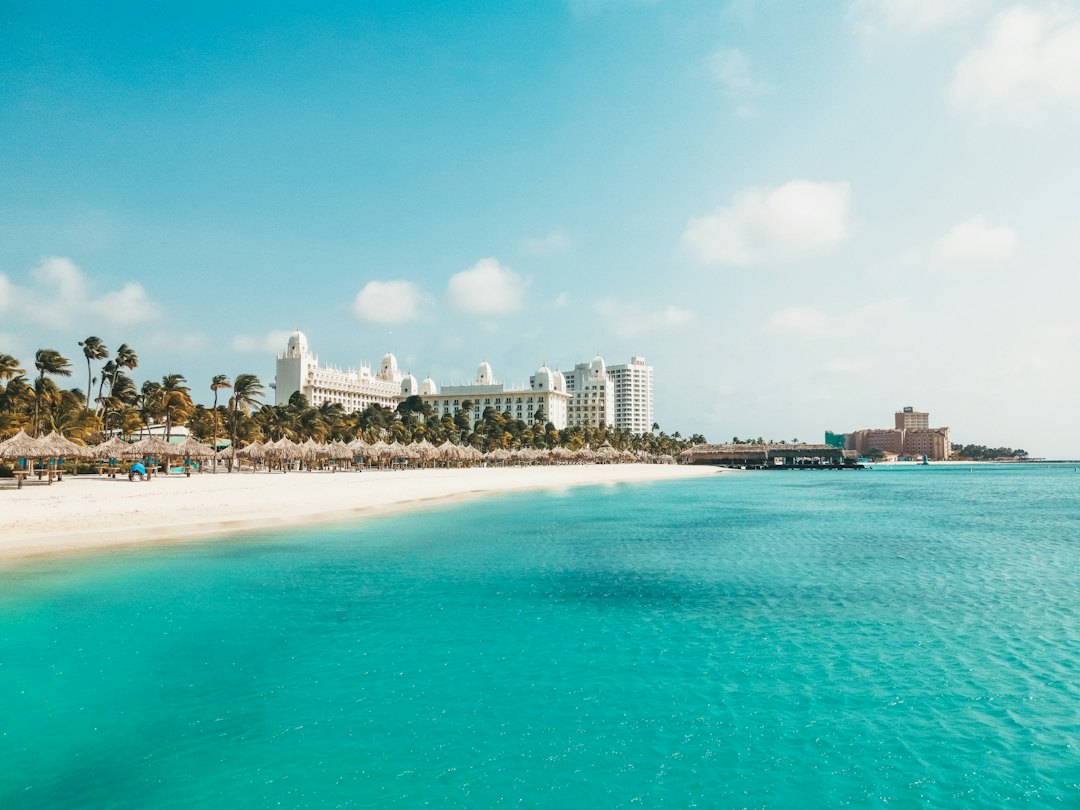
Photo: Kiril Georgiev on Unsplash
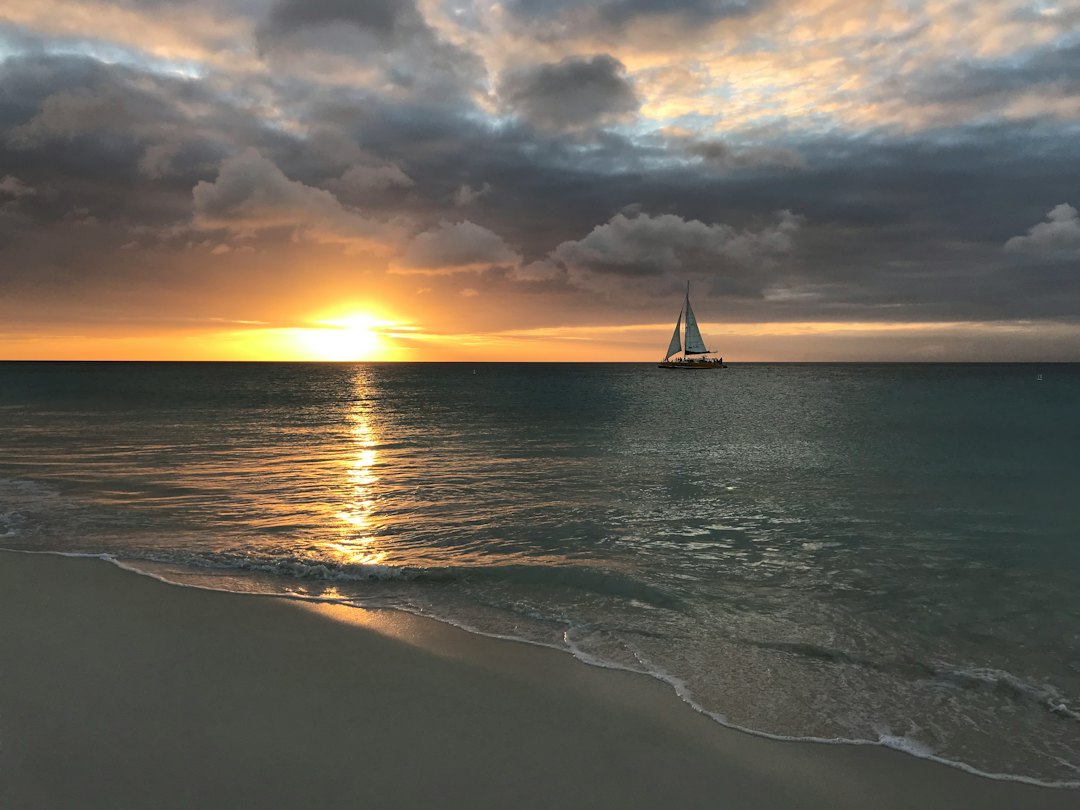
Photo: Jared Lisack on Unsplash
View Full Gallery (3)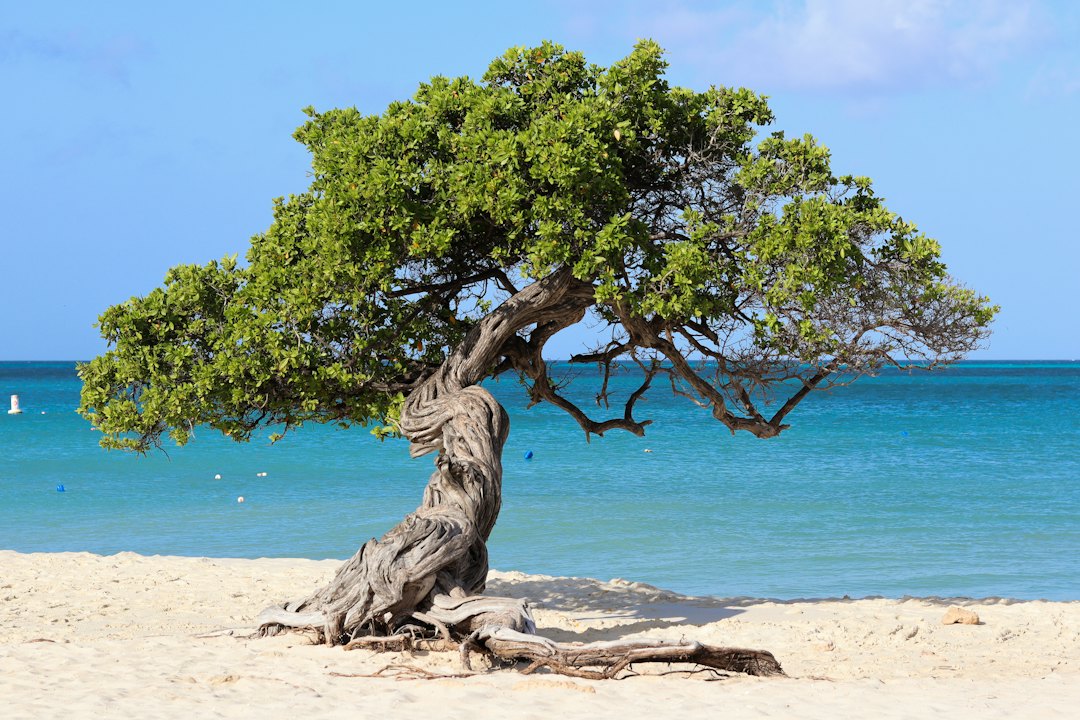
Overview
Aruba is the Caribbean island people book when they want the weather to be settled before they land. It sits south of the main hurricane belt, the wind blows most days, and the landscape behind the beaches is cactus scrub and rock rather than rainforest. The reward is a long season of sun, calm shallows and some of the most organised beach holidays in the region. The cost is that it is busy: this is one of the more heavily visited islands in these guides, and the resort strip is the island’s main business.
Eagle Beach is the one with space: a wide, pale stretch with low-rise hotels, a bent divi-divi tree that appears in every photo and a quieter feel than its neighbour. Palm Beach, a short drive up the coast, is the high-rise strip, with restaurants, shops and the water-sports operators. At the southern tip, Baby Beach is a shallow, sheltered bay that suits small children and weak swimmers. Away from the sand, Arikok National Park covers about a fifth of the island (roughly 18 to 20 per cent, 32 km / 20 mi² or 12 square miles) on the rugged north-east, with caves, rock formations and cactus, and a hire jeep or an organised tour is the usual way in. The tap water is generally drinkable, which is a small thing that makes a week easier. The trade-off is plain: if you want minimal crowds or lush mountains, Aruba is the wrong island.
The best months are April to August and November, when the sun is hot and rates are below the winter peak. Mid-December to March is the busiest and most expensive time, with highs of 28 to 29°C / 82 to 84°F (82 to 84°F). September and October are the hottest, at 30 to 31°C / 86 to 88°F (86 to 88°F). The FCDO says most hurricanes pass to the north of Aruba. Prices and rules are approximate and written from general knowledge, so check them before you go.
A wide, pale beach with low-rise hotels and the divi-divi tree that appears in every photograph. Walk it at sunset and keep a hat for midday.
A shallow, sheltered bay at the southern tip, good for small children and nervous swimmers. Go early, bring shade and food, and take the road along the south coast to Savaneta.
Cactus, rock formations and caves on the dry east side. Go early, carry water and book a jeep tour or hire a vehicle suited to rough tracks.
Best time
Best months for most visitors: Apr–Aug & Nov (peak mid-Dec–Mar). Good weather, thinner crowds and fairer prices.
April to August and November are the sweet spot.
Mid-December to March is the busiest and most expensive time, with highs of 28 to 29°C / 82 to 84°F (82 to 84°F) and brisk trade winds.
September and October are the hottest months, with highs of 31°C / 88°F (88°F) and the warmest sea at about 30°C / 86°F (86°F).
Booking window: reserve flights and stays 2–3 months ahead for Apr–Aug & Nov (peak mid-Dec–Mar), and 4–6 months ahead for peak season (Jan–Mar, Dec).
Partner links. We earn a commission at no extra cost to you; sponsors never change a ranking or safety note. How we earn money →
Weather
Current temperature loads here when your browser can reach Open-Meteo.
Weather data: Open-Meteo Historical & Live API. A single reading for the main town or area, not the whole destination.
Peak season about 28°C / 82°F; shoulder season about 30°C / 86°F.
Rain: Driest April to June; wetter and showery November and December.
Highs of 28 to 29°C / 82 to 84°F (82 to 84°F) with lows of about 25°C / 77°F (77°F) and brisk trade winds. The peak season; the model data shows 10 to 17 rain days a month, mostly short showers.
Hot and dry, with highs of 29 to 31°C / 84 to 88°F (84 to 88°F). April to June are the driest, at about 5 to 7 rain days a month in the model data, and the sea is about 27 to 28°C / 81 to 82°F (81 to 82°F).
The hottest months at 31°C / 88°F (88°F) in September, a sea of about 30°C / 86°F (86°F) in October and, in November and December, the wettest weather, with short showers. Hurricanes normally pass to the north.
Book flights and rooms early.
April to June are the driest months in our model data, with highs of 29 to 30°C / 84 to 86°F (84 to 86°F). November is cheaper than December but is the wettest month in the model data, with short showers.
Rates drop and some small businesses close, while the FCDO notes that most hurricanes pass to the north of Aruba.
Weather data: Open-Meteo Historical & Live API (live reading). Typical highs and season notes are our own summaries. How we verify →
Safety
Last updated: government levels come from our editor-verified table (October 2026). When the live UK FCDO check succeeds, its exact UTC time appears in the panel below. The banner takes the most cautious of the five agencies, so a live UK warning always outranks a green entry in our table and any part-country warning shows as red. We never show a level we haven’t checked. How we verify →
Government levels: editor-verified table, October 2026 How we verify →
Five official agencies, one view. Ratings change, so each pill opens the agency’s own page for today’s level.
Tier 4/5 · Standard caution. No warning against travel: the FCDO page for Aruba lists petty theft, occasional street crime, drug-related violent crime and the June to November hurricane season, noting that most hurricanes pass to the north.
The UK FCDO page for Aruba (updated 7 July 2026) carries no warning against travel. It lists a risk of petty theft and occasional incidents of street crime, and advises avoiding remote areas at night, not taking valuables or cash to the beach, not leaving bags in a vehicle and keeping bags closed. It says Aruba is used as a drug passageway from South America to Europe and North America and there can be drug-related violent crime. It says it is a legal requirement to carry ID, that you need both your UK licence and the correct IDP to drive, and that taxis are not metered, so agree the fare first. It notes there is no recent history of terrorism, though attacks cannot be ruled out, that the hurricane season normally runs from June to November, and that most hurricanes pass to the north of Aruba. Read the current page before you book and again before you travel, because wording changes. Our own rating of 4 out of 5 is an estimate, not an official level.
Our plain-English summary of what the UK FCDO, US State Department, Australian Smartraveller, Japan MOFA and South Korea MOFA publish. We quote no live ratings from memory; each button above opens the agency's own page.
Our opinion, not an official warning
Regional nuance: The UK FCDO page for Aruba carries no warning against travel but lists petty theft, occasional street crime, drug-related violent crime and the June to November hurricane season, noting that most hurricanes pass to the north. Shade touts and timeshare booths are our own note.
The concerns that are real: For most visitors the real nuisances are beach-bag theft, shade touts and timeshare booths. Keep valuables in the room safe and say no politely.
What headlines overstate: Headlines about drug trafficking in the Dutch Caribbean describe real risks, and the FCDO says to take care with luggage. The tourist strips are generally comfortable. Follow the advice on bags and ID.
Written by our editors from general travel knowledge and kept apart from the agencies above. How we verify →
Costs
Backpacker
$135 (≈ €120 / £105) per person per day
What it covers: A guesthouse or studio in Noord or Oranjestad, supermarket meals and snack-bar lunches, the public bus and free beaches.
Mid-Range (default)
$300 (≈ €270 / £240) per person per day
What it covers: A hotel or condo on Eagle Beach or Palm Beach, restaurant dinners, a shared rental car or jeep tour for part of the week and one boat trip.
Boutique
$660 (≈ €590 / £520) per person per day
What it covers: A beachfront resort suite, a private catamaran or snorkel day, tasting dinners and transfers.
Cost source: Audited Local Lodging Taxes, Rail Tariffs & Dining Averages (our own estimates, flights excluded). How we verify →
Source: Should I Go's own estimates, October 2026, in USD per person excluding international flights; euro figures are rough conversions. A couple shares a room, so accommodation drops 25% per person. Prices move, so treat these as a planning range, not a quote.
Estimated total: $0 (≈ €0 / £0)
Estimate in USD per trip, excluding international flights. Two or more travellers share rooms, so accommodation drops 25% per person. Budget and luxury tiers are scaled from the mid-range figure.
Cost source: Audited Local Lodging Taxes, Rail Tariffs & Dining Averages (our own estimates, flights excluded). How we verify →
Where to base yourself
The quieter, low-rise beach with space to walk, close to Oranjestad.
The high-rise resort strip, restaurants, shops and water-sports operators, with Noord apartments close behind.
The capital, with a cruise port, Dutch-colonial colour, shops and the harbour.
A quieter fishing-village coast, local seafood and Baby Beach at the southern tip.
Itineraries
Getting between stops: A fixed-fare taxi from the airport to Eagle Beach takes about 15 minutes (a flat $35 (Afl 63; ≈ €31 / £28)); agree the fare first.
Getting between stops: A rental car or jeep helps for Arikok and the south coast; both a UK licence and the correct IDP are needed to drive.
Getting between stops: Use a rental car and avoid isolated areas at night; take the FCDO’s advice on valuables.
Routes and timetables change. Confirm transit times with the operator before you book.
Do and stay
Best for: Beach-first stays with space and a quieter feel
Pros: A wide pale beach, low-rise hotels and the divi-divi tree.
Watch for: Fewer restaurants within walking distance than Palm Beach, and the beach has little shade.
Best for: First-timers who want restaurants, shops and water sports
Pros: High-rise resorts, a lively evening scene and many activities nearby.
Watch for: The busiest and most expensive stretch, with a crowded sea in peak season.
Best for: Mid-range value close to Palm Beach
Pros: Apartments, restaurants and a short walk or ride to the beach.
Watch for: Less beach frontage, and a car or bus helps in the evening.
These are partner links. We may earn a commission at no extra cost to you.
Trade-offs
Final verdict
Editorial opinion from Should I Go, written from general travel knowledge and reviewed periodically. Verify prices, entry rules and advisories before you book.
Typical costs and rules change; confirm with official sources before you travel.
April to August and November balance sun and lower prices. Mid-December to March is the peak and most expensive, and September and October are the hottest and quietest. Aruba sits outside the main hurricane belt, though tropical storms are possible.
Take a fixed-fare taxi: about 15 minutes and a flat $35 (Afl 63; ≈ €31 / £28). The Arubus buses also link Oranjestad with the hotel districts for a flat $2.50 (≈ €2.23 / £1.97) a ride ($5 (≈ €4.46 / £3.94) return). Taxis are not metered, so agree the fare in local currency before you set off.
Wikivoyage calls Aruba’s tap water absolutely safe to drink (the FCDO page does not comment on it). Bottled water is widely available if you prefer it.
The UK FCDO page for Aruba carries no warning against travel but lists petty theft, occasional street crime and drug-related violent crime. Do not take valuables to the beach, do not leave bags in a vehicle and carry ID.
Get live weather, activities, travel advisories, and personalised tips for Aruba, Caribbean
Check Aruba, Caribbean Now →Have you visited Aruba, Caribbean? Was it worth it? Readers can vote: Worth Every Penny, Great in Shoulder Season Only, or Overrated / Skip It.