Ubud and the rice terraces
Tegallalang gets the photos, but the quieter terraces north of Ubud reward a morning ride. Go before 9am.
Photo: Norbert Braun on Unsplash
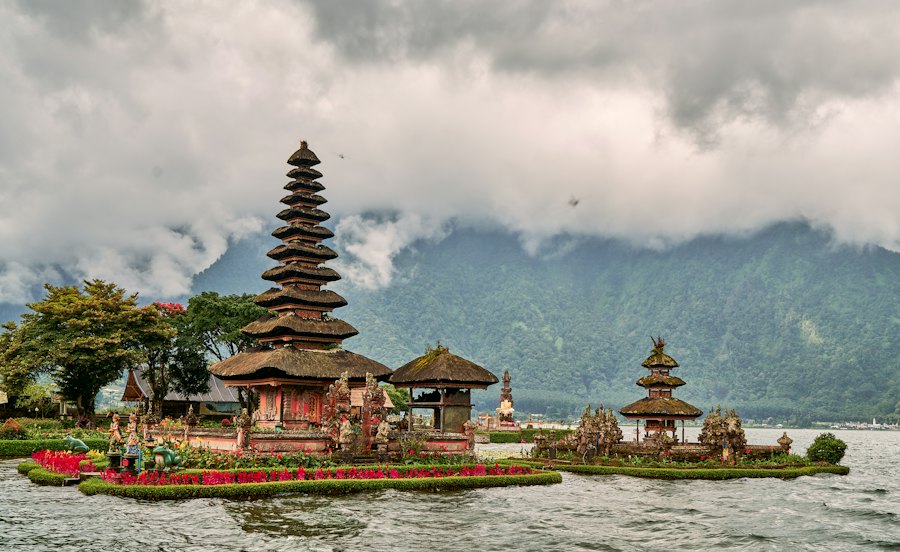
Photo: Maksim Shutov on Unsplash
View Full Gallery (3)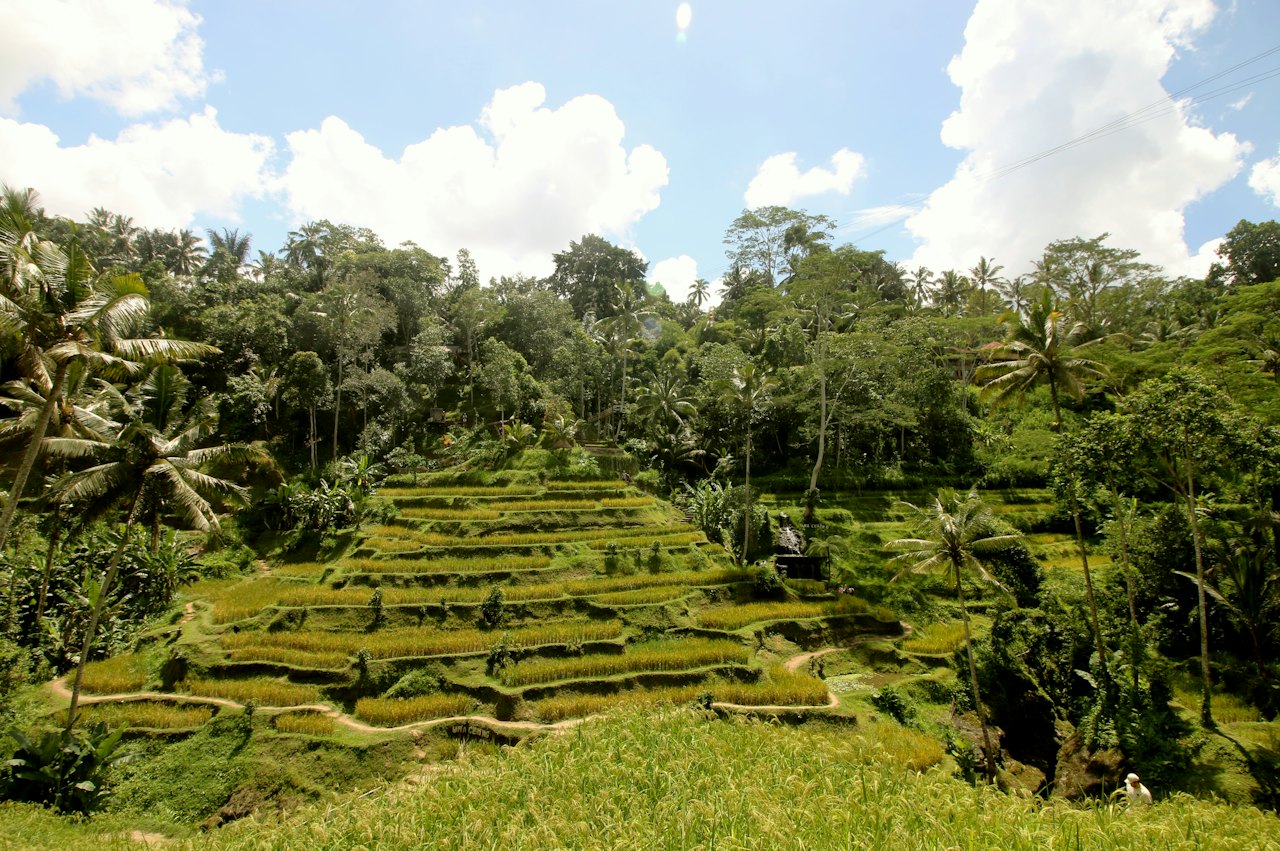
Overview
Bali is Indonesia's island of the gods — a place of terraced rice paddies, ancient Hindu temples, world-class surf breaks, and incredibly warm hospitality. Each region has its own distinct character.
Bali has been called overrun for twenty years, and it keeps being lovely anyway. The trick is to stop treating it as one place. Canggu is a café strip with traffic, Ubud is a market town ringed by rice fields, and the north and east (Munduk, Sidemen, Amed) still feel like villages. A plate of nasi campur at a warung costs a few dollars, and a private driver for the day is cheaper than a scooter accident. Only ride if you hold a licence and travel insurance that covers it. Temples require a sarong and a modest outfit. Go early to the famous terraces, because by ten o'clock they belong to tour groups.
Tegallalang gets the photos, but the quieter terraces north of Ubud reward a morning ride. Go before 9am.
Pura Ulun Danu Beratan on Lake Bratan is the postcard; Tanah Lot and Uluwatu are the coastal choices.
Canggu and Uluwatu are for surf, sunsets and cafés. Quiet Sidemen offers rice valleys without the traffic.
Best time
Best months for most visitors: Apr–Jun & Sep. Good weather, thinner crowds and fairer prices.
April to June and September to October are the best months for weather and value.
July and August, and the Christmas to New Year fortnight, are the busiest times.
November to March is the wet season, with warm, humid days of 27 to 32°C / 81 to 90°F, afternoon downpours, and some flooded roads and rough seas.
Booking window: reserve flights and stays 2–3 months ahead for Apr–Jun & Sep, and 4–6 months ahead for peak season (Jul–Aug, Dec).
Partner links. We earn a commission at no extra cost to you; sponsors never change a ranking or safety note. How we earn money →
Weather
Current temperature loads here when your browser can reach Open-Meteo.
Weather data: Open-Meteo Historical & Live API. A single reading for the main town or area, not the whole destination.
Peak season about 31°C / 88°F; shoulder season about 31°C / 88°F.
Rain: High in the wet season (Nov–Mar); dry Apr–Oct.
Hot and humid year-round. The dry season, roughly April to October, is the steadier window.
Cooler and wetter in the hills, especially from November to March.
July and August are dry, at 27 to 31°C / 81 to 88°F, with clear skies and good surf, but villas and flights can cost 30 to 50 percent more, and Canggu and Ubud are crowded.
Rain eases after March, humidity falls, and days are sunny at around 28 to 31°C / 82 to 88°F. Rates are often 20 to 35 percent below peak, beaches are quieter, and temples and rice terraces are easier to enjoy. May and June are especially good, with dry weather before the school-holiday rush in July.
Villa and hotel prices drop, with the exception of the late-December holidays, and rice terraces are at their greenest.
Weather data: Open-Meteo Historical & Live API (live reading). Typical highs and season notes are our own summaries. How we verify →
Safety
Last updated: government levels come from our editor-verified table (October 2026). When the live UK FCDO check succeeds, its exact UTC time appears in the panel below. The banner takes the most cautious of the five agencies, so a live UK warning always outranks a green entry in our table and any part-country warning shows as red. We never show a level we haven’t checked. How we verify →
Government levels: editor-verified table, October 2026 How we verify →
Five official agencies, one view. Ratings change, so each pill opens the agency’s own page for today’s level.
Tier 4/5 · Standard caution. Normal precautions: scooter accidents, strong surf, volcanic and earthquake activity.
The UK FCDO, US State Department and Australian DFAT generally describe Bali as a popular, mostly safe destination that calls for normal precautions. Their pages typically mention road and scooter accidents, strong currents at beaches, bag snatching, methanol-tainted alcohol, strict drug laws, and volcanic and earthquake activity. Advisories change with conditions such as eruptions, so check the official pages for your passport country before booking and again before departure.
Our plain-English summary of what the UK FCDO, US State Department, Australian Smartraveller, Japan MOFA and South Korea MOFA publish. We quote no live ratings from memory; each button above opens the agency's own page.
Our opinion, not an official warning
Regional nuance: Government advice for Indonesia flags volcanic activity and some remote provinces far from Bali. Mount Agung's exclusion zone matters mainly to hikers.
The concerns that are real: Scooter crashes are the biggest danger to tourists, and many insurers will not pay if you lack the right licence. Beware of money-changer stalls that short-change you, drink spiking, methanol in cheap cocktails, and bag snatching from passing bikes. Swim only where lifeguards patrol.
What headlines overstate: Volcano and earthquake headlines and stories of Bali belly make the island sound riskier than it feels. Eruptions affect specific areas and flights occasionally, and most visitors only face traffic, heat and a stomach bug.
Written by our editors from general travel knowledge and kept apart from the agencies above. How we verify →
Costs
Backpacker
$40 (≈ €35 / £30) per person per day
What it covers: Hostel dorm or simple homestay, warung meals at $1.65–2.80 (IDR 30,000 to 50,000; ≈ €1.47–2.50 / £1.30–2.20), rental scooter for those with a licence and insurance, or short Grab rides, and free beaches.
Mid-Range (default)
$90 (≈ €80 / £70) per person per day
What it covers: Private villa or boutique hotel with pool in Ubud or Canggu, café and warung meals, a private driver a few days, temple entry fees, a cooking class and spa treatment.
Boutique
$200 (≈ €180 / £155) per person per day
What it covers: Five-star resort or private pool villa, private driver and guide each day, fine dining, sunrise trek with breakfast, spa packages and a boat day to Nusa Penida.
Cost source: Audited Local Lodging Taxes, Rail Tariffs & Dining Averages (our own estimates, flights excluded). How we verify →
Source: Should I Go's own estimates, October 2026, in USD per person excluding international flights; euro figures are rough conversions. A couple shares a room, so accommodation drops 25% per person. Prices move, so treat these as a planning range, not a quote.
Estimated total: $0 (≈ €0 / £0)
Estimate in USD per trip, excluding international flights. Two or more travellers share rooms, so accommodation drops 25% per person. Budget and luxury tiers are scaled from the mid-range figure.
Cost source: Audited Local Lodging Taxes, Rail Tariffs & Dining Averages (our own estimates, flights excluded). How we verify →
Where to base yourself
Rice fields, temples, yoga and cafés. A good first base and a base for waterfalls.
Surf, cafés and nightlife. Traffic is heavy and the beach is gritty.
Cliff-top temples, surf breaks and clifftop views. Dramatic but spread out.
Slower, greener and cheaper. You will need a driver or scooter.
Itineraries
Getting between stops: Private driver or Grab/Gojek; roads are slow, so allow double the map time.
Getting between stops: Fast boats to Nusa Penida leave from Sanur, about 30 to 45 minutes; sea conditions vary.
Getting between stops: A hired driver for the whole loop is often cheaper per day than renting separately.
Routes and timetables change. Confirm transit times with the operator before you book.
Do and stay
Best for: Culture and first-timers
Pros: Rice fields, art markets, yoga studios, cooking classes and day trips to temples and waterfalls. Cooler evenings than the coast and plenty of excellent restaurants.
Watch for: Busy central streets, constant traffic and no beach. Tegallalang and Monkey Forest are crowded by mid-morning, so plan to move early.
Best for: Cafés, surf and remote workers
Pros: Beach cafés, coworking spaces, surf schools at Batu Bolong, and good gyms and nightlife. Good value villas are available a few streets back from the sea.
Watch for: Heavy traffic, building sites and crowded beaches. Roads are narrow, and a short trip can take far longer than the map suggests.
Best for: Quiet and value
Pros: Village life, rice fields below Mount Agung, black-sand beaches and snorkelling at Amed, with homestays often under $40 (≈ €35 / £30) a night.
Watch for: Few nightlife options and limited public transport, so you need a driver or scooter. It takes 1.5 to 2.5 hours from the airport.
These are partner links. We may earn a commission at no extra cost to you.
Trade-offs
Final verdict
Editorial opinion from Should I Go, written from general travel knowledge and reviewed periodically. Verify prices, entry rules and advisories before you book.
Typical costs and rules change; confirm with official sources before you travel.
May, June and September are the best all-round months: mostly dry, sunny and less crowded than July and August, with hotel prices 20 to 35 percent lower. April and October also work. The wet season runs from November to March, with afternoon downpours but quieter, greener scenery. Check the weather forecast for the east coast if you plan to snorkel.
Seven to ten days works well: three or four in Ubud, three in a beach base such as Canggu or Uluwatu, and optional days in the east or north. Less than five days means spending much of your time in traffic. Add a few days if you want to include Nusa Penida or the north, where distances are longer than they look on the map.
Only if you hold a valid motorcycle licence, are experienced, and your travel insurance explicitly covers scooters. Traffic is chaotic, roads are uneven, and accidents are common among tourists. A private driver for the day, at around $33–44 (IDR 600,000 to 800,000; ≈ €30–40 / £25–35), is a safer option. Always wear a helmet and carry your licence.
Get live weather, activities, travel advisories, and personalised tips for Bali, Indonesia
Check Bali, Indonesia Now →Have you visited Bali, Indonesia? Was it worth it? Readers can vote: Worth Every Penny, Great in Shoulder Season Only, or Overrated / Skip It.