Table Mountain
Take the cable car (about $28 (ZAR 475) return online, a little more at the ticket office) or hike Platteklip Gorge. The cable car stops in strong wind and the mountain can be cloud-covered, so check conditions.
Photo: Joshua Kettle on Unsplash
Photo: Joshua Kettle on Unsplash
View Full Gallery (3)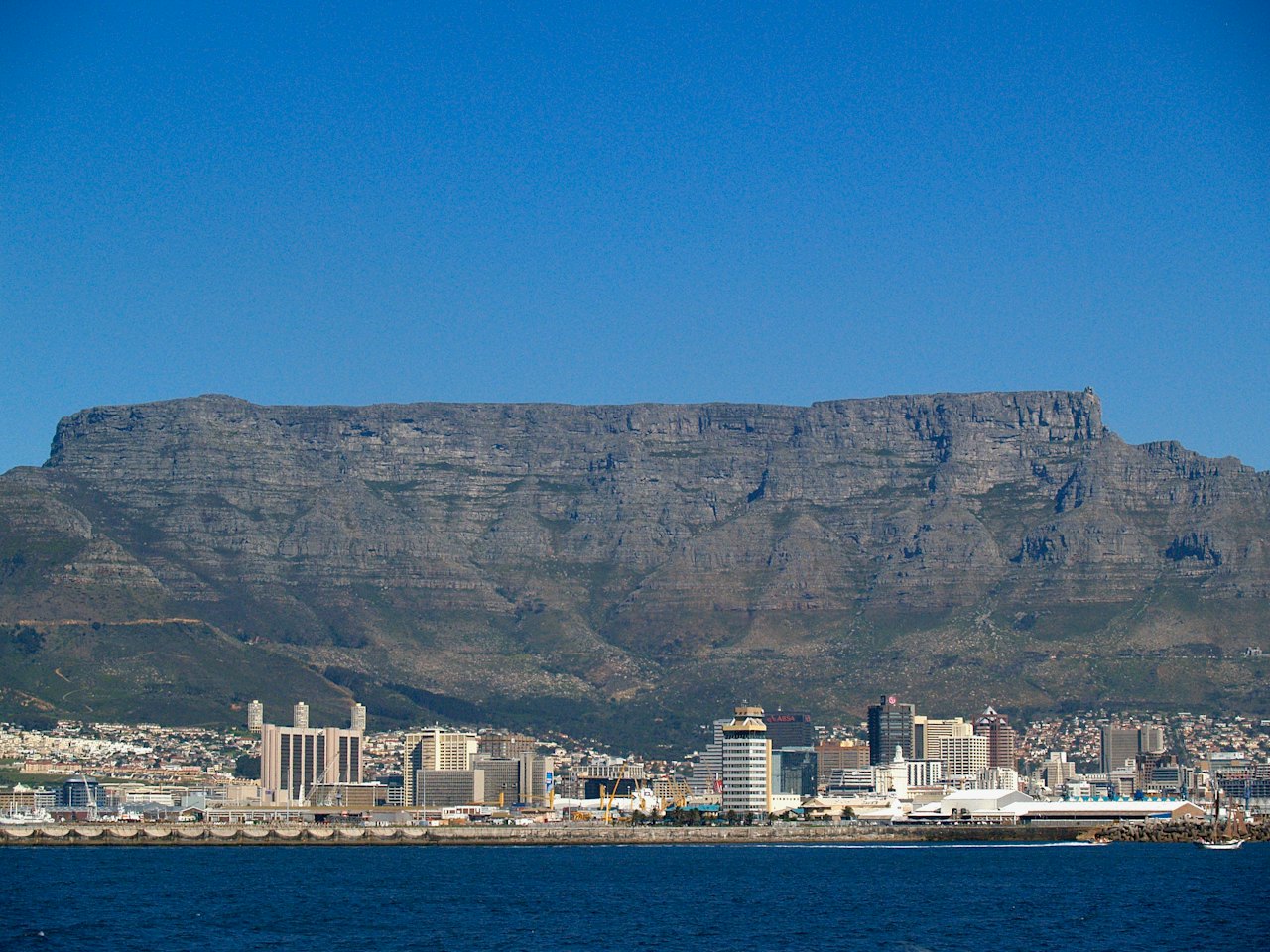
Overview
Cape Town has one of the most dramatic city settings anywhere, a flat-topped mountain over a harbour, with vineyards, penguin beaches and a coastline of fynbos and cliffs within an hour's drive. It is also a city of sharp contrasts, and a visitor sees both the leafy suburbs of the Atlantic Seaboard and the townships of the Cape Flats, which tell the story of apartheid and its legacy.
Cape Town is good value for sterling and dollar travellers, with good wine, seafood and restaurants for a fraction of European prices. Go up Table Mountain early on a clear day (the cable car closes in strong wind, so check before you queue), drive Chapman's Peak to Cape Point, visit the Boulders Beach penguins and taste wine in Stellenbosch or Franschhoek. The Robben Island ferry sells out, so book ahead. Crime is the practical concern: use Uber or Bolt after dark, keep phones out of sight, and do not hike alone on quiet trails. Summer, November to March, is dry and warm with strong southeasterly winds; winter is mild, wet and cheaper.
Take the cable car (about $28 (ZAR 475) return online, a little more at the ticket office) or hike Platteklip Gorge. The cable car stops in strong wind and the mountain can be cloud-covered, so check conditions.
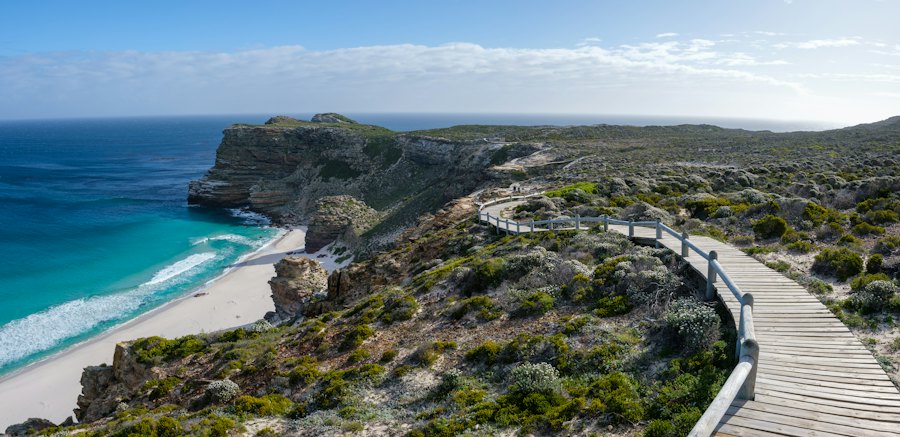
Chapman's Peak, Boulders penguins and Cape Point make a full day by car or tour.
Stellenbosch, Franschhoek and Paarl are an easy day trip with tastings and lunch.
Best time
Best months for most visitors: Nov–Apr. Good weather, thinner crowds and fairer prices.
February to April and October to November are the best months for most visitors, with warm, mostly dry weather, fewer crowds and lower prices.
December and January are the warmest and busiest months, with long days, daytime highs of about 26 to 27 degrees Celsius (hot spells can reach the mid-30s) and strong wind.
May to August is the cool, wet winter, with rain, cold fronts, daytime highs of about 18 degrees and nights of 7 or 8.
Booking window: reserve flights and stays 2–3 months ahead for Nov–Apr, and 4–6 months ahead for peak season (May, Aug–Oct).
Partner links. We earn a commission at no extra cost to you; sponsors never change a ranking or safety note. How we earn money →
Weather
Current temperature loads here when your browser can reach Open-Meteo.
Weather data: Open-Meteo Historical & Live API. A single reading for the main town or area, not the whole destination.
December to March is dry, warm and windy, the peak season.
June to August is cool and rainy, with big surf and whale watching.
Hotels and Airbnbs are most expensive, and the Waterfront, Camps Bay and the Peninsula are crowded. Book months ahead.
The Atlantic side stays cold all year, with the Indian Ocean side of the peninsula a little warmer, and autumn light is good for hiking and wine tasting. Wildflowers bloom from August to September on the West Coast.
Prices are lowest, and southern right whales are along the coast from June to November. Table Mountain cable car closures are more frequent, and some days are grey, but the green season has its own appeal.
Weather data: Open-Meteo Historical & Live API (live reading). Typical highs and season notes are our own summaries. How we verify →
Safety
Last updated: government levels come from our editor-verified table (October 2026). When the live UK FCDO check succeeds, its exact UTC time appears in the panel below. The banner takes the most cautious of the five agencies, so a live UK warning always outranks a green entry in our table and any part-country warning shows as red. We never show a level we haven’t checked. How we verify →
Government levels: editor-verified table, October 2026 How we verify →
Five official agencies, one view. Ratings change, so each pill opens the agency’s own page for today’s level.
Tier 3/5 · Increased caution. Increased caution: street crime and violent crime, though tourist areas are generally safer by day.
The UK FCDO, US State Department and Australian DFAT generally advise visitors to South Africa to take care, since crime rates, including violent crime and robbery, are high by many standards. Their advice usually mentions the Cape Town city centre, certain townships and the Cape Flats, hiking on isolated trails, and periodic protests, power cuts and water supply problems. Advice varies and changes, so check each agency's current South Africa page before you book.
Our plain-English summary of what the UK FCDO, US State Department, Australian Smartraveller, Japan MOFA and South Korea MOFA publish. We quote no live ratings from memory; each button above opens the agency's own page.
Our opinion, not an official warning
Regional nuance: South Africa's advice stresses street and violent crime, including in parts of Cape Town. Tourist areas are generally safer by day, but local guidance on neighbourhoods, townships and hiking routes matters.
The concerns that are real: Phone snatching, bag theft and smash-and-grab from parked cars are common, and armed robbery happens. Stay in tourist areas, avoid walking after dark, use ride-hailing apps and do not hike alone on quiet trails such as parts of Table Mountain. Visit the townships only with a reputable local guide.
What headlines overstate: Headlines about crime and load-shedding (scheduled power cuts, much reduced since 2024 but not guaranteed gone) are accurate but do not describe every visit. Most tourists have trouble-free trips if they use common sense, stay in busy areas and plan transport. Keep up to date with local news during your stay.
Written by our editors from general travel knowledge and kept apart from the agencies above. How we verify →
Costs
Backpacker
$50 (≈ €45 / £40) per person per day
What it covers: Hostel dorm or simple guesthouse, supermarket and market meals, MyCiTi buses and occasional ride-hailing, free hikes and beaches, and one paid sight.
Mid-Range (default)
$110 (≈ €100 / £85) per person per day
What it covers: Boutique guesthouse or apartment shared by two, restaurant dinners with wine, a hire car or Uber, cable car and Robben Island tickets, and a winelands day.
Boutique
$240 (≈ €210 / £190) per person per day
What it covers: Five-star hotel or villa on the Atlantic Seaboard, fine dining and wine estate lunches, private driver-guides, helicopter flights and a night in a Winelands manor.
Cost source: Audited Local Lodging Taxes, Rail Tariffs & Dining Averages (our own estimates, flights excluded). How we verify →
Source: Should I Go's own estimates, October 2026, in USD per person excluding international flights; euro figures are rough conversions. A couple shares a room, so accommodation drops 25% per person. Prices move, so treat these as a planning range, not a quote.
Estimated total: $0 (≈ €0 / £0)
Estimate in USD per trip, excluding international flights. Two or more travellers share rooms, so accommodation drops 25% per person. Budget and luxury tiers are scaled from the mid-range figure.
Cost source: Audited Local Lodging Taxes, Rail Tariffs & Dining Averages (our own estimates, flights excluded). How we verify →
Where to base yourself
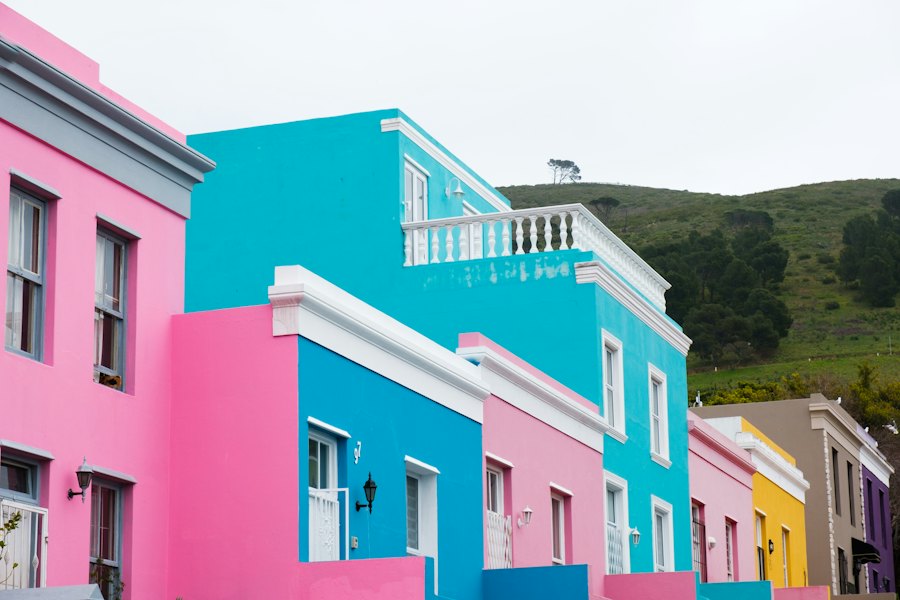
Central museums, restaurants and colourful Cape Malay houses.
Harbour, shopping and seaside promenade.
Vineyards, tastings and food.
Penguins, Cape Point and Chapman's Peak.
Itineraries
Getting between stops: Uber is the safest and easiest way to get around; hire a car for the Peninsula. Robben Island ferries leave from the Nelson Mandela Gateway at the V&A Waterfront, and tickets sell out, so book ahead.
Getting between stops: Drive the N2 or fly to George and rent a car.
Getting between stops: Domestic flights link Cape Town to Johannesburg and Hoedspruit.
Routes and timetables change. Confirm transit times with the operator before you book.
Do and stay
Best for: First-timers
Pros: Walkable restaurants, the harbour, the Robben Island ferry and Cape Wheel, and generally busy and well-patrolled streets. Good for a first visit.
Watch for: Touristy and relatively expensive. Green Point is quieter at night, and you will need a car or Uber to reach the Peninsula.
Best for: Restaurants and views
Pros: Boutique guesthouses and cafes under Table Mountain, close to Kloof Street and the cable car. Good value compared with the Atlantic Seaboard.
Watch for: Hills are steep, and night walking should be limited. A short ride to beaches and the Waterfront.
Best for: Beach and sunsets
Pros: Atlantic promenade and sunset views, with restaurants and beaches nearby. Camps Bay is the glamorous beach strip beneath the Twelve Apostles.
Watch for: Camps Bay is expensive and windy. Sea Point's promenade is safer in daylight than at night. Atlantic water is cold.
These are partner links. We may earn a commission at no extra cost to you.
Trade-offs
Final verdict
Editorial opinion from Should I Go, written from general travel knowledge and reviewed periodically. Verify prices, entry rules and advisories before you book.
Typical costs and rules change; confirm with official sources before you travel.
Cape Town is popular with visitors and most trips are trouble free, but crime is a real concern. Stay in busy, well-lit areas, use Uber or Bolt after dark, keep phones and valuables out of sight and avoid isolated trails. Check the official advice and ask your accommodation about local conditions.
February to April and October to November are good for most visitors, with warm, mostly dry weather and fewer crowds than December and January. Summer is dry but windy and busy. Winter, May to August, is cooler and wetter, but cheaper and good for whale watching.
Four days covers Table Mountain, the Peninsula drive to Cape Point and penguins, Robben Island and the city. Add two or three days for the winelands of Stellenbosch and Franschhoek, or a trip along the Garden Route. A week lets you see the region without rushing.
Get live weather, activities, travel advisories, and personalised tips for Cape Town
Check Cape Town Now →Have you visited Cape Town? Was it worth it? Readers can vote: Worth Every Penny, Great in Shoulder Season Only, or Overrated / Skip It.