New Zealand packs fjords, glaciers, volcanoes, beaches and rainforest into two islands you can drive end to end in about two weeks. Milford Sound, Aoraki Mount Cook, Tongariro, the Bay of Islands and Queenstown's lake-and-mountain setting are all famous for good reason, and the hiking network, the Great Walks, is among the best organised anywhere.
The cost is the first thing to plan around. It is a long and expensive flight for most visitors, and once you arrive, rental cars, campervans, domestic flights and tours add up, with the International Visitor Conservation and Tourism Levy on top. The second is distance: roads are slow, winding and often single-lane bridges, so a South Island loop needs more days than the map suggests. Book Great Walk huts months ahead, check weather and road reports daily, and never leave valuables in a parked car at a trailhead. December to February is warmest; the shoulder months of March, April and November give better prices and fewer people.
Three highlights worth the trip
1Milford Sound and Fiordland
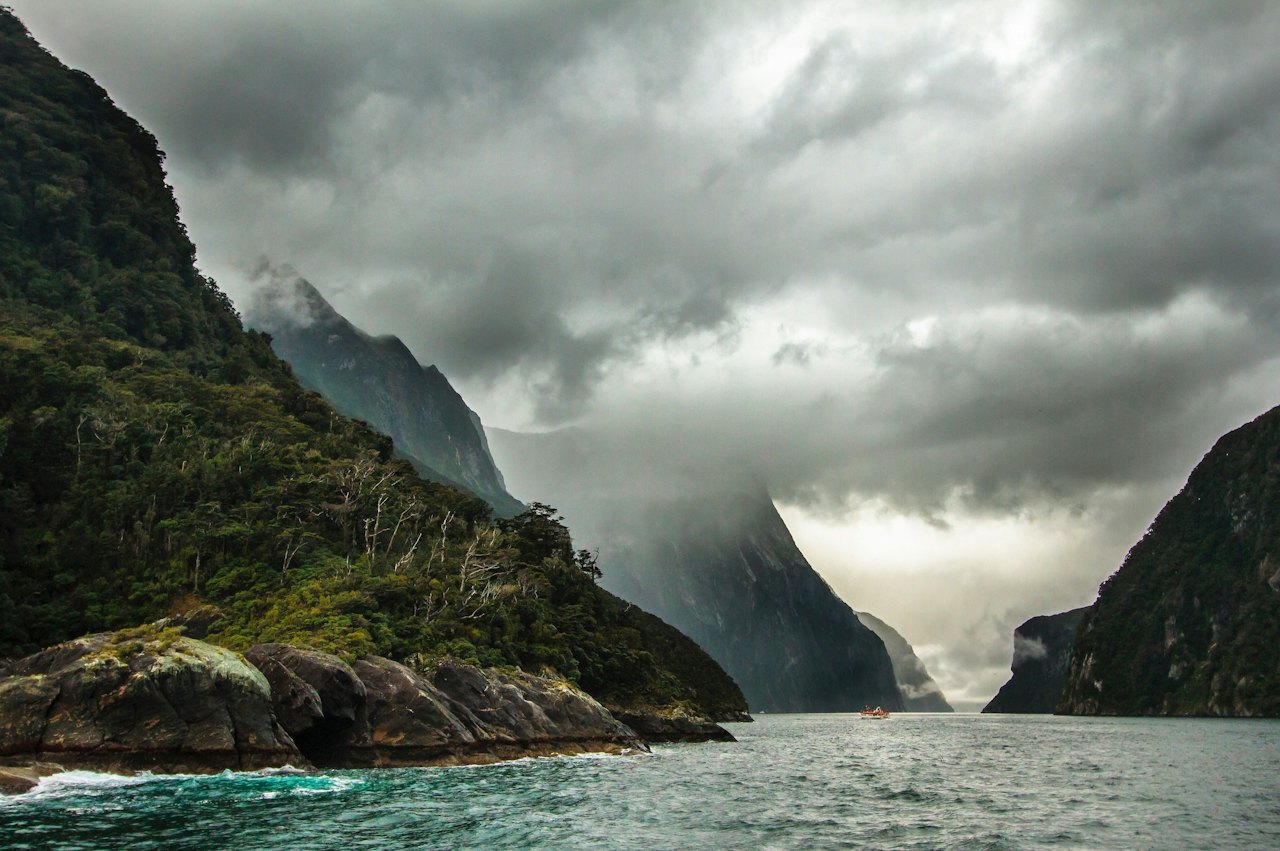
A cruise or kayak trip among waterfalls and sheer rock. Rain makes the waterfalls more dramatic. Standard cruises cost about $75–140 (≈ €65–125 / £60–110), and a scenic fly-cruise package from Queenstown up to $350 (≈ €310 / £280)+.
2Queenstown and adventure sports
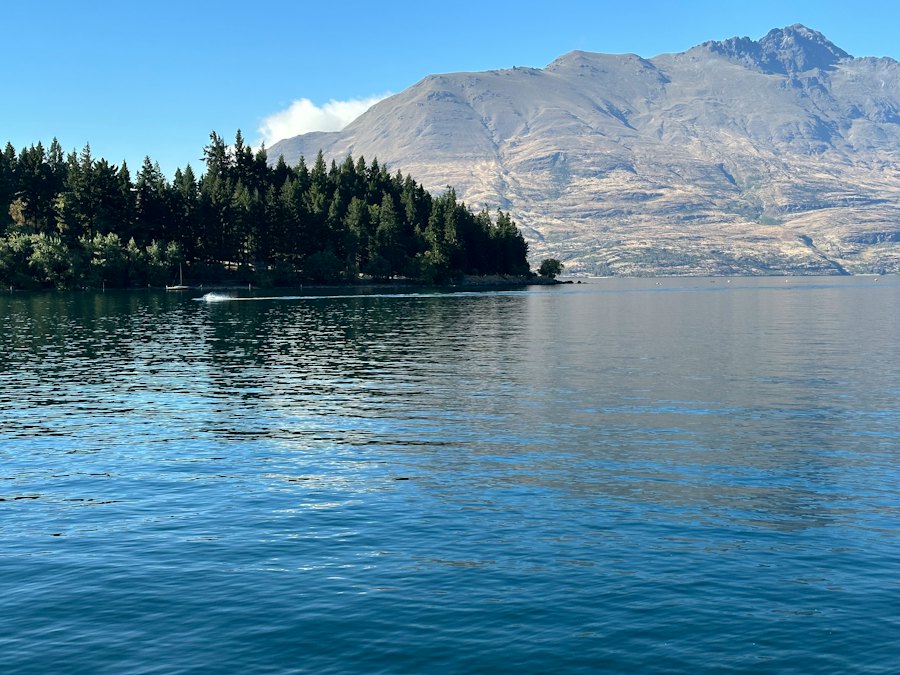
Bungee, skydiving and jet boats; the walks are calmer. Bungy jumping, skydiving or canyon jet-boating costs about $130–220 (≈ €115–195 / £100–175) each.
3Aoraki Mount Cook and Lake Tekapo
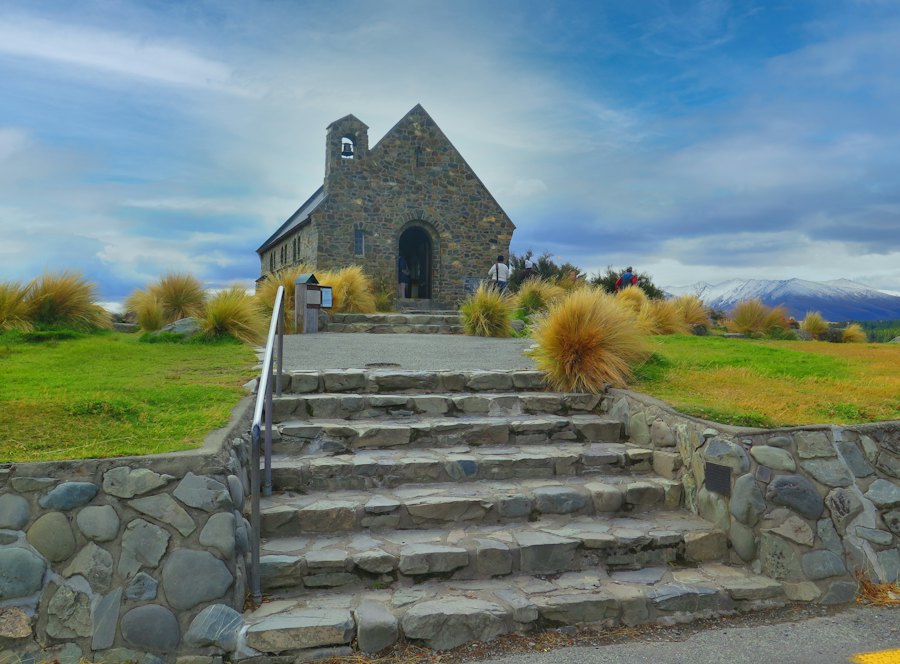
The Hooker Valley track and the Church of the Good Shepherd under dark skies.
2
Best time
Best Time to Visit New Zealand: A 12-Month View
Best months for most visitors: Dec–Feb, or Mar–Apr & Nov. Good weather, thinner crowds and fairer prices.
JanSweet (Sweet spot)
FebSweet (Sweet spot)
MarSweet (Sweet spot)
AprPeak (Peak season)
MayPeak (Peak season)
JunOff (Off-peak)
JulOff (Off-peak)
AugOff (Off-peak)
SepPeak (Peak season)
OctPeak (Peak season)
NovSweet (Sweet spot)
DecSweet (Sweet spot)
Sweet = best balance of weather, crowds and price
Peak = busiest and dearest (or hottest)
Off = quiet; check weather and closures
Shoulder / sweet spot
March to April and October to November are the best balance of weather, prices and space.
Peak season
December to February is summer, with long days and average highs of about 20 to 24 degrees Celsius (68 to 75°F) in Queenstown and Auckland, and the busiest and most expensive months.
Off-peak
June to August is winter, cold and snowy in the mountains, with short days and some alpine tracks and passes closed.
Booking window: reserve flights and stays 2–3 months ahead for Dec–Feb, or Mar–Apr & Nov, and 4–6 months ahead for peak season (Apr–May, Sep–Oct).
Partner links. We earn a commission at no extra cost to you; sponsors never change a ranking or safety note. How we earn money →
3
Weather
Weather and Seasonal Conditions in New Zealand
Right now in New Zealand
Current temperature loads here when your browser can reach Open-Meteo.
Campervans, rental cars, Great Walk huts and Queenstown rooms sell out well in advance, and the Christmas to mid-January stretch is the most crowded of all.
Shoulder season
Autumn has settled weather and good colour in Central Otago; spring brings wildflowers, lambs and waterfalls but also changeable skies. Some Great Walk huts are still open and many tracks are quieter.
Off-peak
It is the season for skiing and snowboarding at Queenstown, Wanaka and the Central Plateau, and for lower prices elsewhere. The North Island stays milder, though wetter.
Last updated: government levels come from our editor-verified table (October 2026). When the live UK FCDO check succeeds, its exact UTC time appears in the panel below. The banner takes the most cautious of the five agencies, so a live UK warning always outranks a green entry in our table and any part-country warning shows as red. We never show a level we haven’t checked. How we verify →
🏛️ Official Government Warnings
Government levels: editor-verified table, October 2026 How we verify →
Five official agencies, one view. Ratings change, so each pill opens the agency’s own page for today’s level.
Tier 5/5 · Very low risk. Normal precautions: changeable weather, mountain conditions, road driving and car break-ins.
The UK FCDO, US State Department and Australian DFAT generally describe New Zealand as a low-risk destination where normal precautions apply. Their advice usually mentions earthquakes and volcanic activity, rapidly changing weather and mountain conditions, road safety for those unused to driving on the left, and theft from vehicles. Check the official pages from all three before booking.
Our plain-English summary of what the UK FCDO, US State Department, Australian Smartraveller, Japan MOFA and South Korea MOFA publish. We quote no live ratings from memory; each button above opens the agency's own page.
🧭 Editorial Opinions & Street-Smart Reality
Our opinion, not an official warning
Regional nuance: New Zealand sits on active earthquake and volcanic zones, and official advice mentions both, along with fast-changing mountain weather. Monitoring and public guidance are good, and most visitors are unaffected.
Theft from parked rental cars at trailheads, viewpoints and car parks
Road crashes involving tired overseas drivers on narrow, winding roads, and mountain weather that turns fast
The concerns that are real: Theft from parked rental cars at trailheads and viewpoints is the most common problem. Road crashes involving overseas drivers on winding, narrow roads are a more serious risk. In the mountains, exposure and sudden weather changes, river crossings and avalanche terrain in winter are the real dangers, so tell someone your plans and carry the right gear.
What headlines overstate: Earthquake and volcano headlines are real but rarely affect visitors directly; New Zealand has detailed monitoring and clear guidance. Most trips are uneventful, and the main thing to respect is the weather.
Written by our editors from general travel knowledge and kept apart from the agencies above. How we verify →
What it covers: Motel or boutique B&B shared by two, cafe lunches and restaurant dinners, rental car and fuel, national park cruises and one paid activity.
What it covers: High-end lodges and boutique hotels, helicopter flights and guided tours, private transfers, fine dining and winery visits.
Where a day's money goes (solo)
Accommodation$189 (≈ €170 / £150)
Food$126 (≈ €110 / £100)
Transit$63 (≈ €55 / £50)
Activities$42 (≈ €40 / £35)
Cost source: Audited Local Lodging Taxes, Rail Tariffs & Dining Averages (our own estimates, flights excluded). How we verify →
Source: Should I Go's own estimates, October 2026, in USD per person excluding international flights; euro figures are rough conversions. A couple shares a room, so accommodation drops 25% per person. Prices move, so treat these as a planning range, not a quote.
Trip Budget Calculator
Estimated total: $0 (≈ €0 / £0)
Stay 45%
Food 30%
Transit 15%
Sights 10%
Estimate in USD per trip, excluding international flights. Two or more travellers share rooms, so accommodation drops 25% per person. Budget and luxury tiers are scaled from the mid-range figure.
Cost source: Audited Local Lodging Taxes, Rail Tariffs & Dining Averages (our own estimates, flights excluded). How we verify →
6
Where to base yourself
Four Regions and Cities in New Zealand
Min. 3 nights
Auckland and the north
Harbour city and the Bay of Islands.
Min. 2 nights
Rotorua and Taupo
Geothermal parks and lakes.
Min. 4 nights
Queenstown and Fiordland
Adventure and fjords.
Min. 3 nights
Christchurch and Tekapo
Gateway to Canterbury and the Alps.
7
Itineraries
Three Itineraries for New Zealand
7 days
South Island highlights
Days 1–3: Queenstown.
Day 4: Milford Sound.
Days 5–6: Mount Cook and Tekapo.
Day 7: Christchurch.
Getting between stops: A rental car or campervan is the easiest way.
10 days
Both islands
Days 1–3: Auckland and Bay of Islands.
Days 4–5: Rotorua.
Days 6–10: South Island.
Getting between stops: Fly between islands or take the Interislander or Bluebridge ferry (about 3.5 hours between Wellington and Picton).
14 days
New Zealand slow
Days 1–4: North Island.
Days 5–14: South Island.
Getting between stops: Drive and book ferries and campsites early.
Routes and timetables change. Confirm transit times with the operator before you book.
8
Do and stay
Things to Do and Where to Stay in New Zealand
Top things to do
Milford Sound and Fiordland
Tongariro Alpine Crossing
Queenstown and Lake Wakatipu
Bay of Islands and Northland
Aoraki Mount Cook and Lake Tekapo
Insider tips
Book Great Walk huts and Milford Sound cruises well in advance in summer
Allow double the time Google Maps suggests on rural South Island roads, and drive on the left
Never leave valuables in a parked car at a trailhead or viewpoint, where break-ins are a known problem
Declare food, boots and outdoor gear at the border, as biosecurity checks are strict
Check MetService and Department of Conservation alerts before any alpine walk
Neighbourhoods to choose from
Queenstown
Best for: First-timers and adventure
Pros: Lake and mountain setting, dozens of activities, restaurants and a wide range of lodging, with day trips to Milford Sound, Glenorchy and Arrowtown. Rooms cost about $75–120 (≈ €65–105 / £60–95) a night for holiday-park cabins or private rooms in design hostels, $160–260 (≈ €145–230 / £125–200) for modern apartments or central lakeside hotels, and $500–1,200 (≈ €450–1,070 / £390–940)+ for remote eco-lodges and design retreats.
Watch for: Expensive and crowded in summer and during the ski season. Book far ahead, and consider staying in Arrowtown or Frankton for lower prices.
Auckland (CBD / Ponsonby / Devonport)
Best for: Arrival and city time
Pros: The main international gateway, with harbour views, restaurants, ferries to Waiheke Island and day trips to beaches and rainforest.
Watch for: Traffic is heavy, public transport is limited compared with other cities, and central hotel prices are high. Most visitors stay a night or two.
Rotorua or Lake Taupo
Best for: Geothermal and Maori culture
Pros: Geothermal parks, Maori cultural experiences, lake activities and a base for Tongariro. Good motel and campervan options at fair prices.
Watch for: Rotorua has a sulphur smell, and both towns are touristy. A car is needed for many sights.
Live Accommodation Map
Ready to Book This Trip? Book Your Trip to New Zealand
These are partner links. We may earn a commission at no extra cost to you.
Advantages and Honest Disadvantages of New Zealand
Advantages
Spectacular scenery in a compact country.
Excellent hiking infrastructure.
Safe and friendly.
Great outdoor adventures.
Honest disadvantages
Long flights from most places.
Expensive to travel: cafes and bakeries cost about $10–18 (≈ €8.93–16 / £7.87–14), a gourmet pub meal $25–50 (≈ €20–45 / £20–40), and estate wine-pairing dinners in Central Otago or Waiheke $90–160 (≈ €80–145 / £70–125)+.
Weather changes quickly.
Sandflies bite.
10
Final verdict
Final Verdict: Is New Zealand the Right Destination for You?
Editorial opinion from Should I Go, written from general travel knowledge and reviewed periodically. Verify prices, entry rules and advisories before you book.
Know Before You Go
✈️ Airport to city centreAuckland airport (AKL) is about 22 km (14 miles) south of the city. SkyBus no longer runs. The cheapest way in is the AirportLink bus to Puhinui Station, then a Southern Line train to Britomart: a 3-zone fare of NZ$6.50 ($3.65 (≈ €3.26 / £2.87); ≈ €3.26 / £2.88) with a contactless card or AT HOP card, or NZ$8 ($4.49 (≈ €4.01 / £3.54); ≈ €4.01 / £3.54) for a paper ticket, with the bus-to-train transfer free if you tag on and off within 30 minutes. The private SkyDrive coach runs non-stop to SkyCity on Hobson Street for NZ$18 ($10.11 (≈ €9.03 / £7.96); ≈ €9.03 / £7.96) when booked online, daily every 30 minutes from 5:00 am to 10:30 pm. A shuttle is about NZ$35 ($20 (≈ €18 / £16); ≈ €17.50 / £15.50), and a taxi or rideshare is roughly NZ$40 to 90 ($22–51 (≈ €20–45 / £17–40); ≈ €20–45 / £18–40) (approximate).
🛂 Visa & entry rulesVisitors from visa-waiver countries (UK passport holders can stay up to 6 months, per the FCDO) need an NZeTA before travel, allowing up to 72 hours, plus the International Visitor Conservation and Tourism Levy collected with it: about NZ$117 (app) or NZ$123 (website) in total, roughly $66–69 (≈ €59–62 / £52–54). You also need the free New Zealand Traveller Declaration, a return or onward ticket, proof of funds and a passport valid for 3 months after you leave. Australian citizens are treated differently. Check the official New Zealand immigration page for your passport.
💳 Cash, cards & ATMsCards and contactless payment work almost everywhere, including small cafes and holiday parks. Carry a little cash for rural honesty boxes, but ATMs are plentiful in towns.
🚰 Tap water & healthTap water is safe nearly everywhere. Treat or boil water from streams and lakes on trails, and cover up against sandflies in Fiordland and on the West Coast.
🍽️ Tipping customTipping is not expected. Staff are paid a living wage, and a tip is a gesture for exceptional service rather than a custom.
⚠️ #1 local scam to watch forVehicle break-ins at trailheads and scenic car parks are the most common problem for visitors. Take everything with you, even items hidden out of sight, and leave nothing in the car.
Typical costs and rules change; confirm with official sources before you travel.
Getting From the Airport Into Town
Route: Auckland Airport (AKL), about 22 km (14 miles) south of the centre. The cheapest option is the AirportLink bus to Puhinui Station, then a Southern Line train to Britomart (SkyBus no longer runs). The private SkyDrive coach goes non-stop to SkyCity on Hobson Street; shuttles, rideshares and taxis also serve the city. Queenstown (ZQN) and Christchurch (CHC) also have bus links.
Time: About 60 to 90 minutes by AirportLink bus and train including the change at Puhinui; the SkyDrive coach and taxis are quicker, depending on traffic.
Fare: NZ$6.50 ($3.65 (≈ €3.26 / £2.87); ≈ €3.26 / £2.88) by bus and train with a contactless or AT HOP card (NZ$8 paper ticket; transfers free within 30 minutes); NZ$18 ($10.11 (≈ €9.03 / £7.96); ≈ €9.03 / £7.96) by SkyDrive coach, every 30 minutes from 5:00 am to 10:30 pm; shuttles about NZ$35 ($20 (≈ €18 / £16)); taxis and rideshares roughly NZ$40 to 90 ($22–51 (≈ €20–45 / £17–40); ≈ €20–45 / £18–40).
New Zealand: Your Questions Answered
What is the best month to visit New Zealand?
February and March are often the best combination of warm, settled weather and slightly fewer crowds than December and January. November and April are good shoulder months with lower prices. Winter, from June to August, is for skiing, and many alpine tracks are closed or need winter skills.
Is New Zealand expensive?
Yes, particularly once you add a rental car or campervan, domestic transport and activities, on top of a long international flight. Mid-range travellers should expect about $170 to $230 (≈ €150–210 / £135–180) per person per day. Self-catering, camping or holiday parks, and travelling in the shoulder seasons keep costs down.
How many days do you need in New Zealand?
Two weeks is a practical minimum to see a good part of one island, and three weeks lets you cover both. The distances are bigger than they look, and the weather can force changes. If you only have a week, pick either the South Island or the North Island rather than trying both.
Get live weather, activities, travel advisories, and personalised tips for New Zealand