Serengeti and the Great Migration
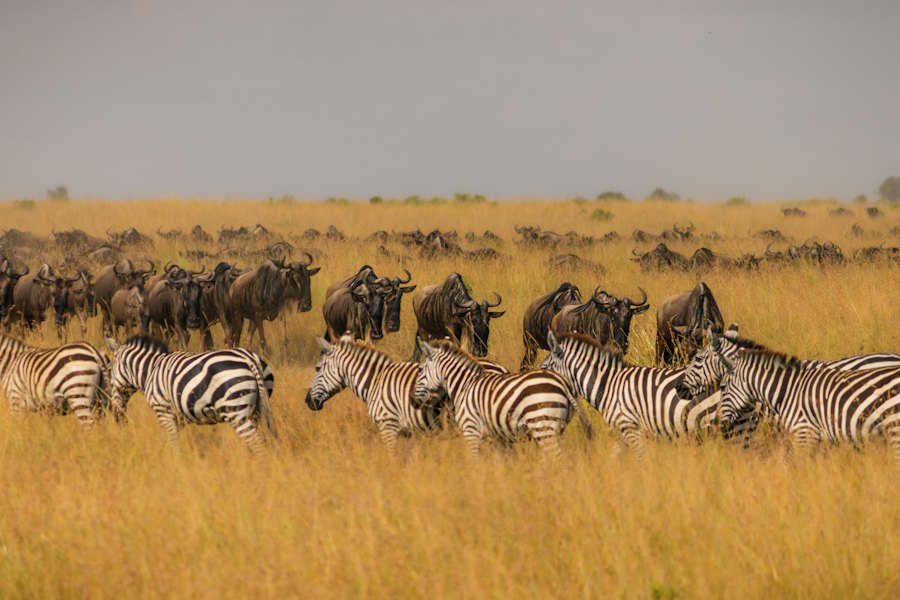
The herds move through the year; Mara River crossings are in July to October.
A lioness beside a safari vehicle, Serengeti
Best months: Jun–Oct, or Jan–Feb
Photo: Magdalena Kula Manchee on Unsplash
Photo: Mayur Arvind on Unsplash
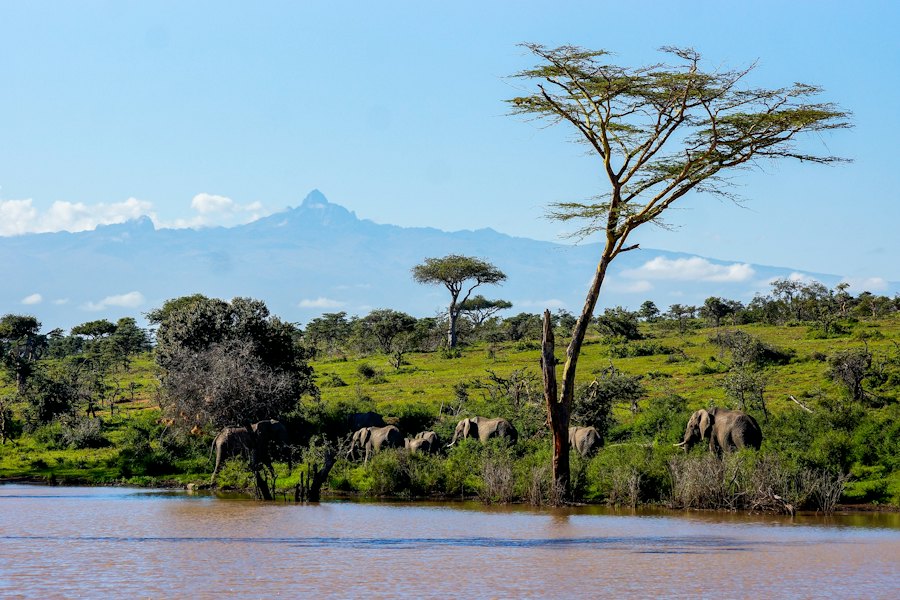
Photo: Leon Pauleikhoff on Unsplash
View Full Gallery (3)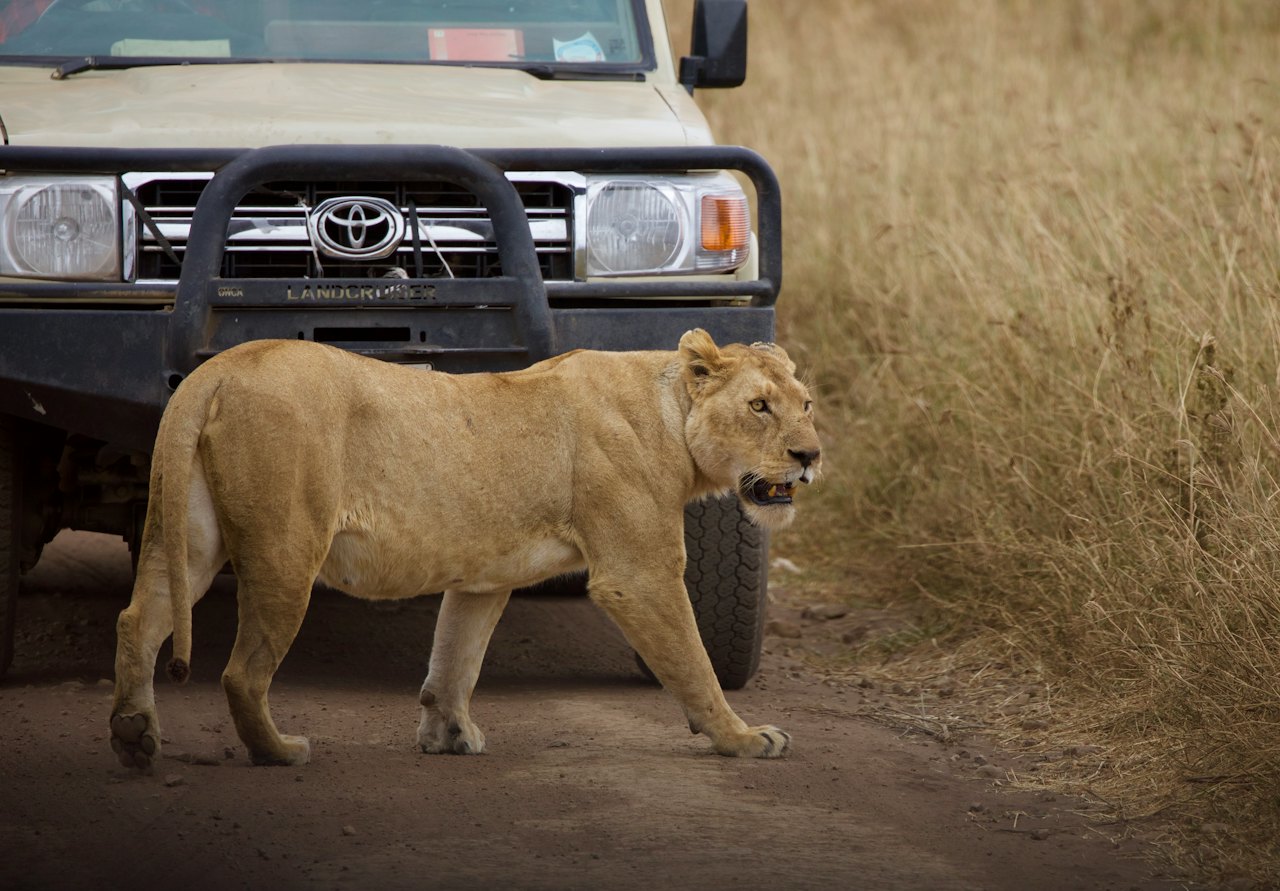
Overview
A safari in Kenya and Tanzania is the most expensive thing on this site, and for many people the most worth paying for. The Maasai Mara and the Serengeti are two halves of the same ecosystem, where more than a million wildebeest, along with zebra and gazelle, follow the rains in a loop that crosses the border. Ngorongoro Crater, Amboseli beneath Kilimanjaro and the Tarangire elephants add variety.
The cost is mostly park fees, a driver-guide and a vehicle, and those do not shrink much for budget travellers. A mid-range trip usually runs about $350 to $550 (≈ €310–490 / £280–430) a day per person all-in. The river crossings are dramatic, but they are a few hours in a long season and you may see none; the Mara and the central Serengeti fill with vehicles in July to October, and a good guide and a quieter conservancy matter more than the month. Book a registered operator, choose camps with fewer vehicles, and take malaria precautions and a yellow fever certificate if required. June to October is the dry season; the long rains of March to May are cheaper and greener but muddy.
The herds move through the year; Mara River crossings are in July to October.
A dense concentration of wildlife in a crater; early morning is best.
Lions and elephants with Mount Kilimanjaro on clear mornings at Amboseli.
Best time
Best months for most visitors: Jun–Oct, or Jan–Feb. Good weather, thinner crowds and fairer prices.
January to February is a calving season in the southern Serengeti and Ndutu, with predators active and lower prices than the peak.
July to October is the dry season and the peak of the Great Migration in the northern Serengeti and Maasai Mara, with river crossings most likely from about August to September.
March to May is the long-rains season, with heavy showers, muddy roads and some camps closed.
Booking window: reserve flights and stays 2–3 months ahead for Jun–Oct, or Jan–Feb, and 4–6 months ahead for peak season (Nov–Dec).
Partner links. We earn a commission at no extra cost to you; sponsors never change a ranking or safety note. How we earn money →
Weather
Current temperature loads here when your browser can reach Open-Meteo.
Weather data: Open-Meteo Historical & Live API. A single reading for the main town or area, not the whole destination.
June to October and January to February: better wildlife viewing.
March to May is long rains, often with lower prices.
Wildlife is easy to spot around shrinking water, but prices are highest and the Mara is crowded. Book camps and permits many months ahead.
June and November to December are also reasonable, with the short rains beginning in November, which bring greener country and fewer people.
Prices drop sharply and the parks are quiet and green, and wildlife viewing is still good, but road conditions and cloud can disrupt plans, especially in April and May.
Weather data: Open-Meteo Historical & Live API (live reading). Typical highs and season notes are our own summaries. How we verify →
Safety
Last updated: government levels come from our editor-verified table (October 2026). When the live UK FCDO check succeeds, its exact UTC time appears in the panel below. The banner takes the most cautious of the five agencies, so a live UK warning always outranks a green entry in our table and any part-country warning shows as red. We never show a level we haven’t checked. How we verify →
Government levels: editor-verified table, October 2026 How we verify →
Five official agencies, one view. Ratings change, so each pill opens the agency’s own page for today’s level.
Tier 3/5 · Increased caution. Take precautions: petty crime, road safety, health risks and regional security; advice varies by area.
The UK FCDO, US State Department and Australian DFAT each publish separate advice for Kenya and Tanzania, and it varies by region. The UK Foreign Office advises against all travel to areas near the Somali border and the northern Kenyan coast (parts of Mandera, Wajir, Garissa and Lamu counties, though not Lamu Island or Manda Island) and against all but essential travel within 20 km / 12 mi of Tanzania's border with Mozambique. Advice also highlights terrorism risk, petty crime and robbery in Nairobi, road accidents, political demonstrations and health risks. The main safari circuits are visited routinely, but you should check the official pages from all three before booking.
Our plain-English summary of what the UK FCDO, US State Department, Australian Smartraveller, Japan MOFA and South Korea MOFA publish. We quote no live ratings from memory; each button above opens the agency's own page.
Our opinion, not an official warning
Regional nuance: Official advice for Kenya generally advises against travel to areas near the Somali border and some coastal districts, and mentions terrorism risk. The main safari circuits in Kenya and northern Tanzania are far from those areas and operate routinely.
The concerns that are real: Road accidents and bag theft are the most common problems. In Nairobi, avoid walking at night and take registered taxis. In the parks, the real risks are wildlife (stay in the vehicle and obey guides), malaria and long drives on rough tracks. Protests in cities can disrupt transport, so keep your itinerary flexible.
What headlines overstate: Terror attacks and demonstrations in the region make headlines, but the safari areas are generally separate from those places and operate normally. Check current advice, choose a reputable operator and keep your insurance and evacuation cover up to date.
Written by our editors from general travel knowledge and kept apart from the agencies above. How we verify →
Costs
Backpacker
$180 (≈ €160 / £140) per person per day
What it covers: Shared group camping safari with basic tents, park fees, a shared vehicle and a cook, with basic meals and long drives.
Mid-Range (default)
$400 (≈ €360 / £310) per person per day
What it covers: Tented camp or lodge, full board, game drives with a private or small-group vehicle, park fees and airport transfers.
Boutique
$880 (≈ €790 / £690) per person per day
What it covers: Private conservancy camps, fly-in transfers, guided walks, night drives, balloon flights and top-end lodges.
Cost source: Audited Local Lodging Taxes, Rail Tariffs & Dining Averages (our own estimates, flights excluded). How we verify →
Source: Should I Go's own estimates, October 2026, in USD per person excluding international flights; euro figures are rough conversions. A couple shares a room, so accommodation drops 25% per person. Prices move, so treat these as a planning range, not a quote.
Estimated total: $0 (≈ €0 / £0)
Estimate in USD per trip, excluding international flights. Two or more travellers share rooms, so accommodation drops 25% per person. Budget and luxury tiers are scaled from the mid-range figure.
Cost source: Audited Local Lodging Taxes, Rail Tariffs & Dining Averages (our own estimates, flights excluded). How we verify →
Where to base yourself
Endless plains and migration herds.
Crater wildlife and highland views.
Big cats and river crossings.
Elephants under Kilimanjaro.
Itineraries
Getting between stops: Safari vehicles and light aircraft link the parks.
Getting between stops: Fly Nairobi to Mara or drive about 5 to 7 hours, longer in the rains.
Getting between stops: Cross-border transfers need visa planning.
Routes and timetables change. Confirm transit times with the operator before you book.
Do and stay
Best for: Arrival and Kenya trips
Pros: Quiet leafy suburbs with boutique hotels, the Giraffe Centre, the elephant orphanage and Nairobi National Park close by, and easy transfers to the Mara.
Watch for: Traffic is heavy, central Nairobi needs care at night, and you will need taxis or ride-hailing to get around.
Best for: Tanzania trips
Pros: The gateway for the Serengeti, Ngorongoro and Tarangire, with lodges in coffee farms, cooler weather and easy airport links.
Watch for: Arusha itself is a busy, touty town. You will mostly stay for a night before and after the safari.
Best for: Wildlife viewing
Pros: Private conservancies around the reserve limit vehicles and allow night drives and walks. Quiet, close to the migration and the wildlife is excellent.
Watch for: Expensive, and conservancy fees add to the cost. Remote, so flights from Nairobi are the usual way in.
These are partner links. We may earn a commission at no extra cost to you.
Trade-offs
Final verdict
Editorial opinion from Should I Go, written from general travel knowledge and reviewed periodically. Verify prices, entry rules and advisories before you book.
Typical costs and rules change; confirm with official sources before you travel.
June to October is the best overall, with dry weather and wildlife concentrating around water; the migration is usually in the Mara and northern Serengeti from July to October. January and February suit the calving season in the southern Serengeti. March to May has heavy rain and lower prices, and it is a good time for budget-conscious travellers who accept some mud.
A mid-range safari usually costs about $350 to $550 (≈ €310–490 / £280–430) per person per day all-in, covering lodging, meals, vehicle, guide and park fees. Budget camping trips can cost $200 to $300 (≈ €180–270 / £155–240) a day, and luxury camps can exceed $800 (≈ €710 / £630). Park fees alone are a large share of the total, and rates vary by season and group size.
Five to seven days suit a first trip covering one or two parks, such as the Mara or the Serengeti with Ngorongoro. Fewer than four days means you spend a lot of time travelling. Add days if you want to combine Kenya and Tanzania or finish on Zanzibar.
Get live weather, activities, travel advisories, and personalised tips for Safari, East Africa
Check Safari, East Africa Now →Have you visited Safari, East Africa? Was it worth it? Readers can vote: Worth Every Penny, Great in Shoulder Season Only, or Overrated / Skip It.