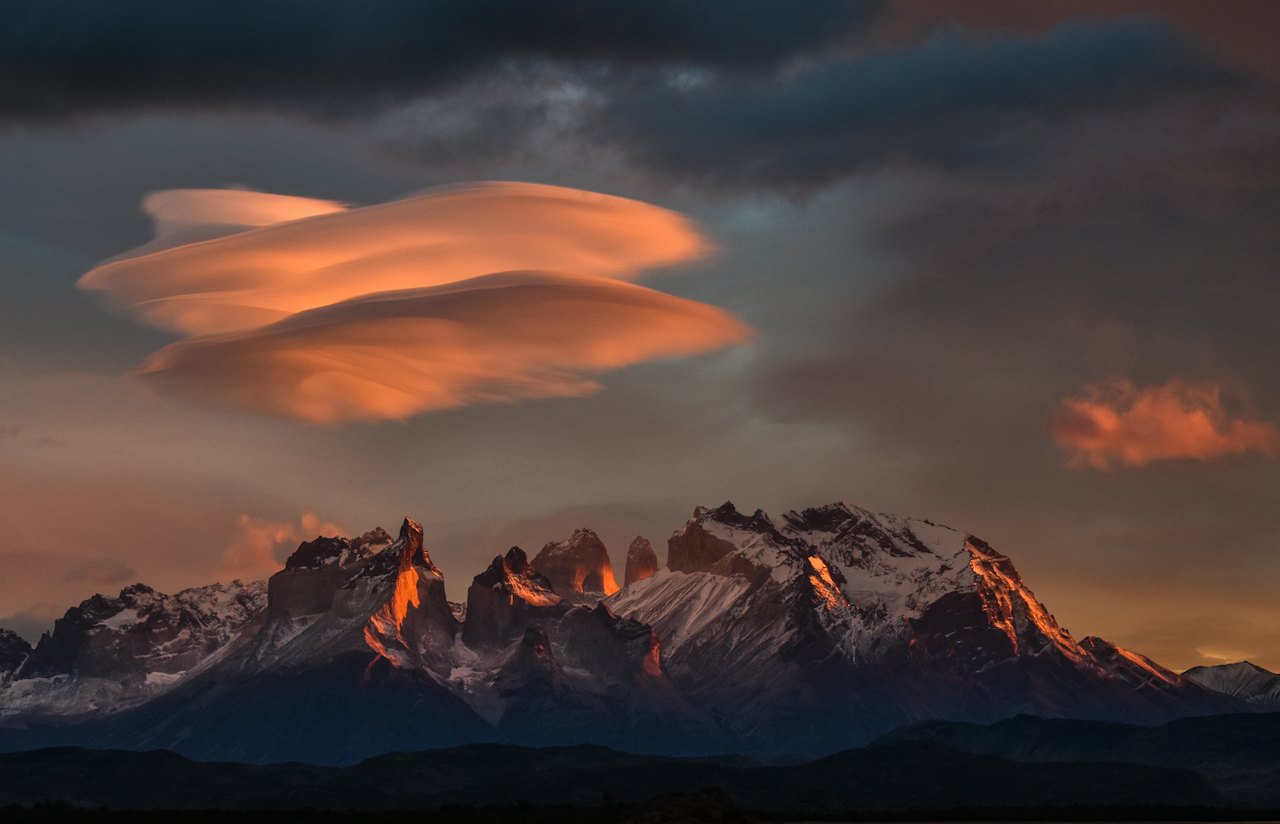
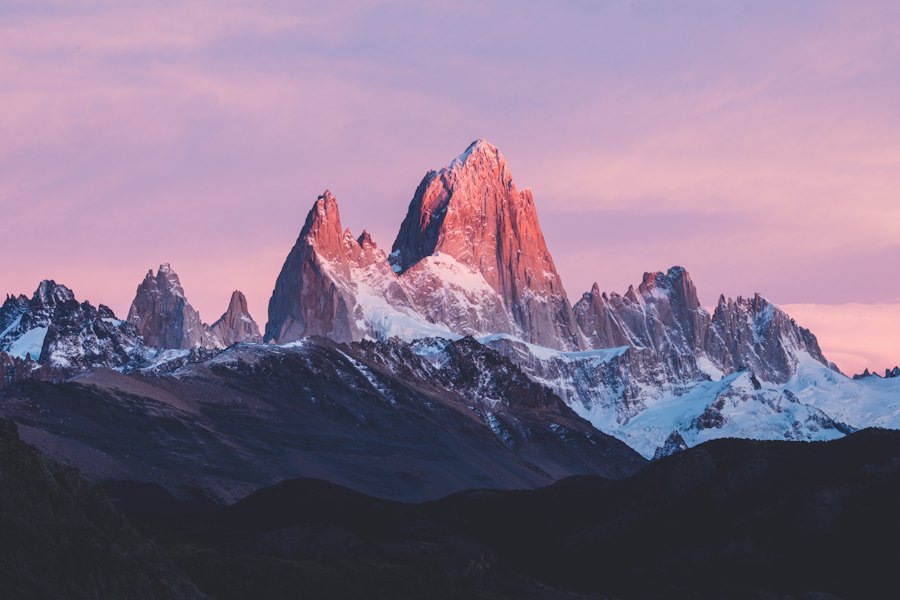
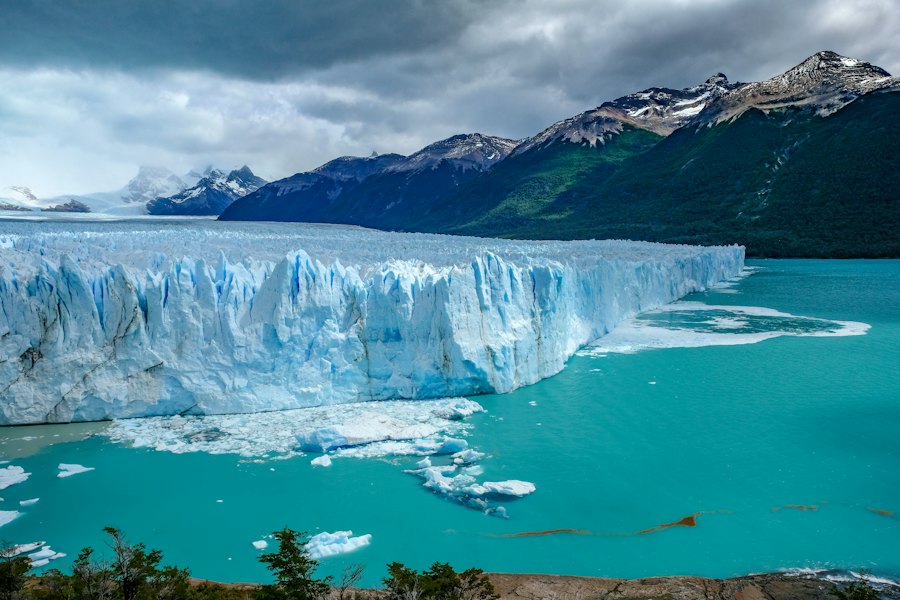
Patagonia is a region more than a destination, and the first decision is where to spend your limited days. Torres del Paine in Chile has the famous granite towers and the W trek. El Chalten in Argentina is the trekking capital, with trails that leave from the village to Laguna de los Tres and the base of Fitz Roy. El Calafate has the Perito Moreno Glacier, which has long been unusually stable for a glacier (its northern front has been retreating since 2020, and the ice front moves with the seasons) and can be seen from walkways close to its face.
Distances are enormous and the weather is not a detail. Wind can stop you walking in a straight line, four seasons can arrive in one afternoon, and many refugios and campsites in Torres del Paine must be booked months in advance for the summer. Most travel is from November to March, with October and April quieter but colder. It is not a cheap trip either, with national park fees, buses and lodging all higher than elsewhere in South America. Pick one base, give it five days, and build in a spare day for weather.
Three highlights worth the trip
1Torres del Paine
The W Trek takes four to five days; refugios and campsites need booking months ahead (park entry is online only, about $49 (≈ €45 / £40); ≈ €44 / £39 for a multi-day pass, and the QR code must be saved before you arrive). Day hikes reach the towers' viewpoint. The park entrance is about 90 km (56 miles) from Puerto Natales, roughly 1½ hours by road.
2Fitz Roy and El Chaltén
Free trails start from the village. Laguna de los Tres is a long, strenuous day, best on a clear morning.
3Perito Moreno glacier
Boardwalks give close views of the ice front; boat and trekking options cost extra. Entry to the Perito Moreno sector of Los Glaciares National Park was about 45,000 pesos ($29 (≈ €25 / £25); ≈ €26 / £23) for foreign visitors in early 2026; the fee changes often, so check before you go.
2
Best time
Best Time to Visit Patagonia: A 12-Month View
Best months for most visitors: Nov–Mar. Good weather, thinner crowds and fairer prices.
JanSweet (Sweet spot)
FebSweet (Sweet spot)
MarSweet (Sweet spot)
AprPeak (Peak season)
MayOff (Off-peak)
JunOff (Off-peak)
JulOff (Off-peak)
AugOff (Off-peak)
SepOff (Off-peak)
OctPeak (Peak season)
NovSweet (Sweet spot)
DecSweet (Sweet spot)
Sweet = best balance of weather, crowds and price
Peak = busiest and dearest (or hottest)
Off = quiet; check weather and closures
Shoulder / sweet spot
November, March and April are quieter, with more settled weather in March and autumn colours in late March and April.
Peak season
December to February is peak season, with long days, temperatures of about 10 to 20 degrees Celsius and all refugios and services open.
Off-peak
May to September is winter, with cold, short days, snow on trails and many refugios, hotels and tour operators closed.
Booking window: reserve flights and stays 2–3 months ahead for Nov–Mar, and 4–6 months ahead for peak season (Apr, Oct).
Partner links. We earn a commission at no extra cost to you; sponsors never change a ranking or safety note. How we earn money →
3
Weather
Weather and Seasonal Conditions in Patagonia
Right now in Patagonia
Current temperature loads here when your browser can reach Open-Meteo.
Long days and wind, with temperatures from 5 to 20°C / 41 to 68°F.
Winter
Short days, snow and many closures; most trails and refugios close.
What each season feels like
Peak season
Trails and buses are busiest, wind is strongest in the afternoon, and Torres del Paine camps and refugios must be booked months in advance (Chileno and Cuernos often sell out first).
Shoulder season
Days are shorter and colder, and some services start closing in April. October can bring snow at higher elevations.
Off-peak
Some winter activities, such as skiing and the Perito Moreno Glacier, are possible, but the W trek and most hiking are not practical without experience and specific permission.
Last updated: government levels come from our editor-verified table (October 2026). When the live UK FCDO check succeeds, its exact UTC time appears in the panel below. The banner takes the most cautious of the five agencies, so a live UK warning always outranks a green entry in our table and any part-country warning shows as red. We never show a level we haven’t checked. How we verify →
🏛️ Official Government Warnings
Government levels: editor-verified table, October 2026 How we verify →
Five official agencies, one view. Ratings change, so each pill opens the agency’s own page for today’s level.
Tier 4/5 · Standard caution. Normal precautions: the main risks are weather, remoteness and trail conditions.
The UK FCDO, US State Department and Australian DFAT generally describe Chile and Argentina as countries where normal precautions apply in the Patagonian south, with advice focusing on petty crime in cities, natural hazards and local conditions. Advice varies by country and region, so check all three official pages for both countries before booking.
Our plain-English summary of what the UK FCDO, US State Department, Australian Smartraveller, Japan MOFA and South Korea MOFA publish. We quote no live ratings from memory; each button above opens the agency's own page.
🧭 Editorial Opinions & Street-Smart Reality
Our opinion, not an official warning
Regional nuance: Advice for Chile and Argentina varies by country and region, but governments generally describe the Patagonian south as a place for normal precautions. The main hazards are wilderness and weather rather than crime. Check the official pages for both countries before you book.
Sudden storms, strong winds, cold and river crossings on trails
Petty theft at bus stations and hostels; wildfire risk in dry summers
The concerns that are real: The main risks are weather and the wilderness: sudden storms, strong winds, hypothermia, river crossings and getting lost off the trail. Wildfires have affected Torres del Paine in the past, so follow park rules on fire. Petty theft occurs in bus stations and hostels, and credit card skimming can occur.
What headlines overstate: Headlines from Santiago or Buenos Aires about protests or economic conditions rarely affect Patagonia's remote parks, though strikes and protests can sometimes disrupt buses and border crossings. Keep a flexible schedule and check local news.
Written by our editors from general travel knowledge and kept apart from the agencies above. How we verify →
What it covers: Tent pitch or hostel dorm (about $15–45 (≈ €13–40 / £12–35)), groceries and empanadas (about $5–12 (≈ €4.46–11 / £3.94–9.45)), local buses between towns, free trails around El Chaltén and one paid park or glacier fee.
What it covers: Private cabin, town-hotel room or pre-pitched dome (about $120–250 (≈ €105–220 / £95–195)), tavern dinners (about $25–50 (≈ €20–45 / £20–40)), bus transfers, park entry, a boat trip or glacier visit, and refugio beds on a trek.
What it covers: All-inclusive adventure lodge (about $600–1,500 (≈ €540–1,340 / £470–1,180)+ a night) with private guides, excursions and transfers, glacier trekking and fine dining such as spit-roast lamb (about $70–120 (≈ €60–105 / £55–95)).
Where a day's money goes (solo)
Accommodation$167 (≈ €150 / £130)
Food$111 (≈ €100 / £85)
Transit$56 (≈ €50 / £45)
Activities$37 (≈ €35 / £30)
Cost source: Audited Local Lodging Taxes, Rail Tariffs & Dining Averages (our own estimates, flights excluded). How we verify →
Source: Should I Go's own estimates, October 2026, in USD per person excluding international flights; euro figures are rough conversions. A couple shares a room, so accommodation drops 25% per person. Prices move, so treat these as a planning range, not a quote.
Trip Budget Calculator
Estimated total: $0 (≈ €0 / £0)
Stay 45%
Food 30%
Transit 15%
Sights 10%
Estimate in USD per trip, excluding international flights. Two or more travellers share rooms, so accommodation drops 25% per person. Budget and luxury tiers are scaled from the mid-range figure.
Cost source: Audited Local Lodging Taxes, Rail Tariffs & Dining Averages (our own estimates, flights excluded). How we verify →
6
Where to base yourself
Four Regions and Cities in Patagonia
Min. 2 nights
El Calafate
Gateway to Perito Moreno glacier.
Min. 3 nights
El Chaltén
Trekking capital of Argentina.
Min. 2 nights
Puerto Natales
Chilean gateway to Torres del Paine.
Min. 2 nights
Ushuaia
The southern tip, with boat trips to the Beagle Channel.
7
Itineraries
Three Itineraries for Patagonia
6 days
Glaciers and spires
Day 1: arrive El Calafate.
Day 2: Perito Moreno.
Days 3–5: El Chaltén day hikes.
Day 6: return.
Getting between stops: Buses link El Calafate and El Chaltén in about 3 to 4 hours.
9 days
Torres del Paine W Trek
Days 1–2: Puerto Natales.
Days 3–7: W Trek.
Days 8–9: Puerto Natales and onward.
Getting between stops: Buses run to the park; book refugios and campsites as soon as the season opens (Chileno and Cuernos often sell out months ahead in December to February).
12 days
Both sides of the Andes
Days 1–3: El Calafate.
Days 4–6: El Chaltén.
Days 7–11: Torres del Paine.
Day 12: return.
Getting between stops: A cross-border bus runs between El Calafate and Puerto Natales in about 6 hours; check border times.
Routes and timetables change. Confirm transit times with the operator before you book.
8
Do and stay
Things to Do and Where to Stay in Patagonia
Top things to do
Torres del Paine W Trek
Perito Moreno Glacier
Fitz Roy and Laguna de los Tres at El Chalten
Boat trips to Grey and Upsala glaciers
Estancias and guanaco spotting on the steppe
Insider tips
Book Torres del Paine campsites and refugios months ahead for December to February
Pack a windproof shell, warm layers and a hat - wind is the main weather factor
Allow a spare day in your plan for weather, trail closures and bus delays
Carry some cash, since smaller towns and many tour offices still prefer it
Buy bus tickets between El Calafate, El Chalten and Puerto Natales ahead in January
Neighbourhoods to choose from
El Chalten (Argentina)
Best for: Day hikes
Pros: Trails to Fitz Roy and Cerro Torre leave from the village, so you can hike without a car. Many hostels, cafes and breweries, and no park entry fee. Shared hostel dorms cost about $15–45 a night (≈ €13–40 / £12–35).
Watch for: A small, windy village with limited lodging in peak season, and prices have risen. About three hours by bus from El Calafate.
El Calafate (Argentina)
Best for: Glaciers
Pros: The base for Perito Moreno Glacier, with an airport, restaurants, shops and a wide range of lodging. Easy bus links to El Chalten and Puerto Natales. A comfortable town-hotel room or private cabin runs about $120–250 a night (≈ €107–223 / £94–197).
Watch for: A touristy town with high summer prices, and a bit of a stopover feel. The glacier is about 80 km / 50 mi away.
Puerto Natales (Chile)
Best for: Torres del Paine
Pros: The gateway to Torres del Paine, with gear rental, supermarkets, hostels and restaurants. Buses reach the park in about two hours. Hostel dorms start around $15–45 a night (≈ €13–40 / £12–35), and groceries for trail food or empanadas cost about $5–12 (≈ €4–11 / £4–9); a hearty dinner of stew, pasta or pizza is about $25–50 a head (≈ €22–45 / £20–39).
Watch for: A working port town that is quiet in winter, and accommodation prices climb in summer. The town itself has few sights.
Inside the parks (camps, domes and lodges)
Best for: Trekkers and splurges
Pros: Your own tent at a backcountry campsite costs about $15–45 a night (≈ €13–40 / £12–35). A pre-pitched dome or private cabin is about $120–250 (≈ €107–223 / £94–197), and a basic refugio dorm bed sits at the top of that range, about $115–150 (≈ €103–134 / £91–118). All-inclusive lodges such as EcoCamp, Explora and Tierra Patagonia run $600–1,500 (≈ €540–1,340 / £470–1,180)+ a night (≈ €536–1,339 / £472–1,181) with guides, excursions and fine dining included. A slow-roasted lamb (cordero al palo) dinner with good Chilean or Argentine wine at a rustic lodge is about $70–120 a head (≈ €63–107 / £55–94).
Watch for: Everything inside the parks is booked far ahead and priced for isolation, so costs jump the moment you leave the gateway towns.
Live Accommodation Map
Ready to Book This Trip? Book Your Trip to Patagonia, Chile & Argentina
These are partner links. We may earn a commission at no extra cost to you.
Editorial opinion from Should I Go, written from general travel knowledge and reviewed periodically. Verify prices, entry rules and advisories before you book.
Know Before You Go
✈️ Airport to city centreFrom El Calafate airport (FTE), shuttles and taxis cover the roughly 20 km / 12 mi to town for about $8-15 (≈ €7.14–13 / £6.30–12) (approximate). Punta Arenas airport (PUQ) is about 3 hours by bus from Puerto Natales, the gateway to Torres del Paine.
🛂 Visa & entry rulesMany nationalities can enter Chile and Argentina without a visa for stays of up to 90 days, but rules vary by passport. Check the official government pages for both countries before you fly, especially if crossing the border by land. Chile gives you a paper tourist card on arrival, so keep it until you leave; Argentina no longer stamps passports.
💳 Cash, cards & ATMsArgentina's exchange rates and rules for foreign cards have shifted often. Cards work in most towns, but carry some cash, and check the current situation before you go. Chile is more straightforward, with widely accepted cards.
🚰 Tap water & healthTap water in towns is generally safe, and mountain streams are often drunk by hikers, though many treat water for safety. Pack sun protection, as UV levels can be high even on cool days.
🍽️ Tipping customIn restaurants, 10% is customary in both countries (Chile often adds a suggested tip to the bill). Tip guides and drivers a few dollars' worth in cash.
⚠️ #1 local scam to watch forTorres del Paine: park entry is sold online only (CONAF Pases Parques portal) and must be bought before you arrive; save the QR code or print it, because there is no phone signal at the entrance checkpoints. A multi-day pass (valid up to 10 days) is 48,500 Chilean pesos for international adults (about $49 (≈ €45 / £40); ≈ €44 / £39) and a single-day pass is 34,000 (about $34 (≈ €30 / £25); ≈ €30 / £27). Inside the park two concessionaires run the camps. On the western side (Grey, Paine Grande, Dickson, Los Perros; Vértice Patagonia) a campsite pitch is about $10–15 (≈ €9–13 / £8–12) per person a night and a refugio dorm bed about $114 (≈ €102 / £90). On the eastern side (Central, Chileno, Cuernos, Francés, Serón; Las Torres Patagonia / Fantástico Sur) a pitch is $30–50 (≈ €27–45 / £24–39), pre-pitched premium camping $80–140 (≈ €71–125 / £63–110) and a refugio bunk $150–250 (≈ €134–223 / £118–197; a bed with bedding averages about $230 (≈ €210 / £180); ≈ €205 / £181). Adding breakfast, a box lunch and dinner costs roughly $100 (≈ €89 / £79) a day. Book western camps through Vértice Patagonia and eastern camps through the TorresHike portal or Las Torres Patagonia. Reservations for the October 2026 to April 2027 season are open; for December to February, book as soon as you know your dates, because Chileno and Cuernos often sell out months ahead. Border crossings between Chile and Argentina can be slow, so allow extra time.
Typical costs and rules change; confirm with official sources before you travel.
Getting From the Airport Into Town
Route: El Calafate International Airport (FTE) by shuttle or taxi to town for Perito Moreno and El Chalten, or Punta Arenas (PUQ) then a bus to Puerto Natales for Torres del Paine.
Time: About 30 minutes from El Calafate airport to town; about 3 hours by bus from Punta Arenas to Puerto Natales, and about 1½ to 2 hours more to the park.
Fare: Approximately $8 to $15 (≈ €7.14–13 / £6.30–12) by shuttle or taxi from El Calafate airport, and about $15 to $25 (≈ €13–20 / £12–20) by bus from Punta Arenas to Puerto Natales; fares vary, so confirm before booking.
Patagonia: Your Questions Answered
What is the best month to visit Patagonia?
December to February offers the longest days and the most open services, though also the most wind and crowds. November and March are often a good balance, with fewer people and prices a little lower. From April most refugios start to close, and from May to September winter conditions make hiking difficult.
How many days do you need in Patagonia?
Ten days is a reasonable minimum for two bases, such as El Calafate with El Chalten, or Torres del Paine and Puerto Natales. The W trek takes four to five days, El Chalten needs three to four days, and Perito Moreno is a day trip. Add a spare day for weather. Two weeks lets you combine Chile and Argentina.
Is Patagonia expensive?
Yes, by South American standards. Park fees, refugios, tours and food cost more than in most of the continent, and prices peak from December to February. Mid-range travellers should expect about $150 to $220 (≈ €135–195 / £120–175) per person per day. Camping, self-catering and travelling in November or March help cut costs.
Get live weather, activities, travel advisories, and personalised tips for Patagonia, Chile & Argentina
Have you visited Patagonia, Chile & Argentina? Was it worth it? Readers can vote: Worth Every Penny, Great in Shoulder Season Only, or Overrated / Skip It.