El Nido island hopping
Tours A to D visit lagoons, beaches and snorkelling spots. Go early to beat other boats.
Photo: Jenevy Vergara on Unsplash
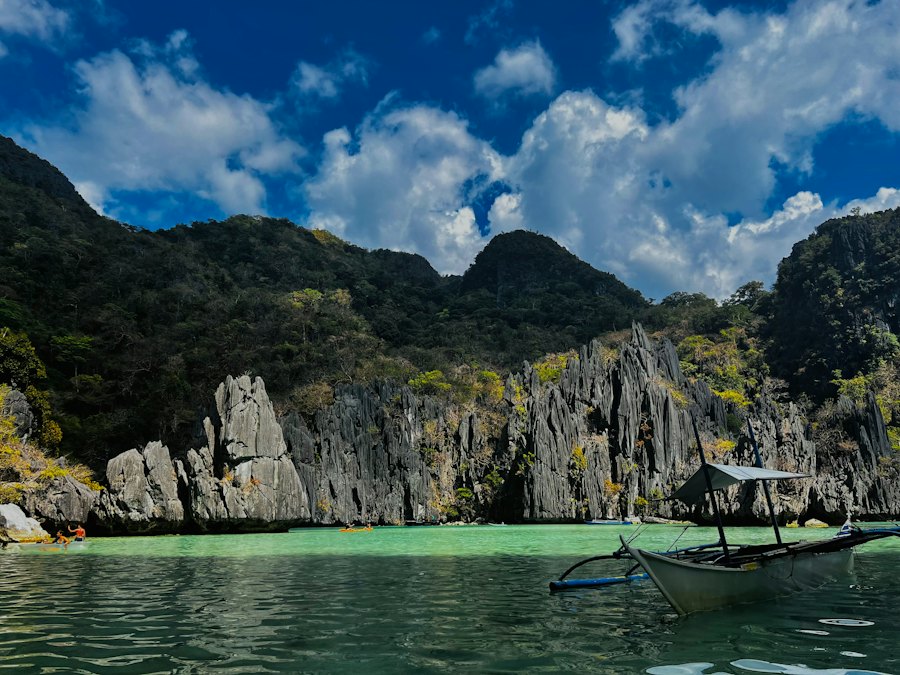
Photo: Florian Delée on Unsplash
View Full Gallery (3)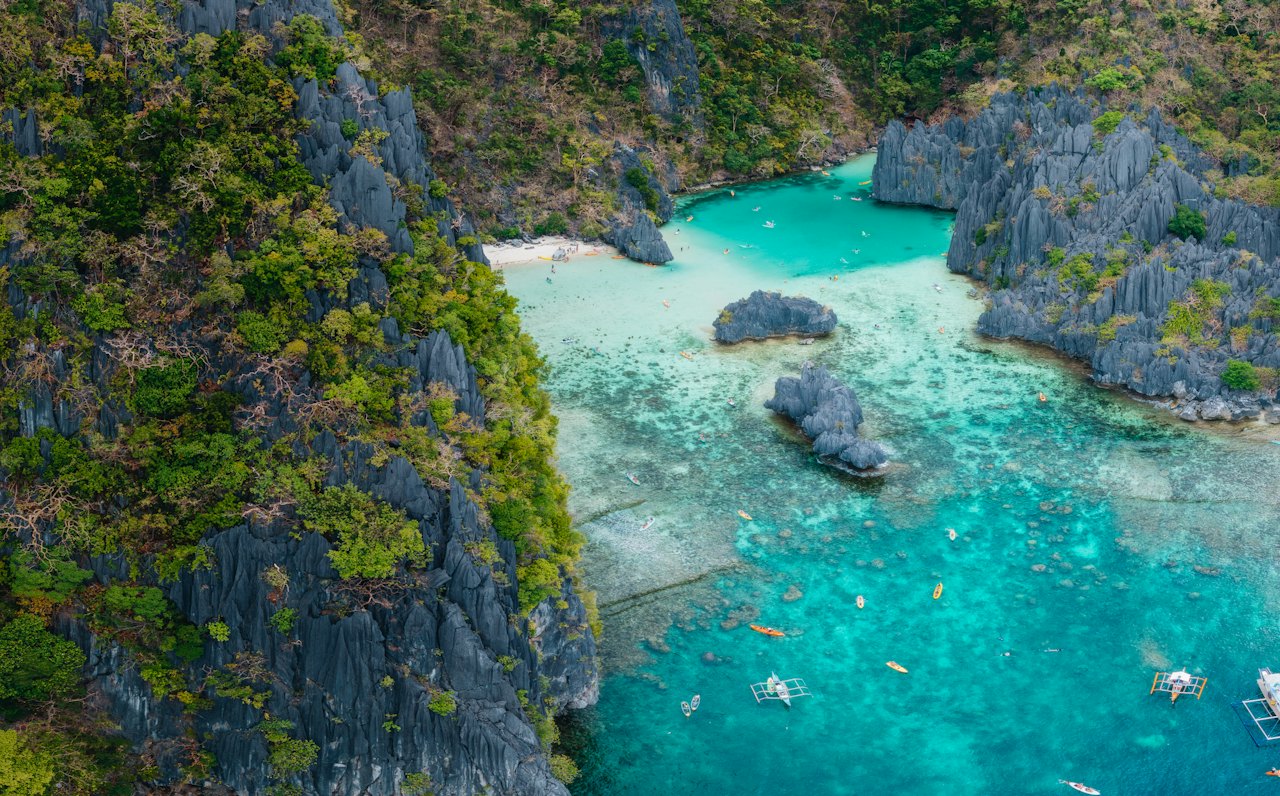
Overview
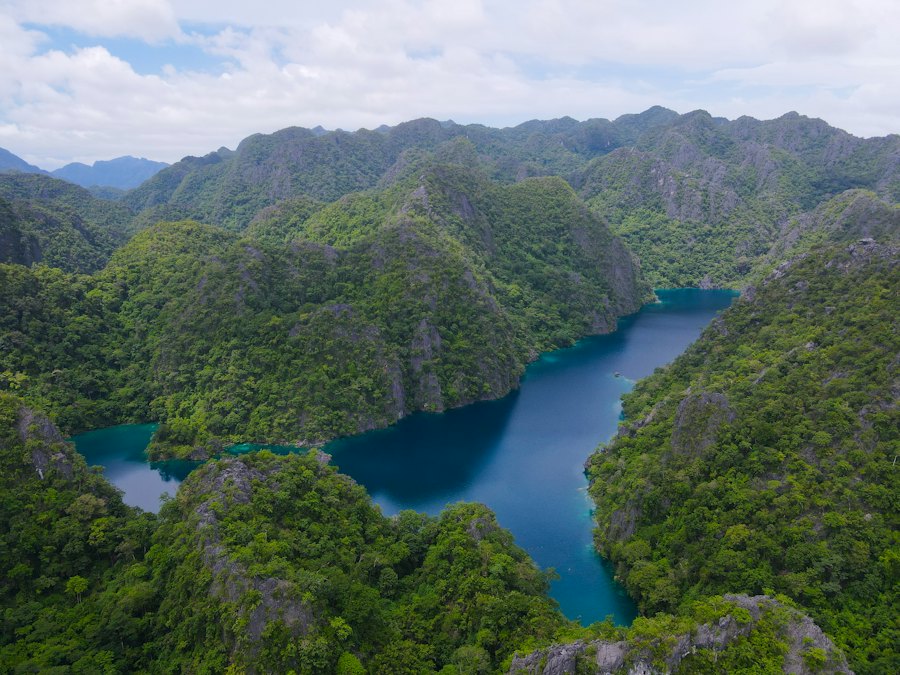
Palawan is a long, thin island at the western edge of the Philippines, and its pull is water: the limestone karsts and lagoons of Bacuit Bay near El Nido, the lakes and Second World War wrecks around Coron, and the mangrove-lined river that disappears into the mountain at Puerto Princesa. The images are accurate. The shallow turquoise water and the sheer cliffs look as good in person as on a screen.
They also attract crowds. In high season the standard island-hopping routes out of El Nido fill with boats by mid-morning, and you will share the Big Lagoon with dozens of kayaks. Go on the earliest departure, ask for the less common itinerary, or base yourself at quieter Port Barton. Travel takes longer than the map suggests: Puerto Princesa to El Nido is four to six hours by van or bus, and flights and ferries are affected by weather. The dry season runs from about November to May. Carry cash, since ATMs are scarce outside the main towns, and expect patchy signal and the occasional power cut.
Tours A to D visit lagoons, beaches and snorkelling spots. Go early to beat other boats.
A UNESCO site with a boat trip through a long cave. Only 900 visitors a day are allowed, so get your permit before you travel.
Wreck diving and a lake with clear green water. Respect rules in protected areas.
Best time
Best months for most visitors: Dec–May. Good weather, thinner crowds and fairer prices.
May and November are the best compromise: still mostly dry or drying, with fewer visitors and lower prices.
December to April is peak season, with sunny days of 29 to 33 degrees Celsius, calm seas and the best visibility for diving.
June to October is the wet and typhoon season.
Booking window: reserve flights and stays 2–3 months ahead for Dec–May, and 4–6 months ahead for peak season (May, Nov).
Partner links. We earn a commission at no extra cost to you; sponsors never change a ranking or safety note. How we earn money →
Weather
Current temperature loads here when your browser can reach Open-Meteo.
Weather data: Open-Meteo Historical & Live API. A single reading for the main town or area, not the whole destination.
Sunny, calm seas and the best conditions for boats.
Rain and rough seas can cancel tours.
El Nido and Coron are at their busiest from late December to Easter, and rooms and the Underground River permits (capped at 900 visitors a day) can sell out. Book several weeks ahead.
May is hot, humid and can bring early rain, while November is the end of the wet season and seas are often calmer by the month's end.
Heavy rain, rough seas and cancelled boats are common, and some resorts close. Prices drop, but island hopping is unreliable. Check the forecast and keep a flexible itinerary if you travel then.
Weather data: Open-Meteo Historical & Live API (live reading). Typical highs and season notes are our own summaries. How we verify →
Safety
Last updated: government levels come from our editor-verified table (October 2026). When the live UK FCDO check succeeds, its exact UTC time appears in the panel below. The banner takes the most cautious of the five agencies, so a live UK warning always outranks a green entry in our table and any part-country warning shows as red. We never show a level we haven’t checked. How we verify →
Government levels: editor-verified table, October 2026 How we verify →
Five official agencies, one view. Ratings change, so each pill opens the agency’s own page for today’s level.
Tier 4/5 · Standard caution. Increased caution: typhoons, sea conditions and petty crime; southern Philippines differs.
The UK FCDO, US State Department and Australian DFAT generally describe the Philippines as a place that needs a higher degree of caution, and they advise against travel to some parts of the south, such as the Sulu archipelago and areas of Mindanao. Palawan is far from these areas, and the main tourist hubs are visited without trouble, but advice changes, so check each agency before booking. Typhoons, sea conditions and petty crime are common themes.
Our plain-English summary of what the UK FCDO, US State Department, Australian Smartraveller, Japan MOFA and South Korea MOFA publish. We quote no live ratings from memory; each button above opens the agency's own page.
Our opinion, not an official warning
Regional nuance: The UK government advises against all travel to western and central Mindanao and the Sulu archipelago, and against all but essential travel to the rest of Mindanao (Camiguin, Dinagat and Siargao excepted). Palawan is not in these zones, but check current advice. Typhoons hit the Philippines mostly between June and November.
The concerns that are real: Weather is the main risk: typhoons cancel boats and flights, and rough seas can strand you. Take care on motorbikes, which cause many tourist injuries. Watch for petty theft on beaches and from rooms, overpriced boats, and sunburn. Medical care outside Puerto Princesa is basic.
What headlines overstate: Headlines about conflict or terrorism in the southern Philippines can make the whole country seem dangerous. Those areas are hundreds of kilometres from Palawan's tourist coast, but keep an eye on current advice.
Written by our editors from general travel knowledge and kept apart from the agencies above. How we verify →
Costs
Backpacker
$45 (≈ €40 / £35) per person per day
What it covers: Dorm bed or fan room, rooms from about $15–30 (≈ €13–27 / £12–24), local meals at carinderias ($2–4 (≈ €1.79–3.57 / £1.57–3.15) a meal, ≈ €2–4 / £2–3: garlic rice, adobo, grilled skewers), a shared island-hopping tour, tricycle rides and van transfers between towns.
Mid-Range (default)
$100 (≈ €90 / £80) per person per day
What it covers: Beach room, boutique eco-lodge or apartment with breakfast ($50–110 (≈ €45–100 / £40–85) a night, ≈ €45–98 / £39–87), café and beachside-grill meals ($6–15 (≈ €5.36–13 / £4.72–12) a person, ≈ €5–13 / £5–12), an island tour each day or two, tricycles, a dive or kayak trip and a flight or van between towns.
Boutique
$220 (≈ €195 / £175) per person per day
What it covers: Private-island, overwater or cliff-top resort ($250–700 (≈ €220–630 / £195–550)+ a night, ≈ €223–625 / £197–551), seafood boodle-fight and sunset dinners ($30–65 (≈ €25–60 / £25–50) a person, ≈ €27–58 / £24–51), private boat charters, spa and guided diving, domestic flights and private transfers.
Cost source: Audited Local Lodging Taxes, Rail Tariffs & Dining Averages (our own estimates, flights excluded). How we verify →
Source: Should I Go's own estimates, October 2026, in USD per person excluding international flights; euro figures are rough conversions. A couple shares a room, so accommodation drops 25% per person. Prices move, so treat these as a planning range, not a quote.
Estimated total: $0 (≈ €0 / £0)
Estimate in USD per trip, excluding international flights. Two or more travellers share rooms, so accommodation drops 25% per person. Budget and luxury tiers are scaled from the mid-range figure.
Cost source: Audited Local Lodging Taxes, Rail Tariffs & Dining Averages (our own estimates, flights excluded). How we verify →
Where to base yourself
Limestone cliffs, lagoons and boat tours.
Gateway city and the Underground River.
Diving wrecks and lake swims.
Quieter beaches.
Itineraries
Getting between stops: Tricycles in town; boat tours leave from the beach. Shared Tours A, B, C and D cost about 1,500 to 1,700 pesos ($23–27 (≈ €20–25 / £18–20); ≈ €21–24 / £18–21).
Getting between stops: Shared vans take about 5 to 6 hours Puerto Princesa to El Nido; buses 7 to 8.
Getting between stops: The fast ferry between El Nido and Coron takes about 3½ to 4 hours; slower outrigger boats take 7 to 8.
Routes and timetables change. Confirm transit times with the operator before you book.
Do and stay
Best for: First-timers
Pros: Tours, restaurants and boats all leave from town, and there is a wide choice of rooms. Easy to book a tour on arrival. Rooms run about $15–30 a night (≈ €13–27 / £12–24) for a homestay or bamboo bungalow, $50–110 (≈ €45–98 / £39–87) for a beachfront resort room, boutique eco-lodge or town apartment with breakfast, and $250–700 (≈ €220–630 / £195–550)+ (≈ €223–625 / £197–551) for island resorts and overwater villas, such as those run by El Nido Resorts.
Watch for: Crowded, noisy and busy with traffic, and the beach in town is not good for swimming. Prices rise sharply in peak season.
Best for: Quiet and value
Pros: A small fishing village with calm bays, lower prices and island hopping that is far less crowded than El Nido. Homestays and bamboo bungalows, some with air conditioning and pool access, start around $15–30 a night (≈ €13–27 / £12–24).
Watch for: Limited power, signal and ATMs, a rough road in, and fewer restaurants. Not suited to those wanting nightlife.
Best for: Diving and lakes
Pros: Good dive shops, island tours and hot springs, with budget and mid-range hotels: about $15–30 a night (≈ €13–27 / £12–24) for a homestay, $50–110 (≈ €45–98 / £39–87) for a beachfront resort room or apartment with breakfast, and $250–700 (≈ €220–630 / £195–550)+ (≈ €223–625 / £197–551) for high-end island properties with private speedboats. The airport is close to the wrecks and lakes.
Watch for: The town itself is not scenic, and the main beaches require a boat. Roads and traffic are chaotic.
These are partner links. We may earn a commission at no extra cost to you.
Trade-offs
Final verdict
Editorial opinion from Should I Go, written from general travel knowledge and reviewed periodically. Verify prices, entry rules and advisories before you book.
Typical costs and rules change; confirm with official sources before you travel.
December to May is the dry season, with calm seas and clear water. March to May is hot but reliable. January and February are crowded, and the shoulder months of November and May can be quieter. June to October is the wet and typhoon season, when boats and flights are often cancelled.
El Nido is better for lagoons, beaches and scenery, while Coron is better for wreck diving, lakes and hot springs. Both have crowded main tours. If you have time, visit both: a fast ferry links them in about 3½ to 4 hours for roughly $41–59 (2,600 to 3,784 pesos; ≈ €36–53 / £32–47) one way, and slower outrigger boats take seven to eight, book 3 to 5 days ahead in the dry season, but sailings depend on the season and weather.
Allow 5 to 7 days for El Nido alone with a couple of day trips, and 10 to 12 days if you add Puerto Princesa and Coron. Travel between the towns is slow, and weather delays are common, so avoid a tight schedule and leave a buffer day before an international flight.
Get live weather, activities, travel advisories, and personalised tips for Palawan
Check Palawan Now →Have you visited Palawan? Was it worth it? Readers can vote: Worth Every Penny, Great in Shoulder Season Only, or Overrated / Skip It.