Jaipur's forts and palaces
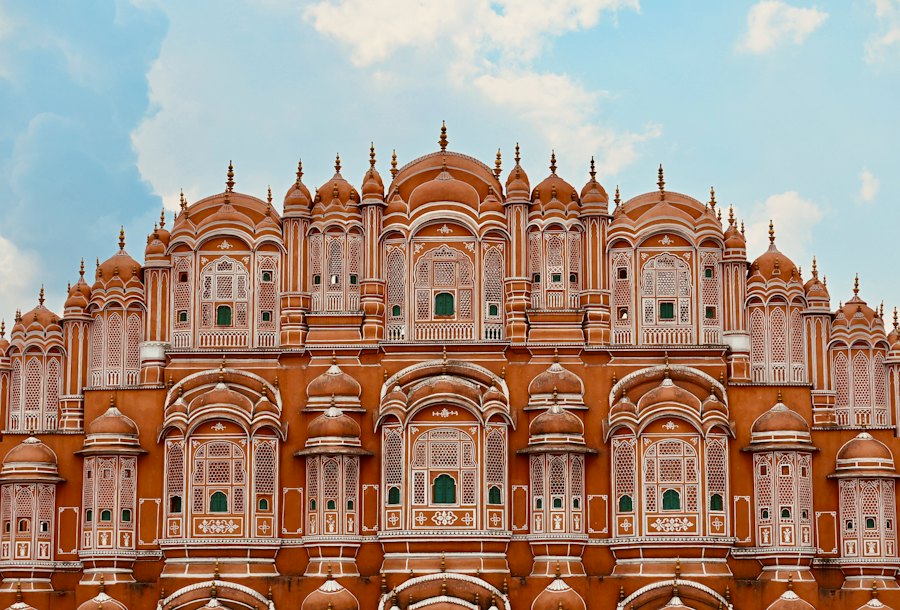
Amer Fort, the City Palace and Hawa Mahal in the Pink City. Go to Amer at opening, before tour buses.
Photo: Jayanth Muppaneni on Unsplash
Photo: Meghna Rawat on Unsplash
View Full Gallery (3)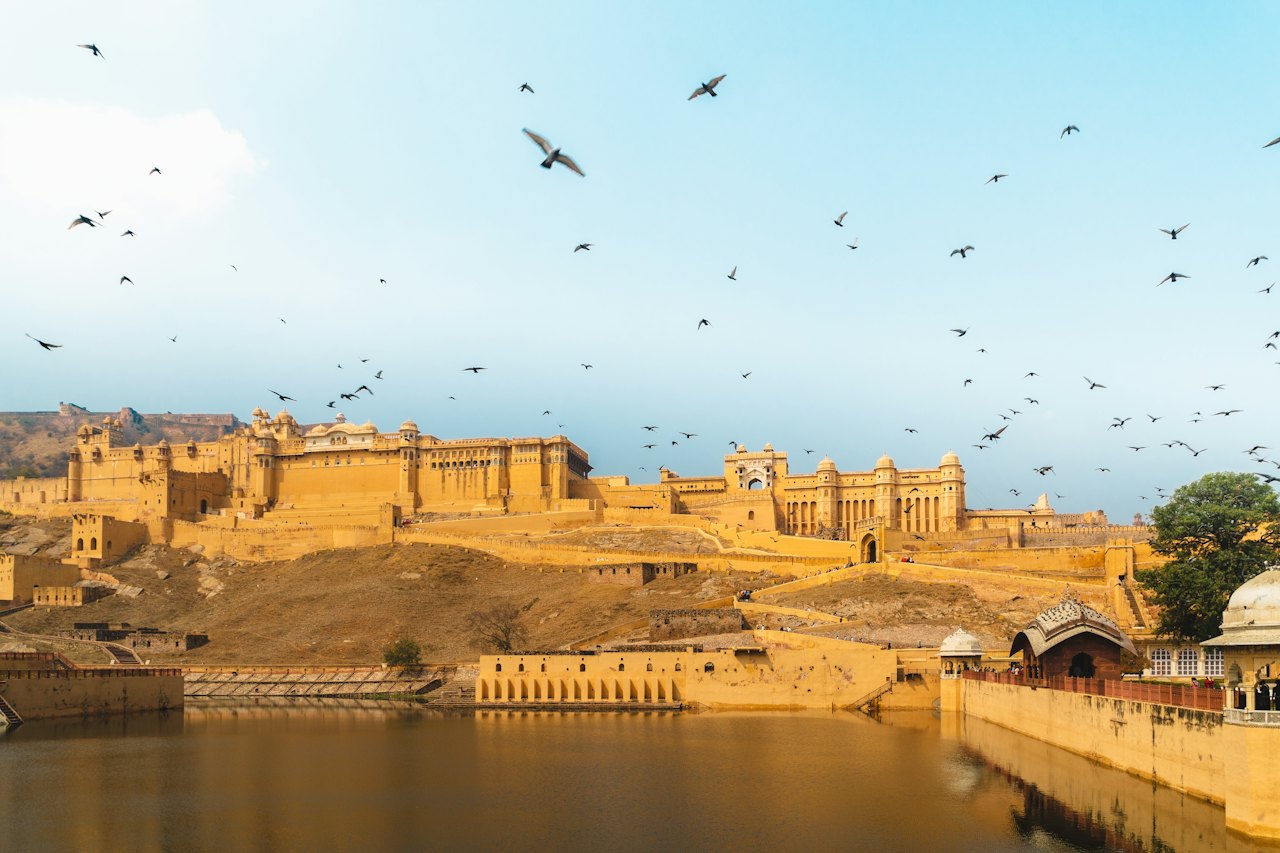
Overview
Rajasthan is the India of the brochures: hill forts above walled cities, camel trains in the Thar Desert, palaces turned into hotels and bazaars selling block-printed cloth and silver. The pink streets of Jaipur, the blue houses of Jodhpur, the lakes of Udaipur and the sandstone fort of Jaisalmer are all distinct, and most visitors link them in a loop of ten to fourteen days.
The state is also hard work. Distances are long, with five or six hours of road between the main cities, the roads are busy, and touts and commission-driven shops are part of the landscape. Heat is the other factor: from April to June temperatures pass 40 °C / 104°F (104 °F), so the sensible window is October to March. Hire a driver for the loop, or use trains where they fit, book rooms in advance for festival periods such as Holi and the Pushkar Camel Fair, and keep your stomach in mind: eat where the food is cooked fresh and busy. First-time visitors to India often start here, but they should expect to be tested as well as charmed.
Amer Fort, the City Palace and Hawa Mahal in the Pink City. Go to Amer at opening, before tour buses.
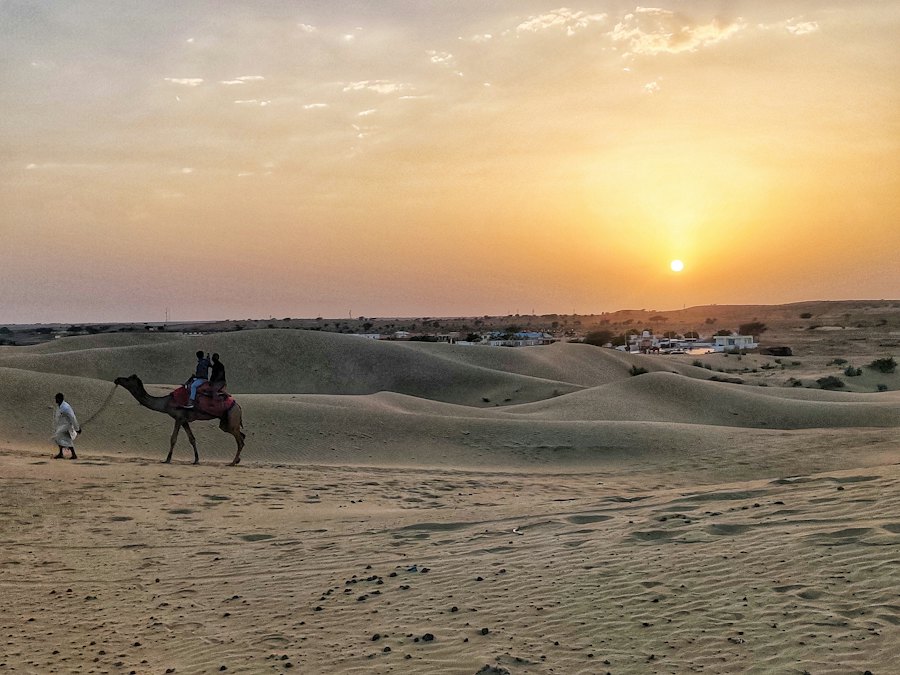
A living sandstone fort and a camel night among dunes. Choose small camps to avoid crowds.
Lake Pichola, the City Palace and rooftop dinners. The most romantic stop.
Best time
Best months for most visitors: Oct–Mar. Good weather, thinner crowds and fairer prices.
October and March are the best compromise: warm but manageable, with fewer visitors and lower prices.
November to February is peak season, with sunny days of about 20 to 28 °C / 68 to 82°F (68–82 °F) and cool nights, especially in the desert.
April to June is very hot, often above 40 °C / 104°F (104 °F), with a dust haze.
Booking window: reserve flights and stays 2–3 months ahead for Oct–Mar, and 4–6 months ahead for peak season (Mar, Aug–Sep).
Partner links. We earn a commission at no extra cost to you; sponsors never change a ranking or safety note. How we earn money →
Weather
Current temperature loads here when your browser can reach Open-Meteo.
Weather data: Open-Meteo Historical & Live API. A single reading for the main town or area, not the whole destination.
Warm days and cool nights; peak season.
Very hot, often above 40°C / 104°F; a monsoon follows from July.
Hotels and drivers are busiest around Christmas and New Year, and the Pushkar Camel Fair in November. Book rooms and trains at least a month or two ahead.
Holi in March is a colourful festival, but it brings crowds and travel disruption. Nights in the desert can be cold in winter and hot by late March.
July to September is the monsoon: the landscape turns green and lake cities such as Udaipur look beautiful, but humidity is high and some roads and sights are disrupted. Prices fall sharply.
Weather data: Open-Meteo Historical & Live API (live reading). Typical highs and season notes are our own summaries. How we verify →
Safety
Last updated: government levels come from our editor-verified table (October 2026). When the live UK FCDO check succeeds, its exact UTC time appears in the panel below. The banner takes the most cautious of the five agencies, so a live UK warning always outranks a green entry in our table and any part-country warning shows as red. We never show a level we haven’t checked. How we verify →
Government levels: editor-verified table, October 2026 How we verify →
Five official agencies, one view. Ratings change, so each pill opens the agency’s own page for today’s level.
Tier 3/5 · Increased caution. Road safety, scams, harassment; FCDO advises against travel within 10 km (6 miles) of the Pakistan border.
The UK FCDO (advice last updated 27 October 2026) advises against all travel within 10 km (6 miles) of the India-Pakistan border, except the Wagah-Attari crossing, and notes the border in Rajasthan and Gujarat is unmarked in places, so do not approach it away from an official crossing. It also advises against travel to Jammu and Kashmir and all but essential travel to Manipur, none of which are on the Rajasthan circuit. It names a high road-death rate, common scams and card fraud, a very likely terrorism risk across India and airline disruption linked to the Middle East. The main tourist cities of Jaipur, Jodhpur and Udaipur are well away from the border zone, but Jaisalmer and the desert to its west are closer, so check each agency's current India page before you book. Our table holds no verified levels for other governments for India.
Our plain-English summary of what the UK FCDO, US State Department, Australian Smartraveller, Japan MOFA and South Korea MOFA publish. We quote no live ratings from memory; each button above opens the agency's own page.
Our opinion, not an official warning
Regional nuance: The UK FCDO advises against all travel within 10 km (6 miles) of the India-Pakistan border (except Wagah-Attari), which includes parts of western Rajasthan; the border is unmarked in places. The main tourist cities and routes are away from it, but check current advice before travelling, especially around Jaisalmer.
The concerns that are real: Road accidents, touts and scams, stomach illness and heat are the most common problems. Women travelling alone often meet staring, unwanted approaches and harassment, so choose well-reviewed accommodation, use licensed taxis or apps at night, and consider a driver or guide. Keep valuables hidden in crowded markets.
What headlines overstate: Headlines about crime or political tension in India can make travel sound reckless. Most visitors on the Rajasthan circuit report hassle rather than danger, but preparation matters. Check current advice, especially for border areas near Jaisalmer.
Written by our editors from general travel knowledge and kept apart from the agencies above. How we verify →
Costs
Backpacker
$40 (≈ €35 / £30) per person per day
What it covers: Simple guesthouse or hostel, thali and street food, rickshaws and local buses, a few fort entries, and occasional shared taxis or trains.
Mid-Range (default)
$90 (≈ €80 / £70) per person per day
What it covers: Heritage haveli or boutique hotel, restaurant meals, a private car with driver shared between two, monument entries and one experience such as a camel safari.
Boutique
$200 (≈ €180 / £155) per person per day
What it covers: Palace hotels, private driver and guide, fine dining, a luxury desert camp and spa treatments.
Cost source: Audited Local Lodging Taxes, Rail Tariffs & Dining Averages (our own estimates, flights excluded). How we verify →
Source: Should I Go's own estimates, October 2026, in USD per person excluding international flights; euro figures are rough conversions. A couple shares a room, so accommodation drops 25% per person. Prices move, so treat these as a planning range, not a quote.
Estimated total: $0 (≈ €0 / £0)
Estimate in USD per trip, excluding international flights. Two or more travellers share rooms, so accommodation drops 25% per person. Budget and luxury tiers are scaled from the mid-range figure.
Cost source: Audited Local Lodging Taxes, Rail Tariffs & Dining Averages (our own estimates, flights excluded). How we verify →
Where to base yourself
Pink City with forts and bazaars.
The blue city under Mehrangarh Fort.
Golden fort and desert camps.
Lakes and palaces.
Itineraries
Getting between stops: Trains and private drivers link the cities; book trains early.
Getting between stops: Overnight trains and short flights for longer legs.
Getting between stops: Fast Gatimaan Express from Delhi to Agra takes about 1.5 hours.
Routes and timetables change. Confirm transit times with the operator before you book.
Do and stay
Best for: First-timers
Pros: Close to the Pink City sights, with many heritage hotels, cafes and bazaars. C-Scheme is calmer and has good restaurants.
Watch for: Heavy traffic and noise, and the old city can be crowded and tiring. Book hotels with a quiet courtyard.
Best for: Romance and relaxation
Pros: Lakeside havelis and rooftop restaurants with views of the City Palace and lake. Walkable and calmer than Jaipur.
Watch for: Prices are high in peak season, and some streets are steep and narrow. Rooftop views cost more.
Best for: Atmosphere
Pros: Stay in a restored haveli below Mehrangarh or inside Jaisalmer's fort for views and atmosphere.
Watch for: Narrow lanes with luggage are awkward, and some fort-based hotels have drainage and water pressure issues. Choose well-reviewed places.
These are partner links. We may earn a commission at no extra cost to you.
Trade-offs
Final verdict
Editorial opinion from Should I Go, written from general travel knowledge and reviewed periodically. Verify prices, entry rules and advisories before you book.
Typical costs and rules change; confirm with official sources before you travel.
Ten to fourteen days works for the classic circuit of Jaipur, Jodhpur, Jaisalmer and Udaipur. With a week, choose two or three cities, for example Jaipur, Jodhpur and Udaipur. Distances are long, with five to six hours on the road between main cities, so avoid trying to see too many in a short trip.
October to March is the best time, with cooler and drier weather. December and January are the busiest. April to June is very hot, often above 40 °C / 104°F (104 °F), and July to September is the monsoon. If you must travel in the heat, plan sightseeing for early morning and late afternoon.
Many solo travellers visit without problems, but women in particular report harassment and unwanted attention, so take extra care. Use well-reviewed accommodation, avoid walking alone late at night, use licensed taxis or apps, and consider a driver or small group tour. Check current official advice for India before you go.
Amber Fort entry is 1,000 rupees for foreign adults ($10.50 (≈ €9.38 / £8.27); ≈ €9.40 / £8.30) and 100 rupees for foreign students ($1.05 (≈ €0.94 / £0.83)), and it includes the Sheesh Mahal (Mirror Palace). The 2-day composite ticket is also 1,000 rupees for foreign tourists and covers 8 state monuments including Amber Fort, Hawa Mahal, Jantar Mantar, Nahargarh Fort and the Albert Hall Museum, so it is the better value if you will see more than one. The fort is open 8:00 am to 5:30 pm with the last tickets at 5:00 pm. Getting up the hill: walk the stone ramps for free, take a shared jeep for about 550-650 rupees return ($5.80-6.85 (≈ €5.18–6.12 / £4.57–5.39); ≈ €5.20-6.10 / £4.55-5.40), or ride an elephant for 2,500 rupees ($26.30 (≈ €25 / £20); ≈ €23.50 / £20.70), though many travellers skip elephant rides for animal-welfare reasons. Night viewing runs 6:30-9:15 pm (the inner mirror halls are closed then) with a Sound and Light Show from 7:00 to 9:00 pm. Tickets can be booked ahead on the official Rajasthan Tourism online booking system.
Get live weather, activities, travel advisories, and personalised tips for Rajasthan
Check Rajasthan Now →Have you visited Rajasthan? Was it worth it? Readers can vote: Worth Every Penny, Great in Shoulder Season Only, or Overrated / Skip It.