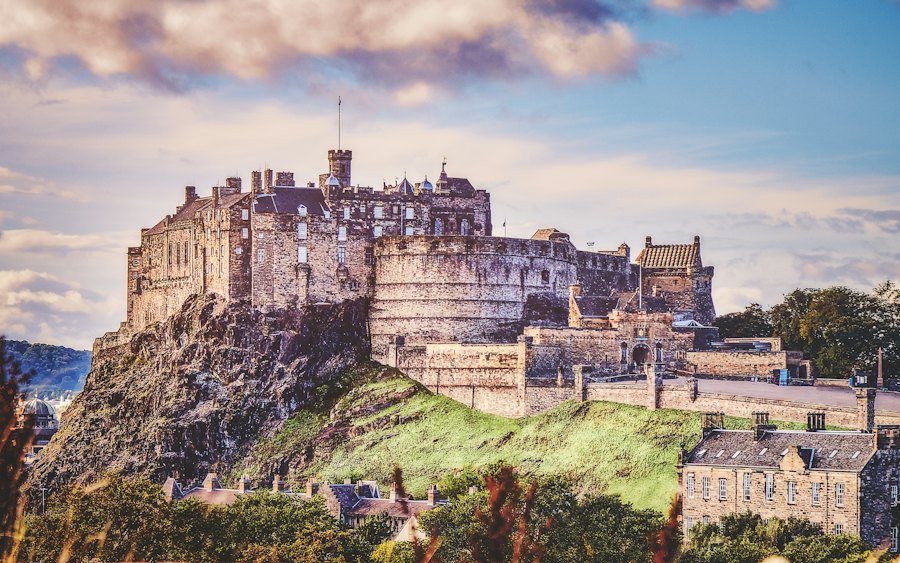
Edinburgh's Old Town and castle
The Royal Mile climbs to the castle on a volcanic rock; Arthur's Seat gives a sunrise view for free.
Photo: K. Mitch Hodge on Unsplash
Overview
Scotland is a land of dramatic Highland scenery, ancient castles, world-class whisky, and some of the wildest coastline in Europe. The Isle of Skye and the North Coast 500 route are bucket-list road trips.
Scotland's best moments are rarely on the postcard. Edinburgh is great, but the Highlands and the islands reward a slower route: Glen Coe, the North Coast 500, Skye, the Outer Hebrides. Single-track roads need patience and attention to passing places, and a car gives you the freedom that trains cannot. A standard distillery tour costs around $19–32 (£15 to £25; ≈ €17–28) and usually includes a dram or two, while masterclass and cask tastings run $64–191 (≈ €55–170 / £50–150)+ (£50 to £150+; ≈ €57–170+) and need booking well ahead, especially on Islay and Skye. Weather changes by the hour, so pack layers and waterproofs even in July. Midges bite from late spring to early autumn, worst in August and September, and August in Edinburgh, when the festivals run, is the one month to book far ahead.
The Royal Mile climbs to the castle on a volcanic rock; Arthur's Seat gives a sunrise view for free.
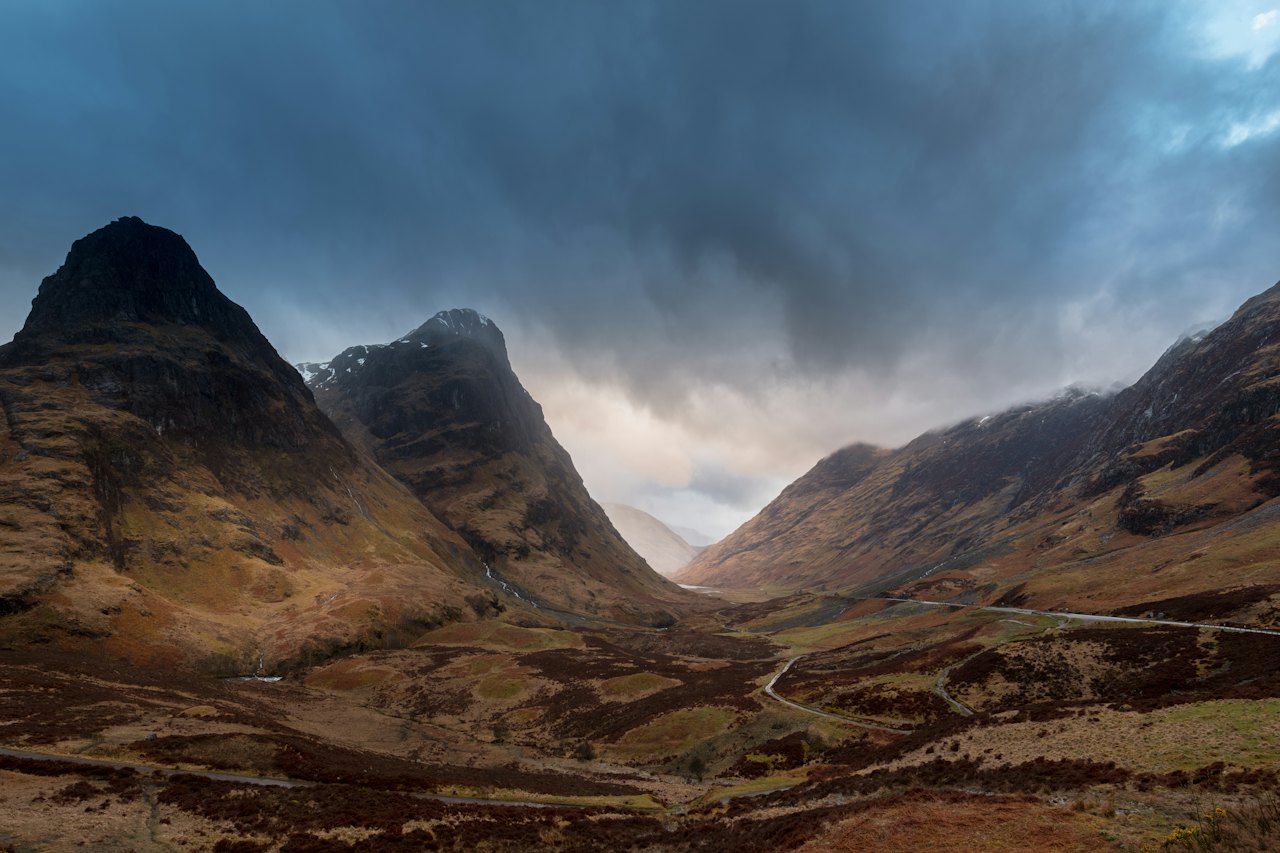
The A82 through Glencoe is one of Britain's great drives. Stop at the lay-bys and walk a short trail.
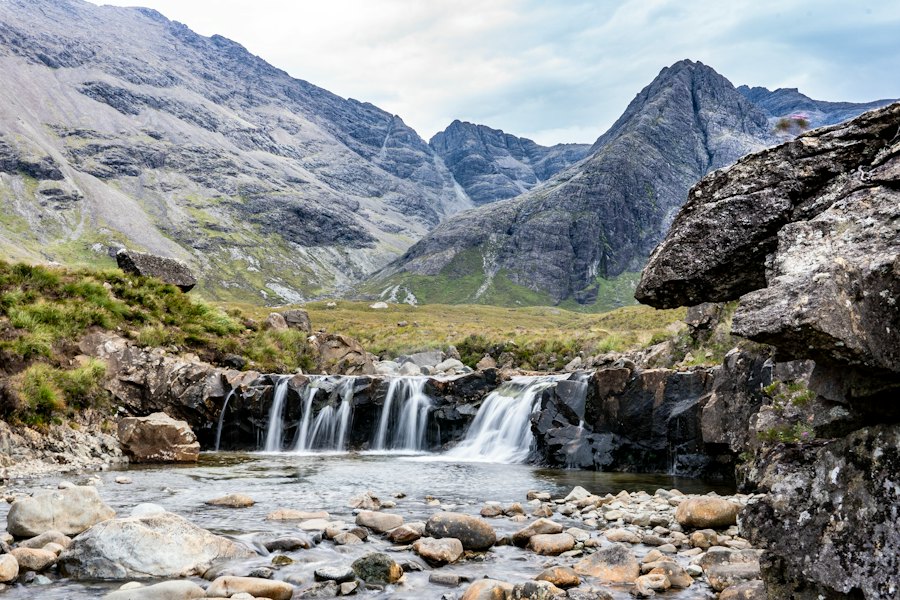
The Fairy Pools are busy, but the Quiraing and the Old Man of Storr reward early starts.
Best time
Best months for most visitors: May–Sep. Good weather, thinner crowds and fairer prices.
April, May and September give the best balance.
June to August is peak season, with the longest days, with up to 17 to 18 hours of daylight in the north in late June (the sun sets well after 10 pm and twilight lingers to midnight), and the mildest weather: Edinburgh highs average about 18°C / 64°F (64°F) in July, touching 19–21°C / 66–70°F (66–70°F) on the best days, while the northern Highlands and outer islands average only about 15.5–16°C / 60–61°F (60–61°F), with lows near 12°C / 54°F (53°F).
October to March is cold, wet and dark: Edinburgh highs sit around 6 to 9°C / 43 to 48°F (43 to 48°F) from December to March, with only about seven hours of daylight in December.
Booking window: reserve flights and stays 2–3 months ahead for May–Sep, and 4–6 months ahead for peak season (Jun–Aug).
Partner links. We earn a commission at no extra cost to you; sponsors never change a ranking or safety note. How we earn money →
Weather
Current temperature loads here when your browser can reach Open-Meteo.
Weather data: Open-Meteo Historical & Live API. A single reading for the main town or area, not the whole destination.
Peak season about 19°C / 66°F; shoulder season about 12°C / 54°F.
Rain: High; showers all year, especially in the west.
Cool and changeable: Edinburgh highs average about 18°C / 64°F (64°F) in July (up to 19–21°C / 66–70°F on the best days) and 6°C / 43°F (43°F) in January, with rain on 12 to 16 days in every month. Layers matter more than the season.
Colder, wetter and windier than Edinburgh. Summer highs in the northern Highlands and outer islands average only about 15.5–16°C / 60–61°F (60–61°F), and May and September about 11.5–13°C / 53–55°F (53–55°F), with mountain nights close to freezing. The west gets up to three times Edinburgh's rain, so a waterproof is needed even in July. Midges are worst in August and September.
August is the busiest because of the Edinburgh festivals. Expect high accommodation prices, packed single-track roads on Skye and midges in the Highlands.
May is mild (Edinburgh highs about 14°C / 57°F), with long days, spring flowers and few midges, while September has highs near 16°C / 61°F (61°F), autumn colour and quieter roads once schools are back, though midges can linger. Accommodation is clearly cheaper than July and August, and ferries and distilleries are open. April is cooler and changeable but good for value. In the Highlands, May and September daytime highs are only about 11.5–13°C / 53–55°F (53–55°F), and mountain nights fall close to freezing.
Some island ferries run reduced timetables and many rural attractions close. Prices drop, Edinburgh's Hogmanay is a highlight (see the FAQ below), and clear winter days in the Cairngorms can be spectacular for prepared travellers, though snow and wind often close roads such as the Cairnwell Pass between December and February.
Weather data: Open-Meteo Historical & Live API (live reading). Typical highs and season notes are our own summaries. How we verify →
Safety
Last updated: government levels come from our editor-verified table (October 2026). When the live UK FCDO check succeeds, its exact UTC time appears in the panel below. The banner takes the most cautious of the five agencies, so a live UK warning always outranks a green entry in our table and any part-country warning shows as red. We never show a level we haven’t checked. How we verify →
Government levels: editor-verified table, October 2026 How we verify →
Five official agencies, one view. Ratings change, so each pill opens the agency’s own page for today’s level.
Tier 5/5 · Very low risk. Normal precautions: changeable mountain weather and single-track roads.
The UK FCDO does not issue travel advice for the UK itself, so check your own government's page for the United Kingdom before booking. Scotland is generally an easy, low-risk place to travel. Mountain weather and remote single-track roads are the main practical risks, and entry rules matter: most visitors from the US, EU, Canada and Australia now need a UK Electronic Travel Authorisation (ETA, £20 / about $25 (≈ €20 / £20)) before they fly.
Our plain-English summary of what the UK FCDO, US State Department, Australian Smartraveller, Japan MOFA and South Korea MOFA publish. We quote no live ratings from memory; each button above opens the agency's own page.
Our opinion, not an official warning
Regional nuance: Advice for the UK is routine, with weather and mountain-safety notes for the Highlands. Remote areas have limited phone signal and fast-changing conditions.
The concerns that are real: The mountains are the main danger: weather changes quickly, and navigation errors are common on Ben Nevis and Glen Coe. Single-track roads need patience and attention to passing places. Pickpockets operate in Edinburgh in August, and some people drive on the wrong side after landing.
What headlines overstate: Scotland rarely makes safety headlines, other than the occasional mountain rescue story. The risk is not crime but underestimating the terrain, the weather and the distances. Carry a map, waterproofs and tell someone your route.
Written by our editors from general travel knowledge and kept apart from the agencies above. How we verify →
Costs
Backpacker
$110 (≈ €100 / £85) per person per day
What it covers: Hostel dorm or campsite, self-catering from supermarkets (Tesco, Sainsbury's), regional buses and public transport, free hill walks, beaches and many museums, with an occasional cheap distillery visit. About £50–73 a day.
Mid-Range (default)
$245 (≈ €220 / £195) per person per day
What it covers: A central three- or four-star boutique hotel room, traditional pub lunches, a formal dinner, one distillery visit and a rental car. About £140–245 a day.
Boutique
$540 (≈ €480 / £430) per person per day
What it covers: Five-star estate hotels and historic castle stays, fine dining and private Highlands driving guides. About £420–920+ a day.
Cost source: Audited Local Lodging Taxes, Rail Tariffs & Dining Averages (our own estimates, flights excluded). How we verify →
Source: Should I Go's own estimates, October 2026, in USD per person excluding international flights; euro figures are rough conversions. A couple shares a room, so accommodation drops 25% per person. Prices move, so treat these as a planning range, not a quote.
Estimated total: $0 (≈ €0 / £0)
Estimate in USD per trip, excluding international flights. Two or more travellers share rooms, so accommodation drops 25% per person. Budget and luxury tiers are scaled from the mid-range figure.
Cost source: Audited Local Lodging Taxes, Rail Tariffs & Dining Averages (our own estimates, flights excluded). How we verify →
Where to base yourself
Castle, Old Town and festivals. Book far ahead for August.
Victorian architecture, music and museums. Cheaper and more local than Edinburgh.
Mountains, lochs and the start of the West Highland Way.
Cliffs, castles and sea lochs. Needs a car or a tour.
Itineraries
Getting between stops: ScotRail to Fort William and the West Highland Line; a car helps.
Getting between stops: Drive the A82 and A87; ferries or the Skye Bridge connect the island.
Getting between stops: Mix trains and a hire car; single-track roads need patience.
Routes and timetables change. Confirm transit times with the operator before you book.
Do and stay
Best for: First-timers
Pros: Walkable access to the castle, the Royal Mile, museums and pubs, with good rail links to Glasgow and the Highlands, and plenty of hotel choices.
Watch for: Very busy and expensive in August, and Old Town streets are steep and noisy at night. Book months ahead for festival weeks.
Best for: Hiking and scenery
Pros: A natural base for Ben Nevis, Glen Coe, the Jacobite steam train and the road to Skye. Plenty of hostels, B&Bs and outdoor shops.
Watch for: The town itself is functional rather than pretty, weather is wet, and summer midges are bad. Rooms can sell out quickly.
Best for: Island exploring
Pros: Skye's main village has a colourful harbour, restaurants and tours, and is close to the Quiraing, the Old Man of Storr and Fairy Pools.
Watch for: Overloaded with visitors in summer, with high prices and traffic on single-track roads. Booking early is essential and parking is limited.
These are partner links. We may earn a commission at no extra cost to you.
Trade-offs
Final verdict
Editorial opinion from Should I Go, written from general travel knowledge and reviewed periodically. Verify prices, entry rules and advisories before you book.
Typical costs and rules change; confirm with official sources before you travel.
May and September are usually best. May is mild, with long daylight and few midges, while September has autumn colour and fewer crowds, though midges can linger early in the month. June is also lovely but busier. July and August bring the warmest weather (Edinburgh highs about 18°C / 64°F) but also peak prices, crowds and midges. Whatever the month, pack waterproofs and layers, because the weather can change several times in a single day.
A week lets you see Edinburgh and a slice of the Highlands, such as Glen Coe and Skye. Ten days gives you time for the North Coast 500 or the islands without rushing. Distances look short on a map but single-track roads and ferries slow everything down. If you want the Outer Hebrides as well, add another three or four days for ferries and slower roads.
For Edinburgh and Glasgow, no, as trains, trams and buses are good. For the Highlands, Skye and the North Coast 500, a car makes the trip much easier, though trains reach Fort William and Mallaig. Book rentals early in summer and be careful on single-track roads. Allow extra time for fuel stops in remote areas, where petrol stations are sparse and often close early.
Edinburgh's street festival needs tickets booked months ahead. Accommodation prices triple or quadruple from 30 December to 2 January, and many pubs charge for entry wristbands, so book rooms early and check what each venue requires.
Not comfortably. Large stretches are single-track with passing places, and fuel stations, EV chargers and places to eat are sparse in the northwest, so map your stops in advance. In late June the long daylight (up to 17 to 18 hours) gives you plenty of driving light.
Get live weather, activities, travel advisories, and personalised tips for Scotland
Check Scotland Now →Have you visited Scotland? Was it worth it? Readers can vote: Worth Every Penny, Great in Shoulder Season Only, or Overrated / Skip It.