Seceda and the Odle
A cable car from Ortisei lifts you to the ridge. Go early for the view of the jagged peaks.
Dolomite peaks and alpine meadows, near the Sassolungo group
Best months: Jul-Sep & Dec-Feb
Photo: Michiel Ronde on Unsplash
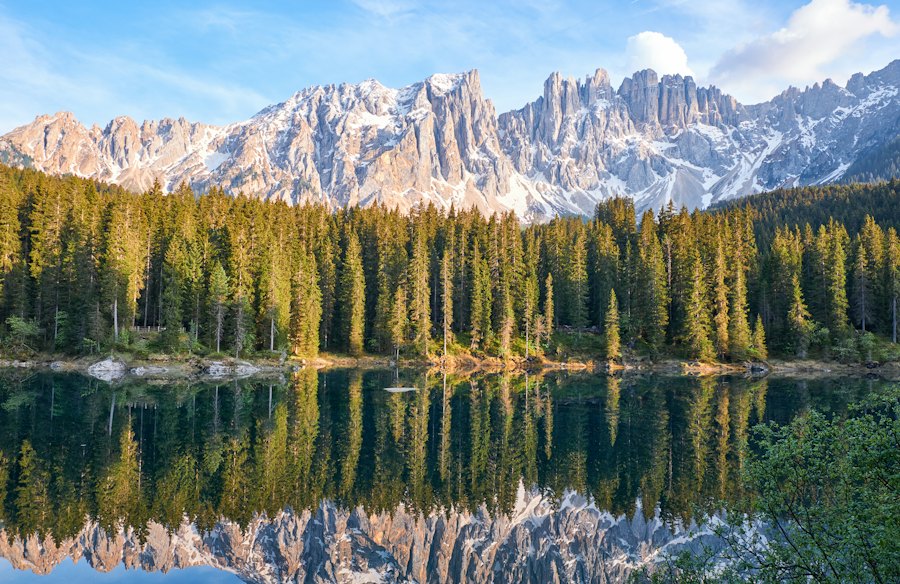
Photo: Riccardo Chiarini on Unsplash
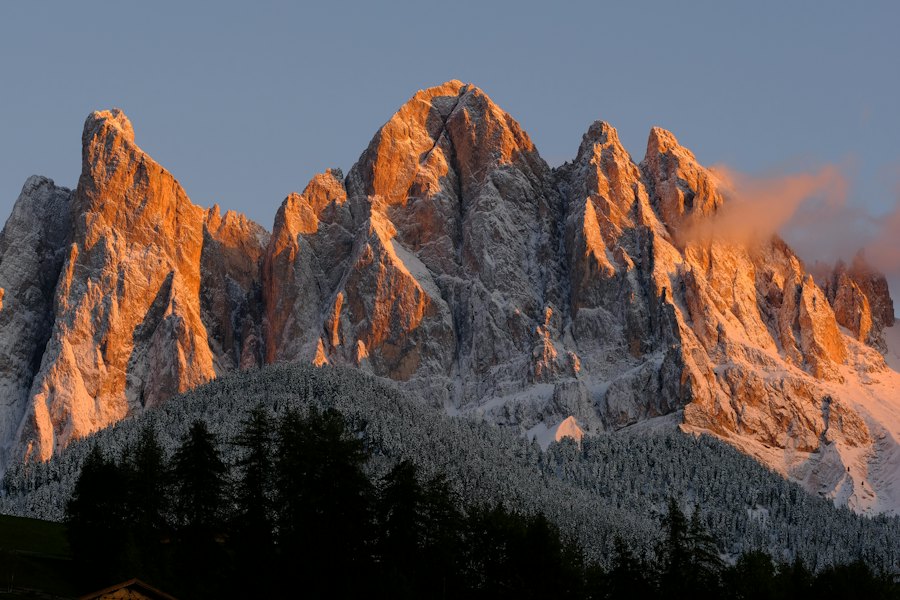
Photo: Stefano Bazzoli on Unsplash
View Full Gallery (3)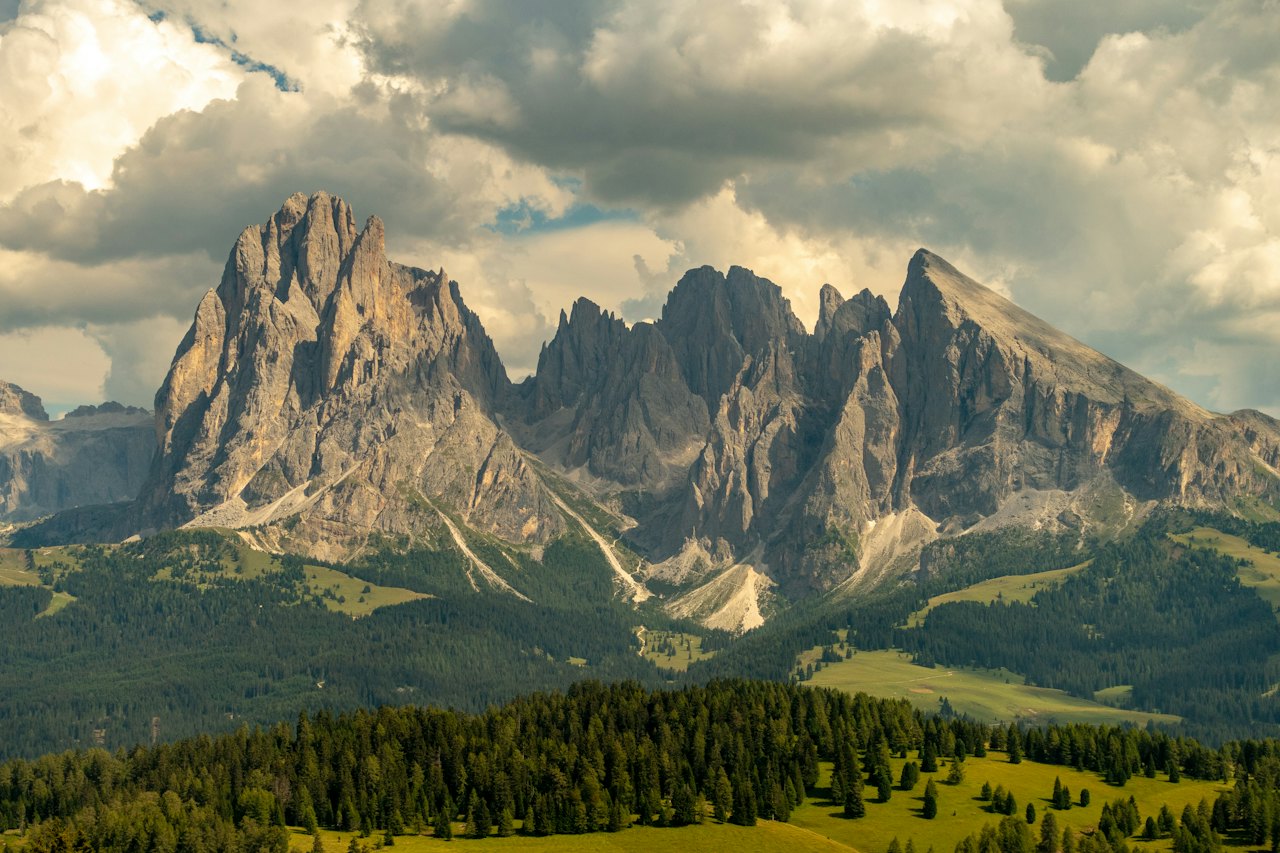
Overview
The Dolomites are pale limestone peaks in north-east Italy that turn pink at sunset, rising above green meadows and wooden chalets. They are a UNESCO World Heritage Site, and the region mixes Italian, Austrian and Ladin cultures, so a single valley may serve both polenta and dumplings.
In summer, they are walking country: mountain huts called rifugi serve hot meals and beds along routes such as the Alta Via 1, and cable cars lift you straight to the high plateaus. In winter, the Dolomiti Superski pass covers some 1,200 km / 746 mi of pistes across 12 resorts, including the Sella Ronda circuit. The honest catch is crowds at a few famous spots. Lago di Braies and Seceda are packed from July to September, and in July to mid-September, driving into the Braies valley between 9am and 4pm needs an online reservation (the lake itself is free). Roads over the passes are narrow and busy, and thunderstorms arrive on summer afternoons, so start early. The easiest bases are Cortina d'Ampezzo, Val Gardena and Alta Badia. Venice or Verona airports are the usual gateways, and a car gives the most freedom.
A cable car from Ortisei lifts you to the ridge. Go early for the view of the jagged peaks.
Braies is busy by 9am; Tre Cime di Lavaredo is a loop hike with huts for lunch.
Mountain huts serve polenta, strudel and beer. Book ahead for overnight stays.
Best time
Best months for most visitors: Jul-Sep & Dec-Feb. Good weather, thinner crowds and fairer prices.
Late June and September are the best months for walking: fewer people, clear light and still-open huts, although many close in late September.
July and August are the busiest for hiking, with warm days of 18 to 25 degrees Celsius, all huts and cable cars open and afternoon thunderstorms.
April to May and November are quiet between seasons, when many lifts, huts and hotels close and the weather is unsettled.
Booking window: reserve flights and stays 2–3 months ahead for Jul-Sep & Dec-Feb, and 4–6 months ahead for peak season (Mar, Jun, Oct).
Partner links. We earn a commission at no extra cost to you; sponsors never change a ranking or safety note. How we earn money →
Weather
Current temperature loads here when your browser can reach Open-Meteo.
Weather data: Open-Meteo Historical & Live API. A single reading for the main town or area, not the whole destination.
Cool mornings and afternoon storms. Trails open fully from late June.
Snow from December to March for skiing around Cortina and the Sella Ronda.
Mid-December to early January and February half-term are the peak ski periods. Book accommodation, rifugi and parking well ahead.
Early December and March offer good skiing with lower prices. Late June can still have snow on high paths.
It is cheap but limited. Winter skiing runs from December to March, with colder temperatures often below zero.
Weather data: Open-Meteo Historical & Live API (live reading). Typical highs and season notes are our own summaries. How we verify →
Safety
Last updated: government levels come from our editor-verified table (October 2026). When the live UK FCDO check succeeds, its exact UTC time appears in the panel below. The banner takes the most cautious of the five agencies, so a live UK warning always outranks a green entry in our table and any part-country warning shows as red. We never show a level we haven’t checked. How we verify →
Government levels: editor-verified table, October 2026 How we verify →
Five official agencies, one view. Ratings change, so each pill opens the agency’s own page for today’s level.
Tier 4/5 · Standard caution. Normal precautions: mountain weather, rockfall and lightning.
The UK FCDO, US State Department and Australian DFAT generally describe Italy as a low-risk destination where normal precautions apply. Their advice usually mentions petty theft in cities, and for mountain areas, weather, avalanche and rockfall risks. Advice varies and changes, so read each government's current Italy page before you book.
Our plain-English summary of what the UK FCDO, US State Department, Australian Smartraveller, Japan MOFA and South Korea MOFA publish. We quote no live ratings from memory; each button above opens the agency's own page.
Our opinion, not an official warning
Regional nuance: Italy's advice for the Dolomites centres on mountain weather, rockfall and avalanche risk rather than crime. Specific trails and passes close at times, so check local alpine updates.
The concerns that are real: The mountains are the real risk. Thunderstorms, fog and sudden temperature drops catch walkers out, and via ferrata routes need proper equipment and experience. Check the forecast the night before, tell the hut where you are going and turn back if conditions change. Winter off-piste skiing needs avalanche gear and training.
What headlines overstate: Occasional reports of rockfall or landslides after heavy rain can close specific trails and roads, but most routes and valleys remain open. Check local alpine club and tourist-office updates.
Written by our editors from general travel knowledge and kept apart from the agencies above. How we verify →
Costs
Backpacker
$75 (≈ €65 / £60) per person per day
What it covers: Hostel or dorm bed in a rifugio, picnic lunches, local buses, free walking and a few cable car rides.
Mid-Range (default)
$170 (≈ €150 / £135) per person per day
What it covers: Guesthouse or family hotel with half board, a hire car share, cable car tickets, hut lunches and a ski pass in winter (approximate).
Boutique
$370 (≈ €330 / £290) per person per day
What it covers: Five-star spa hotel in Cortina or Val Gardena, gourmet dining, private guides and ski rentals.
Cost source: Audited Local Lodging Taxes, Rail Tariffs & Dining Averages (our own estimates, flights excluded). How we verify →
Source: Should I Go's own estimates, October 2026, in USD per person excluding international flights; euro figures are rough conversions. A couple shares a room, so accommodation drops 25% per person. Prices move, so treat these as a planning range, not a quote.
Estimated total: $0 (≈ €0 / £0)
Estimate in USD per trip, excluding international flights. Two or more travellers share rooms, so accommodation drops 25% per person. Budget and luxury tiers are scaled from the mid-range figure.
Cost source: Audited Local Lodging Taxes, Rail Tariffs & Dining Averages (our own estimates, flights excluded). How we verify →
Where to base yourself
Cable cars, villages and the Seceda ridge.
Elegant resort with hikes to Tre Cime and Cinque Torri.
Quiet villages and ski circuits.
Turquoise lake and gateway valley.
Itineraries
Getting between stops: Local buses and cable cars run in summer; a car helps.
Getting between stops: Book huts months ahead and carry paper maps.
Getting between stops: Buses link Venice and Cortina in about 2.5 to 3 hours.
Routes and timetables change. Confirm transit times with the operator before you book.
Do and stay
Best for: First-timers
Pros: A real town with shops, restaurants and access to the Tre Cime, Cinque Torri and Tofane. Suits both walkers and skiers.
Watch for: Expensive, especially in peak season and winter. Busy with traffic in summer.
Best for: Skiing and Seceda
Pros: Direct access to Seceda, Alpe di Siusi and the Sella Ronda. Good choice of hotels, with Ladin culture and wood carving.
Watch for: Busy and pricey in high season. Parking and traffic can be difficult in Ortisei.
Best for: Food and quieter villages
Pros: Excellent restaurants in Alta Badia and easy access to Lago di Braies and Tre Cime from Val Pusteria. Smaller villages and good-value guesthouses.
Watch for: You need a car or good bus planning. Fewer evening activities than in Cortina.
These are partner links. We may earn a commission at no extra cost to you.
Trade-offs
Final verdict
Editorial opinion from Should I Go, written from general travel knowledge and reviewed periodically. Verify prices, entry rules and advisories before you book.
Typical costs and rules change; confirm with official sources before you travel.
For hiking, go from late June to the end of September, with September offering clear air and fewer people. For skiing, go from December to March. July and August are the busiest. In April, May and November many huts and lifts are closed.
A car gives the most freedom, especially for passes and trailheads, but buses link the main valleys and cable cars reach many high routes. In summer, some roads and car parks have restrictions or need reservations, so check ahead. Winter driving needs snow tyres or chains.
Five to seven days gives you time for two bases and several walks, allowing for bad weather. A long weekend is enough for one valley. Add extra days if you want to walk part of the Alta Via 1 or ski the Sella Ronda.
Get live weather, activities, travel advisories, and personalised tips for The Dolomites
Check The Dolomites Now →Have you visited The Dolomites? Was it worth it? Readers can vote: Worth Every Penny, Great in Shoulder Season Only, or Overrated / Skip It.