Opera House and Harbour
Take the Circular Quay ferry to Manly ($5.95 (≈ €5.31 / £4.69), A$8.49 each way) for harbour views. Tours of the Opera House sell out; book ahead.
Sydney Opera House and Harbour Bridge
Best months: Sep–Nov & Mar–May
Photo: April Pethybridge on Unsplash
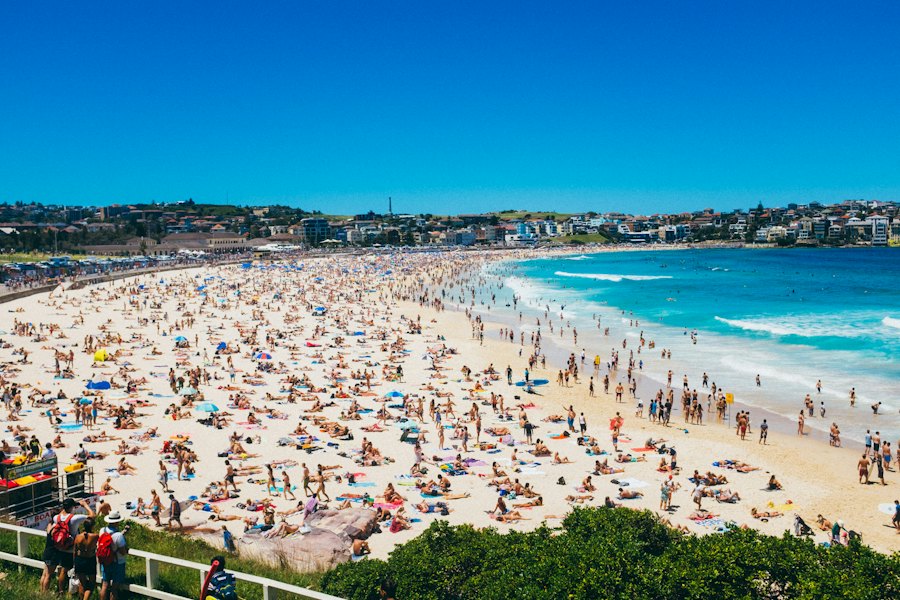
Photo: Jay Wennington on Unsplash
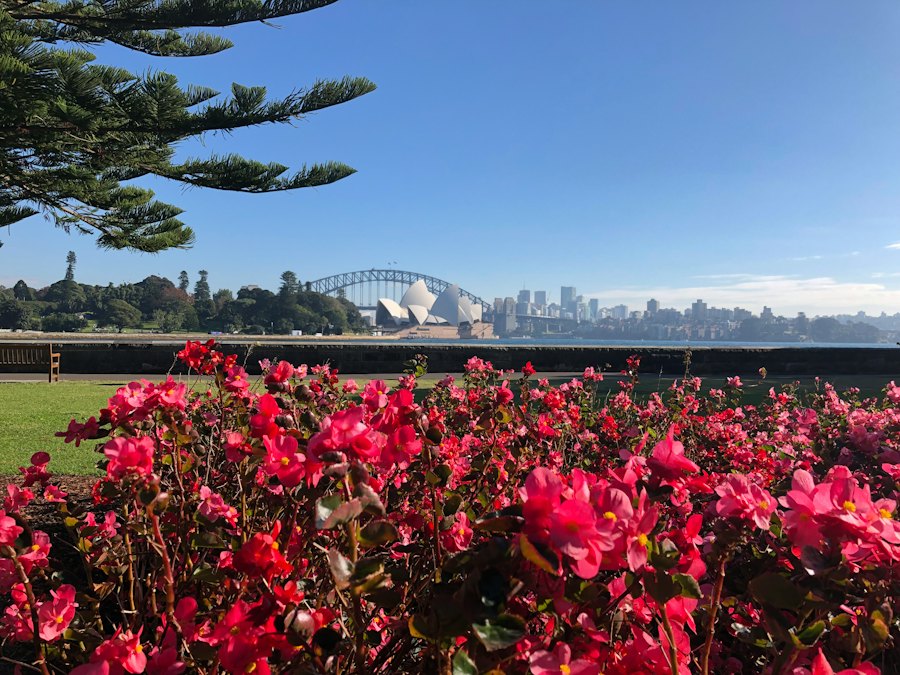
Photo: Tyler Mower on Unsplash
View Full Gallery (3)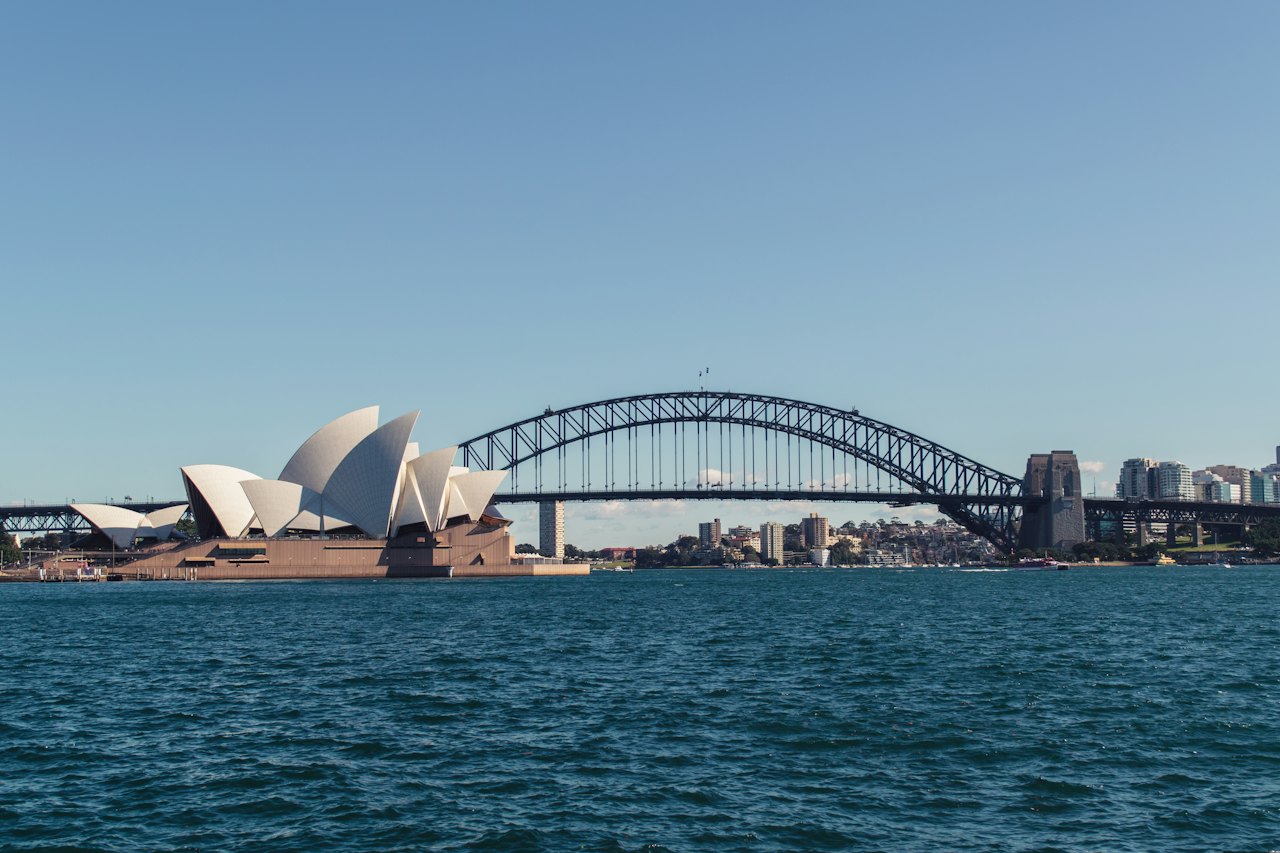
Overview
Sydney is a harbour city whose best moments are free. A ferry from Circular Quay to Manly costs a fraction of a harbour cruise and gives you the Opera House, the Harbour Bridge and the heads at the harbour mouth from the water. The coastal walk from Bondi to Coogee passes cliffs and ocean pools in about two hours, and the Royal Botanic Garden runs along the shoreline into the city.
It is also one of the most expensive cities in the Asia-Pacific region. Central three- to four-star hotels often cost $175 to $315 (≈ €155–280 / £140–250) a night (A$250 to A$450 or more; ≈ €155 to €280 / £138 to £248), and more in high summer or during big events, and eating out adds up fast, so plan around lunch specials, ferries and public transport, and use a contactless card or an Opal card for trains, buses and ferries, which have daily and weekly caps. Summer, from December to February, is hot and crowded, with New Year's Eve fireworks the peak. Autumn and spring are quieter and milder. Swim between the flags, as rips are a real danger on the open beaches, and wear sunscreen even on cloudy days.
Take the Circular Quay ferry to Manly ($5.95 (≈ €5.31 / £4.69), A$8.49 each way) for harbour views. Tours of the Opera House sell out; book ahead.
On a Friday, Saturday or Sunday the $6.70 (A$9.65; ≈ €6 / £5.30) daily cap turns the public F1 Manly ferry into a harbour cruise past the Opera House and Harbour Bridge, with the rest of the day's transport free. Tap on at Circular Quay Wharf 3 and go mid-morning for the best deck seats.
A scenic 6 km / 3.7 mi cliff walk with beaches and rock pools. Start early on weekends.
Three Sisters, waterfalls and eucalyptus forest, about two hours by train.
Best time
Best months for most visitors: Sep–Nov & Mar–May. Good weather, thinner crowds and fairer prices.
March to May and September to November are the best months: warm days, lower prices, fewer crowds and easy beach and walking weather.
December to February is summer, with highs of 25 to 30 degrees Celsius and occasional heatwaves.
June to August is winter, with mild days of about 12 to 17 degrees Celsius and some rain.
Booking window: reserve flights and stays 2–3 months ahead for Sep–Nov & Mar–May, and 4–6 months ahead for peak season (Jan, Jun–Aug, Dec).
Partner links. We earn a commission at no extra cost to you; sponsors never change a ranking or safety note. How we earn money →
Weather
Current temperature loads here when your browser can reach Open-Meteo.
Weather data: Open-Meteo Historical & Live API. A single reading for the main town or area, not the whole destination.
Highs of 26–28 °C / 79–82°F (79–82 °F), often humid; heatwaves can pass 35 °C / 95°F (95 °F). Beaches are busiest.
Warm, pleasant days, from 25 °C / 77°F (77 °F) down to 20 °C / 68°F (68 °F) by late May.
Crisp and mild: highs of 17–18 °C / 63–64°F (63–64 °F), coastal nights rarely below 8 °C / 46°F (46 °F).
Sunny and fresh, highs climbing from 20 °C / 68°F (68 °F) to 24 °C / 75°F (75 °F).
Beaches are busy, hotel rates are at their highest around Christmas and New Year, and the fireworks fill the harbour. Book rooms months ahead for New Year's Eve.
March and April have settled weather, while spring has wildflowers and whale-watching from the headlands from May to November.
It is the cheapest time for hotels, and Vivid Sydney light festival in late May and June is a draw. Swimming is cold, but the city is uncrowded and walking is pleasant.
Weather data: Open-Meteo Historical & Live API (live reading). Typical highs and season notes are our own summaries. How we verify →
Safety
Last updated: government levels come from our editor-verified table (October 2026). When the live UK FCDO check succeeds, its exact UTC time appears in the panel below. The banner takes the most cautious of the five agencies, so a live UK warning always outranks a green entry in our table and any part-country warning shows as red. We never show a level we haven’t checked. How we verify →
Government levels: editor-verified table, October 2026 How we verify →
Five official agencies, one view. Ratings change, so each pill opens the agency’s own page for today’s level.
Tier 5/5 · Very low risk. Normal precautions: rips, strong sun and summer bushfires.
The UK FCDO, US State Department and Australian government generally describe Australia as a low-risk destination where normal precautions apply. Their advice usually covers natural hazards such as bushfires, strong sun and ocean currents, and a general terrorism threat that applies widely. Advice varies and changes, so check the current pages from each agency before you travel.
Our plain-English summary of what the UK FCDO, US State Department, Australian Smartraveller, Japan MOFA and South Korea MOFA publish. We quote no live ratings from memory; each button above opens the agency's own page.
Our opinion, not an official warning
Regional nuance: Australia's advice generally points to natural hazards rather than crime. Ocean rips, high UV and summer bushfires are the main risks; Sydney itself is not an area to avoid.
The concerns that are real: The sea and sun are the main risks. Rips at surf beaches cause drownings every year, so swim only between the flags. UV levels are high, and bushfire smoke can affect summer air quality. Petty theft occurs in crowded areas and on beaches, and alcohol-related violence is possible in some nightlife areas late at night.
What headlines overstate: Headlines about sharks, spiders and snakes dominate overseas coverage. Shark attacks in Sydney are rare, and harbour beaches are netted or patrolled. Treat water safety and sun protection as the real daily risks.
Written by our editors from general travel knowledge and kept apart from the agencies above. How we verify →
Costs
Backpacker
$105 (≈ €95 / £85) per person per day
What it covers: Hostel dorm bed, cheap eats and supermarket meals, public transport, free beaches, walks and gardens, and a ferry or two.
Mid-Range (default)
$230 (≈ €210 / £180) per person per day
What it covers: Three- or four-star hotel or apartment shared by two, cafe and restaurant meals, public transport, a harbour cruise or Blue Mountains trip, and a few drinks.
Boutique
$510 (≈ €460 / £400) per person per day
What it covers: Five-star harbourfront hotel, fine dining, private tours, a seaplane or helicopter flight and a BridgeClimb (twilight from $290 (≈ €260 / £230), A$415; ≈ €259 / £228).
Cost source: Audited Local Lodging Taxes, Rail Tariffs & Dining Averages (our own estimates, flights excluded). How we verify →
Source: Should I Go's own estimates, October 2026, in USD per person excluding international flights; euro figures are rough conversions. A couple shares a room, so accommodation drops 25% per person. Prices move, so treat these as a planning range, not a quote.
Estimated total: $0 (≈ €0 / £0)
Estimate in USD per trip, excluding international flights. Two or more travellers share rooms, so accommodation drops 25% per person. Budget and luxury tiers are scaled from the mid-range figure.
Cost source: Audited Local Lodging Taxes, Rail Tariffs & Dining Averages (our own estimates, flights excluded). How we verify →
Where to base yourself
Historic quarter, harbour and ferries.
Cafés and nightlife.
Beaches and coastal walks.
Ferry ride, beach and walks.
Itineraries
Getting between stops: Opal card for trains, buses and ferries; the ferry is the best commute.
Getting between stops: Trains from Central to Katoomba take about 2 hours each way, every 30 to 60 minutes; a Friday or weekend return is capped at $6.70 (≈ €5.98 / £5.28) (A$9.65).
Getting between stops: A rental car helps for the Hunter Valley.
Routes and timetables change. Confirm transit times with the operator before you book.
Do and stay
Best for: First-timers
Pros: Walk to the Opera House, ferries and trains, with a wide choice of hotels and harbour views.
Watch for: Expensive, busy with tourists, and quiet and corporate in the evening. Rooms facing the road can be noisy.
Best for: Food and nightlife
Pros: Cafes, restaurants and bars within walking distance, with good boutique hotels and a short walk or train to the harbour.
Watch for: No harbour views, and some streets are noisy at weekends. Rooms are not cheap.
Best for: Beach stays
Pros: Stay by the sand, with surf lessons, cafes and the coastal walks on the doorstep. Manly has a ferry to the city.
Watch for: A 30- to 45-minute journey into the city centre, and high prices in summer. Bondi is crowded at weekends.
These are partner links. We may earn a commission at no extra cost to you.
Trade-offs
Final verdict
Editorial opinion from Should I Go, written from general travel knowledge and reviewed periodically. Verify prices, entry rules and advisories before you book.
Typical costs and rules change; confirm with official sources before you travel.
Three to four days covers the harbour, a coastal walk and a beach day, with a fifth for the Blue Mountains. Two days is enough to see the main landmarks. Add extra days for Taronga Zoo, the Royal National Park or wineries in the Hunter Valley.
Yes. Accommodation, eating out and drinks cost a lot: central three- to four-star hotels often run $175 to $315 (≈ €155–280 / £140–250) a night (A$250 to A$450 or more), and prices rise at New Year and during big events. Rooms under about A$200 are mostly budget motels, outer suburbs and hostels. Mid-range travellers should expect roughly $190 to $270 (≈ €170–240 / £150–210) per person per day, with food averaging about $115 (≈ €105 / £90) (A$165) for three meals. You can cut costs with hostels, lunch specials, public transport and the many free sights.
Spring (September to November, highs climbing from 20 °C / 68 °F to 24 °C / 75 °F) and autumn (March to May, from 25 °C / 77 °F down to 20 °C / 68 °F by late May) offer warm weather, lower prices and fewer crowds. Summer (December to February) averages 26 to 28 °C / 79 to 82°F (79 to 82 °F), can be humid and busy, especially around New Year, and heatwaves occasionally pass 35 °C / 95°F (95 °F). Winter averages 17 to 18 °C / 63 to 64°F (63 to 64 °F), with coastal nights rarely below 8 °C / 46°F (46 °F): mild and quiet but too cool for swimming. Whale watching runs from about May to November.
Prices are dynamic and change with time of day, day of week, school holidays and demand. Standard summit climbs for adults start from $227 (A$325; ≈ €203 / £179) at night, $262 (A$375; ≈ €234 / £206) by day, $290 (A$415; ≈ €259 / £228) at twilight, the most popular slot, and $297 (A$425; ≈ €265 / £234) at dawn, which has limited departures. BridgeClimb Ultimate, which crosses the full breadth of the bridge, starts from $290 (≈ €260 / £230) (A$415), and the shorter UnderBridge Walk from $173 (A$248; ≈ €154 / £136) if you would rather not climb the upper arch.
Yes. The Blue Mountains Line runs from Central Station to Katoomba in about 2 hours each way, roughly every 30 to 60 minutes from early morning until late at night. It is part of the Opal network, so a weekday return costs no more than the $13.50 (≈ €12 / £11) (A$19.30) daily cap, and on a Friday or weekend the whole round trip is capped at $6.70 (≈ €5.98 / £5.28) (A$9.65).
It is a way to get a full harbour cruise for the price of a day of public transport. On a Friday, Saturday or Sunday an adult's travel is capped at $6.70 (A$9.65; ≈ €6 / £5.30) for the whole day. Walk to Circular Quay, Wharf 3, and tap on to the public F1 Manly ferry with a contactless card, phone wallet or Opal card. A standard Manly return is $11.90 (A$16.98; ≈ €10.60 / £9.35), but the fare stops charging at the cap partway through the first trip, and every further ferry, train, light rail or bus that day costs nothing. The F1 passes the Opera House, the Harbour Bridge and Bradleys Head, the same route as commercial sightseeing boats that charge $28–49 (≈ €25–45 / £20–40)+ (A$40–70+; ≈ €25–44 / £22–38.50) a head. The ferries are large green-and-yellow boats or twin-deck catamarans with open-air decks. Plan a 30-minute crossing, an afternoon on Manly Beach or lunch at the wharf, and the ferry back at sunset. Look for the public ferry (F) signs: private fast ferries such as Captain Cook Cruises leave from nearby wharves and do not accept Opal capping. Sunny weekend afternoons are the busiest, so go mid-morning for the best seats on the outdoor decks.
Get live weather, activities, travel advisories, and personalised tips for Sydney
Check Sydney Now →Have you visited Sydney? Was it worth it? Readers can vote: Worth Every Penny, Great in Shoulder Season Only, or Overrated / Skip It.