Tulum ruins on the cliff
The Maya site overlooks the sea. Go at opening for cooler air and fewer tour buses.
Photo: Dimitris Kiriakakis on Unsplash
View Full Gallery (2)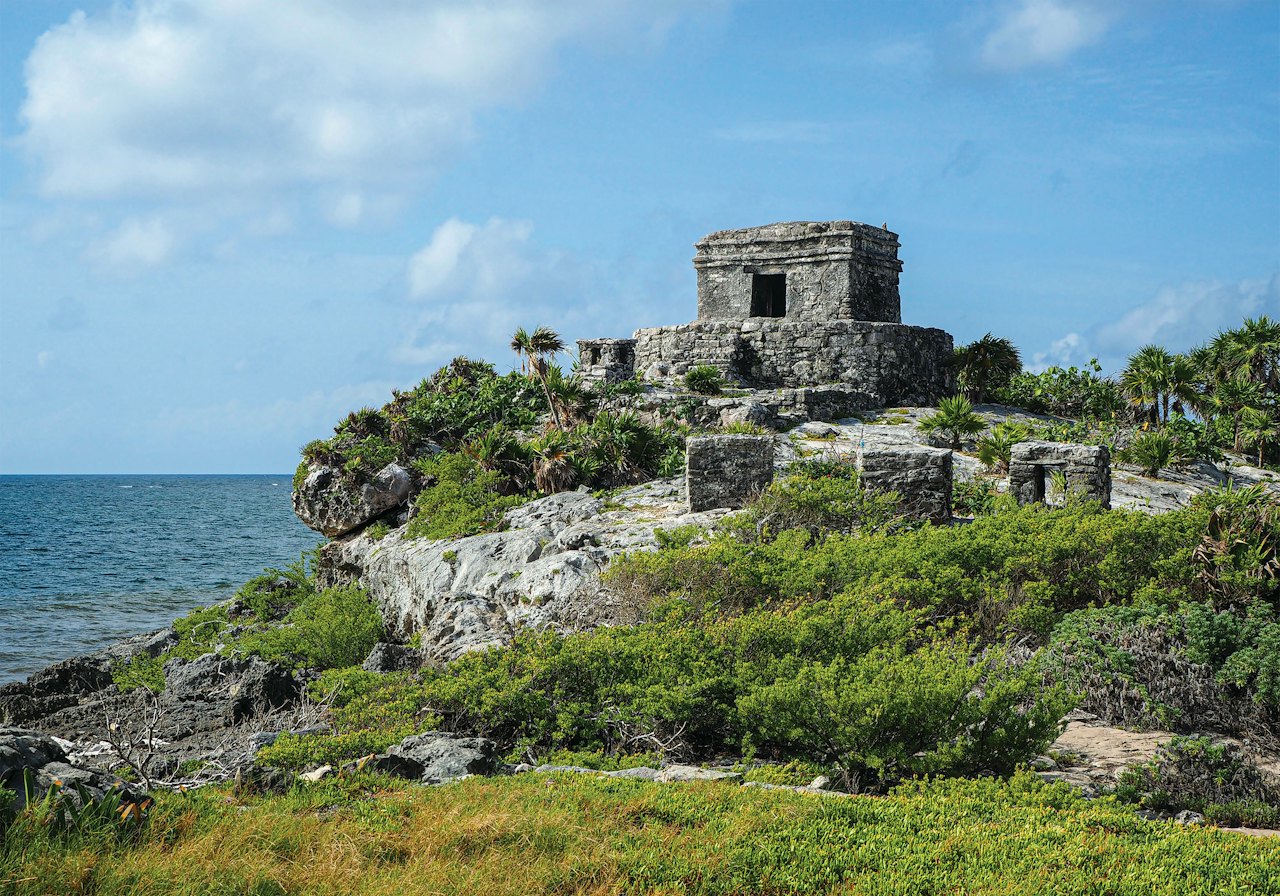
Overview
Tulum is two places on one coastline. One is a small Maya walled city on a cliff above the Caribbean, built around the 13th century and still among the best-placed ruins in Mexico. The other is a strip of boutique hotels, beach clubs and juice bars along the jungle road behind the beach, with prices that would not look out of place in Miami. The ruins are a morning visit. The beach strip is a decision about budget.
The area around Tulum is better than the town itself. Cenotes (limestone sinkholes filled with clear water) such as Gran Cenote, Dos Ojos and Cenote Calavera, the Sian Ka'an biosphere reserve, and Akumal for turtles are all within an hour. The honest trade-offs are cost, sargassum seaweed on some beaches from May to October, hurricane season, and traffic on the main highway. Stay in Tulum Pueblo for value, go in December to March for dry, sunny weather, and visit the ruins at opening time.
The Maya site overlooks the sea. Go at opening for cooler air and fewer tour buses.
Gran Cenote and Dos Ojos offer cave swimming with clear water, about 400 to 450 pesos ($22 to $25 (≈ €20–20 / £17–20)) for swimming. Bring reef-safe sunscreen.
The hotel zone is pricey; Sian Ka'an is a UNESCO biosphere reserve with lagoons and mangroves. Book a tour or a Punta Allen boat (about 3,500 pesos for six people) rather than driving it yourself.
Three fees add up to about 515 pesos ($28 (≈ €25 / £20)) per foreign adult: INAH 100, conservation bracelet 120, Jaguar National Park 295. Bring cash.
A protected bay: go with a certified local guide and a life jacket. About $35 to $50 (≈ €30–45 / £30–40) per person including gear, locker and marine park fees.
Best time
Best months for most visitors: Dec–Mar. Good weather, thinner crowds and fairer prices.
April to June and November are mixed.
December to March is the driest and sunniest stretch, with highs of about 27 to 28 degrees Celsius (81 to 83 degrees Fahrenheit), lows of 21 to 22 degrees Celsius (70 to 72 degrees Fahrenheit) and clear water (sargassum season runs May to October).
July to October is hot, humid and wet, with highs of 30 to 31 degrees Celsius (86 to 88 degrees Fahrenheit) and 15 to 23 rain days a month (model data).
Booking window: reserve flights and stays 2–3 months ahead for Dec–Mar, and 4–6 months ahead for peak season (Apr–Jun, Nov).
Partner links. We earn a commission at no extra cost to you; sponsors never change a ranking or safety note. How we earn money →
Weather
Current temperature loads here when your browser can reach Open-Meteo.
Weather data: Open-Meteo Historical & Live API. A single reading for the main town or area, not the whole destination.
Warm and mostly dry: highs of 27 to 30 °C / 81 to 86°F (81 to 86 °F), lows of 21 to 24 °C / 70 to 75°F (70 to 75 °F), sea about 27 °C / 81°F (81 °F). The busiest and most expensive time. Sargassum is rare in these months.
Hot and humid: highs of 30 to 31 °C / 86 to 88°F (86 to 88 °F), 15 to 23 rain days a month in model data, and a risk of tropical systems, mostly August to October. Sargassum season runs May to October and is worst June to August; cenotes stay clear.
Even then there are 10 to 15 days a month with at least 1 mm of rain (model data). It is the busiest and most expensive period, particularly over Christmas, New Year and Easter, so book hotels and popular restaurants ahead.
November is often warm and quieter, though rain may linger (about 15 rain days). April and May are hotter, with highs of 29 to 30 degrees Celsius (84 to 86 degrees Fahrenheit), sargassum from May, and prices that begin to drop. Ruins and cenotes are usually fine.
The main hurricane risk runs from August to October. Prices are lowest and crowds thin, and cenotes remain enjoyable, but storms may disrupt plans and sargassum is at its worst from June to August and can foul the water and leave a sulphur smell on the sand. Buy flexible bookings and travel insurance.
Weather data: Open-Meteo Historical & Live API (live reading). Typical highs and season notes are our own summaries. How we verify →
Safety
Last updated: government levels come from our editor-verified table (October 2026). When the live UK FCDO check succeeds, its exact UTC time appears in the panel below. The banner takes the most cautious of the five agencies, so a live UK warning always outranks a green entry in our table and any part-country warning shows as red. We never show a level we haven’t checked. How we verify →
Government levels: editor-verified table, October 2026 How we verify →
Five official agencies, one view. Ratings change, so each pill opens the agency’s own page for today’s level.
Tier 3/5 · Increased caution. No UK advice against travel; be very cautious after dark in downtown Tulum and stay in tourist zones.
The UK FCDO does not advise against travel to Tulum or the Quintana Roo coast. It names Tulum among the tourist destinations the Mexican government works to protect, and it also says rival criminal gangs have clashed in and around Cancun, that gangs have not targeted tourists, and that several shootings have affected tourists since 2021. It advises being very cautious after dark in downtown Cancun, Tulum and Playa del Carmen, and staying on well-lit pedestrian streets and in tourist zones. It also reports assaults on British travellers in these resorts, in some cases involving hotel staff, taxi drivers or security personnel. Check the FCDO page before booking.
Our plain-English summary of what the UK FCDO, US State Department, Australian Smartraveller, Japan MOFA and South Korea MOFA publish. We quote no live ratings from memory; each button above opens the agency's own page.
Our opinion, not an official warning
Regional nuance: The UK FCDO does not advise against travel to Tulum. It says rival gangs have clashed around Cancun, that gangs have not targeted tourists but violence could affect anyone nearby, and that several shootings have affected tourists since 2021. It advises great caution after dark in downtown Tulum. Check the FCDO page for current wording.
The concerns that are real: The FCDO warns of police officers extorting money for alleged minor offences (do not hand over money or your passport; ask for a copy of the fine and the officer's badge number), and of taxi protests that have blocked roads in Cancun and pulled tourists from Uber cars. At airports, use only authorised pre-paid taxis. Our own notes: taxi overcharging, timeshare pitches, beach and room theft and drink spiking are the most common problems, and rip currents affect some beaches, so heed the flags.
What headlines overstate: Headlines about violence in Quintana Roo can sound severe. The FCDO says the gang clashes have not targeted tourists but could affect anyone nearby, so the practical advice is the one above: stay in tourist zones after dark. Hurricane season is the more predictable risk, so watch forecasts and follow local authorities.
Written by our editors from general travel knowledge and kept apart from the agencies above. How we verify →
Costs
Backpacker
$75 (≈ €65 / £60) per person per day
What it covers: Hostel dorm or simple room in Tulum Pueblo, tacos and market meals, collectivos and a bike, one cenote entry a day.
Mid-Range (default)
$170 (≈ €150 / £135) per person per day
What it covers: Boutique hotel in town or a simple beach-road cabana for two, restaurant meals, cenote entries, ruin tickets and a day tour to Coba or Sian Ka'an.
Boutique
$370 (≈ €330 / £290) per person per day
What it covers: Beachfront eco-luxury hotel, tasting menus, private cenote or boat tours, spa treatments and airport transfers.
Cost source: Audited Local Lodging Taxes, Rail Tariffs & Dining Averages (our own estimates, flights excluded). How we verify →
Source: Should I Go's own estimates, October 2026, in USD per person excluding international flights; euro figures are rough conversions. A couple shares a room, so accommodation drops 25% per person. Prices move, so treat these as a planning range, not a quote.
Estimated total: $0 (≈ €0 / £0)
Estimate in USD per trip, excluding international flights. Two or more travellers share rooms, so accommodation drops 25% per person. Budget and luxury tiers are scaled from the mid-range figure.
Cost source: Audited Local Lodging Taxes, Rail Tariffs & Dining Averages (our own estimates, flights excluded). How we verify →
Where to base yourself
Town centre with taquerías, hostels and bikes. Cheaper than the beach.
Boutique hotels on the sand. Expensive, with beach clubs.
Day trip to lagoons and mangroves. Small-group tours $180 to $250 (≈ €160–220 / £140–195) per person, or a Punta Allen boat for six at about 3,500 pesos.
Half-day trips to Gran Cenote and others.
Itineraries
Getting between stops: Rent a bicycle in town or use taxis; Colectivos run along the highway.
Getting between stops: ADO buses link the Riviera Maya; the Tren Maya also runs from a station at Tulum airport to Cancun and other Yucatan cities.
Getting between stops: ADO buses and rental cars connect the main towns.
Routes and timetables change. Confirm transit times with the operator before you book.
Do and stay
Best for: Value
Pros: Cheaper rooms, local tacos and cafes, and a lively evening scene. Easy bike or taxi rides to the ruins, cenotes and the beach, and ADO buses stop here. Hostels and town hotels run about $15 to $75 (≈ €13–65 / £12–60) a night, and taquerias such as Taqueria Honorio and El Fogon charge about $3 to $8 (≈ €2.68–7.14 / £2.36–6.30) a meal (50 to 150 pesos; ≈ €2–7 / £2–6).
Watch for: The beach is a few kilometres away, and the main road is busy. Quality varies between hotels, so read recent reviews.
Best for: Beach and boutique
Pros: Hotels set among palms right on the sand, beach clubs, yoga and some of the best restaurants. Closest access to the sea and to sunrise. Eco-chic beachfront resorts start around $400 (≈ €360 / £310) and reach $1,000 (≈ €890 / £790)+ a night, and meals at places such as Hartwood, Arca or the beach clubs start at about $27 (500 pesos; ≈ €24 / £21).
Watch for: Very expensive, often with sparse electricity or mobile signal at eco-hotels, one road, and heavy traffic at peak times. Sargassum can affect some beaches.
Best for: Mid-range comfort
Pros: A newer residential area between the town and the beach road, with apartments, pools and restaurants. Quieter than the town, cheaper than the beach. Boutique rooms here or in town run about $100 to $250 (≈ €90–220 / £80–195) a night, and cafes, brunch spots and casual dinners cost about $8 to $27 (≈ €7.14–25 / £6.30–20) a meal (150 to 500 pesos; ≈ €7–24 / £6–21).
Watch for: Few sights on your doorstep, and you will still need a taxi or bike to the beach. Construction continues in parts.
These are partner links. We may earn a commission at no extra cost to you.
Trade-offs
Final verdict
Editorial opinion from Should I Go, written from general travel knowledge and reviewed periodically. Verify prices, entry rules and advisories before you book.
Typical costs and rules change; confirm with official sources before you travel.
December to March is the driest and sunniest, with highs of about 27 to 28 degrees Celsius (81 to 83 degrees Fahrenheit), calm seas and the lowest chance of sargassum. It is also the busiest and most expensive time. November and April can be good compromises. From June to November there is hurricane risk, particularly from August to October, and summer humidity is high (highs of 30 to 31 degrees Celsius, 86 to 88 degrees Fahrenheit).
Beach-road hotels and restaurants are expensive, often at United States prices. You can save a lot by staying in Tulum Pueblo, eating at local taquerias and visiting cenotes by bike or collectivo. Mid-range travellers should expect about $130 to $200 (≈ €115–180 / £100–155) per person per day, depending on where they stay.
Three to four days covers the ruins, two or three cenotes and a beach day. Five days lets you add Sian Ka'an, Coba or Akumal at a relaxed pace. Tulum is easy to combine with Bacalar, Chichen Itza or Merida for a longer Yucatan trip.
The UK FCDO says British passport holders do not need a visa for tourist visits to Mexico and get a stamp showing the days allowed. The longest stay is 180 days, and your passport must be valid for the length of your stay (the Mexican Embassy recommends at least 180 days). British nationals entering by land must fill in an online immigration form. Other nationalities differ, so check the official Mexican government pages.
The ruins charge three fees at the gate: the INAH ticket (100 pesos), a conservation bracelet (120 pesos) and the Jaguar National Park fee (295 pesos), about 515 pesos in all, or $28 (≈ €25 / £22) for a foreign adult. Bring pesos in cash, because card machines are often offline. Cenotes are privately owned, so prices vary: famous ones such as Dos Ojos and Gran Cenote cost about 400 to 450 pesos ($22 to $25 (≈ €20–20 / £17–20); ≈ €20–22 / £17–20) for swimming only, guided cavern snorkelling or diving runs from 900 to 1,800+ pesos ($48 to $96 (≈ €45–85 / £40–75)+; ≈ €43–86 / £38–76), and lesser-known open cenotes such as Cristal or Escondido cost about 150 to 200 pesos ($8 to $11 (≈ €7.14–9.82 / £6.30–8.66); ≈ €7–10 / £6–8). Figures are editor-supplied and not independently checked; Wikivoyage lists a much lower ruins price from 2021, so confirm at the gate.
Visitax is the state tourist tax for international visitors over the age of four. It costs 2.5 UMA, about 285 to 290 pesos or $15 (≈ €13 / £12) per person. Pay it online only, through the official Quintana Roo government Visitax portal, before or during your trip, and save the QR code on your phone. Unofficial sites that advertise on search engines add $10 to $20 (≈ €8.93–18 / £7.87–16) in service fees.
Sian Ka'an is a huge protected reserve, so do not try to drive it unless you have a high-clearance 4x4 and a full day. From the village of Punta Allen a private boat for up to six people costs about 3,500 pesos ($187 (≈ €165 / £145); ≈ €167 / £147) for mangroves, dolphins and reef snorkelling. Full-day small-group tours from Tulum cost $180 to $250 (≈ €160–220 / £140–195) per person including conservation fees, boat and meals. Akumal Bay is a protected marine area: to swim out to the turtle grass beds you must go with a certified local guide and wear a life jacket. A guided snorkel off Akumal Beach costs about $35 to $50 (≈ €30–45 / £30–40) per person including gear, locker and marine park fees. All figures are editor-supplied and not independently checked.
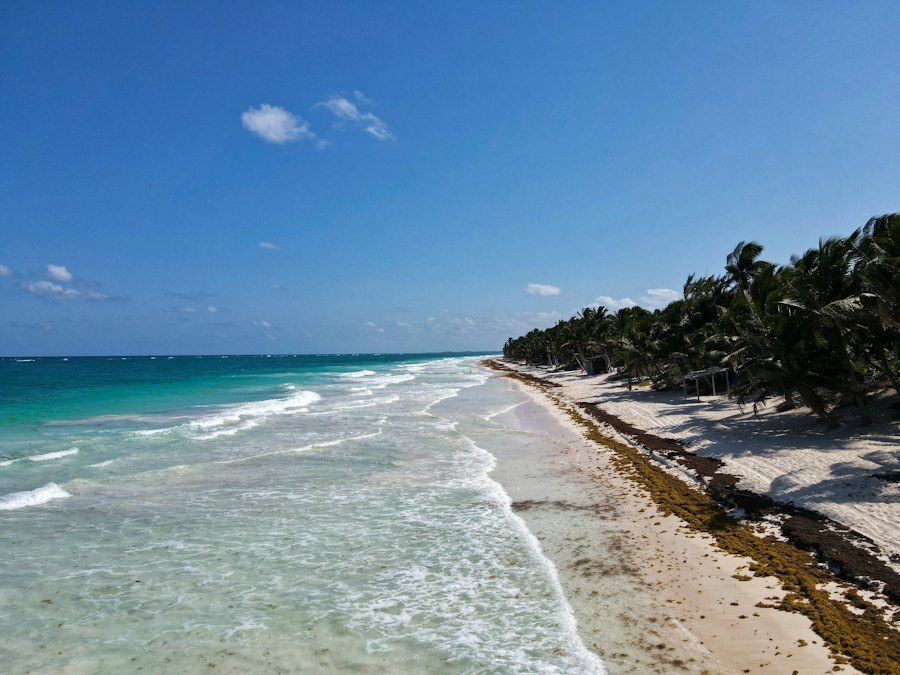
Sargassum can wash up from May to October, and June to August is usually the worst, when thick mats cloud the water and leave a strong sulphur smell on the sand. November to April is normally clear. If seaweed arrives during your stay, head inland: cenotes are fed by underground rivers and stay clear all year.
Pesos are preferred over dollars. In restaurants and bars leave 10% to 15%, or 15% to 20% at high-end hotel-zone venues, and check the bill for "Servicio", because some tourist-heavy places already add it. Tip hotel porters 25 to 50 pesos a bag ($1.35 to $2.70 (≈ €1.21–2.41 / £1.06–2.13); ≈ €1.20–2.40 / £1.05–2.10) and housekeeping the same per day. Tip ruins and cenote guides and boat captains 10% to 20% of the tour price. Taxi drivers do not expect a tip, but 10 to 20 pesos ($0.55 to $1.05 (≈ €0.49–0.94 / £0.43–0.83); ≈ €0.50–0.95 / £0.45–0.85) is courteous if they handle heavy luggage.
Tulum has two price levels. Tulum Pueblo (town) and Aldea Zama are good value; the beach and hotel zone is far dearer. Budget rooms (hostels, town hotels) are about $15 to $75 (≈ €13–65 / £12–60) a night, with meals of 50 to 150 pesos ($3 to $8 (≈ €2.68–7.14 / £2.36–6.30); ≈ €2–7 / £2–6) at taquerias and street stalls. Mid-range boutique rooms are $100 to $250 (≈ €90–220 / £80–195) a night, with meals of 150 to 500 pesos ($8 to $27 (≈ €7.14–25 / £6.30–20); ≈ €7–24 / £6–21). Luxury eco-chic beachfront resorts are $400 to $1,000 (≈ €360–890 / £310–790)+ a night, with meals from 500 pesos ($27 (≈ €25 / £20); ≈ €24 / £21) at places such as Hartwood or Arca and the beach clubs. These are editor-supplied figures, not independently checked.
Get live weather, activities, travel advisories, and personalised tips for Tulum, Mexico
Check Tulum, Mexico Now →Have you visited Tulum, Mexico? Was it worth it? Readers can vote: Worth Every Penny, Great in Shoulder Season Only, or Overrated / Skip It.