The short answer: cities and trains, or sea and ferries
Choose Italy if you want a trip built around cities, museums, restaurants and fast trains. Choose Greece if you want one island, a ferry timetable and a lot of slow afternoons. That is the whole decision; the rest of this guide is the detail, and the trade-offs each side would prefer you didn't read first.
On our estimates a mid-range day costs about $200 (≈ €180 / £155) per person in Italy and about $160 (≈ €145 / £125) across Greece, with Santorini the outlier at $230 (≈ €210 / £180). Both score 4 out of 5 for safety on our scale. Italy scores 5 for crowds, Greece 4. All figures are our own estimates, flights excluded, as of October 2026.
If you can only look at one thing, look at the pairing. Compare Italy and Greece side by side and you will see the same shape in both: two countries that fill up in July and August, and two that reward September.
What each trip costs
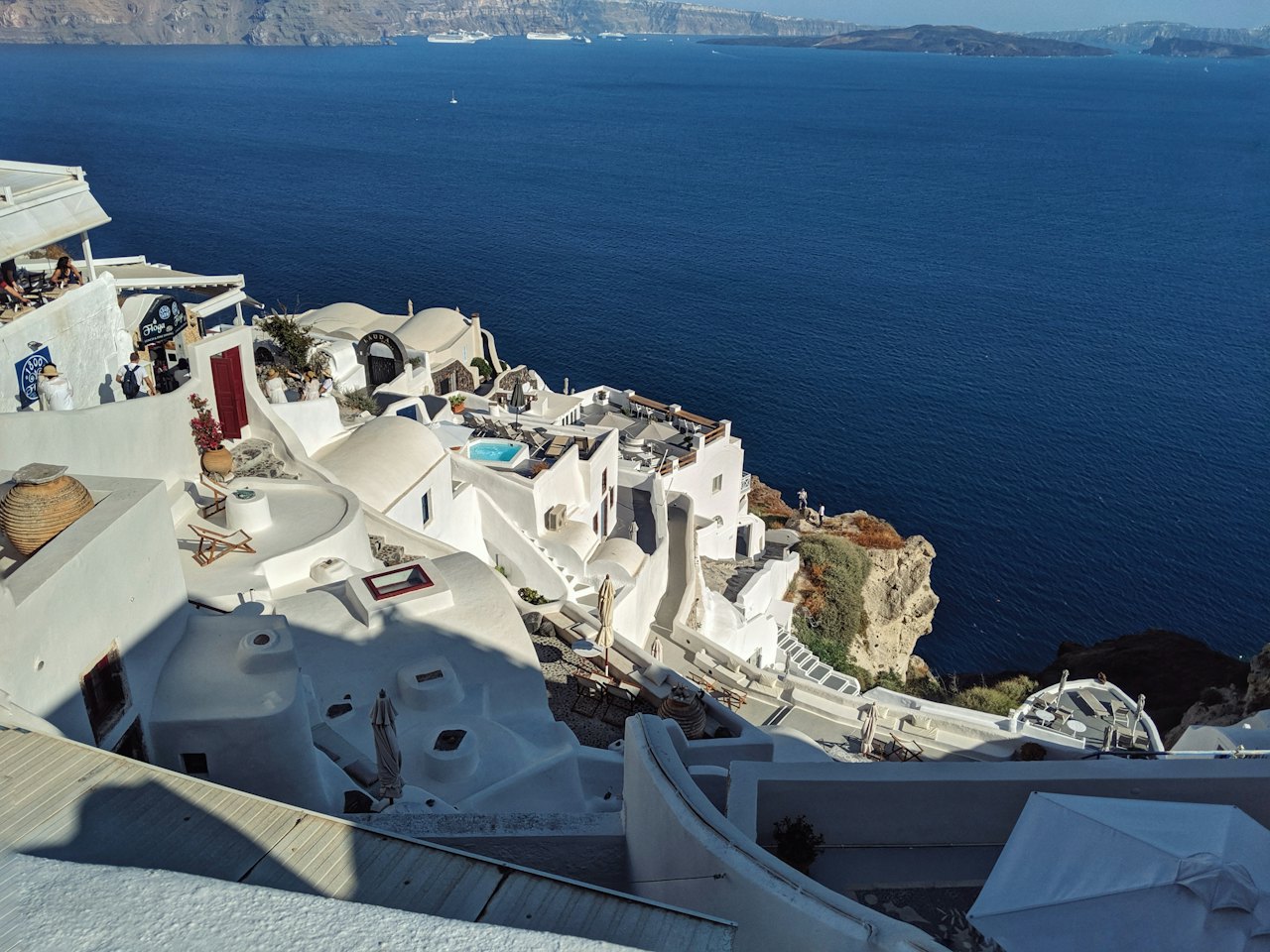
Greece is cheaper on paper, not on its most famous island. A general Greek trip comes in around $160 (≈ €145 / £125) a day mid-range, against $200 (≈ €180 / £155) for Italy. But Santorini, at $230 (≈ €210 / £180), costs more than Italy as a whole, and Oia in particular is described on our destination page as beautiful and expensive. If your Greek trip is Santorini and nothing else, you are not saving money.
Italy's cost is driven by cities. Rome runs about $170 (≈ €150 / £135) a day mid-range and the Amalfi Coast about $260 (≈ €230 / £200), so a route that ends on the coast is the expensive version of Italy. Our backpacker tier is derived at 45 per cent of mid-range, and luxury at 2.2 times it.
The practical way to spend less in either country is to pick the cheaper base. In Greece that means an island other than Santorini (the dupes guide makes the case for Naxos). In Italy it means a city like Rome, or Puglia, rather than Positano.
Lodging is the largest line in our daily split, at 45 per cent, with food at 30, transport and sights at 15 and everything else at 10. That is why the base matters more than the country. A week in a Rome apartment and a week on Santorini's caldera rim share almost nothing but a flight. Cheaper bases save more than clever restaurant choices: a pizza al taglio lunch is a good meal in Italy, but it will not rescue a $230 (≈ €210 / £180)-a-day island.
| Italy | Greece | Santorini | |
|---|---|---|---|
| Mid-range per person per day | $200 (≈ €180 / £155) | $160 (≈ €145 / £125) | $230 (≈ €210 / £180) |
| Backpacker tier (45%) | $90 (≈ €80 / £70) | $72 (≈ €65 / £55) | $104 (≈ €95 / £80) |
| Crowds (1 to 5) | 5 | 4 | 5 |
| Safety score (1 to 5) | 4 | 4 | 4 |
| Best months | Apr–May & Sep–Oct | Apr–Jun & Sep–Oct | May–Jun & Sep–Oct |
| Typical highs, peak / shoulder | 31°C / 20°C / 68°F | 32°C / 22°C / 72°F | 29°C / 22°C / 72°F |
When to go: both want September
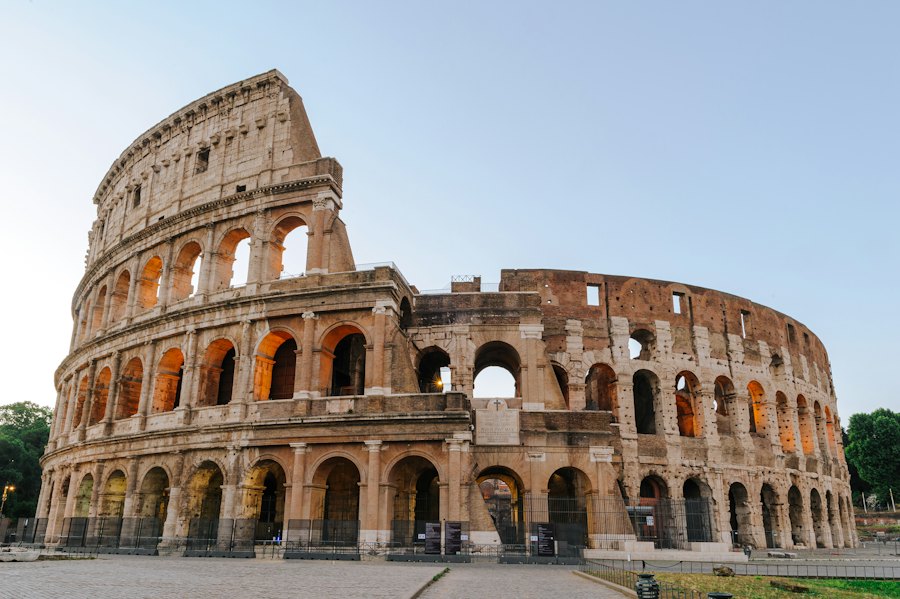
Both countries have the same problem. July and August bring heat, crowds and the year's highest prices, and the shoulder months bring most of the same sun at a gentler pace. Italy's best months on our scale are April to May and September to October; Greece's are April to June and September to October.
Heat is the practical difference. Peak-season highs run around 31°C / 88°F for Italy and 32°C / 90°F for Greece, falling to roughly 20°C / 68°F and 22°C / 72°F in the shoulder. For Italy, our destination page says summer heat in the big cities is oppressive; for Greece, the risks it lists are heat, wildfires and ferry disruption.
If you want the sea warm, go in September to Greece. If you want to walk, eat and queue less, go to Italy in April or early October. Whichever you choose, book 2 to 3 months ahead for the sweet-spot months and 4 to 6 months ahead for peak season.
Getting around, and what can go wrong
Italy is the easier country to move through. High-speed rail links Rome, Florence, Venice and Milan, and the classic first trip, Rome, Florence and Venice, is a train itinerary from end to end. Greece runs on ferries and buses, trains are limited, and our advice is to book summer ferries ahead and allow slack for wind. Neither is hard; Greece just asks you to hold a timetable more loosely.
On safety, both countries sit at normal precautions on our scale. Italy's page flags pickpockets in tourist areas (the Rome metro, Termini, the Colosseum and Trevi Fountain areas), tourist-trap restaurants and strike days that cancel trains for a day. Greece's flags summer heat, wildfires, petty theft in tourist areas, ferry disruption and, on Santorini, cliff-edge falls and quad-bike accidents on narrow roads.
We do not quote advisory levels here, because they change. The UK FCDO, the US State Department and Australia's Smartraveller each publish pages for both countries, and our verified table (October 2026) lists Greece at the lowest tier with all five agencies we track, and Italy with a US State Department increased-caution marker. Open each agency page before you book; each destination page links all five.
Who should pick which
Pick Italy if you like a day with a plan: a museum slot, a long lunch, a train. It is the better choice for a first trip to Europe, for food, and for anyone who wants a week with variety, with coast, lakes and mountains within a few hours. The honest cost is queues. Without timed tickets, the Colosseum, the Vatican and the Uffizi will take hours out of your day, and restaurants next to the landmarks charge for the view.
Pick Greece if you want to do less. Beach days, a ferry hop, grilled fish, wine on volcanic soil. It is the better choice for couples who want warm water and a slow pace. The honest cost is logistics: ferries sell out in summer, wind delays them, and the very best-known island is priced like a luxury product.
Pick neither in August unless you cannot travel at any other time. If you cannot decide, split the difference: a week in Rome and the Amalfi Coast in May, and a separate trip to the Cyclades in late September. They are different holidays, and they do not compete well for the same fortnight.
Dates change the verdict more than the country does. In April or October, Italy's cities are workable without booking everything in advance. In May or September, a Greek island is warm enough for the sea and quiet enough to hear yourself think. In August, both are a test of patience. If your dates are fixed to school holidays, Italy's lakes and Dolomites offer cooler options in summer, which Greece's standard island route does not.
Italy vs Greece: frequently asked questions
Is Italy or Greece cheaper?
On our estimates Greece is cheaper overall, at about $160 (≈ €145 / £125) a day per person mid-range against $200 (≈ €180 / £155) for Italy, excluding flights. Santorini is the exception at about $230 (≈ €210 / £180). These are estimates as of October 2026.
Which is better for a first trip to Europe?
Italy, for most people, because the rail network makes a multi-city trip easy and the sights are close together. Greece suits a second trip, or a first trip built around beaches rather than cities.
When is the best time to visit Italy or Greece?
Italy is best from Apr–May & Sep–Oct; Greece from Apr–Jun & Sep–Oct. July and August are the hottest, busiest and most expensive months in both.
Are Italy and Greece safe for tourists?
Both score 4 out of 5 on our safety scale, with normal precautions: pickpockets and strikes in Italy, heat, wildfires and ferry disruption in Greece. Check the UK FCDO, US State Department and Smartraveller pages for the current advice before you travel.