The same track, a tenth of the price
Most of Europe's famous scenic trains are not special railways. They are ordinary railways with a better-dressed train on them, a reservation fee, and in some cases a marketing department. The line over the Bernina Pass carries commuters and schoolchildren as well as the Bernina Express. The viaduct in the Highlands carries a daily ScotRail service as well as the steam excursion. The track, the gradients and the view out of the window are the same. What changes is the price printed on the ticket.
That gap is the whole argument of this guide. A packaged scenic train can cost $170–335 (€150 to €300; ≈ £135–260) once you add the seat, the transfer and the lunch. The regional train over the same ground often costs $17–50 (€15 to €45; ≈ £13–40). You give up three things: a panoramic window, a guaranteed seat, and someone telling you when to look left. Whether those are worth $110 (€100; ≈ £85) or more is a fair question, and for a few of these routes we think they are.
Below are six journeys we would ride on a regional ticket: three Alpine or Highland classics, one coastal strip that works only if you time it, and two long, less polished lines that reward patience. Each section gives the route, the budget fare against the tourist-train fare, how to book, when to go and where to sit, and one honest caveat. Fares are approximate, checked in October 2026, and they move with the season and the exchange rate, so confirm each on the operator's own site before you commit. If you are pricing a wider trip, our guide to budget travel in Europe covers the rest of the costs.
1. Bernina Route: Tirano (Italy) to St. Moritz (Switzerland)
The short answer: the red regional train on the Rhaetian Railway (RhB) covers the same UNESCO-listed line as the Bernina Express for about $36 (€32; ≈ £30) on a Swiss Saver Day Pass, against a seat reservation of $34 (€30; ≈ £25) or more on the Bernina Express before you have paid for the ticket itself.
The route climbs from Tirano, a sleepy Italian town at roughly 430 metres, to the Ospizio Bernina pass at 2,253 metres in about two hours and twenty minutes, with no rack and pinion, only adhesion and gradients up to 7 per cent. Early on you loop through the Brusio spiral viaduct, then pass Alp Grüm and the Palü glacier, then run along the shore of Lago Bianco before dropping towards Pontresina and St. Moritz. It is one of the steepest ordinary railways in the world, and it feels it.
The honest comparison is about windows and nothing else. The Bernina Express has large panoramic glass; the regular red trains have normal windows, but they open, which matters because photographs through glass are flat and photographs through an open window are not. Open one, lean back a little, and you have the view without the reservation.
How to book
- Budget way: buy a point-to-point ticket or a Saver Day Pass through the Swiss Travel System or RhB site, or at the Tirano station ticket office. No seat reservation is needed on the regional trains.
- Tourist way: the Bernina Express requires a compulsory seat reservation, usually $34 (€30; ≈ £25) or more in summer, on top of a ticket or pass. Book it early if you want a window seat in July or August.
- Confirm that your ticket or pass covers the Tirano end, since the line starts in Italy.
Best season and seat
- June to October for open country, with September's lower crowds and sharper light the best of it. A winter run in snow is spectacular, but the pass can be affected by weather, so check the day before.
- Pick any seat by a window you can open, then move between sides: the glacier and lake views swap as the line turns. Standing in the vestibule with the window down is perfectly normal.
Caveat
- There is no commentary and no guaranteed seat on a busy summer afternoon. The regional train also stops at every little halt, so the journey is slow by design. If you want the glass roof and the announcements, the Bernina Express exists for a reason.
2. West Highland Line: Glasgow to Mallaig (Scotland)
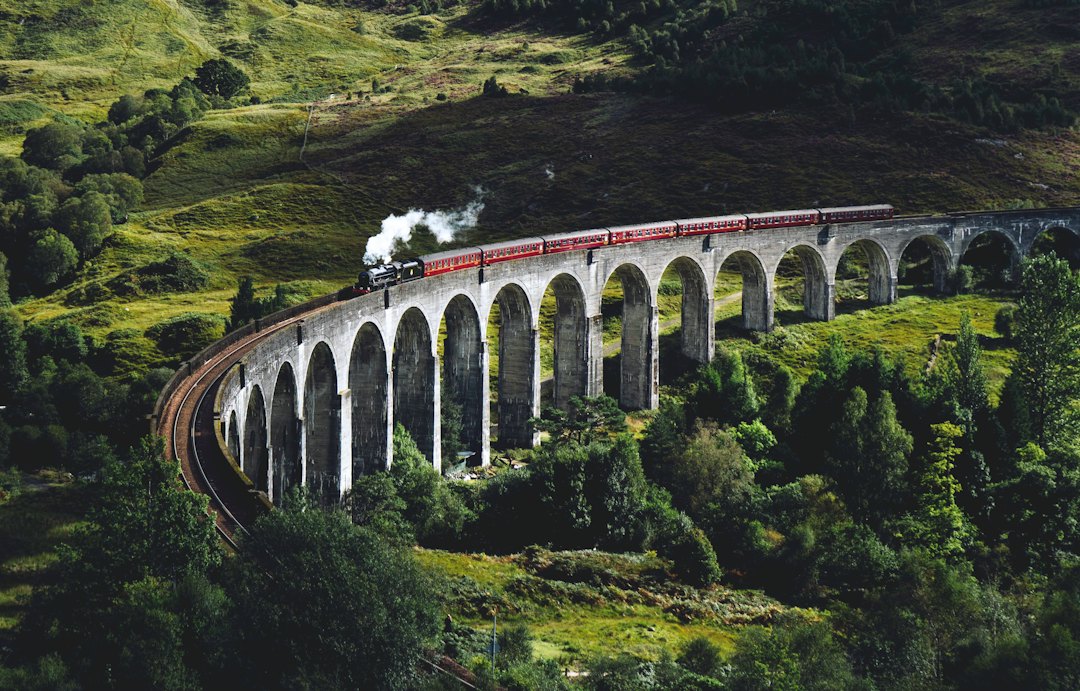
The short answer: a standard ScotRail ticket on the West Highland Line costs about $28–44 (£22 to £35; ≈ €25–40) depending on when you travel and how early you book, against $210 (£165; ≈ €195) or more for a seat on the Jacobite steam train. The ScotRail train still crosses Glenfinnan Viaduct.
Be clear about what you are buying. The famous steam moment, the plume of white smoke across the curved stone arches that most people have seen in film, is the Jacobite. It crosses at its own time, with its own passengers on board. You will not get that image from a ScotRail seat, because you are inside the train on the viaduct rather than watching it from the hillside. What you will get is the same crossing in a diesel unit, with Loch Shiel opening to one side, which is a fine view but a different one.
The rest of the line is the point. Glasgow to Mallaig takes about five and a half hours, past Loch Lomond, over Rannoch Moor, beneath the north face of Ben Nevis country, and along the coast to the fishing port at the end. It is one of the most scenic ordinary rail journeys in Britain, and the fare is the cost of a modest lunch in Edinburgh.
How to book
- Budget way: ScotRail's site and app, or the station. Advance fares on the Fort William to Mallaig section release in batches and are cheaper than turning up. Day returns and a Highland Rover pass are worth checking if you want to stay a night.
- Tourist way: the Jacobite, which runs between Fort William and Mallaig in the warmer months, is sold by the operator, West Coast Railways. The fares of $210 (£165; ≈ €195) or more are for a standard return seat, with reserved premium cars higher, and summer dates sell out weeks ahead.
Best season and seat
- May to September for long daylight, though midsummer midges are real once you step off the platform. October is lovely and quieter, with bracken turning copper.
- The loch side, usually the left going north from Glasgow, is the commonly suggested side for the Loch Shiel stretch. Glance at a map before you board, because it depends on where the line curves.
Caveat
- For the viaduct itself, get off at Glenfinnan, walk up to the viewpoint, and watch a train cross, steam or not. Be aware that the viewpoint is crowded when the Jacobite is due. The ScotRail train is a way of riding the line, not of photographing the famous shot.
3. Cinque Terre and the Ligurian coast: Levanto to La Spezia (Italy)
The short answer: the little Trenitalia regional trains linking Levanto, the five villages and La Spezia are the only practical way in, and they cost a few euros a hop or roughly $22 (€20; ≈ £17) for a day card. The skill is timing, not money.
The whole line is about 30 minutes end to end, and a lot of it is in tunnels. That surprises people. Between the dark you get sudden blocks of sea, a terraced hillside, a village stacked in a gorge, and then it is dark again. The views are fleeting, which is why the best way to see them is to ride the train as transport and walk a section on foot.
The more serious problem is crowds. When a cruise ship docks at La Spezia or Livorno, coaches and day-trippers pour onto the same short platforms, and the afternoon trains between Monterosso and Vernazza become a slow shuffle. It is not dangerous, only miserable, and you can mostly avoid it.
How to book
- Budget way: base yourself in Levanto, which is bigger, cheaper and calmer than the villages themselves. Buy the Cinque Terre train card (unlimited rail between Levanto and La Spezia for the day) or single regional tickets from machines at the station. Validate paper tickets before boarding, or you can be fined.
- Tourist way: organised day trips from Florence, Milan or the cruise ports commonly cost $67–135 (€60 to €120; ≈ £55–105) and give you a fixed few hours, usually in the busiest window of the day.
Best season and seat
- Shoulder season, which means April to May and mid-September to October. August is the one to avoid. Go early, before 9am, or late, after about 4.30pm, since mid-morning to mid-afternoon is when the cruise crowds peak.
- Heading south-east from Levanto to La Spezia, the sea is on the right. Take that side, and stand by the door for the gaps between tunnels.
Caveat
- The coastal trail can close after landslides or storms, and some stretches require a paid park card. Check the park authority's site on the day. Do not assume a train will have a seat at 11am in July.
4. Douro Line: Porto to Pocinho (Portugal)
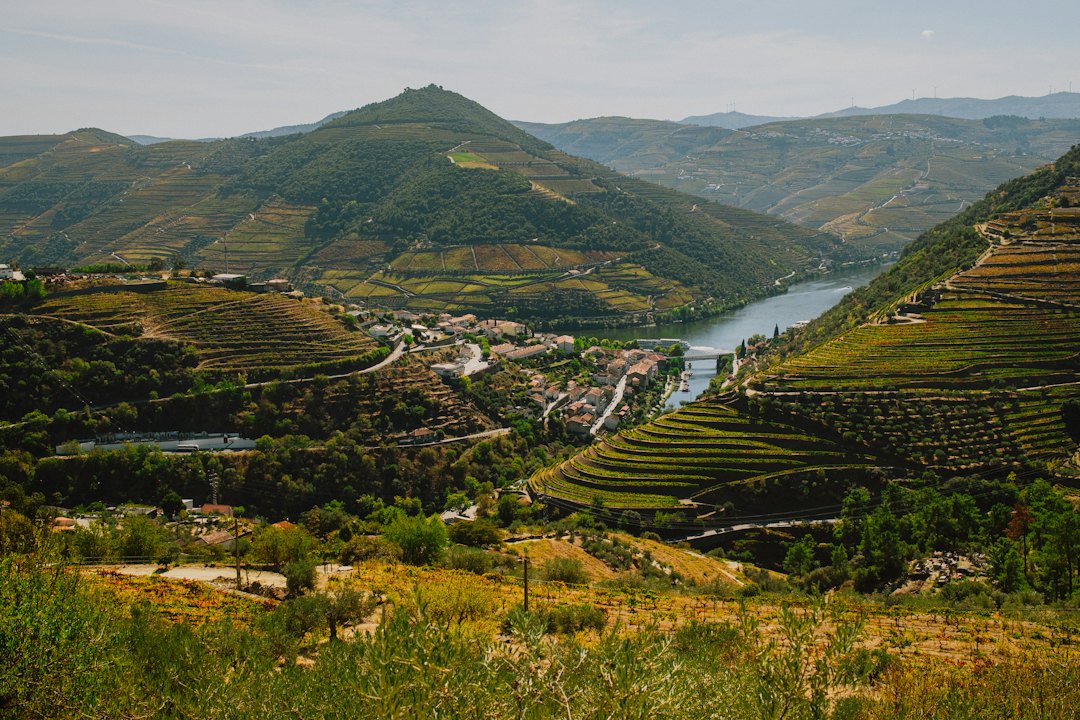
The short answer: the Comboios de Portugal (CP) regional train from Porto São Bento to Pocinho costs about $17 (€14.85; ≈ £13) one way and runs through the terraced vineyards that grow port wine, a journey cruise operators sell for $67–110 (€60 to €100; ≈ £55–85) or more.
The first stretch out of Porto is industrial and unremarkable, so be patient. The line comes alive near Peso da Régua, where it drops to the riverbank and stays there. For the next hour the tracks follow the Douro almost at water level, with schist terraces climbing in steps behind, whitewashed quintas in the folds, and small stations whose tiled platforms are worth a look. Pocinho is the end of the line, a quiet place with a dam, and the point of going that far is that the valley does not get duller.
The whole trip takes about three and a half hours each way, so treat it as a day out with a night in Régua or Pinhão if you can. Our Portugal guide covers Porto and the wider country if you are building a longer route.
How to book
- Budget way: buy on the CP site or app, or at the station. Regional trains on this line are unreserved, so you cannot book a particular seat, and a ticket can be had on the day.
- Tourist way: day cruises and wine-tour packages from Porto, and the historic steam-hauled Douro train on selected summer dates. Both cost several times more than the regional ticket.
Best season and seat
- September and October for the harvest and the golden-red vines; April to May for fresh green. July and August are hot, and the vines look dusty.
- Sit on the river side as often as you can. The line crosses the river at points, so the good side changes. Do not sleep through the section between Régua and Tua.
Caveat
- Services are only a handful a day, so a missed train can strand you, and the outbound and return times do not always suit a same-day return. Check the timetable first, and carry water and snacks, since the trains have no food service.
5. Belgrade to Bar: Serbia to Montenegro
The short answer: about $27 (€24; ≈ £20) for one of Europe's most dramatic mountain railways, in return for patience and a few hours more than the timetable says.
The Belgrade–Bar railway runs about 476 kilometres / 296 mi / 476 km from the Serbian capital to the Adriatic, through 254 tunnels and across 435 bridges as it climbs into the Dinaric Alps and drops again to the coast. It was a prestige project of the Yugoslav era, finished in 1976, and you can tell: this is engineering built to prove a point. The Mala Rijeka viaduct in Montenegro is among the highest railway bridges in Europe, and the line ends along the shore of Lake Skadar before the sea.
There is no packaged version of this journey. The nearest equivalent is a private tour, a hired car or a coach, and each of those is a different, more expensive day. Here the budget way is the only way, and the price is the whole case for it.
How to book
- Serbian Railways and Montenegro Railways run their own sections, so check both, and buy at the station or on their sites. A seat reservation is cheap, and worth it in summer. Fares are approximate and have a habit of changing, so confirm on the day of purchase.
- There is a border check on board, so keep your passport to hand, and buy a ticket for the full route if you can.
Best season and seat
- Late spring and early autumn for clear air and mild temperatures. The crossing of the high mountains can be snowy in winter, which is beautiful but unpredictable.
- Sit on the side the mountain falls away, which varies. The best stretch is in Montenegro, on the descent through the Morača canyon and out onto the plain by Podgorica.
Caveat
- It can run slow and late. A journey advertised at ten or eleven hours has taken considerably longer, and carriages can be dated, with grubby windows and no guaranteed air conditioning. Bring food, water and a charged phone, and do not plan a tight connection or a ferry at the other end.
6. Oslo to Bergen: Bergensbanen (Norway)
The short answer: the Bergen Line is a normal intercity route, and an advance Minipris ticket booked 60 to 90 days ahead on Vy.no is a fraction of the full fare, and a fraction of any packaged tour over the same mountains.
The line crosses the Hardangervidda plateau, the highest railway crossing in northern Europe, topping out near Finse at 1,222 metres. The seven hours between Oslo and Bergen take you from birch forest to bare rock, snowfields in June and lakes still iced in spring, then down through tunnels and fjord country to the west coast. Nothing about the carriage is special. The land outside does the work.
The branch everyone mentions is the Flåm Railway, which drops from Myrdal station down to the fjord at Flåm in about an hour. It is spectacular, but it is sold as an attraction and priced like one. Packages such as Norway in a Nutshell, which stitch the Bergen Line, the Flåm Railway, a fjord ferry and a bus, commonly cost well over $170 (€150; ≈ £135) per person. You can ride the Bergen Line alone for less than that.
How to book
- Budget way: Vy.no (the Norwegian state operator) releases Minipris tickets roughly 60 to 90 days ahead, and the cheapest go first. Set a reminder. They are limited, non-refundable and tied to a single departure.
- Tourist way: all-in packages through tour operators or the Norway in a Nutshell website, which are convenient and pricey. If you want the Flåm branch, you can buy it separately and add it to your own plan.
Best season and seat
- June to September for green valleys and snow patches; February and March for deep winter, with the plateau white. The crowds peak in July.
- Take a window seat on either side and move for the Finse and Myrdal sections. Book a seat when you reserve, since the tickets include a reserved place.
Caveat
- Winter weather can delay or cancel services on the plateau, and a cheap Minipris ticket will not be refunded if that happens on the day. Allow a day of slack at either end. The Flåm branch is short, so if you want it, give it a night, not a rushed hour.
What the six trips have in common
Look at the six and a pattern appears. The scenic trains charge for a reserved seat, a guarantee and a wide window. The regional trains charge for the ride. The ride is the same. If you are travelling alone or as a pair, flexible about the hour, and happy to stand in a vestibule for ten minutes, the cheaper option holds.
The trade-off is not trivial, and we would not pretend otherwise. On the Jacobite you get the plume of steam; on the Bernina Express you get a window the height of your seat; on Norway in a Nutshell you get a plan. If one of those is the reason you are going, pay for it. Otherwise, take the ordinary train and spend the difference on a night near the tracks.
Summary: six routes at a glance
Fares are approximate, checked in October 2026, and subject to change. Always confirm on the operator's own site before booking.
| Route | Budget way (approx.) | Tourist way (approx.) | Best season | Main caveat |
|---|---|---|---|---|
| Tirano to St. Moritz | About $36 (€32; ≈ £30) (Saver Day Pass), red RhB train | Bernina Express, $34 (€30; ≈ £25)+ reservation on top of fare | Jun–Oct | Normal windows, no commentary |
| Glasgow to Mallaig | ScotRail, $28–44 (£22–£35; ≈ €25–40) | Jacobite steam train, $210 (£165; ≈ €195)+ | May–Oct | Steam shot is the Jacobite, not ScotRail |
| Levanto to La Spezia | About $22 (€20; ≈ £17) day card or a few euros a hop | Guided day trips, about $67–135 (€60–€120; ≈ £55–105) | Apr–May, Sep–Oct | Cruise-ship crowds, lots of tunnels |
| Porto to Pocinho | $17 (€14.85; ≈ £13), CP regional | Cruises and wine tours, about $67–110 (€60–€100; ≈ £55–85)+ | Sep–Oct, Apr–May | Few trains a day |
| Belgrade to Bar | About $27 (€24; ≈ £20) | No packaged equivalent | Late spring, early autumn | Slow, often late |
| Oslo to Bergen | Minipris, book 60–90 days ahead on Vy.no | Norway in a Nutshell, often $170 (€150; ≈ £135)+ | Jun–Sep, Feb–Mar | Cheap tickets are non-refundable |
Frequently asked questions
Is a regional train really the same route as a scenic tourist train?
On these six lines, yes: the track is the same, and the tourist service is a different train running over it. The difference is the carriage (panoramic glass, commentary, a reserved seat) and the price. The Jacobite is the one exception worth knowing: it is a steam excursion, so its crossing of Glenfinnan Viaduct is a different sight from a ScotRail diesel crossing.
Do I need to book regional trains in advance?
Usually not, with two exceptions. Oslo to Bergen is far cheaper if you book a Minipris 60 to 90 days ahead on Vy.no, and the Belgrade to Bar service is worth reserving in summer. The Bernina, Douro and Cinque Terre regional trains can be bought on the day, though summer weekends fill up.
What is the cheapest time of year to ride these routes?
Shoulder season is both the cheapest and the least crowded, which means April to June and September to October on most of these lines. Winter fares can be lower still, but weather can delay or cancel services in the mountains, so give yourself slack.
Are these fares accurate?
They are approximate and were checked in October 2026. Rail fares change with the season, the day, how early you book and the exchange rate. Confirm each one on the operator's own site before you buy.