Tbilisi’s Old Town and sulphur baths
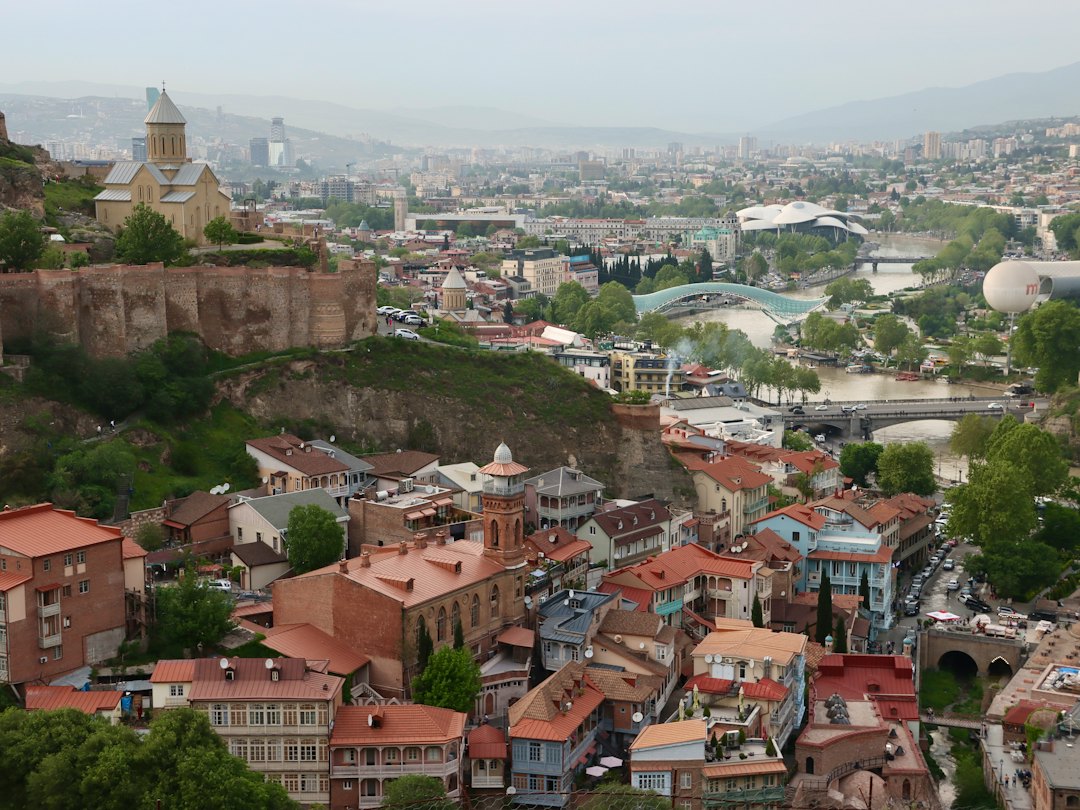
Wooden balconies, Narikala fortress, the Abanotubani bathhouses and a Rustaveli Avenue evening, with the best restaurants in the country.
Photo: Iman Gozal on Unsplash
Overview
Georgia, the country, packs a wine region, the Greater Caucasus and a capital with sulphur baths into a space smaller than Ireland, and a mid-range day costs about $85–90 (≈ €75–80 / £65–70). The surprise is how different the parts are. Tbilisi is a city of wooden balconies and Soviet blocks above a river gorge; Kakheti is vineyards and family cellars where wine is still made in buried clay jars; Kazbegi and Svaneti are high mountain valleys with medieval stone churches and watchtowers. It is not one trip but three.
Base yourself in Tbilisi for three or four nights: the Old Town and Narikala fortress, the sulphur baths of Abanotubani, Rustaveli Avenue, the Dry Bridge market and the Fabrika courtyard. Then choose. Kazbegi (Stepantsminda) is about three hours north along the Georgian Military Road, with the Gergeti Trinity Church above it; marshrutkas leave from Didube station for about $4–6 (10 to 15 lari; ≈ €3.57–5.36 / £3.15–4.72). Kakheti takes a day trip or a night in Sighnaghi or Telavi. Svaneti, with Mestia and Ushguli, is a long drive or a small flight away. Marshrutkas, the shared minibuses, run almost everywhere and leave when full; pay the driver in cash. A khachapuri costs about $4.60–7.70 (12 to 20 lari; ≈ €4.12–6.87 / £3.63–6.06), khinkali about a lari each, and the lari is worth roughly 38 US cents. Best months are May to June and September to October; July and August are hot in Tbilisi and the best time for the mountains. The honest caveats are fast driving, stray dogs, and the occupied-territory boundary lines, which you should stay away from.
Wooden balconies, Narikala fortress, the Abanotubani bathhouses and a Rustaveli Avenue evening, with the best restaurants in the country.
Family cellars in Sighnaghi, Telavi and Tsinandali, where wine is fermented in buried clay jars, with long suppers and Caucasus views.
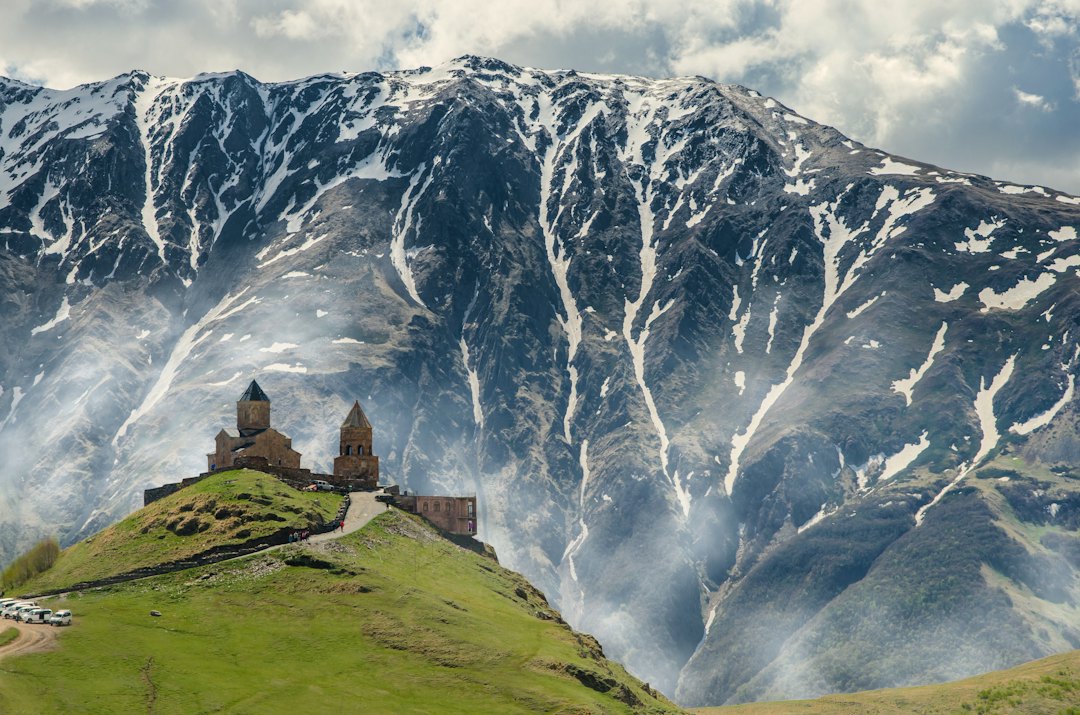
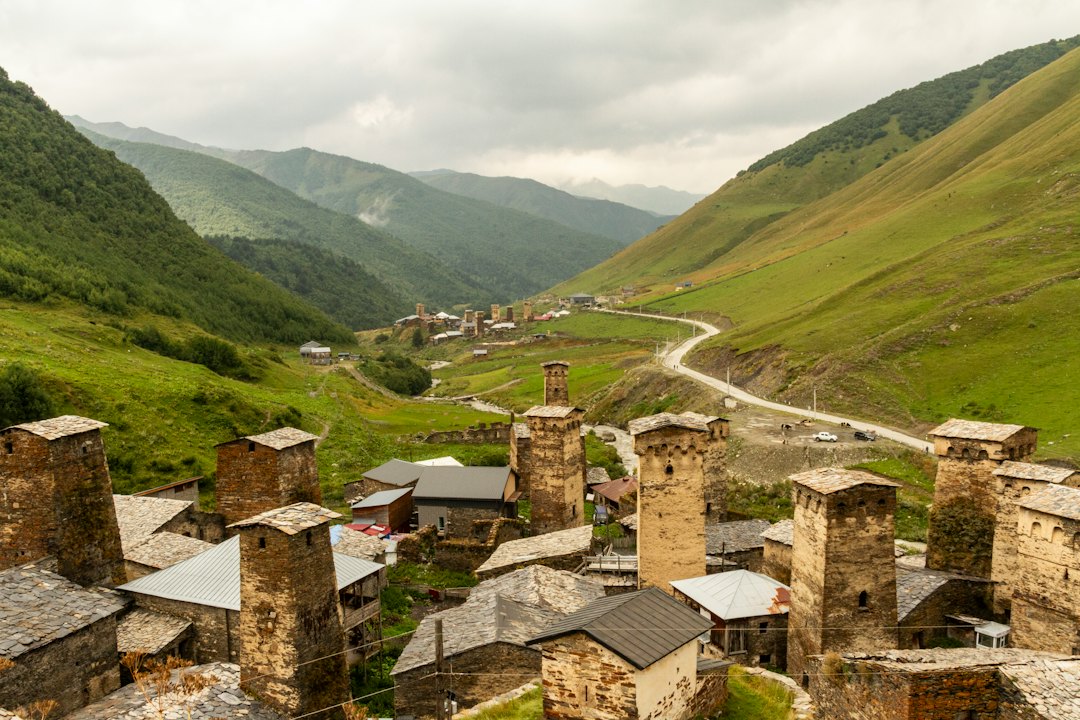
The Gergeti Trinity Church under Mount Kazbek, and the stone watchtowers of Mestia and Ushguli, the main mountain trips.
Best time
Best months for most visitors: May–Jun & Sep–Oct. Good weather, thinner crowds and fairer prices.
May to June and September to October are the best months for most trips.
July and August are the busiest and hottest months in Tbilisi, with highs averaging about 32°C / 90°F and hot spells into the mid-30s, and the best time for the high mountains, with trekking in Svaneti and Kazbegi at its easiest.
November to March is cold in Tbilisi (highs of about 7 to 13°C / 45 to 55°F), with snow in the mountains.
Booking window: reserve flights and stays 2–3 months ahead for May–Jun & Sep–Oct, and 4–6 months ahead for peak season (Jul–Aug).
Partner links. We earn a commission at no extra cost to you; sponsors never change a ranking or safety note. How we earn money →
Weather
Current temperature loads here when your browser can reach Open-Meteo.
Weather data: Open-Meteo Historical & Live API. A single reading for the main town or area, not the whole destination.
Peak season about 29°C / 84°F; shoulder season about 19°C / 66°F.
Rain: Moderate; wetter in spring and in the mountains.
Highs of about 28 to 32°C / 82 to 90°F in Tbilisi (hot spells reach the mid-30s), with mountain valleys at a pleasant 18 to 23°C / 64 to 73°F by day, and Batumi humid and showery, wetter still in autumn.
Highs of about 7 to 8°C / 45 to 46°F in Tbilisi, snow in Kazbegi and Svaneti, and skiing at Gudauri and Bakuriani. High passes can close.
Batumi is also at its busiest and wettest in summer. Book Kazbegi and Svaneti guesthouses early.
Highs of 20 to 28°C / 68 to 82°F in Tbilisi, green hills in spring, and the grape harvest (rtveli) in Kakheti in September and October. Mountains are still snowy in May, so check trails.
Kakheti and Tbilisi are quiet and cheap, the baths are at their best, and Gudauri and Bakuriani have skiing from December to March. Some high roads, such as the road to Tusheti, are closed.
Weather data: Open-Meteo Historical & Live API (live reading). Typical highs and season notes are our own summaries. How we verify →
Safety
Last updated: government levels come from our editor-verified table (October 2026). When the live UK FCDO check succeeds, its exact UTC time appears in the panel below. The banner takes the most cautious of the five agencies, so a live UK warning always outranks a green entry in our table and any part-country warning shows as red. We never show a level we haven’t checked. How we verify →
Government levels: editor-verified table, October 2026 How we verify →
Five official agencies, one view. Ratings change, so each pill opens the agency’s own page for today’s level.
Tier 4/5 · Standard caution. Normal precautions in Tbilisi and the main sights; avoid protests and the occupied-territory boundary lines; take care on mountain roads.
The UK FCDO, US State Department, Australian DFAT and other agencies describe Georgia as a destination where normal precautions apply in most areas, but the FCDO advises against all travel to the Russian-occupied regions of Abkhazia and South Ossetia and against all but essential travel to the areas immediately next to their boundary lines. Their advice also mentions road safety and ongoing protests in Tbilisi. Advice changes, so read each agency’s current Georgia page before you book.
Our plain-English summary of what the UK FCDO, US State Department, Australian Smartraveller, Japan MOFA and South Korea MOFA publish. We quote no live ratings from memory; each button above opens the agency's own page.
Our opinion, not an official warning
Regional nuance: Advice for Georgia treats the main tourist areas as routine but warns against travel to the occupied territories of Abkhazia and South Ossetia and the areas next to their boundary lines. Road safety and occasional demonstrations in Tbilisi also feature.
The concerns that are real: Fast, aggressive driving is the main risk, on mountain roads and in Tbilisi. Mountain roads can be closed by snow or landslides, and trekking in the Caucasus needs proper preparation. Crime levels are low, but pickpocketing is possible in crowded places. Protests in Tbilisi have run daily since late 2024 (the FCDO counted the 650th consecutive day on 9 September 2026), now mostly outside Parliament on Rustaveli Avenue, and some have turned violent, mainly on Saturday evenings. The FCDO says taking part can bring questioning on exit or refusal of entry, so avoid the crowds and follow local news. Stay away from the boundary lines with the occupied territories. At the David Gareja monastery complex the Azerbaijan border near the Udabno caves is unmarked and disputed, so take a border guide’s advice and do not cross. The FCDO also reports drink spiking, so do not follow strangers to a bar or restaurant, and advises seeking medical help for any dog bite or scratch (rabies).
What headlines overstate: Headlines about politics, protests or the occupied territories usually describe one place or event, and visitors to Tbilisi, Kakheti and the main mountain areas generally have an uneventful trip. Check local news and your embassy’s advice before travelling, especially if you plan to visit border areas.
Written by our editors from general travel knowledge and kept apart from the agencies above. How we verify →
Costs
Backpacker
$40 (≈ €35 / £30) per person per day
What it covers: Hostel dorm or guesthouse room, khachapuri and khinkali meals, metro and marshrutkas, and cheap museum entry.
Mid-Range (default)
$88 (≈ €80 / £70) per person per day
What it covers: Boutique guesthouse or small hotel shared by two, restaurant lunch and dinner with wine, Bolt rides, marshrutkas and a wine tasting.
Boutique
$190 (≈ €170 / £150) per person per day
What it covers: Design hotel in Tbilisi or Sighnaghi, a private driver, tasting-menu dinners and guided days to Kazbegi, Kakheti or Svaneti.
Cost source: Audited Local Lodging Taxes, Rail Tariffs & Dining Averages (our own estimates, flights excluded). How we verify →
Source: Should I Go's own estimates, October 2026, in USD per person excluding international flights; euro figures are rough conversions. A couple shares a room, so accommodation drops 25% per person. Prices move, so treat these as a planning range, not a quote.
Estimated total: $0 (≈ €0 / £0)
Estimate in USD per trip, excluding international flights. Two or more travellers share rooms, so accommodation drops 25% per person. Budget and luxury tiers are scaled from the mid-range figure.
Cost source: Audited Local Lodging Taxes, Rail Tariffs & Dining Averages (our own estimates, flights excluded). How we verify →
Where to base yourself
The capital, with the baths, Old Town and food scene, and the ancient church city of Mtskheta a half-hour away.
Wine country: Sighnaghi, Telavi, family cellars and monasteries, with Caucasus views from the vineyards.
Stepantsminda, the Gergeti Trinity Church and the Georgian Military Road through the Greater Caucasus.
Mestia and Ushguli in the high Caucasus, plus Kutaisi’s caves and Batumi on the Black Sea.
Itineraries
Getting between stops: Marshrutkas to Kazbegi leave from Didube station in Tbilisi, taking about three hours for roughly $4–6 (10 to 15 lari; ≈ €3.57–5.36 / £3.15–4.72). Snow or landslides can close the road, so check conditions.
Getting between stops: Marshrutkas from Samgori station take about 1.5 hours to Sighnaghi and up to 2.5 hours to Telavi. A driver (about $70 to $100 (≈ €60–90 / £55–80) a day) makes cellar-hopping easier. Kakheti to Kazbegi is best done through Tbilisi.
Getting between stops: Mestia is 8 to 10 hours from Tbilisi by road, with marshrutkas from Kutaisi and Zugdidi. The train from Tbilisi to Kutaisi or Batumi takes about 5 hours. Check flight options to Mestia, which are weather-dependent.
Routes and timetables change. Confirm transit times with the operator before you book.
Do and stay
Best for: First-timers
Pros: The sulphur baths, Narikala fortress and the best restaurants are within walking distance, with boutique guesthouses in old wooden-balconied houses.
Watch for: Streets are steep and cobbled, bars near Erekle II Street can be noisy late at night, and some buildings are in need of repair.
Best for: Cafés and local life
Pros: Cafés, bars and Rustaveli Avenue close by, with the metro and cheaper rooms than the Old Town. Good for longer stays.
Watch for: Fewer sights on the doorstep, and some blocks are run-down. Traffic is heavy on the main streets.
Best for: Mountain views
Pros: Guesthouses with direct views of Mount Kazbek and the Gergeti Trinity Church, plus trails from the village.
Watch for: Cold at night even in summer, limited dining choices, and weather can hide the mountains for days. Book ahead in July and August.
These are partner links. We may earn a commission at no extra cost to you.
Trade-offs
Final verdict
Editorial opinion from Should I Go, written from general travel knowledge and reviewed periodically. Verify prices, entry rules and advisories before you book.
Typical costs and rules change; confirm with official sources before you travel.
Seven to ten days is about right: three or four in Tbilisi, a day or two in Kakheti, a night or two in Kazbegi and, if you can, three or four days in Svaneti. A week covers Tbilisi, Kakheti and Kazbegi. Add Batumi or Kutaisi if you want the coast or the caves.
Yes. A mid-range day costs about $85 to $90 (≈ €75–80 / £65–70) per person, and food, wine and local transport are very cheap. Accommodation costs more in Tbilisi’s Old Town and in Kazbegi and Svaneti in July and August, and guided trips, private drivers and flights are the main costs.
Marshrutkas (shared minibuses) link almost every town and leave when full; express trains link Tbilisi, Kutaisi and Batumi (about 5 hours each way from Tbilisi). Bolt and Yandex are the best taxi apps in cities. For Svaneti, Tusheti and Kakheti vineyards, a driver or a hire car is much easier than public transport.
Get live weather, activities, travel advisories, and personalised tips for Georgia
Check Georgia Now →Have you visited Georgia? Was it worth it? Readers can vote: Worth Every Penny, Great in Shoulder Season Only, or Overrated / Skip It.