Newfound Gap Road and Clingmans Dome
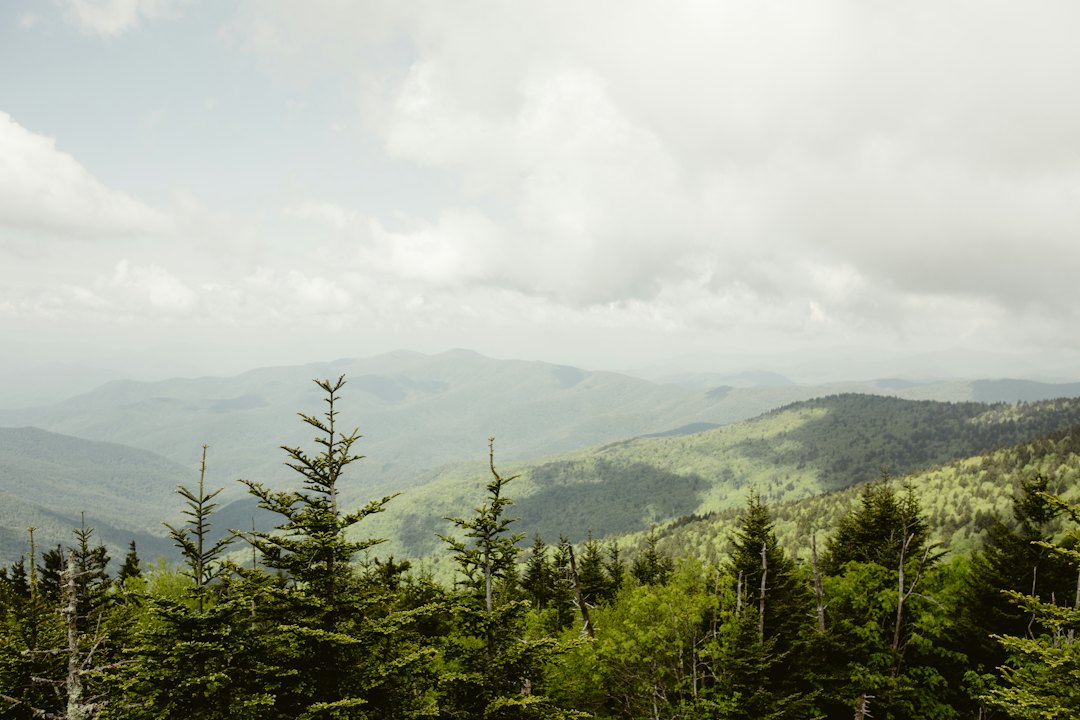
US 441 climbs from Sugarlands to the Newfound Gap pass at 1,539 m, with Clingmans Dome (2,025 m, road closed roughly December to March) a side road and a steep half-mile paved walk to the tower.
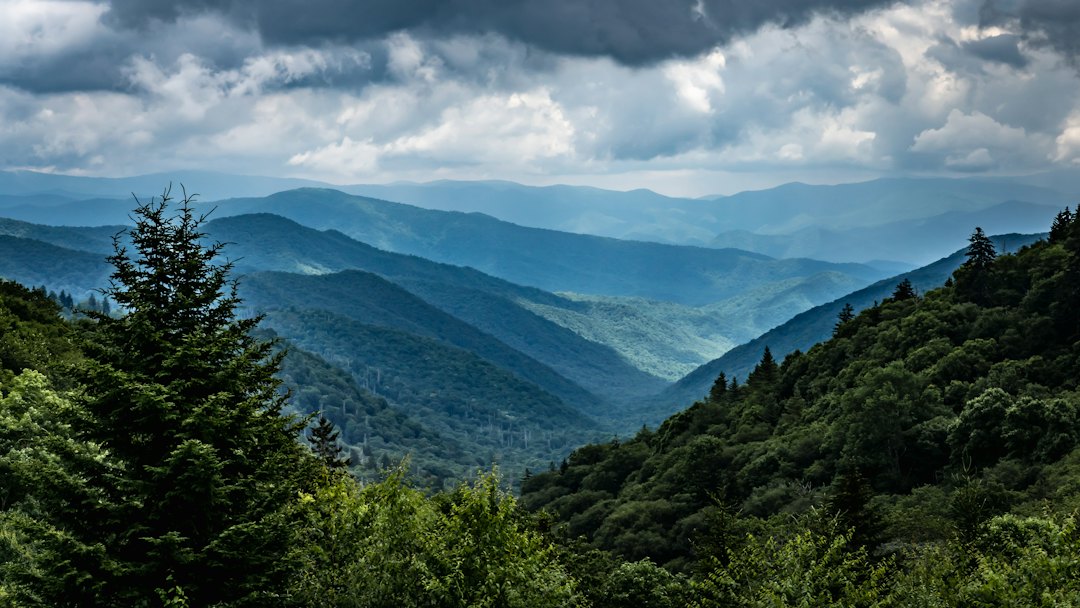
Ridgelines in the Great Smoky Mountains, Tennessee
Best months: Apr–May, Sep & Nov; Oct for colour
Photo: Joshua Burdick on Unsplash
Photo: David Hertle on Unsplash
Overview
Great Smoky Mountains National Park is free to enter and the most visited in the United States, with more than 12 million visits a year, and those two facts explain each other. The park straddles Tennessee and North Carolina along the Appalachian crest, and most visitors never leave their cars: they take Newfound Gap Road (US 441) from Gatlinburg over the ridge to Cherokee, stop at a few overlooks and join the queue behind somebody else's bear. That is a fair way to see it. It is not the only way.
The honest case for the Smokies is to choose your side. Gatlinburg and Pigeon Forge, on the Tennessee side, are a roadside carnival of pancake houses, mini-golf and Dollywood, and they are loud in July and October. Townsend, Cherokee, Bryson City and Asheville, on the other side, are the quieter doors. Rent a car (there is no workable alternative), be on the road before 8 am, and walk a trail past the first mile. Entry is free, but a Parking Tag is required to park for more than 15 minutes: about $5 (≈ €4.46 / £3.94) a day, $15 (≈ €13 / £12) a week or $40 (≈ €35 / £30) a year (approximate; verify on the park's website before you go). Autumn colour peaks from mid-October to early November, wildflowers arrive in April, and the Clingmans Dome road shuts roughly from December to March.
US 441 climbs from Sugarlands to the Newfound Gap pass at 1,539 m, with Clingmans Dome (2,025 m, road closed roughly December to March) a side road and a steep half-mile paved walk to the tower.
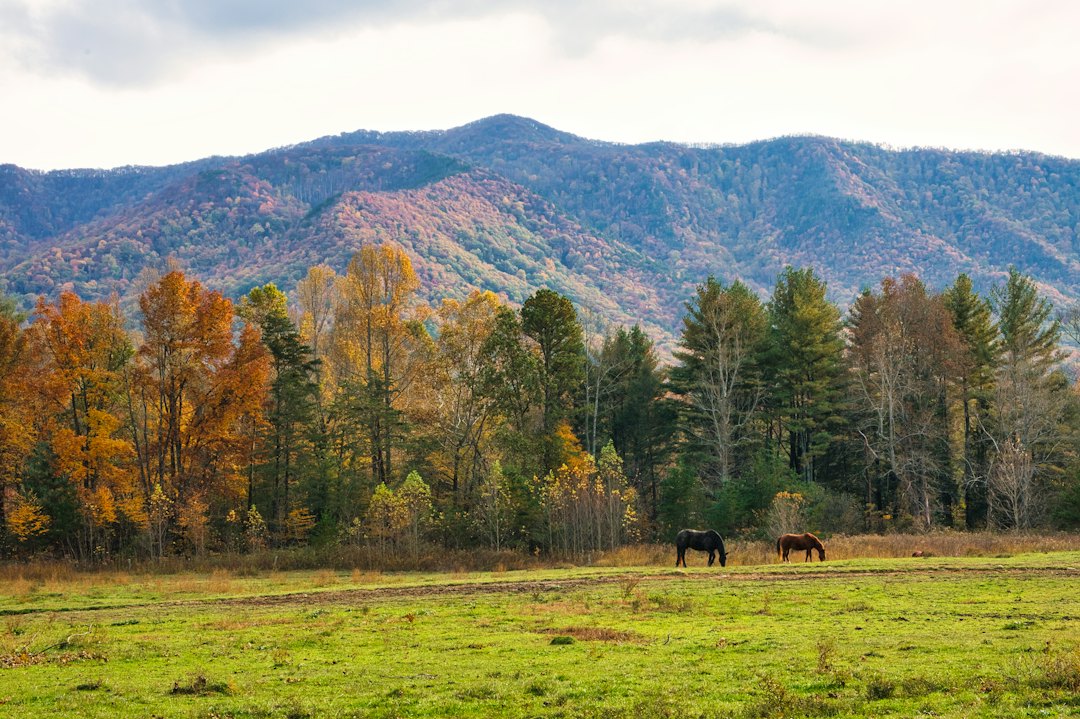
An 11-mile one-way loop through meadows with old cabins and churches. Deer and bears are common; go at dawn, because the loop can take 2 to 4 hours when busy.
Colour starts on the high ridges in early October and reaches the valleys by late October to early November; wildflowers peak in April on trails such as Porters Creek.
Best time
Best months for most visitors: Apr–May, Sep & Nov; Oct for colour. Good weather, thinner crowds and fairer prices.
April to May and September are the best balance.
July and the leaf-colour weeks from mid-October to early November are the busiest, with Gatlinburg valley highs around 29°C / 84°F in July and 17 to 21°C / 63 to 70°F in October.
December to March is cold, with valley highs of about 7 to 12°C / 45 to 54°F and snow or ice on the high roads.
Booking window: reserve flights and stays 2–3 months ahead for Apr–May, Sep & Nov; Oct for colour, and 4–6 months ahead for peak season (Jun–Aug, Oct).
Partner links. We earn a commission at no extra cost to you; sponsors never change a ranking or safety note. How we earn money →
Weather
Current temperature loads here when your browser can reach Open-Meteo.
Weather data: Open-Meteo Historical & Live API. A single reading for the main town or area, not the whole destination.
Peak season about 29°C / 84°F; shoulder season about 20°C / 68°F.
Rain: Moderate to high; thunderstorms in summer, driest in autumn, and more rain and snow on the ridges.
Valley highs of 27 to 30°C / 81 to 86°F, humid with afternoon thunderstorms; the high ridges are markedly cooler. Early June is also firefly season.
Valley highs of about 7 to 10°C / 45 to 50°F with frost most nights; the highest ridges drop below freezing and the Clingmans Dome road is closed. Snow can close Newfound Gap Road.
Rooms sell out, cabins cost most on weekends, and Newfound Gap Road and Cades Cove back up. Book lodging two to three months ahead and go before 8 am.
Expect highs of 18 to 27°C / 64 to 81°F in the valleys, wildflowers in April, and noticeably cooler air on the ridges. Late May to mid-June brings the synchronous fireflies at Elkmont, entered by lottery. Early November, after the peak, is quiet with bare trees and long views.
The Clingmans Dome road is closed roughly December to March, and Newfound Gap Road shuts when conditions turn. Rooms are cheapest, trails are empty, and the leafless ridges show their shape.
Weather data: Open-Meteo Historical & Live API (live reading). Typical highs and season notes are our own summaries. How we verify →
Safety
Last updated: government levels come from our editor-verified table (October 2026). When the live UK FCDO check succeeds, its exact UTC time appears in the panel below. The banner takes the most cautious of the five agencies, so a live UK warning always outranks a green entry in our table and any part-country warning shows as red. We never show a level we haven’t checked. How we verify →
Government levels: editor-verified table, October 2026 How we verify →
Five official agencies, one view. Ratings change, so each pill opens the agency’s own page for today’s level.
Tier 4/5 · Standard caution. Normal precautions: black bears, fast mountain weather, slippery stream rocks and heavy traffic on park roads.
The UK FCDO, US State Department and Australian DFAT generally treat the United States as a normal-precautions destination for tourists. For national parks their advice points to natural hazards, such as wildlife, severe weather, flash flooding and driving, rather than crime. The National Park Service posts live road, trail and bear notices. None of the three flags the Smokies as a place to avoid. Check the official pages and the park's conditions page before booking, and again before you travel.
Our plain-English summary of what the UK FCDO, US State Department, Australian Smartraveller, Japan MOFA and South Korea MOFA publish. We quote no live ratings from memory; each button above opens the agency's own page.
Our opinion, not an official warning
Regional nuance: US advice for Tennessee and North Carolina is routine. The regional nuance is the park itself: black bears, sudden mountain weather, flash flooding in streams and, on the North Carolina side, road and trail damage from Hurricane Helene in September 2024, so check current closures.
The concerns that are real: Falls on wet rocks at waterfalls and stream crossings cause most injuries, followed by heat and dehydration on summer climbs and sudden weather changes on the ridges. Black bears are common and become dangerous when fed; the park rules are to stay 50 yards (about 45 m) away and store food in your vehicle. Break-ins at busy trailhead car parks happen, so keep valuables out of sight.
What headlines overstate: Headlines about bear encounters and flash floods describe real events, but the park receives more than 12 million visits a year and the great majority end without incident. Hurricane Helene (September 2024) damaged parts of the North Carolina side, so check current road and trail status rather than relying on older reports.
Written by our editors from general travel knowledge and kept apart from the agencies above. How we verify →
Costs
Backpacker
$75 (≈ €65 / £60) per person per day
What it covers: In-park campsite (about $25 to $30 (≈ €20–25 / £20–25) a night) or a budget motel in Townsend or Bryson City, grocery picnics, free hikes, and a Parking Tag.
Mid-Range (default)
$170 (≈ €150 / £135) per person per day
What it covers: Three-star hotel or a cabin shared by two, diner breakfast and a casual dinner, the Parking Tag, fuel, and one paid attraction every other day.
Boutique
$370 (≈ €330 / £290) per person per day
What it covers: A resort or well-appointed cabin in Townsend, Gatlinburg or Asheville, chef-led dinners, a guided hike or fly-fishing trip, and a Dollywood day.
Cost source: Audited Local Lodging Taxes, Rail Tariffs & Dining Averages (our own estimates, flights excluded). How we verify →
Source: Should I Go's own estimates, October 2026, in USD per person excluding international flights; euro figures are rough conversions. A couple shares a room, so accommodation drops 25% per person. Prices move, so treat these as a planning range, not a quote.
Estimated total: $0 (≈ €0 / £0)
Estimate in USD per trip, excluding international flights. Two or more travellers share rooms, so accommodation drops 25% per person. Budget and luxury tiers are scaled from the mid-range figure.
Cost source: Audited Local Lodging Taxes, Rail Tariffs & Dining Averages (our own estimates, flights excluded). How we verify →
Where to base yourself
The Tennessee gateway: Roaring Fork, Alum Cave and Laurel Falls trails and the busiest visitor centre.
The loop road, Abrams Falls and Little River, with the quietest Tennessee lodging.
The North Carolina entrance, with elk meadows, Mingo Falls and the Museum of the Cherokee Indian.
Waterfalls and tubing at Deep Creek, a historic railway, and Asheville with the Blue Ridge Parkway for a city day.
Itineraries
Getting between stops: A rental car is essential. US 441 (Newfound Gap Road) links Gatlinburg and Cherokee in about 45 minutes without stops; the Cades Cove loop road is one-way and can take 2 to 4 hours when busy.
Getting between stops: Based in Bryson City or Cherokee. Asheville is about 75 to 90 minutes from Cherokee; sections of the Blue Ridge Parkway can close for storm repairs, so check the status before you set out.
Getting between stops: Mid-October to early November is the busiest time of year: book lodging months ahead and plan every drive for before 8 am or after 4 pm. Cataloochee is reached by a winding gravel road and takes about an hour from Cherokee.
Routes and timetables change. Confirm transit times with the operator before you book.
Do and stay
Best for: First-timers without a plan
Pros: At the park gate, with the main Sugarlands visitor centre, Roaring Fork and the Alum Cave trailhead close, a free trolley and plenty of restaurants.
Watch for: Crowded, noisy and commercial, with traffic on the Parkway and paid parking everywhere.
Best for: Cades Cove and quiet
Pros: The "peaceful side" of the Smokies: a short drive to the Cades Cove loop and Little River, with cabins, creeks and little traffic.
Watch for: Few restaurants and no nightlife, and it is a long drive over the park to Cherokee.
Best for: North Carolina side
Pros: Deep Creek, the Oconaluftee elk, the Museum of the Cherokee Indian and the Great Smoky Mountains Railroad, with much lighter crowds.
Watch for: Simpler lodging and dining, and Gatlinburg is about an hour away over Newfound Gap.
These are partner links. We may earn a commission at no extra cost to you.
Trade-offs
Final verdict
Editorial opinion from Should I Go, written from general travel knowledge and reviewed periodically. Verify prices, entry rules and advisories before you book.
Typical costs and rules change; confirm with official sources before you travel.
No. Entry is free, which is unusual among major US national parks. What you do need is a Parking Tag if you park for more than 15 minutes: about $5 (≈ €4.46 / £3.94) a day, $15 (≈ €13 / £12) a week or $40 (≈ €35 / £30) a year at the time of writing. Prices change, so confirm them on the National Park Service website and buy before you arrive.
April to May and September give the best balance of weather and crowds, with wildflowers in April. Mid-October to early November has the best autumn colour and the biggest crowds. Late May to June is firefly season, entered by lottery, and December to March is cold and quiet, with the Clingmans Dome road closed.
The North Carolina side and Townsend are quieter than Gatlinburg and Pigeon Forge. Cherokee, Bryson City and Deep Creek see far fewer cars, and elk graze near Oconaluftee. Gatlinburg is closer to Knoxville and the most popular trailheads, so it is the busiest base.
Get live weather, activities, travel advisories, and personalised tips for Great Smoky Mountains, USA
Check Great Smoky Mountains, USA Now →Have you visited Great Smoky Mountains, USA? Was it worth it? Readers can vote: Worth Every Penny, Great in Shoulder Season Only, or Overrated / Skip It.