The Grand Strand
Sixty miles (97 km) of Atlantic beach, from Little River in the north to Winyah Bay in the south. Go early for space, and swim near a lifeguard.
Myrtle Beach, the pier and the SkyWheel
Best months: May & Sep–Oct
Photo: High Tide Content on Unsplash
Photo: Drew Perales on Unsplash
Photo: Clint Patterson on Unsplash
View Full Gallery (3)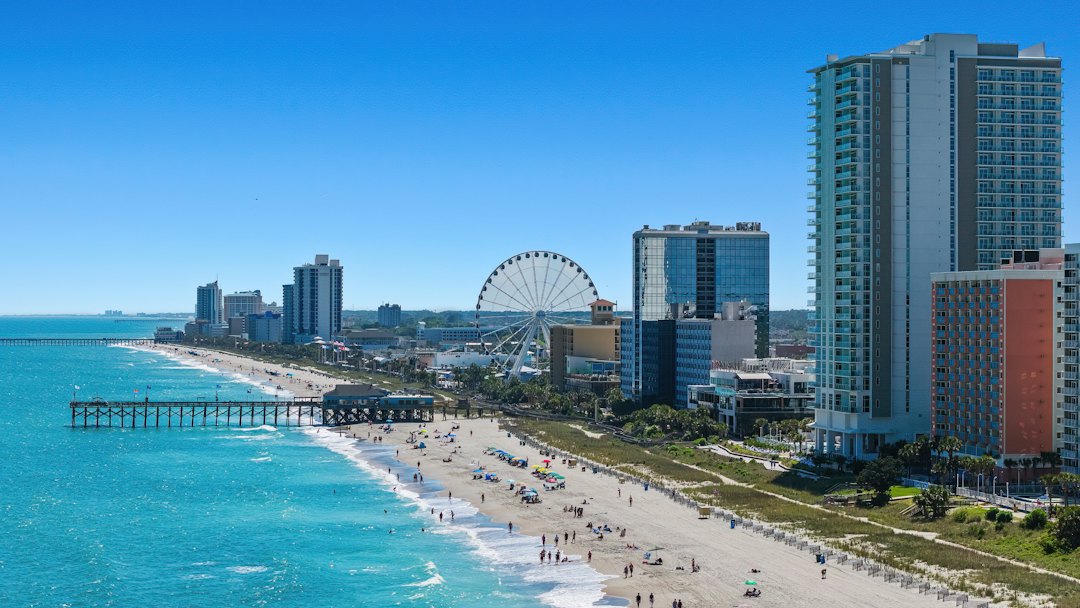

Overview
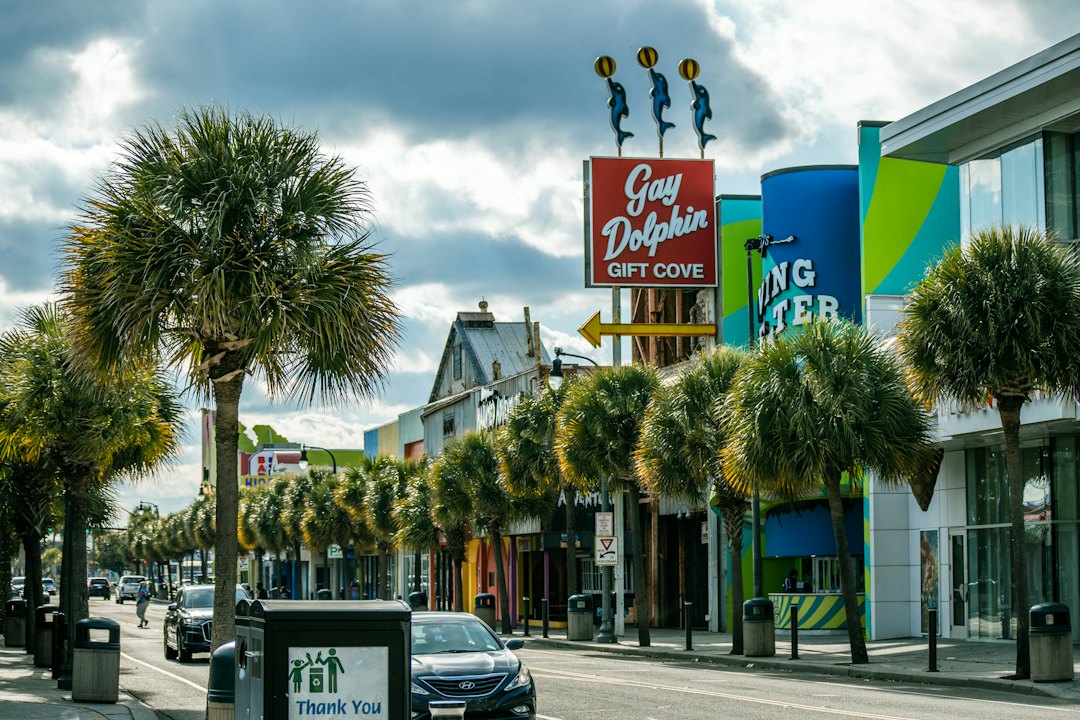
Myrtle Beach is not trying to be discreet, and that is its best quality. The Grand Strand runs for 60 miles (97 km) of Atlantic beach, most of it lined with hotel towers, mini-golf, pancake houses and a ferris wheel, and it makes no apology for any of it. If you want boutique silence, this is the wrong coast. If you want a wide beach, a short drive to dinner and a bill you can predict, it is a good one.
The honest case is value and variety. More than 80 golf courses sit within driving distance, the boardwalk and the SkyWheel keep children occupied until bedtime, and Murrells Inlet, about 13 miles (21 km) south of the city, is where the seafood is worth the detour: fried shrimp, oysters and flounder at tables over the marsh. Brookgreen Gardens, nearby, gives the grown-ups a quieter afternoon. The honest cost is the season. July is hot, busy and priced to match, with highs near 31°C / 88°F (88°F). The sea is at its best in May and September at about 26°C / 79°F (79°F), and those two months, plus October, are when the Strand is pleasant rather than packed. Winter is cheap and cool, and many attractions shorten their hours. Hurricane season runs from June to November, peaking from late August to September, so travel insurance is a sensible purchase rather than a gloomy one.
You need a car. The beach is long, the attractions are spread out and the bus network is basic. Prices and rules are approximate, written from general knowledge, so check them before you go.
Sixty miles (97 km) of Atlantic beach, from Little River in the north to Winyah Bay in the south. Go early for space, and swim near a lifeguard.
More than 80 courses sit in the area, with tee times from budget rounds to resort courses. The boardwalk and SkyWheel keep non-golfers busy.
Restaurants on the marsh serve the local catch. Go at sunset, and look for places that name the day’s fish.
Best time
Best months for most visitors: May & Sep–Oct. Good weather, thinner crowds and fairer prices.
May and September–October are the sweet spot.
June to August is the busiest stretch, with highs near 31°C / 88°F (88°F), full hotels and the highest rates.
November to March is cool and quiet, with daytime highs from about 13°C / 55°F (55°F) in January to 19°C / 66°F (66°F) in November and March.
Booking window: reserve flights and stays 2–3 months ahead for May & Sep–Oct, and 4–6 months ahead for peak season (Jun–Aug).
Partner links. We earn a commission at no extra cost to you; sponsors never change a ranking or safety note. How we earn money →
Weather
Current temperature loads here when your browser can reach Open-Meteo.
Weather data: Open-Meteo Historical & Live API. A single reading for the main town or area, not the whole destination.
Peak season about 31°C / 88°F; shoulder season about 26°C / 79°F.
Rain: Moderate, with afternoon thunderstorms in summer; hurricane season June to November.
Hot and humid, with highs near 31°C / 88°F (88°F), afternoon thunderstorms and warm sea. Hurricane season has started.
Cool and quiet, with daytime highs from about 13°C / 55°F (55°F) in January to 19°C / 66°F (66°F) in November and March. The sea is cold, and hours are shorter.
Book a few months ahead, go to the beach early and keep dinner reservations for the evenings you care about. Hurricane season has started, so check forecasts.
The sea is about 26°C / 79°F (79°F) in May and September, the sun is warm, rates drop and the crowds thin. September is the quietest month with beach weather, though September sits near the peak of hurricane season (late August to September).
Rooms are cheapest and golf is good value, but the sea is cold and some attractions cut hours or close.
Weather data: Open-Meteo Historical & Live API (live reading). Typical highs and season notes are our own summaries. How we verify →
Safety
Last updated: government levels come from our editor-verified table (October 2026). When the live UK FCDO check succeeds, its exact UTC time appears in the panel below. The banner takes the most cautious of the five agencies, so a live UK warning always outranks a green entry in our table and any part-country warning shows as red. We never show a level we haven’t checked. How we verify →
Government levels: editor-verified table, October 2026 How we verify →
Five official agencies, one view. Ratings change, so each pill opens the agency’s own page for today’s level.
Tier 4/5 · Standard caution. Normal precautions: rip currents, heat, hurricane season (June to November) and hidden resort fees.
The UK FCDO’s page for the United States (updated 30 October 2026) carries no warning against travel to the places in this guide. It says terrorists are very likely to try to carry out attacks in the US, including in crowded places; that violent crime rarely affects tourists, though you should take care in unfamiliar areas; and that gangs may target vehicles driven by people who look like tourists, so avoid leaving items on display in your car. Read the current page before you book, and again before you travel, because wording changes. For Myrtle Beach, the practical points are the Atlantic hurricane season (the FCDO says it normally runs from June to November, and to follow local evacuation orders), plus rip currents and sun, which are our own notes rather than FCDO items.
Our plain-English summary of what the UK FCDO, US State Department, Australian Smartraveller, Japan MOFA and South Korea MOFA publish. We quote no live ratings from memory; each button above opens the agency's own page.
Our opinion, not an official warning
Regional nuance: The UK FCDO page for the US carries no warning against travel. The regional nuance is weather: the FCDO says the Atlantic hurricane season normally runs from June to November. Rip currents are a common beach hazard, though that is our own note, not an FCDO item.
The concerns that are real: Rip currents and heat are the main risks: swim near a lifeguard, obey the beach flags and drink water. Sunburn catches many visitors. Take care with valuables left in cars and on the beach, and keep to well-lit streets at night as in any busy resort town.
What headlines overstate: Headlines usually concern tropical storms and hurricanes. Storm season runs from June to November, and an evacuation order is the thing to take seriously. Check the forecast, keep flexible bookings and read the official advice if a storm is in the forecast.
Written by our editors from general travel knowledge and kept apart from the agencies above. How we verify →
Costs
Backpacker
$85 (≈ €75 / £65) per person per day
What it covers: A motel or hostel-style room shared, grocery breakfasts, free beach days and one cheap seafood dinner.
Mid-Range (default)
$190 (≈ €170 / £150) per person per day
What it covers: An oceanfront hotel room shared by two, restaurant lunches and dinners, a car or rides, and a round of mini-golf or an attraction.
Boutique
$420 (≈ €380 / £330) per person per day
What it covers: A beachfront resort suite or a golf-resort villa, tee times, spa time and waterfront dinners.
Cost source: Audited Local Lodging Taxes, Rail Tariffs & Dining Averages (our own estimates, flights excluded). How we verify →
Source: Should I Go's own estimates, October 2026, in USD per person excluding international flights; euro figures are rough conversions. A couple shares a room, so accommodation drops 25% per person. Prices move, so treat these as a planning range, not a quote.
Estimated total: $0 (≈ €0 / £0)
Estimate in USD per trip, excluding international flights. Two or more travellers share rooms, so accommodation drops 25% per person. Budget and luxury tiers are scaled from the mid-range figure.
Cost source: Audited Local Lodging Taxes, Rail Tariffs & Dining Averages (our own estimates, flights excluded). How we verify →
Where to base yourself
Quieter beaches and family resorts at the northern end of the Strand.
Shops, restaurants, the SkyWheel and the Oceanfront, all within a short drive.
Marsh-side seafood and a slower, more local feel.
A calmer, family-oriented beach town on the same strand.
Itineraries
Getting between stops: Rent a car, or use Uber (about $15–22 (≈ €13–20 / £12–17) from the airport to the Oceanfront, 12 minutes). Coast RTA buses are the budget option at a flat $1.50 (≈ €1.34 / £1.18) a ride ($2.00 (≈ €1.79 / £1.57) on express routes); a metered taxi starts at $2.50 (≈ €2.23 / £1.97) plus about $2.80 (≈ €2.50 / £2.20) a mile.
Getting between stops: Book tee times early for May and September–October, and ask the course about cart and range fees.
Getting between stops: May and September–October give warm sea at about 26°C / 79°F (79°F) with fewer crowds. Check storm forecasts in September.
Routes and timetables change. Confirm transit times with the operator before you book.
Do and stay
Best for: Families who want a calmer stretch
Pros: Quieter beaches, family-friendly resorts and a more relaxed atmosphere than the Oceanfront strip.
Watch for: Further from the central attractions, so you will drive for most of them.
Best for: First-timers who want things to do
Pros: Walkable shops and restaurants around Market Common, with the boardwalk, SkyWheel and the Oceanfront close by.
Watch for: Busy and loud in summer, with higher rates and paid parking.
Best for: Seafood and a slower pace
Pros: The marsh restaurants are the best dinners on the Strand, and the setting feels more local than the main strip.
Watch for: Fewer beachfront hotels and more driving to the sand.
These are partner links. We may earn a commission at no extra cost to you.
Trade-offs
Final verdict
Editorial opinion from Should I Go, written from general travel knowledge and reviewed periodically. Verify prices, entry rules and advisories before you book.
Typical costs and rules change; confirm with official sources before you travel.
May and September–October are best, with the sea at about 26°C / 79°F (79°F) in May and September and fewer crowds. June to August is hotter, busier and more expensive, and November to March is cool and cheap.
Most visitors do. The beaches, golf courses and Murrells Inlet are spread out, and the bus network (Coast RTA buses are $1.50 (≈ €1.34 / £1.18) a ride; Bus 15 is one option) is basic. Uber from the airport to the Oceanfront takes about 12 minutes and costs about $15–22 (≈ €13–20 / £12–17).
Some resorts add daily fees for pools, parking, Wi-Fi or beach services on top of the room rate. Ask for the total price including taxes and fees before you book, and avoid timeshare booths offering “free” show tickets.
Coast RTA buses charge a flat standard fare of $1.50 a ride (≈ €1.34 / £1.18), and express routes cost $2.00 (≈ €1.79 / £1.57). A metered taxi has a $2.50 (≈ €2.23 / £1.97) flag drop plus about $2.80 (≈ €2.50 / £2.20) a mile, so a trip along the 60-mile (97 km) Strand adds up quickly and a car or rideshare is usual for longer hops.
Get live weather, activities, travel advisories, and personalised tips for Myrtle Beach, South Carolina, USA
Check Myrtle Beach, South Carolina, USA Now →Have you visited Myrtle Beach, South Carolina, USA? Was it worth it? Readers can vote: Worth Every Penny, Great in Shoulder Season Only, or Overrated / Skip It.