Teahouse trekking
Annapurna Base Camp, Poon Hill, Langtang and Everest Base Camp all run on a bed-and-meal teahouse system, so you carry only a day pack if you hire a porter.
Prayer flags and the Annapurna range from Poon Hill
Best months: Mar–May & Oct–Nov
Photo: Sylwia Bartyzel on Unsplash
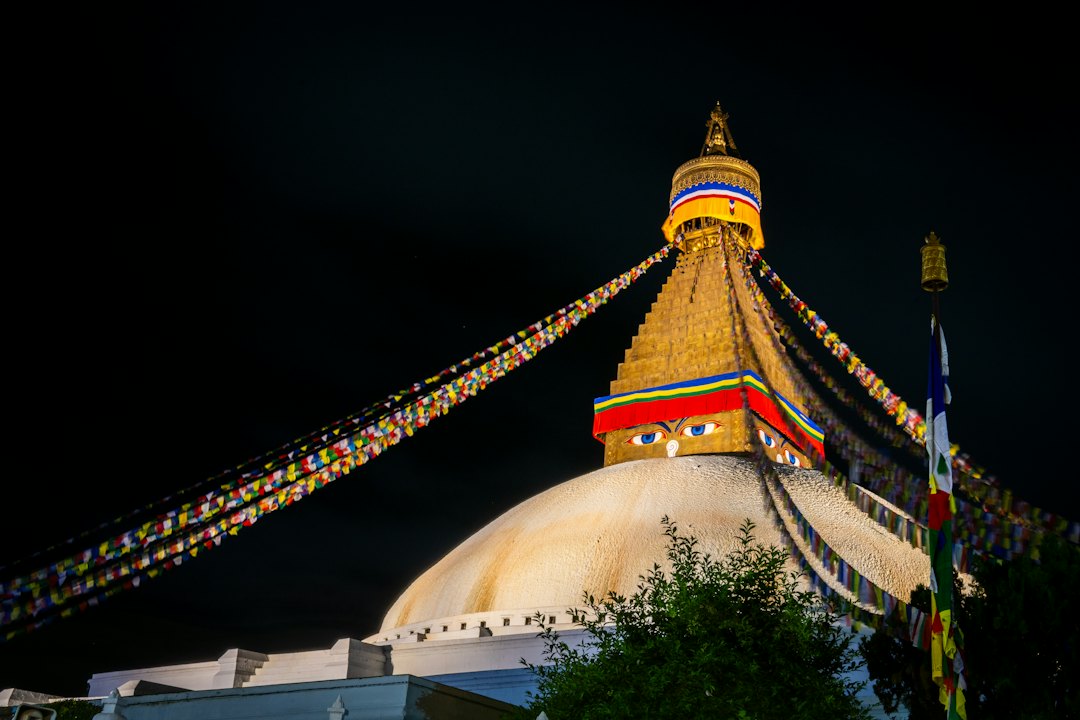
Photo: Jochen van Wylick on Unsplash
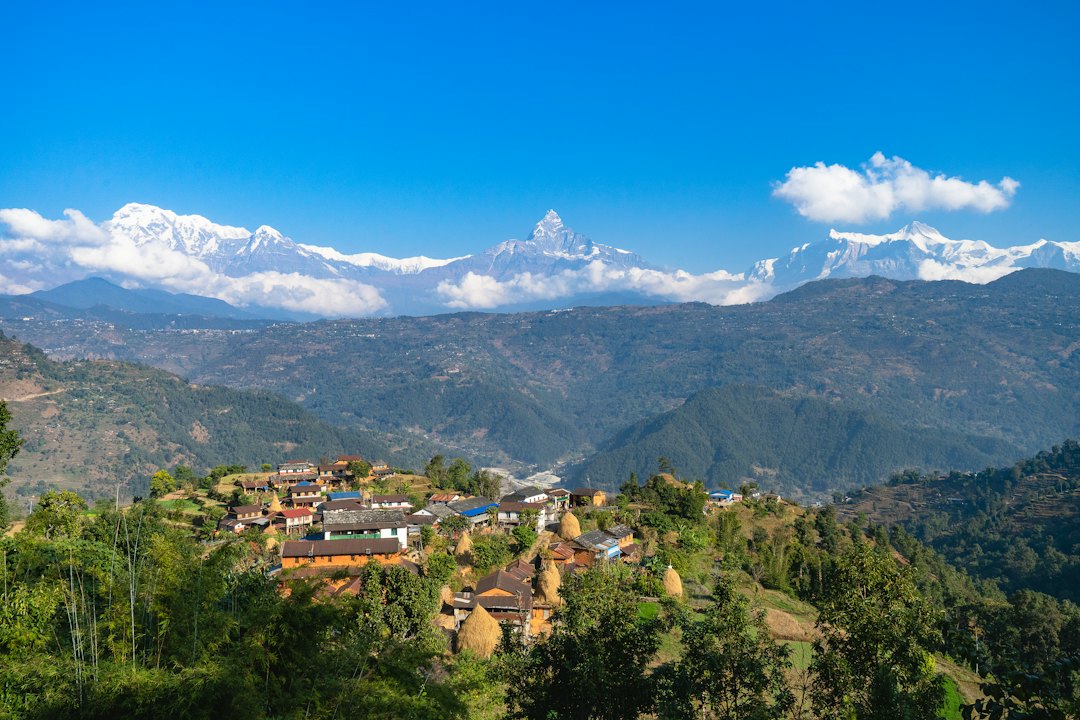
Photo: Martin Skřivánek on Unsplash
View Full Gallery (3)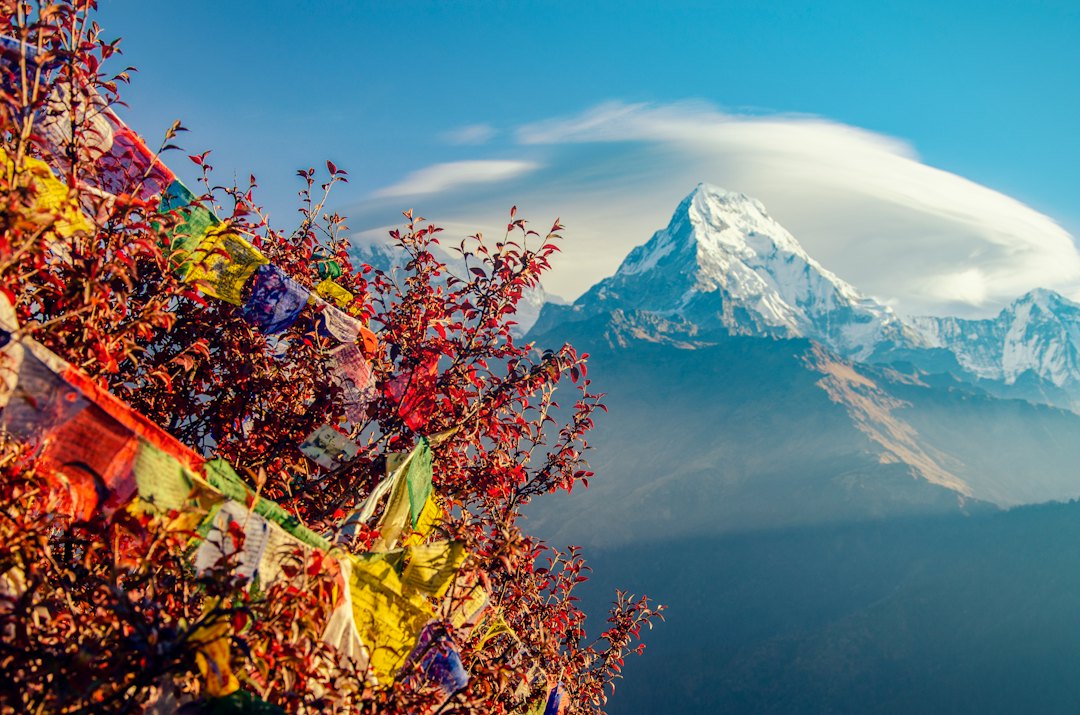
Overview
Nepal is the cheapest way to stand under a mountain that is taller than anything in Europe, and the mountains are only half the reason to go. Kathmandu’s old squares and stupas, Pokhara’s lake with the Annapurna range floating above it, and the teahouse trails that link villages at 2,000 to 4,000 metres make up a country where the best days are usually spent walking. A three-week trip costs less than a week in Switzerland, and a plate of dal bhat with unlimited refills is still the best-value meal in Asia.
The word ‘cheap’ needs a footnote, though. Nepal is cheap at sea level and gets steadily dearer as the trail climbs, because everything above the road is carried by porter, mule or aircraft: a bottle of water at Everest Base Camp costs several times its price in Kathmandu. The country is also unforgiving about planning. Altitude sickness is a real risk above about 3,000 metres and does not care how fit you are, flights to Lukla and Jomsom are cancelled for weather as a matter of routine, and the monsoon from June to September turns trails to mud and views to cloud. Go in October–November or March–May, add two spare days to any trek that depends on a small plane, book a licensed guide through a registered company, and make sure your insurance covers helicopter evacuation at the altitude you plan to reach. Kathmandu itself is dusty, loud and congested, and takes a day or two to get used to.
Annapurna Base Camp, Poon Hill, Langtang and Everest Base Camp all run on a bed-and-meal teahouse system, so you carry only a day pack if you hire a porter.
Boudhanath, Swayambhunath, Pashupatinath, Patan and Bhaktapur sit within a few kilometres of each other; hire a local guide for at least one.
Boat on Phewa Lake with the Annapurna range behind it, then drop to the Terai for rhinos, deer and jungle walks in Chitwan National Park.
Best time
Best months for most visitors: Mar–May & Oct–Nov. Good weather, thinner crowds and fairer prices.
March to May is the other good window: rhododendrons bloom between 2,000 and 3,500 metres in March and April, days are warm and the mountains are generally visible in the morning.
October and November are the peak: clear skies after the monsoon, stable weather, Dashain and Tihar festivals, and the busiest trails.
June to September is the monsoon: heavy rain, leeches, landslides and cloud over the peaks, though prices fall and the Kathmandu Valley is lush and green.
Booking window: reserve flights and stays 2–3 months ahead for Mar–May & Oct–Nov, and 4–6 months ahead for peak season (Oct).
Partner links. We earn a commission at no extra cost to you; sponsors never change a ranking or safety note. How we earn money →
Weather
Current temperature loads here when your browser can reach Open-Meteo.
Weather data: Open-Meteo Historical & Live API. A single reading for the main town or area, not the whole destination.
Peak season about 25°C / 77°F; shoulder season about 20°C / 68°F.
Rain: Heavy monsoon Jun–Sep; dry Oct–May.
Kathmandu reaches about 25 to 30°C / 77 to 86°F by day and 8 to 16°C / 46 to 61°F at night. Above 4,000 metres, nights fall below freezing, even in the best months.
Heavy rain most days, highs of 28 to 30°C / 82 to 86°F in Kathmandu, leeches on the trails and cloud over the peaks. Landslides can close roads and cancel flights.
Rooms in Kathmandu, Pokhara and on the Annapurna and Everest routes fill up, so book flights and guides two to three months ahead. Daytime highs in Kathmandu are around 25°C / 77°F.
Lowland haze and dust (and smoke from crop burning in April) can flatten the views, and Kathmandu highs reach 30°C / 86°F by May.
December to February is cold at altitude, with night temperatures well below freezing above 3,500 metres, but low-level treks and the Kathmandu Valley are clear and quiet.
Weather data: Open-Meteo Historical & Live API (live reading). Typical highs and season notes are our own summaries. How we verify →
Safety
Last updated: government levels come from our editor-verified table (October 2026). When the live UK FCDO check succeeds, its exact UTC time appears in the panel below. The banner takes the most cautious of the five agencies, so a live UK warning always outranks a green entry in our table and any part-country warning shows as red. We never show a level we haven’t checked. How we verify →
Government levels: editor-verified table, October 2026 How we verify →
Five official agencies, one view. Ratings change, so each pill opens the agency’s own page for today’s level.
Tier 3/5 · Increased caution. Normal precautions to increased caution: altitude, trekking accidents and landslides in the monsoon.
The UK FCDO, US State Department and Australian DFAT all advise extra care in Nepal, mostly for mountain and travel risks rather than crime: altitude sickness, trekking accidents, landslides in the monsoon, earthquake risk and road safety. Some also mention political demonstrations and strikes that can disrupt transport. Advice changes, so read each agency’s current Nepal page before you book.
Our plain-English summary of what the UK FCDO, US State Department, Australian Smartraveller, Japan MOFA and South Korea MOFA publish. We quote no live ratings from memory; each button above opens the agency's own page.
Our opinion, not an official warning
Regional nuance: Nepal’s advice is mostly about the mountains: altitude, weather, landslides in monsoon season and trekking safety. Road conditions, flight delays and occasional political strikes or protests also affect plans, so check each agency’s page for the dates you will be there.
The concerns that are real: The risks that matter are mountain ones. Altitude sickness can affect anyone above about 3,000 metres, storms and snow can close passes quickly, and mountain roads and small aircraft have mixed safety records. Choose a registered operator, avoid trekking alone on remote routes, and know the early signs of altitude illness. In towns, expect petty theft, overcharging and aggressive touts rather than violence.
What headlines overstate: Headlines about avalanches, flight crashes or political unrest are real, but they describe particular places and days. Check the latest news and your government’s advice, keep a buffer in the itinerary, and be flexible: a strike or storm usually costs you a day, not the trip.
Written by our editors from general travel knowledge and kept apart from the agencies above. How we verify →
Costs
Backpacker
$30 (≈ €25 / £25) per person per day
What it covers: Basic guesthouse or teahouse room, dal bhat and momos, local buses and shared jeeps, and entry fees to a few temples. On a trek, food and lodging are about $20 to $35 (≈ €18–30 / £16–30) a day below 3,500 metres, rising higher up.
Mid-Range (default)
$70 (≈ €60 / £55) per person per day
What it covers: Private room with bathroom in Kathmandu or Pokhara, restaurant meals, taxis and the odd tourist bus, a guide for a day or two and entry fees. A guided teahouse trek with a porter costs roughly $50 to $90 (≈ €45–80 / £40–70) per person per day.
Boutique
$150 (≈ €135 / £120) per person per day
What it covers: Heritage hotel or lodge in Kathmandu, Pokhara or Chitwan, private drivers, domestic flights, a private trekking guide and porter-guide team, or a helicopter transfer for the Everest region.
Cost source: Audited Local Lodging Taxes, Rail Tariffs & Dining Averages (our own estimates, flights excluded). How we verify →
Source: Should I Go's own estimates, October 2026, in USD per person excluding international flights; euro figures are rough conversions. A couple shares a room, so accommodation drops 25% per person. Prices move, so treat these as a planning range, not a quote.
Estimated total: $0 (≈ €0 / £0)
Estimate in USD per trip, excluding international flights. Two or more travellers share rooms, so accommodation drops 25% per person. Budget and luxury tiers are scaled from the mid-range figure.
Cost source: Audited Local Lodging Taxes, Rail Tariffs & Dining Averages (our own estimates, flights excluded). How we verify →
Where to base yourself
Boudhanath, Pashupatinath, Patan and Bhaktapur; hire a guide and allow a day for each pair.
Lake town base plus treks such as Poon Hill (4 to 5 days) or Annapurna Base Camp (7 to 10 days).
Lukla flight, Namche Bazaar and Everest Base Camp: a 12 to 14 day commitment with acclimatisation days.
Jungle safaris and the Buddha’s birthplace; a warm, low-altitude break from the mountains.
Itineraries
Getting between stops: Tourist buses from Kathmandu to Pokhara take 6 to 8 hours for roughly $8 to $15 (≈ €7.14–13 / £6.30–12) (approximate); flights take about 25 minutes. Book guides and permits through a registered agency.
Getting between stops: Trailheads are a 1.5 to 3 hour drive from Pokhara by taxi or jeep. Sleep no more than about 500 metres higher each night above 3,000 metres and keep a spare day in hand.
Getting between stops: Flights to Lukla are weather-dependent, and in busy seasons many depart from Ramechhap (about 3 to 4 hours by road) rather than Kathmandu. Allow at least two spare days and carry insurance that covers helicopter evacuation.
Routes and timetables change. Confirm transit times with the operator before you book.
Do and stay
Best for: Trek preparation and first-timers
Pros: Gear shops, trekking agencies, restaurants and money changers within a few streets, and a wide range of rooms from $10 to $120 (≈ €8.93–105 / £7.87–95). The easiest place to arrange permits and guides.
Watch for: Loud, dusty and aimed at tourists, with touts and heavy traffic at the edges. Choose a hotel off the main drag or with a courtyard garden.
Best for: Atmosphere and quiet mornings
Pros: A Tibetan Buddhist neighbourhood around the great stupa: monks, prayer flags, monasteries and rooftop cafés. Calm at dawn and dusk when pilgrims circle the stupa.
Watch for: About 7 km / 4.3 mi from Thamel, with slow traffic into the centre. Fewer places for evening dining or trek shopping.
Best for: Relaxing before or after a trek
Pros: Boating on Phewa Lake, cafés, bakeries, paragliding and views of the Annapurna range on clear mornings. Closest base for Poon Hill, Annapurna Base Camp and Mardi Himal treks.
Watch for: Heavily commercial strip with fewer authentic restaurants. Pokhara is among the wettest places in Nepal, so cloud often covers the mountains outside the dry season.
These are partner links. We may earn a commission at no extra cost to you.
Trade-offs
Final verdict
Editorial opinion from Should I Go, written from general travel knowledge and reviewed periodically. Verify prices, entry rules and advisories before you book.
Typical costs and rules change; confirm with official sources before you travel.
October and November give the clearest skies and are the most popular trekking months. March to May is the second-best window, with blooming rhododendrons and warmer days but hazier views. June to September is the monsoon, and December to February is cold above 3,500 metres. Avoid the monsoon for classic Himalayan treks.
Yes, in most places you need permits, and the rules are tightening. Annapurna and Everest region fees are collected by the national park or conservation area and local governments. The Nepal Tourism Board lists many routes (among them Everest Base Camp, the Annapurna Circuit, Poon Hill and Mardi Himal) where a licensed guide and an agency-issued TIMS card ($13, NPR 2,000; ≈ €12 / £10) have been required since 31 March 2023, though enforcement on the ground varies. Rules change, so ask a registered agency and check Nepal Tourism Board pages before you travel.
Ten days covers Kathmandu, Pokhara and a short trek such as Poon Hill or Mardi Himal. Two to three weeks lets you do Annapurna Base Camp, Langtang or Everest Base Camp with acclimatisation days and a buffer for flight delays. The Annapurna Circuit and Everest Base Camp with Gokyo are three-week commitments.
Get live weather, activities, travel advisories, and personalised tips for Nepal
Check Nepal Now →Have you visited Nepal? Was it worth it? Readers can vote: Worth Every Penny, Great in Shoulder Season Only, or Overrated / Skip It.