Madrid’s art and street life
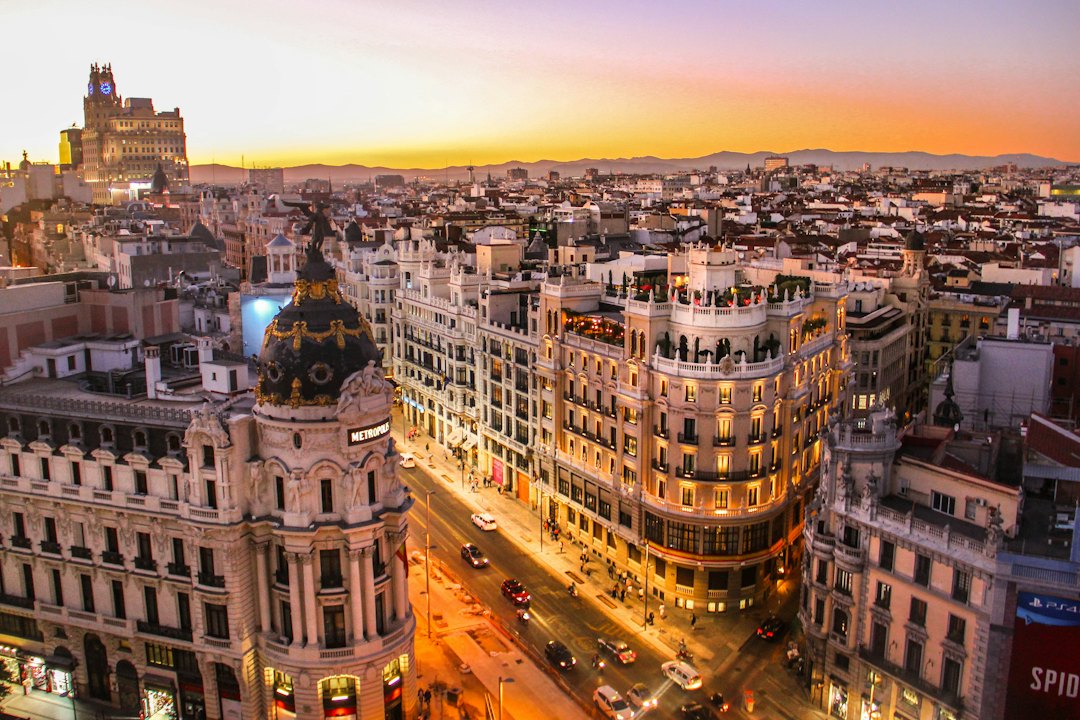
The Prado, Reina Sofía and Thyssen sit within a short walk of each other, with Retiro Park and late-night tapas bars between them.
Photo: Taisia Karaseva on Unsplash
Photo: Florian Wehde on Unsplash
View Full Gallery (3)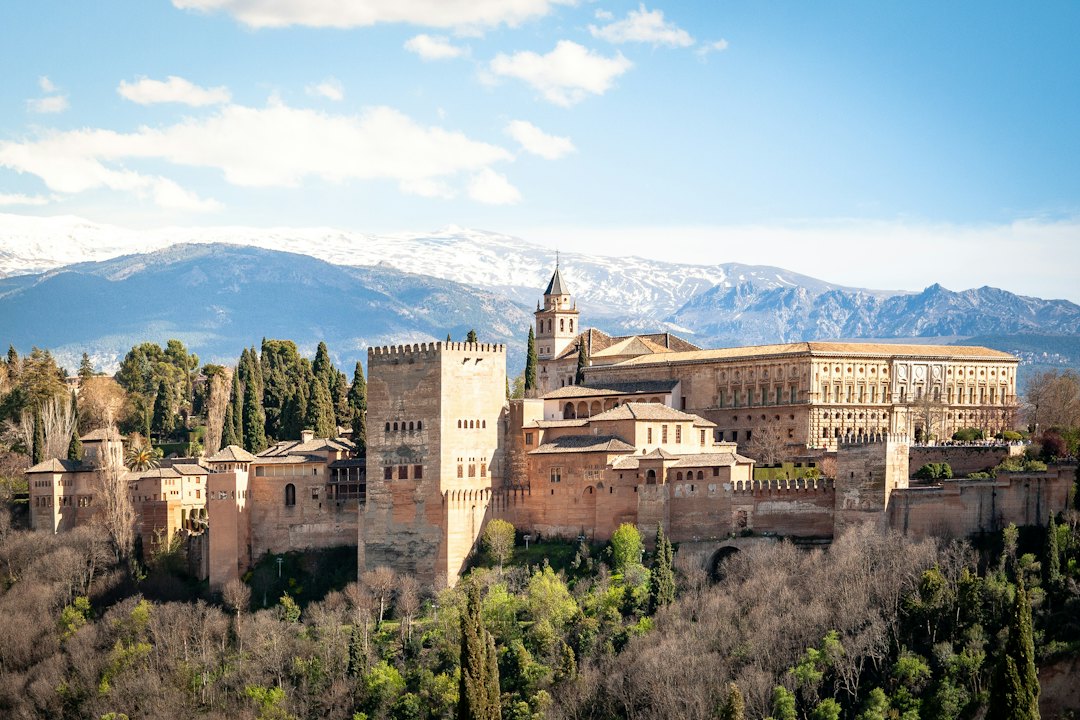
Overview
Spain is the rare big European country where the food, the trains and the history all live up to their reputations, and where a good lunch costs about $17 (€15; ≈ £13). Madrid’s Prado and Reina Sofía, Seville’s Alcázar, Granada’s Alhambra and San Sebastián’s pintxo bars are four different countries in one, linked by a high-speed rail network that puts most of them two to three hours apart. Trains, a menú del día at lunchtime and a late dinner are the whole formula.
The country asks you to adopt its clock. Lunch runs from 2 to 4 pm, dinner rarely starts before 9, and in smaller cities shops close for a few hours in the afternoon and for most of Sunday. The south is brutally hot from late June to early September: Seville averages about 37°C / 99°F (99°F) in July and often passes 40°C / 104°F (104°F), and sightseeing at noon is a mistake rather than a plan. Alhambra tickets sell out weeks ahead in spring and autumn, so book them first and build the trip around the date. The big cities attract pickpockets, particularly on the Madrid and Barcelona metros and around the busiest plazas, and the pushback against mass tourism in Barcelona, the Balearics and parts of Andalusia is real. Spring (April to early June) and autumn (September and October) are the sweet spots, and the north is cooler, greener and wetter than the postcards suggest.
The Prado, Reina Sofía and Thyssen sit within a short walk of each other, with Retiro Park and late-night tapas bars between them.
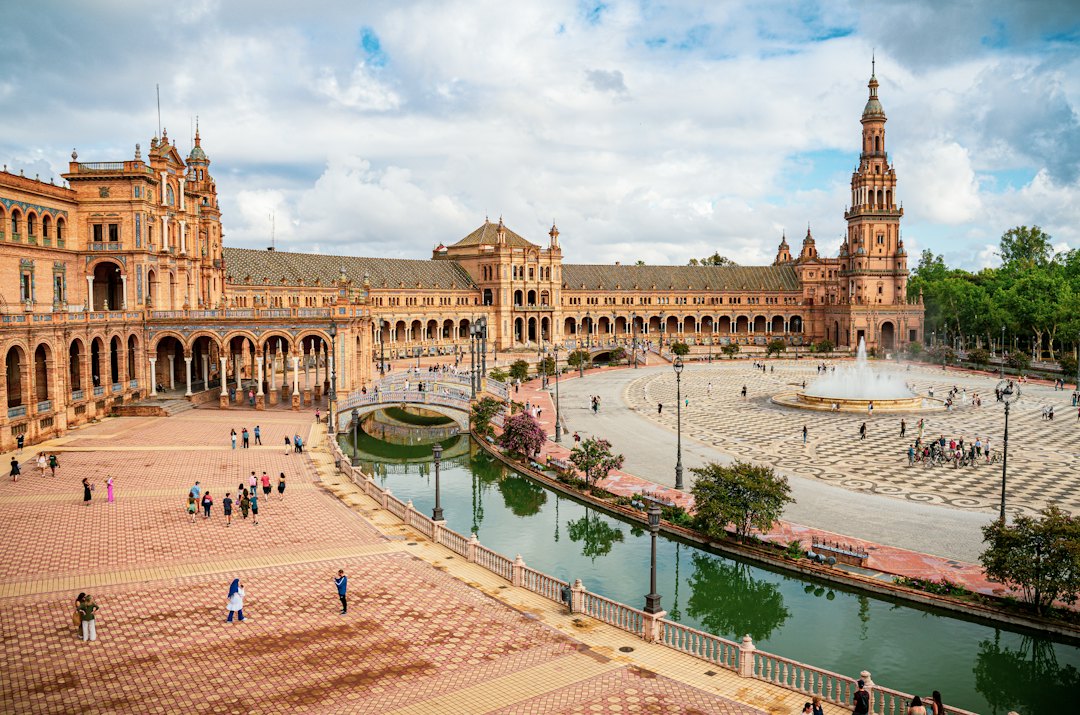
Seville’s Alcázar, Córdoba’s Mezquita and Granada’s Alhambra are linked by trains and buses and can be done in about a week.
San Sebastián’s pintxo bars and Bilbao’s Guggenheim make a three-day food and art trip on the Bay of Biscay.
Best time
Best months for most visitors: Apr–Jun & Sep–Oct. Good weather, thinner crowds and fairer prices.
April to June and September to October are the best months for city touring: Madrid reaches average highs of 19 to 29°C / 66 to 84°F (66 to 84°F), Seville 23 to 32°C / 73 to 90°F (73 to 90°F), and the Alhambra and Alcázar are open without the extreme heat.
July and August are peak season for coastal Spain, with average highs of 33 to 37°C / 91 to 99°F (91 to 99°F) in Madrid and Seville and packed beaches.
November to March is cool and cheap, with Madrid at average highs of 10 to 14°C / 50 to 57°F (50 to 57°F), colder nights and a raw wind in winter, and the north grey and wet.
Booking window: reserve flights and stays 2–3 months ahead for Apr–Jun & Sep–Oct, and 4–6 months ahead for peak season (Jun–Aug).
Partner links. We earn a commission at no extra cost to you; sponsors never change a ranking or safety note. How we earn money →
Weather
Current temperature loads here when your browser can reach Open-Meteo.
Weather data: Open-Meteo Historical & Live API. A single reading for the main town or area, not the whole destination.
Peak season about 34°C / 93°F; shoulder season about 23°C / 73°F.
Rain: Low; wetter in the north.
Madrid averages about 34°C / 93°F (93°F) in July and Seville 37°C / 99°F (99°F), with spells above 40°C / 104°F (104°F). The north coast stays near 25°C / 77°F (77°F) but can be wet.
Madrid highs of 10 to 13°C / 50 to 55°F (50 to 55°F) with cold nights, Seville near 16 to 18°C / 61 to 64°F (61 to 65°F), and the Basque coast cool and wet.
Madrid is empty in August as locals leave, and many small restaurants close. Easter week (Semana Santa) and Seville’s April Feria are also peak events: book rooms months ahead.
May and late September are the sweet spot. Book the Alhambra three to four weeks ahead.
Southern coasts stay mild at around 16°C / 61°F (61°F) in January, and the Canaries are warm all year. Museums are quiet and hotel rates are lowest outside Christmas.
Weather data: Open-Meteo Historical & Live API (live reading). Typical highs and season notes are our own summaries. How we verify →
Safety
Last updated: government levels come from our editor-verified table (October 2026). When the live UK FCDO check succeeds, its exact UTC time appears in the panel below. The banner takes the most cautious of the five agencies, so a live UK warning always outranks a green entry in our table and any part-country warning shows as red. We never show a level we haven’t checked. How we verify →
Government levels: editor-verified table, October 2026 How we verify →
Five official agencies, one view. Ratings change, so each pill opens the agency’s own page for today’s level.
Tier 4/5 · Standard caution. Normal precautions: pickpockets in big cities, summer heat and wildfires.
The UK FCDO has no warning against travel to Spain. Its advice is about street crime (thieves use distraction techniques and often work in teams), demonstrations that can start with little or no warning, strikes that can disrupt transport, wildfire risk (causing one is a criminal offence, even unintentionally), drowning in the sea and pools, and passport rules (issued under 10 years ago, valid 3 months after you leave). Advice changes, so read the current page before you book.
Our plain-English summary of what the UK FCDO, US State Department, Australian Smartraveller, Japan MOFA and South Korea MOFA publish. We quote no live ratings from memory; each button above opens the agency's own page.
Our opinion, not an official warning
Regional nuance: The UK FCDO advice for Spain is national: street crime by teams using distraction, demonstrations at short notice, strikes and wildfire risk. No region is singled out for ordinary tourism. It also reports significant rail disruption after the 28 October 2026 high-speed train collision in Toledo province.
The concerns that are real: Theft is the realistic hazard: pickpockets on the Madrid and Barcelona metros, at train stations, around Plaza Mayor and the Prado, and bag-snatchers at café tables. Phones are the usual target. Heat is the other one: in July and August, carry water, avoid midday walking in the south, and treat heat warnings seriously.
What headlines overstate: On 28 October 2026 two high-speed trains collided between Mora and Orgaz in Toledo province, and the FCDO expects significant disruption to rail services; check Renfe before you travel. Protests, rail strikes and summer wildfires usually mean a disrupted day or a closed road, not a closed country, so keep a plan B for a day.
Written by our editors from general travel knowledge and kept apart from the agencies above. How we verify →
Costs
Backpacker
$80 (≈ €70 / £65) per person per day
What it covers: Hostel dorm or budget guesthouse, menú del día lunch, supermarket dinner or tapas, metro or buses, free museum hours and walking tours.
Mid-Range (default)
$174 (≈ €155 / £135) per person per day
What it covers: Three-star hotel or apartment shared by two, tapas or a restaurant dinner with wine, metro and some regional trains, and one or two paid sights such as the Alhambra or the Alcázar.
Boutique
$380 (≈ €340 / £300) per person per day
What it covers: Boutique hotel or parador, tasting-menu dinners, a private guide, high-speed first class and taxis.
Cost source: Audited Local Lodging Taxes, Rail Tariffs & Dining Averages (our own estimates, flights excluded). How we verify →
Source: Should I Go's own estimates, October 2026, in USD per person excluding international flights; euro figures are rough conversions. A couple shares a room, so accommodation drops 25% per person. Prices move, so treat these as a planning range, not a quote.
Estimated total: $0 (≈ €0 / £0)
Estimate in USD per trip, excluding international flights. Two or more travellers share rooms, so accommodation drops 25% per person. Budget and luxury tiers are scaled from the mid-range figure.
Cost source: Audited Local Lodging Taxes, Rail Tariffs & Dining Averages (our own estimates, flights excluded). How we verify →
Where to base yourself
The Prado, Reina Sofía and Retiro, with day trips to Toledo and Segovia by train.
Seville, Córdoba and Granada: the Alcázar, the Mezquita and the Alhambra, with tapas in between.
San Sebastián’s pintxos and beaches, plus Bilbao’s Guggenheim and old town.
Gaudí, the Gothic Quarter and the beaches; see our Barcelona guide for the city in detail.
Itineraries
Getting between stops: Metro and walking inside Madrid; Toledo is about 35 minutes from Atocha by AVANT, Segovia about 30 minutes by high-speed from Chamartín.
Getting between stops: Seville to Córdoba by AVE takes under 50 minutes; Córdoba to Granada takes about 2 hours 30 by train or bus. Start sightseeing early in summer.
Getting between stops: Bus from San Sebastián to Bilbao takes about 1 hour 15 minutes; Madrid is about 5 hours by train from San Sebastián. A car makes sense only for the Rioja leg.
Routes and timetables change. Confirm transit times with the operator before you book.
Do and stay
Best for: First-timers
Pros: Walkable to the Prado, Retiro Park, Plaza Mayor and Puerta del Sol, with dozens of tapas bars and Metro lines in every direction. Atocha station for fast trains is a short walk.
Watch for: Noisy at night, and Sol and Gran Vía have crowds of pickpockets. Rooms are small and light sleepers should avoid street-facing ones.
Best for: Atmosphere and sights
Pros: Narrow lanes, orange trees and tapas bars within walking distance of the Alcázar and the Cathedral. Easy to reach the Santa Justa train station by taxi.
Watch for: Packed with day-trippers by midday, rooms cost more, and a few lanes feel staged. Hot, still nights in summer are hard without good air conditioning.
Best for: Views and local life
Pros: Whitewashed lanes and views of the Alhambra from the Mirador de San Nicolás, with tapas bars below around Calle Navas and Plaza Nueva. The Alhambra is a 20 to 30 minute walk or a short bus.
Watch for: The Albaicín is steep and cobbled, taxis cannot reach some streets, and luggage is hard to drag uphill. Plan a base near Plaza Nueva if you have mobility concerns.
These are partner links. We may earn a commission at no extra cost to you.
Trade-offs
Final verdict
Editorial opinion from Should I Go, written from general travel knowledge and reviewed periodically. Verify prices, entry rules and advisories before you book.
Typical costs and rules change; confirm with official sources before you travel.
April to June and September to October are the best months for cities, with comfortable temperatures and open sights. July and August are very hot in the south, though the north coast is pleasant. Winter is cheap and quiet but cold in Madrid and wet in the north; the south coast and the Canaries stay mild.
Ten days is enough for a loop of Madrid, Seville and Granada (3 nights each) plus a day trip to Toledo or Córdoba. Two weeks lets you add San Sebastián and Bilbao or Barcelona. Spain is large, so pick two or three regions rather than trying to cover the country.
It is cheaper than France, Italy or the UK, especially for food: a weekday menú del día averages about $16.50 (€14.70), or $11–16 (€10 to €14) in smaller cities and $13–20 (€12 to €18) in prime areas of Madrid, Barcelona or Marbella, and a drink in Granada comes with a free tapa. Hotels average about $180 (€160) a night nationally and are the main cost, with prices spiking in summer. Daily budgets per person run about $56–78 (€50–70) on a budget, $146–202 (€130–180) mid-range and $224–392 (≈ €200–350 / £175–310)+ (€200–350+) for luxury. Trains booked in advance and free museum hours keep costs down.
Both Madrid museums have weekly free hours for their permanent collections. The Prado is free in its last two hours: Monday to Saturday 6:00 PM to 8:00 PM, and Sundays and public holidays 5:00 PM to 7:00 PM. Temporary exhibitions are 50% off rather than free. The Reina Sofía, home of Picasso’s Guernica, is free Monday and Wednesday to Saturday 7:00 PM to 9:00 PM and Sundays 12:30 PM to 2:30 PM, and is closed every Tuesday. Queues wrap around the block in these slots, so arrive 30 to 45 minutes early.
Both limit daily visitors and tie entry to your passport or ID. For the Alhambra in Granada, book 2 to 3 months ahead for April–May and September–October; in summer, aim for the day the 90-day booking window opens. The Nasrid Palaces timed slot sells out first. Tickets cost about $25 (€22.27; ≈ £20) on the official Alhambra site only, and online same-day sales close at 11:59 PM the night before. For the Real Alcázar in Seville, book 1 to 2 weeks ahead in high season; late spring and autumn slots can run dry days ahead. Walk-up tickets are sometimes sold in the afternoon, with no guarantee and queues of 1 to 2 hours.
Each drink you order in a traditional Granada bar arrives with a free plate of food. You pay only for the drink, usually $2.25–3.90 (€2.00 to €3.50) for a caña, glass of wine, vermouth or soft drink. The tapa is the chef’s choice, so you cannot pick it on the first round, and trying to is a common tourist mistake. Each later round usually brings a different and more substantial plate. Three to four rounds of bar-hopping can add up to a full dinner for about $11–17 (€10 to €15).
Hotels average about $180 (€160) a night nationally. Hostel dorms cost about $28–45 (€25 to €40), mid-range 3 to 4-star hotels about $112–280 (€100 to €250), and luxury boutique lodging starts at about $308–476 (≈ €280–420 / £240–370)+ (€275 to €425+). The menú del día is served on weekdays from about 1:00 PM to 3:30 PM and includes two courses, bread, a drink and dessert or coffee.
Get live weather, activities, travel advisories, and personalised tips for Spain
Check Spain Now →Have you visited Spain? Was it worth it? Readers can vote: Worth Every Penny, Great in Shoulder Season Only, or Overrated / Skip It.