Why “Coolcations” Took Over Summer Search
A “coolcation” is a summer trip chosen for what it lacks: the 38°C / 100°F pavement, the airless hotel room, the beach towel claimed at seven in the morning. The word is marketing shorthand, and slightly silly, but the behaviour behind it is real. After several summers of Mediterranean heatwaves, more travellers are looking at cooler northern and alpine places, where July and August highs sit around 16–23°C / 61–73°F (60–73°F) and the evening needs a jumper.
The shift makes sense once you do the arithmetic. At 40°C / 104°F, a day is organised around avoiding the day: museums at noon, a long lunch indoors, sightseeing after dark. At 20°C / 68°F you can walk eight hours without thinking about water, sleep with the window open and eat outside at nine. The trade-off is that you are giving up the swim. Some of these places have lakes and rivers cold enough to make you rethink the idea, and none has a warm sea.
The seven places below were chosen because summer is their best season, not a fallback. Each section gives the plain answer first, then the typical July and August high, a daily budget at three levels, three outdoor things worth your time, a crowd score from 1 (empty) to 5 (shoulder to shoulder) and a few booking and safety notes. Prices are USD per person per day, checked in October 2026, and the budget, mid-range and luxury tiers are our estimates, not quotes. They will move. Slovenia, at 24°C / 75°F, sits right at the top of the “under 24°C / 75°F” range, and we say so below rather than quietly rounding it down.
One honest caveat applies everywhere: cool is an average, not a promise. Northern Europe and the Alps have had their own heat spikes in recent summers, and valleys in particular can feel much warmer than the figures suggest. Check the forecast a week out, pack a light waterproof anyway, and if two places on this list look equally tempting, our comparison tool will put them side by side.
1. Lofoten & Bergen Fjords, Norway
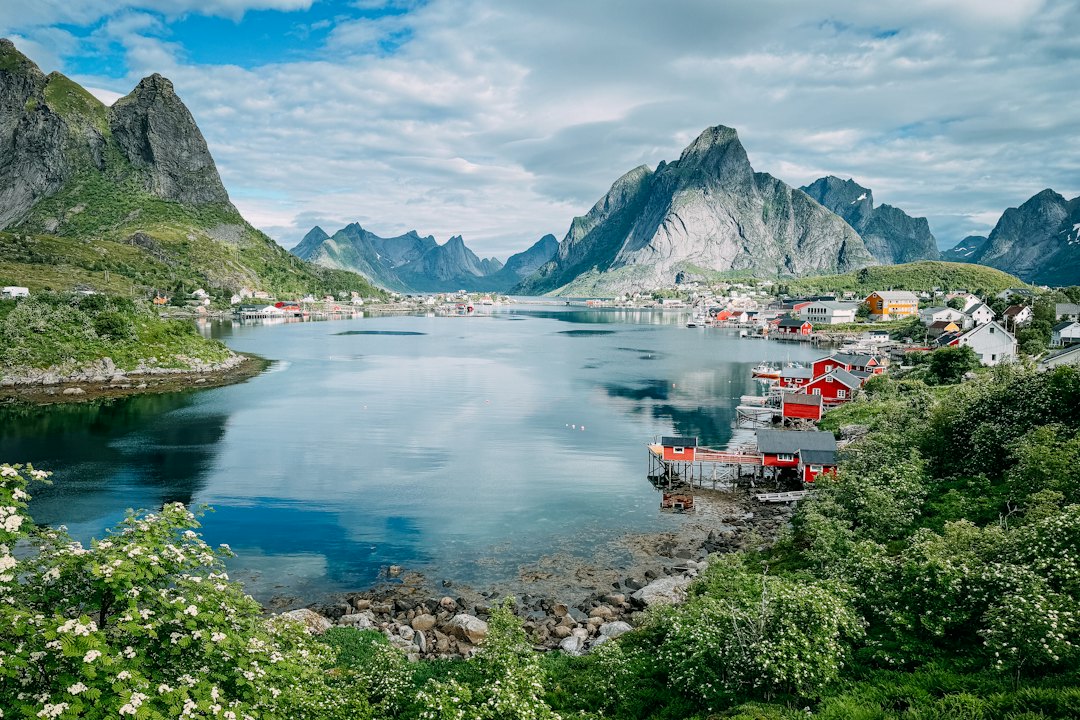
Why go: Lofoten is the rare summer destination that looks better in cool, changeable weather than in a heatwave. Granite peaks drop straight into the sea, red fishing cabins sit on stilts, and from late May to mid July the sun does not set, so a hike can start at ten at night without a torch. Bergen, the gateway on the mainland, is rainy by reputation and gentler in fact: it gives you funiculars, wooden wharf streets and the start of the fjord country. The cost of all this is plain. Norway is expensive, and the Lofoten islands more so in July, when rooms are scarce.
Average July/August high
- About 15°C (59°F) in Lofoten, a few degrees higher in Bergen. Nights hover around 10°C / 50°F. Wind off the sea makes it feel cooler than the number.
Daily budget per person (estimates, October 2026)
- Budget: about $70 (≈ €60 / £55) (hostel or campsite, supermarket meals, local buses).
- Mid-range: about $175 (≈ €155 / £140) (private cabin or guesthouse room, one restaurant meal, a short boat trip).
- Luxury: about $360 (≈ €320 / £280) (fisherman’s-cabin boutique stay, dinner out, guided activity).
Top 3 outdoor experiences
- Midnight-sun hikes: Reinebringen and Ryten are the headline climbs; go late in the evening when the paths are quieter and the light is long and low.
- Fjord kayaking: guided paddles around Henningsvær or in a quiet fjord arm are the best way to see the cliffs from sea level.
- The Hurtigruten-style coastal run or a Bergen fjord cruise: the Nærøyfjord, a UNESCO-listed arm of the Sognefjord, is the scenic pick from Bergen.
Crowd index
- 3 out of 5. Mainland Bergen is busy with cruise ships; the Lofoten road is crowded at viewpoints and parking in July, calmer in the second half of August.
Safety and booking tips
- Book Lofoten rooms and cars by February for July. Reinebringen is a steep stone staircase, so wear proper shoes and stay off it in wet conditions.
- Weather turns quickly; carry a windproof layer even in sunshine. Check the FCDO or US State Department pages for Norway before you go. Both describe it as a low-risk destination for most visitors, but advice changes.
2. Scottish Highlands & Skye
Why go: The Highlands are the budget-friendliest of the northern big-scenery trips and the one most likely to hand you four seasons before lunch. Glens run out into lochs, single-track roads wind to castles, and even in July you can walk all day on a 17–19°C / 63–66°F day and finish in front of a peat fire. The honest warning is the midge, a biting insect that arrives with still, damp air and can turn a lovely lochside evening into a retreat. Our Scotland guide has the wider picture on costs, routes and timing.
Average July/August high
- About 18°C (64°F), with sunny spells of 21–22°C / 70–72°F possible. Rain is likely at some point on most days.
Daily budget per person (estimates, October 2026)
- Budget: about $55 (≈ €50 / £45) (hostel or campsite, self-catering, bus passes).
- Mid-range: about $135 (≈ €120 / £105) (B&B, pub dinner, small-group day trip or a car share).
- Luxury: about $280 (≈ €250 / £220) (country-house hotel, distillery visits, private driver for a day).
Top 3 outdoor experiences
- Glen walks: Glen Coe, Glen Etive and the Fairy Pools area on Skye. Pick one half-day route and leave time to turn back if the cloud drops.
- Castle trails: Eilean Donan, Urquhart on Loch Ness and Dunvegan on Skye can be strung together by road across two or three days.
- Skye’s Quiraing and the Old Man of Storr: go early or at the end of the day; mid-morning, the car parks fill.
Crowd index
- 3 out of 5 overall, 4 on Skye and along the North Coast 500 in July and August.
Safety and booking tips
- Midge tips: they favour still, shaded, damp conditions at dawn and dusk. Use a repellent that contains icaridin or DEET, wear light long sleeves and keep moving. Wind and sun are your friends.
- Book Skye lodging four to six months ahead for peak weeks, and carry a paper map. Mobile signal fails in many glens. Mountain rescue call-outs are common, so tell someone your route.
3. Julian Alps & Soča Valley, Slovenia
Why go: Slovenia is the value argument in this guide: Alpine scenery comparable to Switzerland’s at about half the price, with fewer crowds and a river that is a colour you will not believe until you see it. It is also the top of our range. July and August highs reach 24°C (75°F) in the valleys and can climb higher in a heatwave, so treat Slovenia as the warmest of the seven, saved by altitude and cold water, not as a true chill-out. Go up, not down, and the weather rewards you.
Average July/August high
- About 24°C (75°F) at valley level, such as Bled and Kobarid, and 10–15°C / 50–59°F cooler near the 2,000-metre ridge lines. Afternoon thunderstorms are common.
Daily budget per person (estimates, October 2026)
- Budget: about $42 (≈ €40 / £35) (hostel, camping, market food, buses).
- Mid-range: about $100 (≈ €90 / £80) (guesthouse, restaurant dinner, a rafting trip).
- Luxury: about $215 (≈ €190 / £170) (lakeside hotel, tasting menu, private guide).
Top 3 outdoor experiences
- Emerald-river rafting or kayaking on the Soča, with the river’s turquoise colour at its best in sun after a dry spell.
- Lake Bohinj, quieter than Bled, for a swim, a loop of the shore, and the cable car to Vogel for the view.
- Vintgar Gorge and the Triglav National Park trails: the gorge walk is short and busy; the high routes are not.
Crowd index
- 3 out of 5. Lake Bled is a 4 on summer weekends; the Soča and Bohinj are calmer on weekdays.
Safety and booking tips
- Rent a car if you can; public transport is thinner in the valleys than the maps suggest. Book Bled parking early or stay at Bohinj.
- Mountain weather changes fast and the high routes are serious. Check conditions with the local tourist office, and consult FCDO or State Department pages for any current travel notes.
4. The Dolomites: Val Gardena & Cortina, Italy
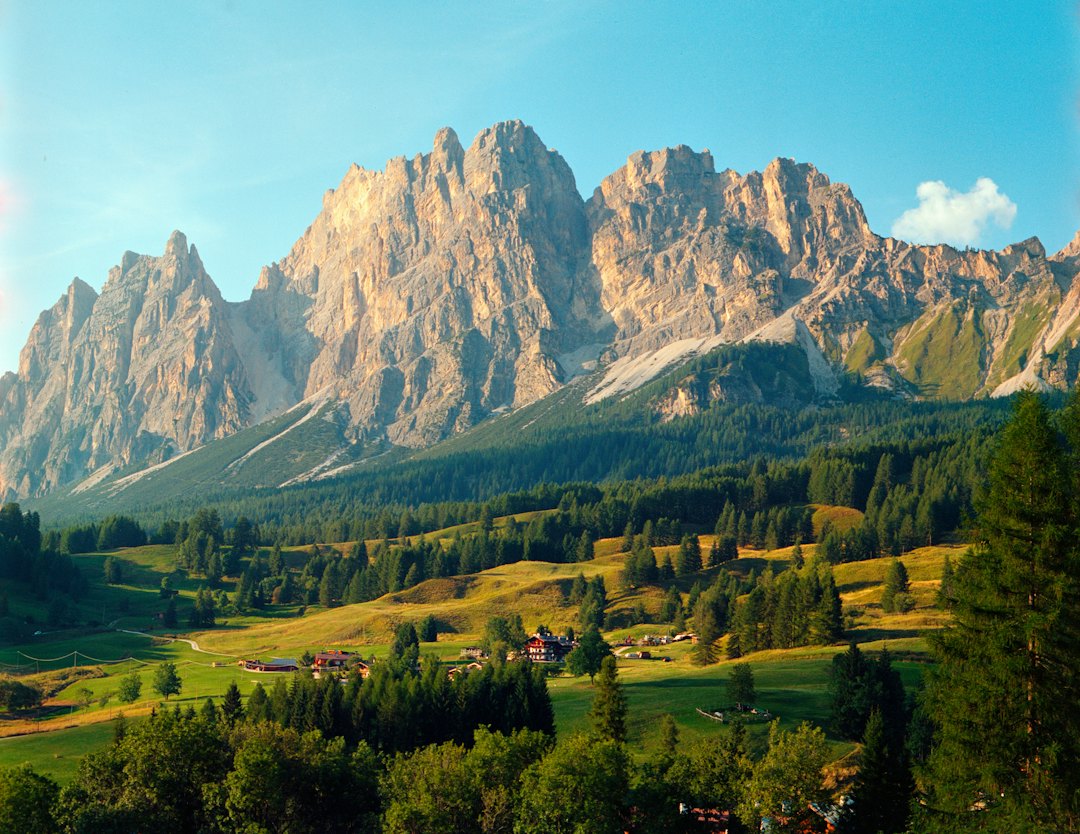
Why go: The Dolomites are the most photogenic mountains in Europe, pale limestone walls that turn pink at dusk, and the best of them are walkable on a comfortable 21°C / 70°F. The pleasure here is less the peaks themselves than the system: cable cars lift you to a high plateau, a rifugio (a mountain hut with a kitchen) serves a hot lunch at 2,000 metres, and you walk down in the cool of the afternoon. The admission is that the famous spots are very crowded, so the trick is to pick one you have not seen on a postcard.
Average July/August high
- About 21°C (70°F) in the villages, 10–14°C / 50–57°F at the high huts and under 5°C / 41°F at night above 2,500 metres.
Daily budget per person (estimates, October 2026)
- Budget: about $60 (≈ €55 / £45) (dorm bed in a rifugio or hostel, supermarket picnics, buses).
- Mid-range: about $155 (≈ €140 / £120) (guesthouse half-board, lift passes, one hut lunch).
- Luxury: about $340 (≈ €300 / £270) (spa hotel in Val Gardena or Cortina, private guide, dinner out).
Top 3 outdoor experiences
- Rifugio hikes: the Seceda ridgeline and the Alpe di Siusi plateau (the meadows in July are a yellow carpet) suit most fitness levels.
- Cable cars: the lifts around Val Gardena and Cortina take the work out of the ascent and let you save your legs for the traverse.
- Tre Cime di Lavaredo loop: a classic circuit, popular enough that road tolls and parking limits apply; start early.
Crowd index
- 4 out of 5, higher in the first half of August (Ferragosto). Early September is far calmer and still cool.
Safety and booking tips
- Book huts and lift passes ahead for July and August; some famous spots such as Lago di Braies now use timed or reserved access.
- Afternoon thunderstorms are common, so start early and be below the ridge by 2pm. Via ferrata routes need equipment and experience; rent kit and a guide if unsure.
5. Iceland Ring Road & the Westfjords
Why go: Iceland is the coolest destination here by a wide margin, with highs around 14°C (57°F), and it is a different experience from the winter aurora trip. Summer gives you long light, green moss, waterfalls fed by snowmelt and puffins on the cliffs. Be accurate about the “24-hour daylight”: that is true around the June solstice; by August, nights are properly dark again. Our Iceland guide covers seasons and costs in more depth. The caution is cost: it is the second most expensive place in this list, and a rental car is almost essential.
Average July/August high
- About 14°C (57°F) in Reykjavík and the south, a degree or two cooler in the Westfjords. Rain and wind are normal; sunshine is a bonus.
Daily budget per person (estimates, October 2026)
- Budget: about $75 (≈ €65 / £60) (campervan or campsite, self-catering, shared car).
- Mid-range: about $185 (≈ €165 / £145) (guesthouse, rental car split two ways, one restaurant meal).
- Luxury: about $390 (≈ €350 / £310) (boutique hotel, guided glacier or whale-watching trip, dinners out).
Top 3 outdoor experiences
- Puffins on the Westfjords cliffs: Látrabjarg is the best-known colony; the season runs roughly mid-May to mid-August.
- Geothermal lagoons: smaller local pools and hot springs cost far less than the famous lagoon near Reykjavík, and are often more pleasant.
- A Ring Road loop, or only the Westfjords, which is quieter: gravel roads, empty fjords and long drives between villages.
Crowd index
- 3 out of 5. The south coast is a 4; the Westfjords are a 1 or 2.
Safety and booking tips
- Check road conditions and weather on the national road administration and meteorological office sites each morning. Gravel roads and river crossings are not for standard hire cars; read your insurance terms.
- Book lagoon slots ahead, and stay on marked paths near geothermal ground and cliff edges.
6. Saas-Fee & the Bernese Oberland, Switzerland
Why go: Saas-Fee is a car-free village ringed by thirteen 4,000-metre peaks, and the glacier above it creates its own cool breeze on even the hottest afternoons. The Bernese Oberland, a short hop away, adds Lauterbrunnen, the valley of waterfalls, with Staubbach Falls dropping from a cliff beside the village. It is also the most expensive of the seven, and the question is how to see it without paying for it all at full fare. The answer is mostly about rail passes and timing.
Average July/August high
- About 20°C (68°F) in Saas-Fee at 1,800 metres, 22–24°C / 72–75°F in Lauterbrunnen and Interlaken, and freezing at the glacier. Valley floors can be hot in a heatwave.
Daily budget per person (estimates, October 2026)
- Budget: about $75 (≈ €65 / £60) (hostel or camping, supermarket meals, Half Fare Card).
- Mid-range: about $200 (≈ €180 / £155) (mid-range hotel or chalet, lifts, one restaurant meal).
- Luxury: about $450 (≈ €400 / £350) (five-star mountain hotel, private transfers, fine dining).
Top 3 outdoor experiences
- Glacier and the high-altitude train from Saas-Fee: the underground funicular reaches the Mittelallalin ice grotto and views over the glacier.
- Lauterbrunnen waterfalls: Staubbach, Trümmelbach (a glacier-fed falls inside the mountain) and the walk to Mürren, with views of the Eiger, Mönch and Jungfrau.
- Lake Thun or Brienz swim: lake water is cold but clean, and a ferry across it costs far less than a mountain-railway ticket.
Crowd index
- 4 out of 5 in Lauterbrunnen and Interlaken, 2 in Saas-Fee.
Safety and booking tips
- The Swiss Half Fare Card gives 50% off most trains, buses, boats and many mountain lifts, and costs $182 (CHF 150) for a month. Do the sums: it pays off if you plan more than two or three big rides. Overnight guests in some villages receive free local lift and bus cards, so ask your hotel before buying a pass.
- Book high-altitude excursions in the morning, when views are clearest. The UK FCDO advises insurance that covers mountain rescue, helicopter costs and repatriation, so check your policy before you go.
7. Banff, Jasper & Vancouver Island, Canada
Why go: The Canadian Rockies are the largest-scale cool escape in this guide: glacier-blue lakes, long hiking days and 22°C / 72°F highs, followed by a ferry to Vancouver Island, whose temperate rainforest feels like a cool green cathedral. It is also the place where you need to think about wildfire smoke and logistics, because distances are huge. Treat it as a two-region trip, not a day-trip.
Average July/August high
- About 22°C (72°F) in Banff and Jasper, with cold nights of 5–8°C / 41–46°F. Vancouver Island runs 20–23°C / 68–73°F on the coast, often cooler in the rainforest.
Daily budget per person (estimates, October 2026)
- Budget: about $60 (≈ €55 / £45) (campsite, groceries, shared car).
- Mid-range: about $160 (≈ €145 / £125) (motel or lodge room, rental car split two ways, park pass, one restaurant meal).
- Luxury: about $340 (≈ €300 / £270) (lakeside lodge, guided canoe or heli-hiking trip, dinners out).
Top 3 outdoor experiences
- Glacial lakes: Lake Louise, Moraine Lake and Peyto Lake. Moraine Lake is reached by Parks Canada shuttle, not by private car, so plan for that.
- Jasper’s quieter trails and the Icefields Parkway, one of the great mountain drives, with stops at glaciers and waterfalls.
- Temperate rainforest on Vancouver Island: Cathedral Grove, the Pacific Rim coast near Tofino and cold-water whale watching.
Crowd index
- 4 out of 5 in Banff and Lake Louise in July and August, 3 in Jasper, 2–3 on the island away from Tofino.
Safety and booking tips
- Book campsites and lodges many months ahead; reservations for popular sites open in winter. Buy a national parks pass. Carry bear spray and know how to use it; keep food locked away.
- Wildfire smoke can affect the Rockies in late summer, and Jasper’s town has been through a serious fire. Check Parks Canada alerts and local air-quality readings before and during the trip, and keep your bookings flexible.
Side-by-Side: The Seven at a Glance
A quick comparison, using the figures above. Temperatures are typical July and August highs, costs are mid-range USD per person per day (our estimate, checked October 2026) and the crowd index runs from 1 (empty) to 5 (packed). Best weeks are the stretch with the best balance of weather, access and calm.
| Destination | Typical summer high | Mid-range cost / day | Crowd index | Best weeks |
|---|---|---|---|---|
| Lofoten & Bergen, Norway | 17°C / 63°F | $175 (≈ €155 / £140) | 3 / 5 | Mid-June to early July for midnight sun; mid-August for calm |
| Scottish Highlands & Skye | 18°C / 64°F | $135 (≈ €120 / £105) | 3 / 5 | Late May to mid-June; early September (fewer midges) |
| Julian Alps & Soča Valley, Slovenia | 24°C / 75°F | $100 (≈ €90 / £80) | 3 / 5 | Mid-June; early September |
| Dolomites, Italy | 21°C / 70°F | $155 (≈ €140 / £120) | 4 / 5 | Late June; first half of September |
| Iceland Ring Road & Westfjords | 14°C / 57°F | $185 (≈ €165 / £145) | 3 / 5 | Mid-June to mid-July (puffins, daylight) |
| Saas-Fee & Bernese Oberland, Switzerland | 20°C / 68°F | $200 (≈ €180 / £155) | 4 / 5 | Late June to early July; September |
| Banff, Jasper & Vancouver Island, Canada | 22°C / 72°F | $160 (≈ €145 / £125) | 4 / 5 | Early to mid-July; mid-September |
Who Should Pick What
If cost matters most, choose Slovenia, then the Scottish Highlands. Both give you large scenery at mid-range costs of about $100–135 (≈ €90–120 / £80–105) a day, and both are manageable without a rental car if you are patient with buses. Switzerland and Iceland are the two to save for, or to approach with a pass and a camping stove.
If you want true cold, pick Iceland or Lofoten. At 14–17°C / 57–63°F, you will wear a fleece in July. Pick them for the light and the drama, not for the sun, and book rooms early.
If you want big walking days with a proper lunch at the top, the Dolomites are hard to beat, because the hut system is the best in Europe. The Bernese Oberland is similar but pricier.
If you want space and distance, Canada, with the caveat that you will drive a lot and should check smoke and fire conditions. The Westfjords in Iceland are the quiet alternative if long drives suit you.
If you are wavering between two, our comparison tool shows cost, crowds, safety summaries and best months side by side for many of these destinations, and the best way to settle it is to run your own dates through it.
Coolcation FAQ
What is a coolcation?
A coolcation is a summer trip to a place with mild temperatures, usually highs of about 14–24°C / 57–75°F (57–75°F), instead of a hot beach or city. It is a marketing term for something travellers have always done: head for the mountains, fjords or northern coast when the south gets too hot.
Which coolcation destination is cheapest?
Of the seven in this guide, Slovenia’s Julian Alps and Soča Valley are the cheapest, at roughly $42 (≈ €40 / £35) budget, $100 (≈ €90 / £80) mid-range and $215 (≈ €190 / £170) luxury per person per day. The Scottish Highlands come next at about $55 (≈ €50 / £45), $135 (≈ €120 / £105) and $280 (≈ €250 / £220). These are our estimates, checked in October 2026, and will change.
When is the best time to book a coolcation?
For July and August, book lodging and cars four to six months ahead, especially the Dolomites, Skye, Lofoten and the Canadian Rockies, where rooms and campsites go early. Shoulder weeks in June and early to mid-September usually give you the same cool weather with fewer people and lower prices.
Are cool destinations really free of heatwaves?
No. Cool destinations are cooler on average, not immune. Alpine valleys in Switzerland and Slovenia can see 30°C / 86°F or more in a heatwave, and Scotland and Scandinavia have recorded unusual highs in recent summers. Higher altitude and northern latitude lower the odds, so check the forecast before you commit and choose lodging at a higher elevation if you can.